circuit networks
 19:22
Mechanical circuits: electronics without electricity
8.7M views • 4 years ago
Steve Mould
Steve Mould shows Spintronics, a set of mechanical components such as resistors, capacitors and transistors linked by chains, that give an intuitive feel for how electrical circuits work.
 2:48
Series circuit - 3 LEDs
620K views • 14 years ago
Henryk Gasperowicz
A three-minute demo of a series circuit with three LEDs that behaves in a surprising way, posed as a question of how it works.
 2:25:52
The spelled-out intro to neural networks and backpropagation: building micrograd
4.4M views • 4 years ago
Andrej Karpathy
Andrej Karpathy's first Neural Networks: Zero to Hero lecture, which builds micrograd, a tiny autograd engine, from scratch in Python. It explains backpropagation and neural network training step by step, assuming only basic Python and some high-school calculus.
 3:07
Neural Networks Demystified [Part 1: Data and Architecture]
838K views • 12 years ago
Welch Labs
The first of a short series by Welch Labs on building a complete neural network in Python. It introduces the data and the architecture of a simple network before later parts cover forward propagation, gradient descent, and backpropagation.
 47:15
Will AI outsmart human intelligence? - with 'Godfather of AI' Geoffrey Hinton
878K views • 1 year ago
The Royal Institution
Geoffrey Hinton's 2025 Royal Institution Discourse on what AI has learned from biological intelligence and how it might surpass it. He explains neural networks and argues that human language use resembles what backpropagation-trained networks do.
 31:52
Reading Silicon: How to Reverse Engineer Integrated Circuits
416K views • 9 years ago
HACKADAY
Ken Shirriff walks through how to reverse engineer integrated circuits from die photos, using famous chips as examples, in a Hackaday SuperConference talk.
 1:11:36
Geoffrey Hinton talk "What is wrong with convolutional neural nets ?"
200K views • 9 years ago
trwappers
Geoffrey Hinton gives an MIT talk on what is wrong with convolutional neural networks and introduces his capsules project. The description points to the capsule network papers.
 57:57
Lecture 1 | Introduction to Convolutional Neural Networks for Visual Recognition
2.9M views • 9 years ago
Stanford University School of Engineering
The first lecture of Stanford's CS231n course on convolutional neural networks for visual recognition. It surveys the history and key challenges of computer vision, from the Cambrian explosion and Hubel and Wiesel to ImageNet.
 20:33
Gradient descent, how neural networks learn | Deep Learning Chapter 2
9.7M views • 9 years ago
3Blue1Brown
3Blue1Brown's second neural network chapter explains cost functions and gradient descent, showing how a network learns by minimizing error during training.
 1:02:29
EEVblog #555 - 555 Timer Kit
370K views • 12 years ago
EEVblog
Dave Jones builds the Evil Mad Scientist discrete-component 555 timer kit, then tests it and explains the internal circuitry of the 555 at transistor level. He finishes with scope waveforms.
 13:09
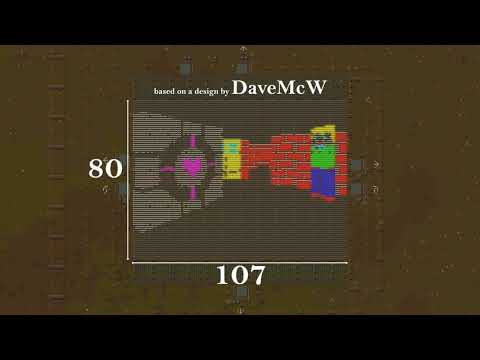
Raycasting engine in Factorio (vanilla 0.17) - Facto-RayO v1.0
1M views • 7 years ago
arrow in my gluteus maximus
A demo of a raycasting 3D engine built entirely from in-game mechanisms in vanilla Factorio 0.17. It renders simple 3D scenes, producing a new frame every 45 game ticks, with the video sped up to compensate for low UPS.
 6:18
A Style-Based Generator Architecture for Generative Adversarial Networks
1.3M views • 7 years ago
Tero Karras FI
A short demo video for NVIDIA's StyleGAN paper, which proposes a style-based generator for GANs. It shows face synthesis with style mixing and scale-specific control over attributes like pose and freckles.
 1:22:38
CS480/680 Lecture 19: Attention and Transformer Networks
374K views • 7 years ago
Pascal Poupart
A university lecture from CS480/680 by Pascal Poupart on attention mechanisms and transformer networks, worked through on a chalkboard.
 11:58
Melt your circuit boards
471K views • 4 years ago
mitxela
mitxela shows his KiCad plugin that rounds PCB tracks to give circuit boards organic, melted-looking layouts instead of rigid geometric ones.
 18:17
Where good ideas come from | Steven Johnson
1.7M views • 16 years ago
TED
Steven Johnson's TED talk argues that good ideas come from connected, slow-building hunches and liquid networks, from London coffee houses to Darwin to the modern web, rather than lone Eureka moments.
 5:26
Neural Network Learns The Physics of Fluids and Smoke | Two Minute Papers #118
209K views • 9 years ago
Two Minute Papers
Two Minute Papers covers a paper on speeding up fluid and smoke simulation with convolutional networks. It contrasts the approach with earlier regression forest methods.
 7:47
This AI actually WORKS!!! - NVIDIA RTX Voice
1.8M views • 6 years ago
ShortCircuit
A ShortCircuit (Linus Tech Tips) review of Nvidia's RTX Voice, which uses GPU-based neural networks to remove background noise from microphone audio. It demonstrates how well the filtering works.
 18:40
But what is a neural network? | Deep learning chapter 1
25.1M views • 9 years ago
3Blue1Brown
3Blue1Brown's first chapter on deep learning explains what neurons and layers are and the math underlying a basic neural network, using handwritten digit recognition with visual animations.
 5:58
MarI/O - Machine Learning for Video Games
11.5M views • 11 years ago
SethBling
SethBling shows MarI/O, a program using neural networks and the NEAT genetic algorithm to learn to play Super Mario World. The description links the source code, the paper and background reading.
 14:48
The Biggest Misconception About Electricity
28.2M views • 4 years ago
Veritasium
Veritasium argues that electric energy is carried by fields around the wires rather than by electrons moving through them, using a thought experiment with a large circuit.
 2:35:53
Tensorflow and deep learning - without a PhD by Martin Görner
610K views • 10 years ago
Devoxx
Martin Gorner's Devoxx talk introduces deep learning with TensorFlow, walking through neural networks for MNIST, how to choose an architecture and how to diagnose networks that fail to train.
 35:42
Progressive Performance (Chrome Dev Summit 2016)
34K views • 9 years ago
Chrome for Developers
Alex Russell's Chrome Dev Summit 2016 talk on building web experiences that work on slow, flaky networks and low-power devices. It argues developers should focus on the performance of real-world mobile hardware rather than desktop machines.
 5:46
"Z2" - Upgraded Homemade Silicon Chips
2.5M views • 5 years ago
Sam Zeloof
Sam Zeloof shows the upgraded second iteration of his homemade silicon integrated circuit fabrication process, producing chips with around a thousand transistors in his garage. It is a short overview of what the home fab can now do.
 51:46
Connections between physics and deep learning
67K views • 10 years ago
MITCBMM
Max Tegmark's MIT CBMM talk on why deep learning works so well. He argues that the laws of physics and the symmetries in physical data make it compressible into small neural networks, tying physics to network structure.
 17:58
What P vs NP is actually about
253K views • 2 years ago
Polylog
Polylog explains how algorithms can be turned into circuits and encoded as satisfiability problems, which lets you effectively run them backwards. It uses this to motivate breaking RSA, general reductions to SAT, and what P vs NP is really asking.
 1:28:28
The Company that Broke Canada
4.1M views • 3 years ago
BobbyBroccoli
BobbyBroccoli documentary on the rise of Nortel Networks, once the dominant Canadian telecom giant, during the dot-com era. It is part one of a two-part story.
 13:30
Stealing Baseball Signs with a Phone (Machine Learning)
30M views • 7 years ago
Mark Rober
Mark Rober and Jabril build an app that uses machine learning to decode baseball sign sequences. The video also explains neural networks in a simple, accessible way.
 31:32
[CVPR'21 WAD] Keynote - Andrej Karpathy, Tesla
51K views • 5 years ago
WAD at CVPR
Andrej Karpathy, then Tesla's head of AI, gives a CVPR 2021 workshop keynote on how Autopilot's neural networks work. A large part covers the move to a vision-only stack, including why radar was dropped and how vision produces depth estimates.
 24:31
How Electricity Actually Works
12.8M views • 4 years ago
Veritasium
Veritasium explores how electrical energy actually travels in a circuit, arguing that it flows through electromagnetic fields around the wires rather than through the electrons. It builds a long-cable experiment with Caltech to test when a distant bulb lights.
 8:25
Large Language Models from scratch
375K views • 4 years ago
Graphics in 5 Minutes
A short cartoon explaining how language models like ChatGPT work, from autocomplete and conditional probabilities to neural networks, gradient descent and backpropagation. It shows how networks act as universal function approximators.
 1:05:18
Recent Developments in Deep Learning
85K views • 16 years ago
Google TechTalks
Geoff Hinton's 2010 Google Tech Talk on deep belief networks, learning layers of representation one at a time from unlabeled data, and extending them with multiplicative interactions.
 8:36
[4k, 60 fps] A Trip Through New York City in 1911
21.7M views • 6 years ago
Denis Shiryaev
Footage shot in New York City in 1911 by a Swedish film company, upscaled to 4K and 60 fps with neural networks and optionally colorized. The creator notes the colors are artificial and added only for ambiance.
 10:18
Backpropagation calculus | Deep Learning Chapter 4
4M views • 9 years ago
3Blue1Brown
3Blue1Brown's chapter 4 on deep learning gives a more formal, symbol-based account of backpropagation calculus, connecting the intuition from the previous chapter to the math found in textbooks and code.
 1:19:08
CS231n Winter 2016: Lecture1: Introduction and Historical Context
462K views • 10 years ago
Andrej Karpathy
The first lecture of Stanford's CS231n Winter 2016 course on convolutional neural networks for visual recognition, introducing the course and the historical context of computer vision.
 55:02
GradIEEEnt half decent: The hidden power of imprecise lines
391K views • 3 years ago
suckerpinch
Tom 7 (suckerpinch) delivers a long, comedic digression on gradient descent and floating-point imprecision. He shows how rounding behavior can supply the nonlinearity needed to build a neural network.
 9:05
Speech Recognition Breakthrough for the Spoken, Translated Word
1M views • 14 years ago
Microsoft Research
Microsoft Research's Rick Rashid demonstrates a speech recognition and translation system, built on deep neural networks, that turns his spoken English into Chinese speech in 2012.
 47:18
OpenFlow @ Google - Urs Hoelzle, Google
47K views • 14 years ago
Open Networking Summit
Urs Hoelzle, Google's SVP of infrastructure, gives the 2012 Open Networking Summit keynote on how Google adopted OpenFlow and software-defined networking in its own networks. The slides are linked in the description.
 20:41
Cuba's Underground Gaming Network
1.5M views • 8 years ago
Cloth Map
Cloth Map documents Havana's SNET, a community-built private network that Cubans created because internet prices were high. It is used for gaming and sharing.
 1:49:11
WE MUST ADD STRUCTURE TO DEEP LEARNING BECAUSE...
101K views • 2 years ago
Machine Learning Street Talk
Machine Learning Street Talk interviews Paul Lessard about Categorical Deep Learning, which uses category theory and monads to make neural network architectures more interpretable and composable. They also discuss neural networks' limits in reasoning and unbounded computation.
 22:49
I bought 1000 meters of wire to settle a physics debate
3.7M views • 4 years ago
AlphaPhoenix
AlphaPhoenix builds a scaled-down version of the Veritasium electricity thought experiment using about a kilometer of wire and an oscilloscope. He measures how the signal actually propagates and explains the result.