cognitive function
 5:51
This Is Your Brain On Stale Air
4.2M views • 7 years ago
Tom Scott
Tom Scott features Kurtis Baute inside a sealed homemade biodome as carbon dioxide builds up, showing how stale air with elevated CO2 affects cognitive function. Sources include studies on CO2 and cognitive scores.
Topic match · Neuroscience & the brain 4:56
Doctor on How Screen Time Hurts Kids' Cognitive Development
2.9M views • 9 months ago
C-SPAN
A five-minute C-SPAN clip of Dr. Jared Cooney Horvath testifying to a US Senate committee that screen time, including in schools, harms children's learning and cognitive development.
 11:25
Monad - FunFunFunction #21
128K views • 10 years ago
Fun Fun Function
An episode of FunFunFunction explaining monads in JavaScript as functors that also implement flatMap. It builds on the preceding functor episode and works through code examples.
 4:00
Hitler reacts to functional programming
275K views • 7 years ago
Rymdkraftverk
A Downfall-style parody in which Hitler rages about functional programming concepts such as monads and Haskell. It runs about four minutes.
 17:52
Training AI Without Writing A Reward Function, with Reward Modelling
259K views • 6 years ago
Robert Miles AI Safety
Robert Miles explains reward modelling, in which an AI learns what humans want from their preference comparisons instead of a hand-written reward function. He walks through the 2017 paper on deep reinforcement learning from human preferences.
 14:28
Superpositions, Sudoku, the Wave Function Collapse algorithm.
764K views • 6 years ago
Martin Donald
Martin Donald explains the Wave Function Collapse algorithm using Sudoku-like constraint solving and shows how he implemented it with Blender and Godot. It links demos and reference articles.
 13:47
This is how you treat ADHD based off science, Dr Russell Barkley part of 2012 Burnett Lecture
5.1M views • 12 years ago
Adhd Videos
A short excerpt from Dr Russell Barkley's 2012 Burnett Lecture on ADHD, focused on treatment. He argues ADHD is a disorder of executive function and self-regulation, and that environments should be designed to compensate.
 4:44
The Most Common Cognitive Bias
17.4M views • 12 years ago
Veritasium
A Veritasium video that runs the 2-4-8 rule-guessing puzzle on people to show how they test only examples that confirm their hypothesis. It uses this to illustrate confirmation bias and falsification.
 9:18
The Most IMPORTANT Video You'll Ever See (part 1 of 8)
5.4M views • 19 years ago
wonderingmind42
Part 1 of a lecture by physicist Albert Bartlett on the exponential function and its consequences for population growth, resource use and energy. It argues that steady growth rates quickly lead to enormous quantities.
 14:34
Visualization of Quantum Physics (Quantum Mechanics)
2.8M views • 9 years ago
udiprod
An animated visualization of basic quantum mechanics using a free particle, with simulations based on the actual equations. It covers waves, particles, and how measurement collapses the wavefunction.
 12:56
Stephen Wolfram's Introduction to the Wolfram Language
924K views • 12 years ago
Wolfram
Stephen Wolfram gives a 13-minute tour of the Wolfram Language, a symbolic, functional programming language with a built-in knowledgebase. He demos querying large datasets, interactivity and deployment.
 11:32
Depth-first search in APL
11K views • 12 years ago
Dyalog
John Scholes builds a depth-first tree-search operator step by step in a Dyalog APL session. It covers higher-order functions and runs the search on the N-Queens problem.
 18:41
Why our IQ levels are higher than our grandparents' | James Flynn
3.2M views • 13 years ago
TED
Moral philosopher James Flynn explains the Flynn effect, the steady rise of IQ scores across the 20th century. He argues the shift reflects a move toward abstract, hypothetical thinking as cognitively demanding professions grew.
 5:24
Diffie-Hellman Key Exchange
547K views • 14 years ago
Art of the Problem
A short Art of the Problem clip explaining Diffie-Hellman key exchange, using a paint mixing analogy for one-way functions and touching on modular arithmetic and discrete logarithms.
 16:29
The great porn experiment | Gary Wilson | TEDxGlasgow
17.8M views • 14 years ago
TEDx Talks
Gary Wilson's TEDxGlasgow talk argues that internet pornography hyperstimulates the brain's reward system and can cause symptoms that reverse when people stop. TED notes that several claims are not supported by respected academic studies.
Topic match · Neuroscience & the brain 4:58
You Actually Share Your Brain With a Silent Stranger
20.2M views • 10 years ago
CGP Grey
CGP Grey explains split-brain patients, where severing the corpus callosum lets the two hemispheres act independently. He uses this to explore the idea of two minds in one head.
Topic match · Neuroscience & the brain 10:18
Why You Should Put YOUR MASK On First (My Brain Without Oxygen) - Smarter Every Day 157
11.6M views • 10 years ago
SmarterEveryDay
Destin Sandlin of Smarter Every Day undergoes hypoxia training and experiences his own impaired thinking as oxygen is withdrawn. The video shows how quickly and unnoticeably oxygen deprivation degrades judgment, illustrating why you put your own mask on first.
Topic match · Neuroscience & the brain 4:04
The effects of DBS on the motor symptoms of Parkinson's Disease
2.4M views • 13 years ago
Andrew Johnson
Andrew, diagnosed with early onset Parkinson's at 35, shows how deep brain stimulation surgery has controlled his motor symptoms. The short video shows his tremors with the stimulator off and on.
Topic match · Neuroscience & the brain 15:09
Why you DON'T want Perfect Pitch
2.5M views • 5 years ago
Adam Neely
Adam Neely explains what perfect (absolute) pitch is, how it differs from relative and quasi-absolute pitch, and why he would not want it. He covers its drawbacks, including drift with age.
Topic match · Neuroscience & the brain 16:26
Why Adults Can't Develop Perfect Pitch
1.8M views • 9 years ago
Rick Beato
Rick Beato argues that adults cannot develop true perfect pitch, which he ties to critical-period brain plasticity and language acquisition. He says it can only be developed in young children, and discusses the research behind this.
Topic match · Neuroscience & the brain 7:58
The Backwards Brain Bicycle - Smarter Every Day 133
31.6M views • 11 years ago
SmarterEveryDay
Destin of Smarter Every Day learns to ride a bicycle whose steering is reversed, taking about eight months, and compares it with how his young son learned much faster. It illustrates knowledge versus understanding and brain plasticity in adults versus children.
Topic match · Neuroscience & the brain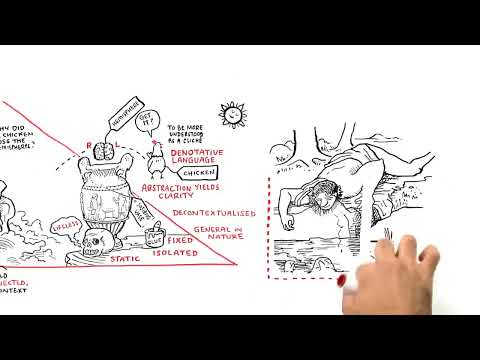 11:48
RSA ANIMATE: The Divided Brain
2.2M views • 15 years ago
Royal Society of Arts
An RSA Animate summary of Iain McGilchrist's lecture on the divided brain, arguing the brain's two hemispheres attend to the world differently and that this has shaped culture and society.
Topic match · Neuroscience & the brain 10:50
#NSDR (Non-Sleep Deep Rest) with Dr. Andrew Huberman
9.2M views • 4 years ago
Virtusan
A roughly 10-minute guided Non-Sleep Deep Rest session voiced by neuroscientist Andrew Huberman. It is meant to reduce daytime fatigue, improve focus and aid sleep.
Topic match · Neuroscience & the brain 17:19
Growing Human Neurons on a Home Made Electrode Array
3.4M views • 6 years ago
The Thought Emporium
The Thought Emporium builds a homemade multi-electrode array, grows human neurons on it and attempts to take readings. It is the first part of a series aimed at connecting living neurons to a computer.
Topic match · Neuroscience & the brain 7:41
Why Life Seems to Speed Up as We Age
8M views • 10 years ago
Veritasium
Veritasium explores why time seems to speed up as we age, covering chronoception and several competing explanations beyond the common proportional-theory argument.
Topic match · Neuroscience & the brain 4:33
Amputee Makes History with APL’s Modular Prosthetic Limb
10.9M views • 11 years ago
Johns Hopkins Applied Physics Laboratory
Johns Hopkins APL shows Les Baugh, a bilateral shoulder-level amputee, controlling two Modular Prosthetic Limbs by thought after a short training period. Nerves rerouted to his chest drive the arms.
Topic match · Neuroscience & the brain 15:13
Free Energy Principle — Karl Friston
171K views • 9 years ago
Serious Science
Neuroscientist Karl Friston gives a 15-minute talk on the free energy principle, covering Markov blankets, Bayesian model evidence and global brain theories.
Topic match · Neuroscience & the brain 12:54
I have APHANTASIA (and you may too...without realising it!)
8M views • 8 years ago
JAMIEvstheVOID
An artist describes discovering she has aphantasia, the inability to form mental images, and how it affects her work. She asks viewers about their own visualization.
Topic match · Neuroscience & the brain 9:02
Why hierarchy creates a destructive force within the human psyche (by dr. Robert Sapolsky)
322K views • 14 years ago
TheSymposionNights
A short clip of Robert Sapolsky on how social hierarchy generates chronic stress, drawing on baboon research. It links rank-related stress to heart health and life expectancy.
Topic match · Neuroscience & the brain 16:15
Update on my Brain Injury & the Future of Strange Parts
500K views • 3 years ago
Strange Parts
An update from the Strange Parts YouTuber on his recovery from a brain injury caused by a metal pipe while filming, and his plans for the channel.
Topic match · Neuroscience & the brain 14:32
How Children Develop Perfect Pitch
972K views • 10 years ago
Rick Beato
Rick Beato discusses a theory of why some children develop perfect pitch, based on early exposure to music. He draws on his experience with his own children.
Topic match · Neuroscience & the brain 14:37
The most important lesson from 83,000 brain scans | Daniel Amen | TEDxOrangeCoast
24.4M views • 13 years ago
TEDx Talks
Psychiatrist Daniel Amen discusses lessons from 83,000 brain scans, arguing that brain activity patterns relate to psychological symptoms and that you can improve your brain.
Topic match · Neuroscience & the brain 9:35
Is Your Red The Same as My Red?
34M views • 13 years ago
Vsauce
Vsauce explores qualia and whether different people experience colors the same way. It draws on color blindness, Mary's room, the explanatory gap and subjective experience.
Topic match · Neuroscience & the brain 6:51
altitude chamber hypoxia training guy passes out
398K views • 16 years ago
Kevin Hayward
Footage of FAA altitude chamber hypoxia training for pilots in which a participant passes out from oxygen deprivation. It shows how quickly and subtly cognition fails at altitude.
Topic match · Neuroscience & the brain 17:01
Your Brain Hallucinates Your Conscious Reality | Anil Seth | TED
12M views • 9 years ago
TED
Neuroscientist Anil Seth argues in this TED talk that perception is a controlled hallucination: the brain constantly predicts the world and our shared agreement is what we call reality. He also touches on the construction of the self.
Topic match · Neuroscience & the brain 11:24
Q&A with a person who does not have an internal monologue
9.7M views • 6 years ago
PA Struggles
A student interviews Kirsten Carlson, who does not have an internal monologue, and she answers questions about how she thinks. The video grew out of a viral article about people lacking inner speech.
Topic match · Neuroscience & the brain 18:29
You aren't at the mercy of your emotions -- your brain creates them | Lisa Feldman Barrett
3.2M views • 8 years ago
TED
Psychology professor Lisa Feldman Barrett presents her research on what emotions are, arguing that the brain constructs them rather than reading them off faces. She says this means we have more control over our emotions than we think.
Topic match · Neuroscience & the brain 15:15
WHY Exercise is so Underrated (Brain Power & Movement Link)
4.3M views • 9 years ago
Joseph Everett - WIL
A video arguing that exercise matters for the brain as much as the body, linking movement, the nervous system and BDNF to learning and memory. It draws on research connecting complex movement to brain development.
Topic match · Neuroscience & the brain 4:45
How playing an instrument benefits your brain - Anita Collins
15.2M views • 12 years ago
TED-Ed
A short TED-Ed animated lesson by Anita Collins on what happens in the brain when people play a musical instrument. It argues that playing engages many brain areas at once, like a full-body workout, with long-term benefits.
Topic match · Neuroscience & the brain 16:51
How we can use light to see deep inside our bodies and brains | Mary Lou Jepsen
297K views • 8 years ago
TED
Inventor Mary Lou Jepsen demonstrates using red light and sound to see inside the body and brain, aiming at tumor detection and neural activity measurement, and potentially a cheaper wearable MRI replacement.
Topic match · Neuroscience & the brain