compute module
 1:21:22
Light Years Ahead | The 1969 Apollo Guidance Computer
2.8M views • 6 years ago
TNMoC
Robert Wills of TNMoC explains the Apollo Guidance Computer hardware and software, then walks through the Apollo 11 landing procedure step by step, including the 1202 alarms.
 6:55:03
50TH ANNIVERSARY OF THE COMPUTER SCIENCE DEPARTMENT AT THE UNIVERSITY OF UTAH
4K views • 3 years ago
University of Utah
A full-day recording of the University of Utah computer science department's 50th anniversary event with panels, keynotes and talks by alumni and pioneers. It includes Ivan Sutherland's presentation on single flux quantum electronics.
 49:03
Apollo Core Rope Memory (Apollo Guidance Computer Part 30)
759K views • 3 years ago
CuriousMarc
CuriousMarc's Apollo Guidance Computer restoration series looks at core rope memory, the ROM that held the Moon landing programs. Mike Stewart builds a custom reader to recover lost AGC programs.
 21:20
Cracking Enigma in 2021 - Computerphile
2.9M views • 5 years ago
Computerphile
Dr Mike Pound of Computerphile shows how a modern laptop can crack Enigma, using a ciphertext-only attack based on an older paper. He compares it with the tooling in CrypTool.
 17:40
3D Gaussian Splatting! - Computerphile
273K views • 2 years ago
Computerphile
A Computerphile video in which Dr Mike Pound and PhD student Lewis Stuart explain 3D Gaussian splatting, a quick technique that turns photos of a scene into a 3D model without much compute. It includes a demo and compares the approach to NeRFs.
 13:52
Ch(e)at GPT? - Computerphile
617K views • 3 years ago
Computerphile
Computerphile video in which Mike Pound explains a University of Maryland paper on watermarking LLM output. The method biases token choices so generated text can later be detected statistically.
 25:57
GPT3: An Even Bigger Language Model - Computerphile
446K views • 6 years ago
Computerphile
Rob Miles discusses GPT-3 on Computerphile, covering how scaling parameters kept improving results over GPT-2 and how the model nearly learned arithmetic without anyone knowing exactly how.
 28:43
Why build an entire computer on breadboards?
3.4M views • 6 years ago
Ben Eater
Ben Eater explains why he builds computers on breadboards, including testing their signal behavior on an oscilloscope. It is a companion to his 6502 breadboard computer series.
 1:26:02
Stanford Seminar - The Soul of a New Machine: Rethinking the Computer
76K views • 6 years ago
Stanford Online
Bryan Cantrill of Oxide Computer Company gives a Stanford EE380 talk on rethinking the server. He argues that hyperscaler-style rack-scale machines with open firmware, RISC-V and Rust should be available to everyone, not just the giants.
 21:42
Future Computers Will Be Radically Different (Analog Computing)
13.2M views • 4 years ago
Veritasium
Veritasium explains why analog computing may suit AI workloads, covering old analog computers, The Analog Thing and Mythic's analog chips that use flash memory for neural network inference. It argues digital hardware is hitting limits.
 20:13
The Most Powerful Computers You've Never Heard Of
13.7M views • 4 years ago
Veritasium
Veritasium traces analog computers from the Antikythera mechanism and Kelvin's tide-predicting machines to fire control and modern analog approaches. It explains how these machines computed continuously rather than digitally.
 56:58
The KGB, The Computer and Me - The Cuckoo’s Egg Story
15K views • 3 years ago
Australian Phoenix CyberOps
A 57-minute account of Clifford Stoll's tracking of a KGB-linked hacker through Lawrence Berkeley Lab computers in 1986, the story of The Cuckoo's Egg. It covers the FBI and Chaos Computer Club involvement.
 5:51
Susan Kare explains Macintosh UI ergonomics on the Computer Chronicles (1984)
51K views • 6 years ago
erg0steur
A 1984 Computer Chronicles segment in which Susan Kare explains the ergonomics and interface design of the original Macintosh. She introduces the interface step by step for newcomers.
 9:10
Smarter than a Smart TV! (Raspberry Pi Inside)
2.4M views • 4 years ago
Jeff Geerling
Jeff Geerling looks at a Sharp NEC commercial display with a slot for a Raspberry Pi Compute Module. It is a large screen without built-in smart TV features or tracking.
 2:31:30
Bryan Johnson: Kernel Brain-Computer Interfaces | Lex Fridman Podcast #186
492K views • 5 years ago
Lex Fridman
Lex Fridman interviews Bryan Johnson, founder of Kernel and previously Braintree, about brain-computer interfaces and Kernel's non-invasive brain monitoring hardware. It covers what the devices can do today and the company's plans.
 18:57
Why the Soviet Computer Failed
4.2M views • 4 years ago
Asianometry
An Asianometry explainer on why the Soviet Union, once a leading computing power, fell far behind the US in computers by the 1980s. It traces the gap from the 1960s onward despite strong state support for science.
 14:03
The Computer Designed To Die In Microseconds
408K views • 3 years ago
Scott Manley
Scott Manley tells the story of a computerized telemetry system built to sit at the heart of a nuclear test device in place of the plutonium pit, designed to transmit data in the microseconds before it was destroyed.
 1:38
"Computer Says No..." | Little Britain | Lucas & Walliams
958K views • 4 years ago
Matt Lucas and David Walliams
The Little Britain sketch in which call-center worker Carol types into her computer and replies 'computer says no' to every request.
 36:02
ChatGPT with Rob Miles - Computerphile
517K views • 3 years ago
Computerphile
Computerphile interviews AI safety researcher Rob Miles about ChatGPT: how it was trained with human feedback, why it tends to produce confident nonsense, and where it may or may not be dangerous.
 35:33
How does Computer Memory Work? 💻🛠
5.5M views • 4 years ago
Branch Education
A 36-minute animated deep dive from Branch Education into how DRAM works. It shows how memory connects to the CPU and how billions of bits are stored in nanoscale capacitor cells. It also covers why DRAM sits between SSDs and the processor.
 23:04
The Computer-free Automation of a Jukebox (Electromechanics)
1.3M views • 6 years ago
Technology Connections
Technology Connections takes apart a 1970 Wurlitzer 3400 jukebox to show how electromechanical relays and switches automated its behavior without a computer.
 23:03
The Universe is Hostile to Computers
26.5M views • 5 years ago
Veritasium
Veritasium explains how cosmic rays and other particles flip bits in computer memory, with examples including a Belgian election count error, plane incidents and game glitches. It is inspired by a RadioLab episode on bit flips.
 19:29
Glitch Tokens - Computerphile
353K views • 3 years ago
Computerphile
Rob Miles explains "glitch" tokens, odd strings in large language model vocabularies that make the model produce gibberish. He covers how they likely arise from tokenizer training data, such as Reddit usernames, that never appeared in the model's own training.
 17:54
Coding Adventure: Ant and Slime Simulations
2.2M views • 5 years ago
Sebastian Lague
Sebastian Lague explores an ant-inspired algorithm and simulates ant and slime mold behavior, using compute shaders. Source code for both simulations is available.
 1:04:19
"We Really Don't Know How to Compute!" - Gerald Sussman (2011)
96K views • 5 years ago
Strange Loop Conference
Gerald Sussman's 2011 Strange Loop keynote argues we still do not know how to compute, comparing biological systems with how we program machines. It touches on propagators, constraint programming and robustness.
 4:40
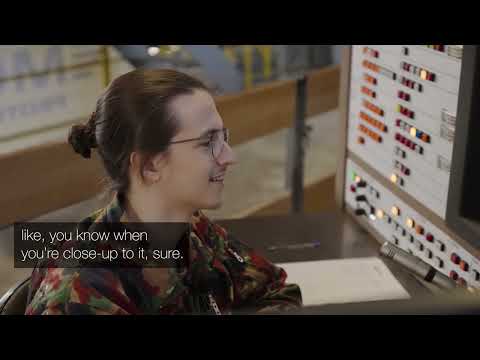
This 1970s tank simulator drives through a tiny world
12M views • 4 years ago
Tom Scott
Tom Scott visits the Swiss Military Museum to see the last surviving 1970s tank-driving simulator. It uses a real camera moving over a miniature model landscape rather than any computer graphics.
 1:06:36
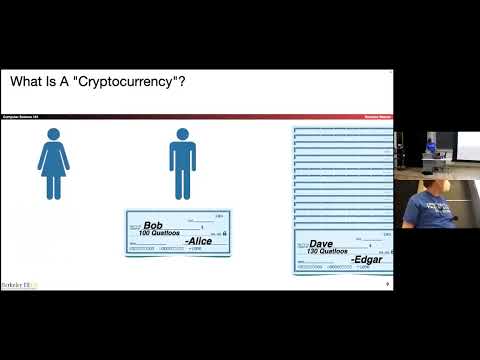
Computer Security 161 Cryptocurrency Lecture
128K views • 4 years ago
Nicholas C Weaver
A UC Berkeley CS 161 lecture by Nicholas Weaver on cryptocurrency and blockchains, covering how they work and the case against them. It is aimed at a computer security course audience.
 12:24
Color Maximite 2 - ARM CPU that runs BASIC!
453K views • 6 years ago
The 8-Bit Guy
The 8-Bit Guy reviews the Color Maximite 2, a modern ARM-based computer that boots straight into BASIC. He shows what it can do as a retro-style machine.
 1:51
New Supercomputer Simulation Sheds Light on Moon’s Origin
12.5M views • 4 years ago
NASA's Ames Research Center
A NASA and Durham University supercomputer simulation suggesting the Moon may have formed within hours of a giant impact between Earth and a Mars-sized body. It is one of the highest-resolution giant-impact simulations run.
 17:05
How Physicists Created a Holographic Wormhole in a Quantum Computer
2.4M views • 3 years ago
Quanta Magazine
Quanta Magazine explains the 2022 experiment that claimed to create a holographic wormhole on Google's quantum computer. The description now notes that a later independent analysis questioned whether any wormhole was created.
 29:44
EEVblog #1341 - AMAZING $250,000 IBM Processor TEARDOWN!
714K views • 6 years ago
EEVblog
Dave Jones of EEVblog tears down a 1991 IBM 9121 thermal conduction module from a System/390 mainframe, a 63-layer ceramic hybrid module with 2772 pins worth about $250,000, and demonstrates a BGA desoldering technique.
 2:02:53
Oxide and Friends 7/3/2023 -- Shipping the first Oxide rack: Your questions answered!
4K views • 3 years ago
Oxide Computer Company
A two-hour Oxide and Friends session answering questions after shipping the first Oxide rack. Topics include making hardware as a startup and why Oxide chose illumos.
 40:13
"Programming a 144-computer chip to minimize power" - Chuck Moore (2013)
19K views • 5 years ago
Strange Loop Conference
Chuck Moore, inventor of Forth, presents GreenArrays' 144-core asynchronous chip at Strange Loop 2013. He explains how idle cores draw almost no power and how tight code minimizes energy use.
 12:27
Brick Assembly
1.6M views • 3 years ago
Ancient
A maker's time-lapse of building a working computer inside a LEGO-style brick, using a tiny 0.42-inch OLED screen, with a demo at the end.
 22:36
Computer Scientist Explains One Concept in 5 Levels of Difficulty | WIRED
7.2M views • 4 years ago
WIRED
WIRED has UCLA professor Amit Sahai explain zero-knowledge proofs to a child, a teen, a college student, a grad student and an expert. Each round goes deeper into the cryptography and why it matters.
 1:00:26
Colossus - The Greatest Secret in the History of Computing
1M views • 6 years ago
The Centre for Computing History
Chris Shore of the Centre for Computing History explains how Colossus was built, how it worked, and how it affected the course of World War II. It is an hour-long museum lecture on the codebreaking computer.
 2:58:24
The Death of Affordable Computing | Tariffs Impact & Investigation
2.3M views • 1 year ago
Gamers Nexus
A long Gamers Nexus investigation into how volatile US tariffs affect the computer hardware industry. It interviews manufacturers and sellers about costs, margins and why moving production to the US is hard.
 19:25
New computers don't speed up old code
187K views • 1 year ago
Matthias random stuff
Matthias Wandel tests old and new code on a range of PCs, including a new mini PC, to measure how much faster modern hardware really is. He also shows optimization techniques such as branchless code, with benchmark programs on GitHub.
 24:07
AI can't cross this line and we don't know why.
2.5M views • 2 years ago
Welch Labs
A Welch Labs explainer on neural scaling laws and the compute-efficient frontier, asking why model loss seems to hit a line it cannot cross. It draws an analogy to an ideal gas law for AI.
 37:47
Andrej Karpathy (Tesla): CVPR 2021 (see description for better quality version)
114K views • 5 years ago
YarrowFlower
Andrej Karpathy's CVPR 2021 presentation on Tesla's Autopilot, covering its vision-based approach, sensor choices and the scale of Tesla's deep learning compute cluster. This upload is a lower-quality copy of the talk.