computer hardware
 10:13
The Problem with Time & Timezones - Computerphile
4.4M views • 12 years ago
Computerphile
Tom Scott explains for Computerphile why handling time and timezones in code is so hard, walking through a simple web app that computes how long ago something happened. It covers the quirks of timezones and calendars and ends in an exasperated rant.
 8:21
Why Electronic Voting is a BAD Idea - Computerphile
2.3M views • 11 years ago
Computerphile
Tom Scott explains for Computerphile why electronic voting is a bad idea, arguing that paper ballots are transparent, auditable and hard to tamper with at scale. He covers why moving voting to phones, tablets or computers undermines trust and verifiability.
 15:12
JPEG DCT, Discrete Cosine Transform (JPEG Pt2)- Computerphile
697K views • 11 years ago
Computerphile
Mike Pound explains the discrete cosine transform and how it underpins JPEG compression. It is part two of Computerphile's JPEG series.
 9:37
Characters, Symbols and the Unicode Miracle - Computerphile
2.1M views • 13 years ago
Computerphile
Tom Scott explains for Computerphile how Unicode and UTF-8 grew out of messy older character encodings to become the web's standard. It covers why the design works and how it handles worldwide text.
 17:40
3D Gaussian Splatting! - Computerphile
273K views • 2 years ago
Computerphile
A Computerphile video in which Dr Mike Pound and PhD student Lewis Stuart explain 3D Gaussian splatting, a quick technique that turns photos of a scene into a 3D model without much compute. It includes a demo and compares the approach to NeRFs.
 8:45
Chip & PIN Fraud Explained - Computerphile
851K views • 11 years ago
Computerphile
Computerphile interview with Prof. Ross Anderson on how Chip and PIN payment systems are being compromised, and the attacks researchers have seen.
 9:16
Floating Point Numbers - Computerphile
2.5M views • 12 years ago
Computerphile
Tom Scott explains for Computerphile how floating point numbers work, why moving the binary point is fast, and why it handles money badly.
 6:14
Turing & The Halting Problem - Computerphile
919K views • 12 years ago
Computerphile
A Computerphile video in which Mark Jago of the University of Nottingham explains Turing's halting problem and how it led to the blueprint for the modern computer.
 13:52
Ch(e)at GPT? - Computerphile
617K views • 3 years ago
Computerphile
Computerphile video in which Mike Pound explains a University of Maryland paper on watermarking LLM output. The method biases token choices so generated text can later be detected statistically.
 12:23
Typesetters in the '80s - Computerphile
105K views • 12 years ago
Computerphile
Professor Brailsford of the University of Nottingham describes how the university set out to print its own mathematics exam papers in the 1980s. The story centers on getting a Mergenthaler Linotron 202 typesetter to work with their own software.
 12:35
The Mathematics of Quantum Computers | Infinite Series
718K views • 9 years ago
PBS Infinite Series
A PBS Infinite Series episode explaining the mathematics of quantum computers, including how qubits store complex numbers and how quantum computation differs from classical computation. Hosted by Kelsey Houston-Edwards.
 18:57
Why the Soviet Computer Failed
4.2M views • 4 years ago
Asianometry
An Asianometry explainer on why the Soviet Union, once a leading computing power, fell far behind the US in computers by the 1980s. It traces the gap from the 1960s onward despite strong state support for science.
 14:03
The Computer Designed To Die In Microseconds
408K views • 3 years ago
Scott Manley
Scott Manley tells the story of a computerized telemetry system built to sit at the heart of a nuclear test device in place of the plutonium pit, designed to transmit data in the microseconds before it was destroyed.
 8:30
Deadly Truth of General AI? - Computerphile
941K views • 11 years ago
Computerphile
A Computerphile video in which Rob Miles warns against assuming a general AI will think like a human. He uses the thought experiment of a stamp-collecting AI to show how a goal-driven system could pursue its aim with dangerous results.
 8:16
Why Asimov's Laws of Robotics Don't Work - Computerphile
873K views • 11 years ago
Computerphile
Rob Miles explains for Computerphile why simple rule sets like Asimov's Three Laws cannot make robots and AI safe. Terms like harm and human are too ambiguous to specify precisely.
 17:31
How Quantum Computers Break Encryption | Shor's Algorithm Explained
3.4M views • 7 years ago
minutephysics
MinutePhysics explains Shor's algorithm, showing how a quantum computer factors large integers by finding the period of a number modulo N. It walks through the modular arithmetic and number theory that give the exponential speedup over classical factoring, and why this threatens encryption.
 6:36
Intel ME explained (intel management engine) from insider
12K views • 8 years ago
jessie
A short video explaining the Intel Management Engine, a hidden embedded computer inside Intel machines with deep access to hardware. It is presented from an insider's perspective and raises backdoor and NSA concerns.
 19:29
Glitch Tokens - Computerphile
353K views • 3 years ago
Computerphile
Rob Miles explains "glitch" tokens, odd strings in large language model vocabularies that make the model produce gibberish. He covers how they likely arise from tokenizer training data, such as Reddit usernames, that never appeared in the model's own training.
 12:24
Elliptic Curve Back Door - Computerphile
554K views • 8 years ago
Computerphile
Dr Mike Pound explains the suspected backdoor in the Dual_EC_DRBG random number generator and how elliptic curve constants could let someone predict its output.
 18:20
FIXING the ENTIRE SM64 Source Code (INSANE N64 performance)
3.2M views • 4 years ago
Kaze Emanuar
Kaze Emanuar explains how he rewrote and optimized the Super Mario 64 source code so it runs far faster on real N64 hardware. He covers performance bottlenecks and fixes in detail for his ROM hacks.
 4:14
Computer Color is Broken
4.3M views • 11 years ago
minutephysics
MinutePhysics explains that computers store brightness nonlinearly, so blurring and blending colors in raw RGB gives wrong, dark results. It shows why mixed colors, such as in gradients, look off.
 19:25
New computers don't speed up old code
187K views • 1 year ago
Matthias random stuff
Matthias Wandel tests old and new code on a range of PCs, including a new mini PC, to measure how much faster modern hardware really is. He also shows optimization techniques such as branchless code, with benchmark programs on GitHub.
 7:08
How "oldschool" graphics worked Part 1 - Commodore and Nintendo
5.7M views • 11 years ago
The 8-Bit Guy
The 8-Bit Guy explains the color limitations of 1980s computers and consoles such as the NES and Commodore 64. It shows how sprites, attributes and palettes shaped the look of old games.
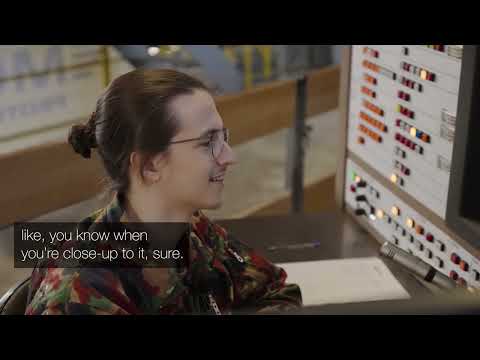 4:40
This 1970s tank simulator drives through a tiny world
12M views • 4 years ago
Tom Scott
Tom Scott visits the Swiss Military Museum to see the last surviving 1970s tank-driving simulator. It uses a real camera moving over a miniature model landscape rather than any computer graphics.
 11:39
The Unbeatable Game from the 60s: Dr NIM
7.2M views • 10 years ago
Stand-up Maths
Matt Parker of Stand-up Maths explains single-pile Nim and the trick that wins it, using Dr NIM, a 1960s mechanical plastic computer that plays perfectly. He teaches the strategy so viewers can beat friends.
 17:05
How Physicists Created a Holographic Wormhole in a Quantum Computer
2.4M views • 3 years ago
Quanta Magazine
Quanta Magazine explains the 2022 experiment that claimed to create a holographic wormhole on Google's quantum computer. The description now notes that a later independent analysis questioned whether any wormhole was created.
 12:40
Tomb Raider on the Nintendo Game Boy Advance is incredible | MVG
906K views • 4 years ago
Modern Vintage Gamer
Modern Vintage Gamer looks at OpenLara, an open source Tomb Raider engine, running on the Game Boy Advance. The video explains how the port achieves playable speeds on the GBA's slow ARM CPU, with input from the developer XProger.
 9:48
Bitcoin Q&A: How Do I Secure My Bitcoin?
117K views • 9 years ago
aantonop
Andreas Antonopoulos answers a question about how to secure your Bitcoin. He covers holding your own keys, backing up the 12 to 24 word seed phrase, and the tradeoffs of custodial accounts, phone wallets and hardware wallets.
 9:32
Disney's Practical Guide to Path Tracing
914K views • 10 years ago
Walt Disney Animation Studios
Walt Disney Animation Studios' short introduction to path tracing, showing how rays are traced and bounced through a virtual scene to simulate light. It explains how this approach is used in animated films.
 18:46
A COMPLETELY Upgradeable Laptop? - Framework Laptop Review
6.2M views • 5 years ago
Linus Tech Tips
Linus Tech Tips reviews the first Framework Laptop, a fully repairable and upgradeable machine. The reviewer expected a flimsy chunky device and was happily surprised.
 4:42
Why Your Webcam Still SUCKS!
552K views • 6 years ago
Techquickie
A short Techquickie explainer on why laptop webcams are much worse than phone cameras. It covers sensor size, image processing, and the interface differences between laptops and phones, with input from a Logitech engineer.
 10:20
STOP Buying ANDROID TV Boxes!
4.6M views • 3 years ago
Linus Tech Tips
Linus Tech Tips warns against cheap Android TV boxes, many of which ship with preinstalled malware. It looks at several boxes and suggests safer alternatives such as Chromecast and Nvidia Shield.
 10:58
DON'T Buy a Used Mining GPU! - $h!t Manufacturers Say
3.7M views • 5 years ago
Linus Tech Tips
Linus Tech Tips looks at whether buying a used GPU that was previously used for crypto mining is a good idea, as miners prepare to sell off cards. The video discusses how mining affects wear on cards and what to watch for.
 14:20
Reveal Invisible Motion With This Clever Video Trick
2.8M views • 6 years ago
Steve Mould
Steve Mould explains motion amplification and video magnification, techniques that find tiny changes in video invisible to the eye and exaggerate them. He covers the MIT research and industrial uses such as diagnosing vibrating machinery.
 8:35
Tesla Autopilot Crashes into Motorcycle Riders - Why?
1.1M views • 4 years ago
FortNine
FortNine looks at why Tesla Autopilot has rear-ended motorcyclists, speculating that the vision system misreads motorcycle taillights as a distant car. It argues that radar and other sensors would help.
 11:27
CGA Graphics - Not as bad as you thought!
2.4M views • 10 years ago
The 8-Bit Guy
The 8-Bit Guy covers IBM's 1981 CGA graphics system, including how composite output and artifacting produced extra colors beyond the nominal palette. He argues CGA looked better in period than it does on RGB monitors.
 10:44
P vs. NP and the Computational Complexity Zoo
3.7M views • 12 years ago
hackerdashery
An 11-minute animated introduction to P vs. NP and the wider landscape of complexity classes, inspired by the Complexity Zoo wiki. It assumes no background in computer science.
 15:09
Mouse Cursor History (and why I made my own)
3M views • 8 years ago
Posy
Posy gives a short history of the computer mouse cursor, from early straight pointers to the tilted arrow, comparing Apple and Windows designs. He then explains why he designed his own cursor set and offers it as a free download.
 11:28
Here's What's Preventing You From Finishing Projects
147K views • 5 years ago
Zack Freedman
Zack Freedman gives advice on why makers fail to finish projects, including scrapping bad ideas, showing work publicly and writing a plan that keeps projects fun. It is aimed at hardware DIY but generalizes.
 18:41
Emulating the DX7 the HARD way
23K views • 5 years ago
plgDavid
An episode of Plogue's chipresearch series on emulating the Yamaha DX7 from the hardware up. It covers the sub CPU and main CPU, address map investigation, cartridges, firmware analysis and a skeleton MAME driver.