computer world
 7:26
Tomorrow's World: Nellie the School Computer 15 February 1969 - BBC
113K views • 16 years ago
BBC
A 1969 BBC Tomorrow's World segment about Nellie, a school computer used by pupils at Forest Grammar School to solve equations and play music. Students learn programming and maintenance, and act out binary arithmetic.
 13:44
The Story of Another World on the Amiga | MVG
350K views • 4 years ago
Modern Vintage Gamer
Modern Vintage Gamer explains how Eric Chahi built Another World on the Amiga 500, using 2D polygons, rotoscoping and clever techniques to run well on a stock 7MHz machine.
 10:00
SICP / What is "Computer Science" ?
131K views • 20 years ago
LarryNorman
An excerpt from Hal Abelson's opening SICP lecture introducing computer science and contrasting declarative and imperative knowledge. He argues that computer science is not really a science and is more like magic or engineering of ideas.
 9:16
World Builder (high quality)
3.3M views • 17 years ago
BranitFX
World Builder is a short film by Bruce Branit in which a man uses holographic tools to build a world for the woman he loves.
 9:37
Characters, Symbols and the Unicode Miracle - Computerphile
2.1M views • 13 years ago
Computerphile
Tom Scott explains for Computerphile how Unicode and UTF-8 grew out of messy older character encodings to become the web's standard. It covers why the design works and how it handles worldwide text.
 6:53
8-bit computer update
2.8M views • 10 years ago
Ben Eater
Ben Eater's short update announcing his plan to build another 8-bit computer from scratch on camera. It kicks off the breadboard computer series that became widely known.
 19:43
U.S. NAVY BASIC MECHANISMS OF FIRE CONTROL COMPUTERS MECHANICAL COMPUTER INSTRUCTIONAL FILM 27794
225K views • 8 years ago
PeriscopeFilm
A 1953 US Navy training film on the basic mechanisms in fire control computers: shafts, gears, cams and differentials. It shows how these mechanical parts compute ship and target firing solutions.
 19:26
history of the entire world, i guess
185.5M views • 9 years ago
bill wurtz
A fast, absurdist 19-minute animated run through the history of the whole world, narrated and scored by Bill Wurtz in his distinctive style. It compresses millennia of events into jokes, songs and quick visuals.
 10:13
The Problem with Time & Timezones - Computerphile
4.4M views • 12 years ago
Computerphile
Tom Scott explains for Computerphile why handling time and timezones in code is so hard, walking through a simple web app that computes how long ago something happened. It covers the quirks of timezones and calendars and ends in an exasperated rant.
 8:21
Why Electronic Voting is a BAD Idea - Computerphile
2.3M views • 11 years ago
Computerphile
Tom Scott explains for Computerphile why electronic voting is a bad idea, arguing that paper ballots are transparent, auditable and hard to tamper with at scale. He covers why moving voting to phones, tablets or computers undermines trust and verifiability.
 15:12
JPEG DCT, Discrete Cosine Transform (JPEG Pt2)- Computerphile
697K views • 11 years ago
Computerphile
Mike Pound explains the discrete cosine transform and how it underpins JPEG compression. It is part two of Computerphile's JPEG series.
 17:40
3D Gaussian Splatting! - Computerphile
273K views • 2 years ago
Computerphile
A Computerphile video in which Dr Mike Pound and PhD student Lewis Stuart explain 3D Gaussian splatting, a quick technique that turns photos of a scene into a 3D model without much compute. It includes a demo and compares the approach to NeRFs.
 8:45
Chip & PIN Fraud Explained - Computerphile
851K views • 11 years ago
Computerphile
Computerphile interview with Prof. Ross Anderson on how Chip and PIN payment systems are being compromised, and the attacks researchers have seen.
 9:16
Floating Point Numbers - Computerphile
2.5M views • 12 years ago
Computerphile
Tom Scott explains for Computerphile how floating point numbers work, why moving the binary point is fast, and why it handles money badly.
 6:14
Turing & The Halting Problem - Computerphile
919K views • 12 years ago
Computerphile
A Computerphile video in which Mark Jago of the University of Nottingham explains Turing's halting problem and how it led to the blueprint for the modern computer.
 16:48
Yesterday's Computer of Tomorrow: The Xerox Alto │Smalltalk-76 Demo
38K views • 8 years ago
Computer History Museum
A Computer History Museum demonstration with Dan Ingalls of Smalltalk-76 running on a Xerox Alto, recorded in 2017. He shows the live environment and discusses the system.
 13:52
Ch(e)at GPT? - Computerphile
617K views • 3 years ago
Computerphile
Computerphile video in which Mike Pound explains a University of Maryland paper on watermarking LLM output. The method biases token choices so generated text can later be detected statistically.
 19:10
How not to be ignorant about the world | Hans and Ola Rosling
3.1M views • 12 years ago
TED
Hans Rosling and his son Ola run an audience quiz with global population, health and income data to show how wrong most people are about the world. Ola then gives four ways to get less ignorant.
 11:11
The Agricultural Revolution: Crash Course World History #1
17.7M views • 14 years ago
CrashCourse
The first episode of Crash Course World History, in which John Green covers the shift from hunting and gathering to agriculture and how it shaped civilization. It is delivered fast and with jokes.
 4:40
This 1970s tank simulator drives through a tiny world
12M views • 4 years ago
Tom Scott
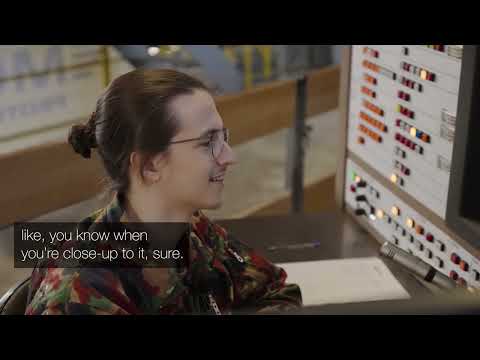
Tom Scott visits the Swiss Military Museum to see the last surviving 1970s tank-driving simulator. It uses a real camera moving over a miniature model landscape rather than any computer graphics.
 7:09
What Is the RNA World Hypothesis?
886K views • 10 years ago
Stated Clearly
Stated Clearly explains the RNA world hypothesis, which resolves the chicken-or-egg problem of genes versus enzymes by proposing that RNA once did both jobs. It outlines how evolution could begin with RNA chains alone.
 7:42
Is a round Minecraft world possible?
669K views • 10 years ago
Jeija
Jeija demonstrates a modified Minetest game with a spherical planet, using a grid transform to make a voxel world round. It includes the orbit math and download links for the spheretest build.
 11:17
EEVblog #822 - World's Worst Tablet Computer Teardown
1.2M views • 10 years ago
EEVblog
Dave Jones of EEVblog tears down an Esinomed Infoview medical tablet computer built around an 800MHz AMD Geode board, exposing extremely shoddy construction and design.
 6:57
Nathan For You - Fixing Computer Repair
2.2M views • 9 years ago
Comedy Central
A Nathan For You sketch in which Nathan Fielder tackles customers' privacy fears at computer repair shops with an awkwardly absurd business solution. It is a comedy clip from the Comedy Central show.
 12:23
Typesetters in the '80s - Computerphile
105K views • 12 years ago
Computerphile
Professor Brailsford of the University of Nottingham describes how the university set out to print its own mathematics exam papers in the 1980s. The story centers on getting a Mergenthaler Linotron 202 typesetter to work with their own software.
 6:08
Immigration, World Poverty and Gumballs
6.8M views • 16 years ago
NumbersUSA
Roy Beck's short gumball presentation using World Bank and Census data to argue that letting people immigrate to the US cannot solve world poverty because the numbers are so large. It is made by NumbersUSA, an immigration-restriction advocacy group.
 6:53
Building The World's First Computer - Greeks, Clocks and Rockets - Antikythera Mechanism Episode 1
1.1M views • 9 years ago
Clickspring
The first episode of Clickspring's series on reproducing the Antikythera Mechanism by hand, laying out the plan and the history. The series follows a machinist building the ancient Greek device with traditional tools and methods.
 12:35
The Mathematics of Quantum Computers | Infinite Series
718K views • 9 years ago
PBS Infinite Series
A PBS Infinite Series episode explaining the mathematics of quantum computers, including how qubits store complex numbers and how quantum computation differs from classical computation. Hosted by Kelsey Houston-Edwards.
 16:37
Why the world population won’t exceed 11 billion | Hans Rosling | TGS.ORG
2M views • 10 years ago
THINK Global School
Hans Rosling uses population statistics to explain why the world population will level off rather than grow without limit. He shows that falling child mortality and rising prosperity lead to smaller families.
 12:06
Macworld Boston 1997-The Microsoft Deal
1.9M views • 20 years ago
JoshuaG
Footage from the Macworld Boston 1997 keynote where Steve Jobs announces Apple's deal with Microsoft, with Bill Gates appearing on the big screen. The almost bankrupt Apple took Microsoft's investment, and the crowd reacted badly, including booing over Internet Explorer as the default browser.
 18:31
The Fallen of World War II
15.1M views • 10 years ago
Neil Halloran
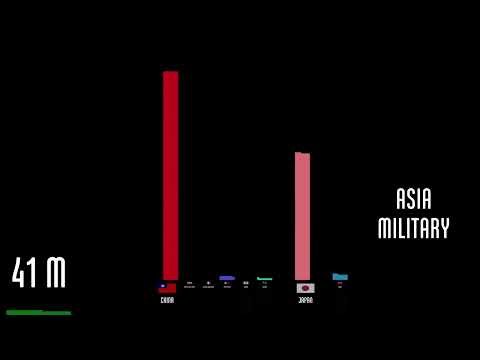
Neil Halloran's animated, data-driven documentary visualizes the human cost of World War II and compares it with other wars and the trend toward fewer war deaths in recent decades.
 13:48
The Joy of Programming in Jai - Part 1: Hello World
36K views • 6 years ago
Nuno Afonso
The first part of a series on programming in Jai, Jonathan Blow's in-development language. It covers compiling, writing hello world and using code from other files.
 6:35
The Maths of General Relativity (1/8) - Spacetime and Worldlines
421K views • 5 years ago
ScienceClic English
The first of an eight-part ScienceClic series building general relativity, covering worldlines, proper time and coordinate systems with animated visualizations.
 9:01
Super Mario World -- Credits Warp in 5:59.6 (First Time Ever on Console)
4.3M views • 11 years ago
SethBling
SethBling performs the first credits warp in Super Mario World on a real SNES console, a glitch that plays the ending without beating Bowser. The run relies on pixel-perfect positioning and tools such as a helper ROM hack.
 5:51
Susan Kare explains Macintosh UI ergonomics on the Computer Chronicles (1984)
51K views • 6 years ago
erg0steur
A 1984 Computer Chronicles segment in which Susan Kare explains the ergonomics and interface design of the original Macintosh. She introduces the interface step by step for newcomers.
 11:55
Super Mario World Credits Warp Explained
638K views • 11 years ago
Frieze
A speedrunner-made explanation of the Super Mario World credits warp, an arbitrary code execution glitch that jumps the game straight to the ending. It simplifies the underlying assembly and memory behavior with animations so non-experts can follow.
 9:35
Macworld San Francisco 2000-The Mac OS X Introduction (Pt.1)
787K views • 20 years ago
JoshuaG
An edited excerpt of Steve Jobs introducing Mac OS X at Macworld San Francisco in 2000. It covers the Aqua interface, Quartz graphics built on PDF, and the Classic, Carbon and Cocoa application environments.
 4:06
DEC LAB-8/e (PDP-8/e) playing music
50K views • 18 years ago
Philipp Hachtmann
A 1971 DEC LAB-8/e (PDP-8/e) minicomputer plays music by inducing noise into a nearby AM radio. The software is Richard Wilson's 1975 Music Compiler running under OS/8.
 14:02
Computers for Cynics 2 - It All Went Wrong at Xerox PARC
23K views • 14 years ago
TheTedNelson
Ted Nelson, in his Computers for Cynics series, gives a critical history of Xerox PARC's vision of personal computing. He lists what he sees as the limitations and wrong turns in PARC's approach to the desktop and documents.
 18:57
Why the Soviet Computer Failed
4.2M views • 4 years ago
Asianometry
An Asianometry explainer on why the Soviet Union, once a leading computing power, fell far behind the US in computers by the 1980s. It traces the gap from the 1960s onward despite strong state support for science.