computing history
 15:09
Mouse Cursor History (and why I made my own)
3M views • 8 years ago
Posy
Posy gives a short history of the computer mouse cursor, from early straight pointers to the tilted arrow, comparing Apple and Windows designs. He then explains why he designed his own cursor set and offers it as a free download.
 18:57
Why the Soviet Computer Failed
4.2M views • 4 years ago
Asianometry
An Asianometry explainer on why the Soviet Union, once a leading computing power, fell far behind the US in computers by the 1980s. It traces the gap from the 1960s onward despite strong state support for science.
Topic match · History of computing 20:13
The Most Powerful Computers You've Never Heard Of
13.7M views • 4 years ago
Veritasium
Veritasium traces analog computers from the Antikythera mechanism and Kelvin's tide-predicting machines to fire control and modern analog approaches. It explains how these machines computed continuously rather than digitally.
Topic match · History of computing 3:39
(1/4) Intro/History: Introducing a 100-year-old mechanical computer
476K views • 11 years ago
engineerguy
The first of four short videos from Bill Hammack (engineerguy) introducing and giving the history of a 100-year-old mechanical computer, Michelson's harmonic analyzer. The series goes on to explain Fourier synthesis, analysis and operation of the machine.
 11:11
The Agricultural Revolution: Crash Course World History #1
17.7M views • 14 years ago
CrashCourse
The first episode of Crash Course World History, in which John Green covers the shift from hunting and gathering to agriculture and how it shaped civilization. It is delivered fast and with jokes.
 19:27
Quantum Computing Expert Explains One Concept in 5 Levels of Difficulty | WIRED
8M views • 8 years ago
WIRED
IBM's Dr. Talia Gershon explains quantum computing to five people of increasing expertise: a child, teen, college student, grad student and professional. The WIRED series format moves from simple analogies to technical detail.
 3:31
Trusted Computing? Yes or No
47K views • 20 years ago
Robin Good
A four-minute 2006 explainer on trusted computing, describing what it is and whether users should support it, with a skeptical DRM angle.
 19:26
history of the entire world, i guess
185.5M views • 9 years ago
bill wurtz
A fast, absurdist 19-minute animated run through the history of the whole world, narrated and scored by Bill Wurtz in his distinctive style. It compresses millennia of events into jokes, songs and quick visuals.
 9:41
How Steve Jobs got the ideas of GUI from XEROX
272K views • 12 years ago
Ringo Pebam
A short video telling how Xerox PARC invented the graphical user interface and how Steve Jobs's 1979 visit influenced Apple's Lisa.
Topic match · History of computing 9:09
England: South Sea Bubble - The Sharp Mind of John Blunt - Extra History - Part 1
3.5M views • 11 years ago
Extra History
The first part of Extra History's animated miniseries on the South Sea Bubble. It explains how England's government debt led Robert Harley to turn to financier John Blunt, whose schemes began inflating artificial demand for shares.
 21:42
Future Computers Will Be Radically Different (Analog Computing)
13.2M views • 4 years ago
Veritasium
Veritasium explains why analog computing may suit AI workloads, covering old analog computers, The Analog Thing and Mythic's analog chips that use flash memory for neural network inference. It argues digital hardware is hitting limits.
 12:23
Typesetters in the '80s - Computerphile
105K views • 12 years ago
Computerphile
Professor Brailsford of the University of Nottingham describes how the university set out to print its own mathematics exam papers in the 1980s. The story centers on getting a Mergenthaler Linotron 202 typesetter to work with their own software.
Topic match · History of computing 17:49
How Japan Learned Semiconductors
228K views • 4 years ago
Asianometry
Asianometry traces the 30-year rise and peak of Japan's semiconductor industry from the 1950s to the 1980s, covering how a postwar country gained competence in an emerging technology.
Topic match · History of computing 24:57
The Man Who Accidentally Killed The Most People In History
43.5M views • 4 years ago
Veritasium
Veritasium tells the story of Thomas Midgley Jr., who introduced leaded gasoline and CFCs, and covers the science behind lead exposure and ozone damage. It also touches on isotope geochemistry used to uncover the history.
 3:05
IBM Selectric Typewriter & its digital to analogue converter
1.1M views • 16 years ago
engineerguy
Bill Hammack of engineerguy uses slow motion video to show how the IBM Selectric typewriter works. He focuses on its fully mechanical digital-to-analog converter, which turns key presses into rotation of the type ball.
Topic match · History of computing 23:29
How Imaginary Numbers Were Invented
22.7M views • 5 years ago
Veritasium
Veritasium tells the history of how imaginary numbers arose from the quest for a general solution to the cubic equation, including the duels and secrecy among Renaissance mathematicians. It argues math had to give up the requirement that it mirror reality.
 12:23
Xanadu Basics 1a - VISIBLE CONNECTION
20K views • 8 years ago
TheTedNelson
Ted Nelson explains the original Xanadu hypertext idea of visible connection, the notion that links between documents should be shown and preserved. He argues that the Web and current document standards lost this concept.
Topic match · History of computing 7:09
A New History for Humanity – The Human Era
10.1M views • 9 years ago
Kurzgesagt – In a Nutshell
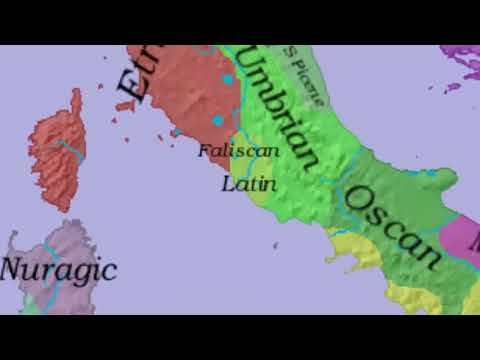
Kurzgesagt explains the Holocene or Human Era calendar, which adds 10,000 years to the current year to anchor dates to the start of human civilization. It argues this gives a more sensible frame for human history.
 18:28
w
3.7M views • 7 years ago
jan Misali
jan Misali traces the history of the letter W, including why it is called double u. The video is part of a series of deep dives into individual letters.
 17:52
Holy Post - Race in America
1.7M views • 6 years ago
Holy Post Media
Phil Vischer of VeggieTales and Holy Post gives an 18-minute history of racial injustice in America, covering why anger persists despite civil rights laws. It is told from an evangelical Christian perspective and adapted from a class he co-taught.
 4:40
This 1970s tank simulator drives through a tiny world
12M views • 4 years ago
Tom Scott
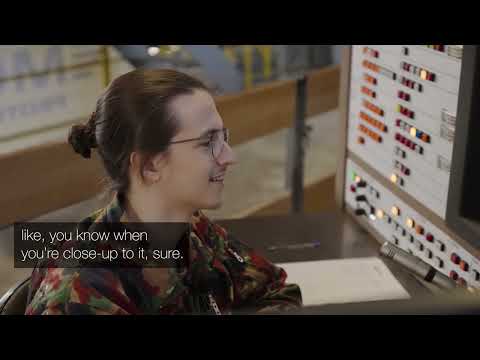
Tom Scott visits the Swiss Military Museum to see the last surviving 1970s tank-driving simulator. It uses a real camera moving over a miniature model landscape rather than any computer graphics.
Topic match · History of computing 58:53
Pounds, shillings, and pence: a history of English coinage
1.2M views • 5 years ago
Lindybeige
Lindybeige gives an hour-long history of English coinage and the problems of maintaining a trustworthy currency. It ends with an explanation of why the pounds, shillings and pence system worked so well.
 13:59
MENACE: the pile of matchboxes which can learn
453K views • 8 years ago
Stand-up Maths
Matt Parker of Stand-up Maths demonstrates MENACE, Donald Michie's 1961 machine made of matchboxes that learns to play noughts and crosses through reinforcement. He builds and trains a physical version.
Topic match · History of computing 9:39
What Happened Before History? Human Origins
24.3M views • 10 years ago
Kurzgesagt – In a Nutshell
Kurzgesagt's animated overview of human origins and the vast prehistory before recorded history. It covers how modern humans emerged and spread.
 19:37
Why is Japan So Weak in Software?
968K views • 2 years ago
Asianometry
Asianometry examines why Japan's software industry has lagged despite its hardware strengths. It looks at dependence on US software and the low prestige of programming.
Topic match · History of computing 9:20
An astonishing old calculator - Numberphile
794K views • 8 years ago
Numberphile
Cliff Stoll shows and explains his two Friden EC-132 electronic calculators for Numberphile. The video covers how these early machines worked, including their unusual acoustic delay line memory.
Topic match · History of computing 1:20
Paul Otlet, visioning a web in 1934
102K views • 18 years ago
Attila Gárdos
A one-minute clip about Paul Otlet, the Belgian bibliographer who in 1934 imagined users accessing a remote database through an electric telescope over a phone line. It presents his vision as a precursor of the web.
Topic match · History of computing 14:03
The Computer Designed To Die In Microseconds
408K views • 3 years ago
Scott Manley
Scott Manley tells the story of a computerized telemetry system built to sit at the heart of a nuclear test device in place of the plutonium pit, designed to transmit data in the microseconds before it was destroyed.
Topic match · History of computing 33:16
Work.
1.7M views • 3 years ago
Historia Civilis
Historia Civilis traces the history of work and time discipline, comparing modern working hours with those of medieval peasants and the changes brought by clocks and industrialization. It draws on works such as Schor's The Overworked American.
 27:13
The Longest Year in Human History (46 B.C.E.)
7.4M views • 7 years ago
Historia Civilis
Historia Civilis tells the story of 46 BCE, the 445-day year in which Julius Caesar reformed the Roman calendar. It covers the political context, including the civil war, Cato and Cicero.
 10:00
How A London Orchestra Broke International Law
270K views • 7 years ago
12tone
12tone tells the story of pitch inflation and how concert A came to be standardized at 440 Hz, including attempts at legal standards. It is a short music history explainer.
 11:45
The History of Europe: Every Year
33.9M views • 8 years ago
Cottereau
An animated map showing the borders and populations of European countries for every year since 400 BC. Vassal states and colonies are excluded from population counts.
 12:09
I promise this story about microwaves is interesting.
9M views • 5 years ago
Tom Scott
Tom Scott investigates the claim that the microwave was invented to heat hamsters, and interviews James Lovelock about freezing and microwave-thawing hamsters in the 1950s. It traces early magnetron uses beyond radar.
 7:16
Unix and Google
9K views • 10 years ago
FOAM
A short animated simulation comparing how Multics and Unix were developed, showing why Unix's small composable programs and pipes gave it a efficiency advantage. It frames Unix as a moonshot achievable by a small team.
Topic match · History of computing 21:32
Alexander Pope Wrote a 35-Page Takedown of a Historian
10.3M views • 5 years ago
CGP Grey
CGP Grey tells the story of Alexander Pope's long takedown of a historian, Thomas Hearne, framed around the quirks of library books and archival research. It is a funny, digressive video essay about literary feuds and tracking down original sources.
 1:03:31
4.5 Billion Years in 1 Hour
17.9M views • 2 years ago
Kurzgesagt – In a Nutshell
Kurzgesagt's hour-long animated film that compresses Earth's 4.5 billion year history into one hour, roughly a million years per second. It follows the evolution of life through to humanity's tiny final stretch.
 25:10
How an Atomic Clock Really Works: Inside the HP 5061A Cesium Clock
464K views • 6 years ago
CuriousMarc
CuriousMarc powers up a vintage HP 5061A cesium beam clock and explains both the quantum principle and the HP implementation in detail. It is part of a longer atomic clock series.
Topic match · History of computing 10:58
Flaw in the Enigma Code - Numberphile
5.4M views • 13 years ago
Numberphile
Numberphile's Dr James Grime explains the flaw in the Enigma machine, namely that a letter could never be encrypted to itself, and how that helped the Allies break the code. It touches on the Bombe and Alan Turing.
Topic match · History of computing 21:20
Cracking Enigma in 2021 - Computerphile
2.9M views • 5 years ago
Computerphile
Dr Mike Pound of Computerphile shows how a modern laptop can crack Enigma, using a ciphertext-only attack based on an older paper. He compares it with the tooling in CrypTool.
Topic match · History of computing 21:09
The Origins of Russian Authoritarianism
1.9M views • 5 years ago
Kraut
Kraut traces centuries of political development, from Mongol rule and the Orthodox church to Muscovite autocracy, that shaped Russia's authoritarian state. It uses countryball animation and compares Russia with Europe and China.