cosmic rays
 23:03
The Universe is Hostile to Computers
26.5M views • 5 years ago
Veritasium
Veritasium explains how cosmic rays and other particles flip bits in computer memory, with examples including a Belgian election count error, plane incidents and game glitches. It is inspired by a RadioLab episode on bit flips.
 28:33
Terence Tao on the cosmic distance ladder
6.5M views • 1 year ago
3Blue1Brown
Terence Tao and Grant Sanderson of 3Blue1Brown walk through the cosmic distance ladder, showing how humans measured distances from the Earth to the Moon, Sun, planets and beyond. It includes animations and the history behind each step.
 1:16:17
Terence Tao: The Cosmic Distance Ladder, UCLA
203K views • 16 years ago
UCLA
Terence Tao's AMS Einstein Public Lecture at UCLA on the cosmic distance ladder, the chain of methods astronomers use to measure distances from the Earth to distant galaxies. It is aimed at a general audience.
 2:39
Stanford Professor Andrei Linde celebrates physics breakthrough
3.2M views • 12 years ago
Stanford
A short Stanford video in which Chao-Lin Kuo surprises Professor Andrei Linde with BICEP2 evidence supporting cosmic inflation, the first apparent images of primordial gravitational waves.
 1:00:34
Chuck Moore's Fireside Chat 2011
6K views • 14 years ago
GreenArraysInc
Chuck Moore, creator of Forth, gives his annual Fireside Chat at Forth Day 2011 at Stanford. He talks about his multi-core GreenArrays chip design and demonstrates code running on it.
 6:51
Star Size Comparison 2
48.7M views • 10 years ago
morn1415
A visual scale comparison of stars and cosmic objects, from planets up to some of the largest known stars, set to music. It is meant to convey the vastness of the universe.
 40:13
"Programming a 144-computer chip to minimize power" - Chuck Moore (2013)
19K views • 5 years ago
Strange Loop Conference
Chuck Moore, inventor of Forth, presents GreenArrays' 144-core asynchronous chip at Strange Loop 2013. He explains how idle cores draw almost no power and how tight code minimizes energy use.
 46:40
Andrew Kelley: A Practical Guide to Applying Data Oriented Design (DoD)
415K views • 2 years ago
ChimiChanga
Andrew Kelley, creator of Zig, presents practical data-oriented design techniques for shrinking memory footprint and making programs cache friendly. He ends with a case study of how these ideas sped up the Zig compiler.
 3:00:57
Joe Rogan Experience #606 - Randall Carlson
27.9M views • 11 years ago
PowerfulJRE
A three-hour Joe Rogan podcast with Randall Carlson, builder and geomythologist, on catastrophic geological events, cosmic impacts and climate at the end of the last glacial period.
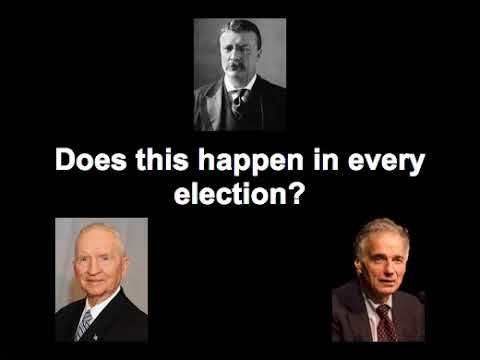 3:35
How our voting system (and IRV) betrays your favourite candidate
35K views • 12 years ago
The Center for Election Science
The Center for Election Science explains favorite betrayal in instant-runoff voting: in some elections, ranking your favorite first can cause your least favorite to win. It contrasts this with plurality voting's spoiler problem.
 11:41
TRUE Limits Of Humanity – The Final Border We Will Never Cross
23.6M views • 5 years ago
Kurzgesagt – In a Nutshell
Kurzgesagt explains why, even with science-fiction technology, most of the universe is permanently out of reach because of cosmic expansion and finite resources.
 1:27:46
CppCon 2014: Mike Acton "Data-Oriented Design and C++"
862K views • 12 years ago
CppCon
Mike Acton of Insomniac Games argues that a program's purpose is transforming data, and shows how common C++ approaches work against that in performance-critical game development. He covers cache behavior, data layout and the limits of compilers.
 9:01
Powers of Ten™ (1977)
9.5M views • 16 years ago
Eames Office
The Eames Office's 1977 film Powers of Ten starts at a picnic in Chicago and zooms out by a factor of ten every ten seconds to the edge of the universe. It then zooms inward to a proton in a carbon atom.
 3:31
Carl Sagan - Pale Blue Dot
8.7M views • 17 years ago
carlsagandotcom
Carl Sagan's narration of the Pale Blue Dot passage, reflecting on the Voyager photograph of Earth as a tiny speck in space. It is a short meditation on humanity's smallness and shared home.
 17:19
Growing Human Neurons on a Home Made Electrode Array
3.4M views • 6 years ago
The Thought Emporium
The Thought Emporium builds a homemade multi-electrode array, grows human neurons on it and attempts to take readings. It is the first part of a series aimed at connecting living neurons to a computer.
 4:17
The Hubble Ultra Deep Field in 3D
9.6M views • 17 years ago
Deep Astronomy
A short video built around an animation of the roughly 10,000 galaxies in the Hubble Ultra Deep Field, placed at their measured redshift distances. It gives a brief history of deep field images and ends with a 3D fly-through.
 1:44:34
Is Starlink A Secret Radar Constellation?
498K views • 6 months ago
Noise In Space
A 105-minute technical deep dive from Noise In Space evaluating whether Starlink satellites could work as synthetic aperture radar. It covers SAR signal-to-noise, amplifiers, antennas, duplexing, phased array beamforming and simulations of V2 Mini and V3 satellites.
 10:43
This ESP32 Antenna Array Can See WiFi
1.2M views • 1 year ago
Jeija
The creator of ESPARGOS, an ESP32-based antenna array from the University of Stuttgart, explains how it senses phase and amplitude of WiFi signals to localize devices and build a WiFi camera. It demos the Python library and project.
 11:05
How to Win an Interstellar War
13.3M views • 2 years ago
Kurzgesagt – In a Nutshell
A Kurzgesagt video exploring how advanced civilizations might wage war across light years. It looks at weapons such as relativistic beams and what they would do.
 9:29
The Most Extreme Explosion in the Universe
11.6M views • 3 years ago
Kurzgesagt – In a Nutshell
A Kurzgesagt animation on supernovae, the most powerful explosions in the universe. It explains their role in creating elements and what would happen to Earth if one occurred nearby.
 19:45
Building a realistic artificial sun (for dark winter days)
3.3M views • 6 years ago
DIY Perks
DIY Perks builds a realistic artificial sun for dark winters, using a powerful water-cooled LED, a satellite dish reflector for near-parallel rays, and a scattering layer to mimic the blue sky. The video explains the optics behind why most lamps do not look like sunlight and shows the build and its results.
 1:00:11
CppCon 2015: Kate Gregory “Stop Teaching C"
181K views • 11 years ago
CppCon
Kate Gregory argues at CppCon 2015 that C++ should be taught without starting from C: no char* strings, printf or raw arrays at first, with references before pointers.
 1:04:52
'A Universe From Nothing' by Lawrence Krauss, AAI 2009
2.6M views • 17 years ago
Richard Dawkins Foundation for Reason & Science
Lawrence Krauss's 2009 talk on the current picture of the universe, how it will end and how it could have come from nothing. It covers the expanding universe, cosmic background radiation and the cosmological constant.
 1:15:57
The Great Global Warming Swindle Full Movie
967K views • 15 years ago
Kazza0423
A 2007 Channel 4 documentary by Martin Durkin arguing that human-caused global warming is overstated or a scam. It features contrarian scientists such as Richard Lindzen and promotes sunspot and cosmic-ray explanations for temperature change. Its claims are rejected by mainstream climate science.
 1:18:57
Kedi - Full Length Documentary
0 views • 9 years ago
vlogbrothers
Kedi is a feature documentary following seven street cats of Istanbul and the people who care for them. It portrays the relationship between the city and its cats.
 28:06
MountainWest RubyConf 2014 - But Really, You Should Learn Smalltalk
27K views • 12 years ago
Confreaks
Noel Rappin's MountainWest RubyConf talk introduces Smalltalk to Ruby programmers. He compares the two languages' object models, blocks, 1-based arrays, simple syntax and live programming environment, and walks through sample code.
 9:32
Disney's Practical Guide to Path Tracing
914K views • 10 years ago
Walt Disney Animation Studios
Walt Disney Animation Studios' short introduction to path tracing, showing how rays are traced and bounced through a virtual scene to simulate light. It explains how this approach is used in animated films.
 30:37
High-performance Tree Wrangling, the APL Way // Aaron Hsu // Dyalog '18
6K views • 7 years ago
Dyalog User Meetings
Aaron Hsu shows how to manipulate and transform tree data in APL using arrays and inverted tables instead of pointers. He claims much smaller code, better performance and easier parallelisation.
 12:55
Humanity was born way ahead of its time. The reason is grabby aliens.
1.7M views • 5 years ago
Rational Animations
Rational Animations explains Robin Hanson's grabby aliens model, which argues that humanity looks suspiciously early in cosmic history. Expanding civilizations set a deadline that explains our timing and bears on the Fermi paradox.
 1:32:47
Data-Oriented Demo: SOA, composition
201K views • 11 years ago
Jonathan Blow
A live-coded demo by Jonathan Blow showing how to get object-system-style expressiveness in a data-oriented way, covering structure-of-arrays layouts and composition. It shows features of his Jai language that make programs fast.
 0:46
Modos Paper Monitor Typing Demo
18K views • 4 years ago
Modos
A short demo of typing on the Modos Paper Monitor, an open e-ink monitor, using 4-level grayscale to show low latency.
 16:36
JWST just made the "Crisis in Cosmology" WORSE
1.3M views • 3 years ago
Dr. Becky
Astrophysicist Dr. Becky explains the Hubble tension, the disagreement between expansion-rate measurements from the cosmic microwave background and the distance ladder, and what early JWST Cepheid observations add.
 4:11
Laniakea: Our home supercluster
8.3M views • 12 years ago
nature video
A short Nature video on the discovery that our home supercluster is Laniakea, redefined by mapping the flow of galaxies rather than their density. It names the structure with a Hawaiian word meaning 'immeasurable heaven'.
 4:18
4chan on Fox
1M views • 19 years ago
SK
A 2007 Fox news segment that portrays 4chan users as hardcore hackers.
 6:19
"The World is a Corporation" (Network, 1976)
1M views • 12 years ago
Pedro Palatnik
A six-minute clip of the famous speech from the 1976 film Network in which the world is described as a corporation. It portrays a world run by corporate interests.
 1:02
William Shatner Tries To Describe The Awe of Space, Jeff Bezos Shoots Champagne Like An Asshole
441K views • 5 years ago
Ron Jones
A one-minute clip of William Shatner trying to describe the awe of space after a Blue Origin flight while Jeff Bezos sprays champagne.
 2:44
Galaxy Song - Monty Python's The Meaning of Life
9.5M views • 17 years ago
Monty Python
The Galaxy Song from Monty Python's The Meaning of Life, a comic musical tour of the size and motion of the galaxy and our place in it.
 1:32
Google Chrome Dear Sophie
310K views • 12 years ago
THE AD FACTORY
Google's "Dear Sophie" Chrome ad, in which a father emails his daughter's life moments to her future self over the years. It portrays an email account as a lifelong keepsake.