crash test
 2:52
If money was no object, should you run every medical test?
263K views • 8 years ago
Medlife Crisis
A doctor from Medlife Crisis explains in under three minutes why even a rich patient should not simply order every medical test, touching on pre-test probability and Bayesian reasoning. False positives make blanket testing counterproductive.
 34:29
I took an IQ test to explain what's wrong with them
13.1M views • 3 years ago
Veritasium
Veritasium takes an IQ test and examines what IQ measures, its history including military use and eugenics, its controversies, and how it correlates with life outcomes. Experts including Cecil Reynolds and Stuart Ritchie contribute.
 11:11
The Agricultural Revolution: Crash Course World History #1
17.7M views • 14 years ago
CrashCourse
The first episode of Crash Course World History, in which John Green covers the shift from hunting and gathering to agriculture and how it shaped civilization. It is delivered fast and with jokes.
 21:14
The medical test paradox, and redesigning Bayes' rule
1.4M views • 5 years ago
3Blue1Brown
3Blue1Brown explains why positive results on accurate medical tests are often false positives, and reframes Bayes' rule using likelihood ratios (Bayes factors) to update odds. It uses visual examples to make the reasoning intuitive.
 13:20
How Kodak Exposed Nuclear Testing
6.7M views • 6 years ago
Veritasium
Veritasium tells how Kodak film was fogged by radioactive fallout from the first atomic tests, letting the company detect nuclear testing before anyone announced it. The video also covers the deal to keep it quiet and how fallout contaminated packaging.
 6:00
The real reason Boeing's new plane crashed twice
15M views • 7 years ago
Vox
Vox explainer arguing the two Boeing 737 Max crashes were not just a software bug but the result of a company's drive to beat its rival, with a flawed MCAS design.
 14:24
DNA Testing and Privacy (Behind the scenes at the 23andMe Lab) - Smarter Every Day 176
1.5M views • 9 years ago
SmarterEveryDay
Destin of Smarter Every Day goes behind the scenes at the 23andMe lab to show how genotyping works. He also discusses DNA testing and privacy.
 8:25
Calculating a Car Crash - Numberphile
446K views • 8 years ago
Numberphile
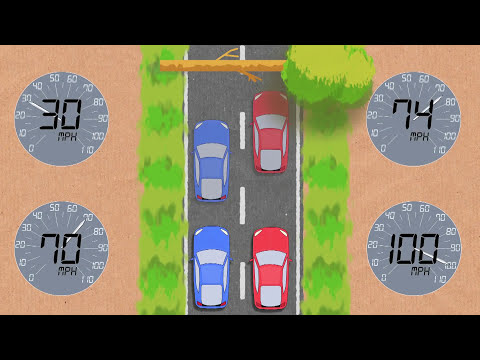
Numberphile's Ben Sparks works through the physics of a car crash, showing how kinetic energy grows with the square of speed and why stopping distance climbs so quickly as velocity increases.
 38:01
I published music on Tidal to test MQA - MQA Review
610K views • 5 years ago
GoldenSound
GoldenSound publishes music on Tidal to test MQA, a deep dive into the format's claims and problems including its leaky filter. Testing begins around the 5:45 mark.
 3:38
The Shortest-Splitline Algorithm: a Gerrymandering Solution [Bonus Video]
692K views • 15 years ago
CGP Grey
A short CGP Grey bonus video explaining the shortest-splitline algorithm, which draws electoral districts by repeatedly splitting a state along its shortest dividing line while balancing population. It is offered as a neutral, algorithmic fix for gerrymandering.
 5:52
Equipment Review: Best Carbon-Steel Skillets (Can This One Pan Do It All?) & Our Testing Winner
2M views • 11 years ago
America's Test Kitchen
America's Test Kitchen tests eight carbon-steel skillets to find the best one, asking whether a single pan can replace stainless, cast iron and nonstick. It names a winner and covers how the pans perform.
 11:54
Tested: Where Does The Tone Come From In An Electric Guitar?
2.9M views • 4 years ago
Jim Lill
Guitarist Jim Lill methodically tests what in an electric guitar affects its tone, swapping parts on a partscaster and even trying a 2x4 body. He finds that wood and construction matter far less than people assume.
 6:17
Why Cars Rarely Crash into Buildings in the Netherlands
1M views • 6 years ago
Not Just Bikes
Not Just Bikes explains why cars rarely crash into buildings in the Netherlands, attributing it to street design that forgives mistakes and to systematic crash investigation. It contrasts this with North American acceptance of such crashes.
 14:06
Testing 432 Hz Frequencies (and temperaments)
4M views • 7 years ago
Adam Neely
Adam Neely tests the claims for tuning to A=432 Hz by trying the unusual tuning systems that its proponents' numerology requires. He compares how they sound against standard tuning and temperaments.
 28:06
#Earth 🌏 Will we survive this ? Amazing⚡️ #crashcourse on #collapse & #environment by #ArthurKeller
101K views • 7 years ago
NEXT - Les Mondes Sensibles (byThePassengerStudio)
Arthur Keller gives a roughly half-hour crash course on environmental collapse, covering exponential growth, carrying capacity and ecological overshoot.
 10:33
Testing if 60 minutes of silence drives you crazy
32.8M views • 12 years ago
Veritasium
Veritasium's Derek Muller spends an hour in a silent, dark anechoic chamber at BYU to test the claim that 45 minutes is the most anyone can bear. He reports on his experience and other people's reactions.
 11:17
Can A Metal Bowling Ball Survive Inside a Nuclear Explosion?
737K views • 6 years ago
Scott Manley
Scott Manley explains the Cold War experiments in which steel and aluminium spheres, known as Lew Allen's Balls, were placed near nuclear detonations. The spheres survived the fireball, and he walks through what the declassified results show.
 14:03
The Computer Designed To Die In Microseconds
408K views • 3 years ago
Scott Manley
Scott Manley tells the story of a computerized telemetry system built to sit at the heart of a nuclear test device in place of the plutonium pit, designed to transmit data in the microseconds before it was destroyed.
 11:15
The hardest problem on the hardest test
16.5M views • 8 years ago
3Blue1Brown
3Blue1Brown walks through a very hard Putnam competition problem and its elegant solution, emphasizing the visual intuition and the thought process behind solving it.
 20:58
The Epidemic of Fake Disease
2.4M views • 6 years ago
Medlife Crisis
A Medlife Crisis video by cardiologist Rohin Francis on overdiagnosis and over-screening. It explains how detecting more disease does not necessarily mean saving more lives, and covers harms such as unnecessary treatment.
 8:28
The Fastest Way to Board a Plane Feels Like the Slowest
37.5M views • 7 years ago
CGP Grey
CGP Grey compares airplane boarding methods, based on an arXiv paper, and shows why the intuitive back-to-front approach is slow while random or outside-in boarding does better.
 26:33
The Most Underrated Algorithm
10.8M views • 4 years ago
Veritasium
Veritasium tells the story of the Fast Fourier Transform, from its use in detecting nuclear tests to Cold War politics, and how it could have changed the arms race. It includes a short, intuitive explanation of what the Fourier transform does.
 3:05
Why does PUNCHING Sonic 3D trigger a Secret Level Select?
510K views • 6 years ago
Coding Secrets
A short Coding Secrets episode explaining why hitting a Sonic 3D cartridge triggers a hidden level select. The cause was a custom crash handler that redirected CPU error interrupts to the level select screen.
 8:35
Tesla Autopilot Crashes into Motorcycle Riders - Why?
1.1M views • 4 years ago
FortNine
FortNine looks at why Tesla Autopilot has rear-ended motorcyclists, speculating that the vision system misreads motorcycle taillights as a distant car. It argues that radar and other sensors would help.
 3:58
The 'duck curve' is solar energy's greatest challenge
2.7M views • 8 years ago
Vox
A short Vox explainer on the duck curve, the shape electricity demand takes in California as solar output grows. It explains why grid operators struggle to balance supply and demand with lots of solar.
 24:55
Why don't Americans use electric kettles?
5.3M views • 4 years ago
Technology Connections
Technology Connections explains why electric kettles are uncommon in the US, centering on 120V circuits limiting power. He tests ways of boiling water on gas, electric ranges and kettles.
 3:49
The Trinity Hall Prime - Numberphile
322K views • 9 years ago
Numberphile
Numberphile with Tadashi Tokieda on the Trinity Hall Prime, a prime number whose digits form a picture of the college's coat of arms, left as a gift by a departing mathematician.
 10:18
How to Stop a Riot
5.2M views • 9 years ago
Wendover Productions
Wendover Productions explains counterintuitive riot control techniques based on research, showing that effective tactics tend to avoid violence.
 4:21
An elevator that actually goes sideways
4.3M views • 9 years ago
Tom Scott
Tom Scott visits ThyssenKrupp's test tower in Rottweil to see the Multi, a rope-free elevator that uses linear motors to move cabins sideways as well as vertically.
 21:52
A Look Inside Apple's $130 USB-C Cable
4.4M views • 3 years ago
Adam Savage’s Tested
Adam Savage and engineer Zach Radding examine Lumafield CT scans of Apple's $130 Thunderbolt 4 cable alongside cheaper USB-C cables. They explain the internal components that distinguish Thunderbolt from ordinary USB-C.
 45:08
Adam Savage's Epiphany on the Science of Measurement!
1.1M views • 4 years ago
Adam Savage’s Tested
Adam Savage shows a set of Mitutoyo ceramic gauge blocks and uses them to explain metrology, the science of measurement. He argues that accuracy and precision work differently than most people assume, which changes how you think about every measuring tool.
 24:26
The Beauty of Bézier Curves
2.2M views • 5 years ago
Freya Holmér
Freya Holmer explains how Bezier curves work, from the helper-line construction to their uses in animation, text rendering and shapes. It uses visuals from her Unity Shapes plugin and was a SoME1 contest winner.
 6:30
How the Dutch got their cycle paths
1.2M views • 15 years ago
BicycleDutch
A short BicycleDutch video on how the Netherlands got its cycling infrastructure, including the 1970s protests and the shift away from car-centric planning. The channel later published an updated version.
 19:05
Why No One Has Measured The Speed Of Light
24.3M views • 6 years ago
Veritasium
Veritasium explains why the one-way speed of light has never been measured, only the round-trip speed, since measuring it requires synchronized clocks that assume the answer. It explores the implications for relativity.
 6:17
Can You Watch This Without Getting Angry?
12.1M views • 11 years ago
CGP Grey
CGP Grey explains how ideas spread like germs, and why content that triggers outrage spreads fastest, using a study on what makes online content viral. He argues that opposing outrage-driven memes feed each other.
 23:12
Simulating an epidemic
5.2M views • 6 years ago
3Blue1Brown
3Blue1Brown builds toy SIR models to simulate how an epidemic spreads and tests scenarios like social distancing, travel restrictions, central gathering places and quarantine. It was made during the early COVID-19 outbreak.
 22:46
Cassettes - better than you don't remember
2.8M views • 10 years ago
Techmoan
Techmoan's beginner introduction to the compact cassette, testing metal tapes and Dolby S noise reduction on a Sony TC-S1 deck. He checks whether a cassette can sound close to a CD when good tape and equipment are used.
 22:58
Runaway Stabilizer!! How to stop MCAS.
421K views • 7 years ago
Mentour Pilot
A Boeing 737 pilot explains the runaway stabilizer checklist, the procedure for stopping unwanted horizontal stabilizer movement such as an MCAS activation on the 737 MAX. He walks through the steps, the trim cutout switches and the jackscrew mechanism, and shows a simulator run including the manual trim wheel effort.
 14:25
China is erasing its border with Hong Kong
14.8M views • 8 years ago
Vox
A Vox Borders episode with Johnny Harris explaining how China is gradually erasing the line between mainland China and Hong Kong since the 1997 handover. It describes the one country, two systems arrangement and its expiration date.
 5:39
Every Ruler Makes the Same Mistake When They Die
6.8M views • 10 years ago
CGP Grey
CGP Grey, adapting The Dictator's Handbook, explains how rulers keep power and why succession causes trouble when they die. It is the sequel to his video on the rules for rulers.