daily show
 10:45
The 5 Most Dangerous Chemicals on Earth
11.9M views • 11 years ago
SciShow
A SciShow episode in which Hank Green introduces five of the most dangerous chemicals, from lethal toxins to substances that explode on contact. It is an entertaining overview of extreme chemical hazards.
 23:53
D/A and A/D | Digital Show and Tell (Monty Montgomery @ xiph.org)
647K views • 13 years ago
FL Studio
Monty Montgomery of Xiph.org gives real-time demonstrations of sampling, quantization, bit depth and dither using real audio equipment, including both digital analysis tools and vintage analog bench gear. It shows that sampled audio is not stair-stepped and corrects common misconceptions about digital audio.
 23:01
Safe Cycling Showdown - Good vs. Bad City Design - Plus 1 Minus 2
1.1M views • 5 years ago
Not Just Bikes
Not Just Bikes compares the same cycling trip to a hardware store in Calgary and in Amsterdam, using a 'plus 1 minus 2' format. It shows how street design shapes how safe and practical cycling is.
 16:35
How The Dutch Economy Shows We Can't Reduce Wealth Inequality With Taxes | Economics Explained
8M views • 5 years ago
Economics Explained
An Economics Explained video arguing that the Netherlands shows taxes alone can't reduce wealth inequality. It distinguishes income inequality from wealth inequality and discusses the Gini index.
 32:57
Are Seed Oils Inflammatory?! (The *Evidence* No One Shows)
480K views • 4 years ago
Nutrition Made Simple!
A nutrition-science explainer reviewing the human evidence on whether seed oils cause inflammation. It looks at nine different seed oils, heated oils, and genetic variability, and compares omega-6 intake with saturated fat.
 3:52
I can't show you how pink this pink is.
9.7M views • 9 years ago
Tom Scott
Tom Scott explains why a vivid pink pigment by artist Stuart Semple cannot be fully shown on a screen, and touches on the dispute over exclusive rights to the blackest black pigment. It is a short explainer on color gamuts and pigment politics.
 18:15
So... the minute hand shows progression — apparently we think of time in wildly different ways
706K views • 4 years ago
Technology Connextras
A Technology Connections video essay on how analog and digital clocks shape different mental models of time, with the minute hand acting as a progress indicator.
 12:59
America Was Wrong About Ethanol - Study Shows
2.9M views • 4 years ago
Engineering Explained
Engineering Explained examines new research suggesting corn ethanol in US gasoline may emit as much or more carbon than gasoline. It covers the Renewable Fuel Standard and why ethanol was assumed to be a green fuel.
 46:01
Exploring Sid Meier's Pirates! - BASIC Code, Quirks, Bugs on Commodore 64
115K views • 5 years ago
8-Bit Show And Tell
8-Bit Show And Tell walks through the BASIC source code of the original Commodore 64 Sid Meier's Pirates!. It covers bugs, quirks and traces of abandoned features and scenarios left in the code.
 4:48
Hans Rosling's 200 Countries, 200 Years, 4 Minutes - The Joy of Stats - BBC
11.5M views • 15 years ago
BBC
Hans Rosling uses augmented-reality animation to show 200 countries over 200 years in four minutes, built from 120,000 data points. It tracks life expectancy and income to show the world's development.
 4:01
Who else benefits from the Dutch cycling infrastructure
88K views • 13 years ago
BicycleDutch
A short BicycleDutch episode showing how people with disabilities use Dutch cycle tracks on hand-cycles, tricycles and mobility scooters.
 11:33
Light Waves Visualized using Photon Sieves.
69K views • 6 years ago
Huygens Optics
Huygens Optics shows how DIY photon sieves shape a laser's wave front, explaining how they differ from zone plates and how aperture count affects the focal point, with time-resolved visualizations of the diffraction.
 10:15
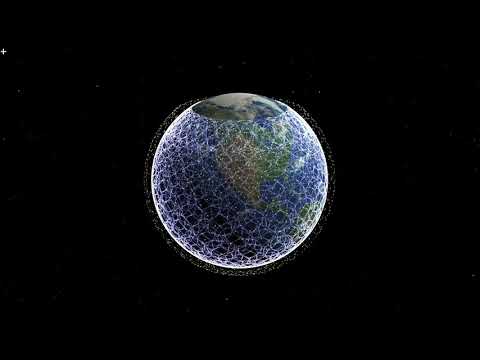
Using ground relays with Starlink
506K views • 6 years ago
Mark Handley
Mark Handley of UCL explains, with simulation visualizations, how early Starlink satellites without inter-satellite links could still give low-latency wide-area communication by hopping via ground relays. He shows it can beat fibre on many long paths.
 13:20
Your Home Can Survive a Wildfire
164K views • 11 years ago
National Fire Protection Association
NFPA video in which wildfire researcher Jack Cohen explains that embers (firebrands), not the flame front, are the main cause of homes igniting in wildfires. He shows how landscaping and removing debris around the home reduce risk.
 19:42
But what is the Fourier Transform? A visual introduction.
12.6M views • 8 years ago
3Blue1Brown
3Blue1Brown's animated visual introduction to the Fourier Transform, showing how a signal breaks into frequency components.
 12:44
We Were Taught to Call Death a Blessing
11.9M views • 8 years ago
CGP Grey
CGP Grey narrates an animated adaptation of Nick Bostrom's Fable of the Dragon-Tyrant. The story uses a dragon that demands a daily toll of lives as a metaphor for aging and society's acceptance of death.
 12:04
Why Being Delusional is a Superpower
15.2M views • 6 years ago
Veritasium
Veritasium examines the role of luck in success, with simulations and examples showing how small advantages and chance can compound. It argues that top outcomes are disproportionately luck-driven while still crediting effort.
 28:23
The Fast Fourier Transform (FFT): Most Ingenious Algorithm Ever?
2.3M views • 5 years ago
Reducible
Reducible's visual walkthrough of the Fast Fourier Transform, motivated by polynomial multiplication. It shows how the FFT's key ideas can be discovered by asking the right questions.
 8:38
Diffie-Hellman Key Exchange
938K views • 14 years ago
Art of the Problem
A short explainer on the history and mechanics of public key cryptography and the Diffie-Hellman key exchange. It uses a mixing-paint-colors analogy to show how two parties can agree on a shared secret in public.
 27:19
Once you understand game theory, you understand the world.
26.5M views • 2 years ago
Veritasium
Veritasium explores the Prisoner's Dilemma and Axelrod's tournaments, showing why tit-for-tat and forgiving strategies win in repeated games. It extends the ideas to cooperation in evolution and conflict.
 12:50
How close is nuclear fusion power?
764K views • 5 years ago
Sabine Hossenfelder
Sabine Hossenfelder explains how close nuclear fusion really is to break-even, and why headlines about ITER and lab milestones are misleading. She distinguishes plasma gain (Q plasma) from whole-system gain (Q total) and shows the latter is still far below one.
 11:15
The hardest problem on the hardest test
16.5M views • 8 years ago
3Blue1Brown
3Blue1Brown walks through a very hard Putnam competition problem and its elegant solution, emphasizing the visual intuition and the thought process behind solving it.
 6:06
The 7 Habits of Highly Miserable People
14.7M views • 9 years ago
CGP Grey
CGP Grey's sarcastic animated video adapted from the book How to Be Miserable, listing habits that reliably make people unhappy. By inverting the advice, it shows what to avoid and prompts reflection on goals and routines.
 5:43
The EU Has Orbits, and the UK Fell Out of All of Them
0 views • 7 years ago
CGP Grey
CGP Grey's six-minute explainer of the relationships the UK could have with the EU, based on Barnier's slide, shown as orbits of different closeness. It explains why the UK's red lines ruled out the closer options.
 4:27
The Voting System That Should Replace Every Election
4.7M views • 15 years ago
CGP Grey
A short CGP Grey explainer on the alternative vote (instant runoff voting) versus first past the post, made around the 2011 UK referendum. It shows how ranked ballots are tallied and why they avoid spoiler effects.
 3:04
mRNA Translation (Advanced)
1.5M views • 16 years ago
DNA Learning Center
A short animation from the DNA Learning Center showing how mRNA carries a gene's message to the ribosome, where tRNA and codons are used to assemble amino acids into a protein.
 7:16
Unix and Google
9K views • 10 years ago
FOAM
A short animated simulation comparing how Multics and Unix were developed, showing why Unix's small composable programs and pipes gave it a efficiency advantage. It frames Unix as a moonshot achievable by a small team.
 21:36
Fractals are typically not self-similar
4.6M views • 9 years ago
3Blue1Brown
3Blue1Brown explains fractal dimension and shows why many fractals are not strictly self-similar. Self-similarity turns out to be a special case of the broader idea of fractional dimension.
 33:33
Longer-lasting light bulbs: it was complicated
2.3M views • 3 years ago
Technology Connections
Technology Connections examines why light bulbs have the lifespans they do, including the real history of the Phoebus cartel. He shows that bulb life trades off against brightness and efficiency rather than being simple planned obsolescence.
 16:30
"NO CGI" is really just INVISIBLE CGI - 1
1.5M views • 3 years ago
The Movie Rabbit Hole
VFX supervisor Jonas Ussing examines what studios mean by "no CGI", showing how much invisible CGI hides behind practical-effects marketing. It is the first part of a multi-part series that includes analysis of doctored behind-the-scenes footage.
 11:33
A new way to visualize General Relativity
3.6M views • 6 years ago
ScienceClic English
ScienceClic explains why the rubber sheet analogy for general relativity is misleading and offers a new visualization that includes the curvature of time and shows gravity as motion through curved spacetime.
 8:28
The Fastest Way to Board a Plane Feels Like the Slowest
37.5M views • 7 years ago
CGP Grey
CGP Grey compares airplane boarding methods, based on an arXiv paper, and shows why the intuitive back-to-front approach is slow while random or outside-in boarding does better.
 14:27
All the Numbers - Numberphile
1.8M views • 7 years ago
Numberphile
Matt Parker talks Numberphile through the different kinds of numbers: algebraic, transcendental, computable, normal, and beyond. It shows how few numbers we can actually name or describe.
 55:46
How Much Do Rockets Pollute? Are They Bad For Our Air?
1.3M views • 6 years ago
Everyday Astronaut
Everyday Astronaut's Tim Dodd runs an hour-long, data-driven analysis of what rockets actually emit and how that compares with airliners and other industries. It breaks down exhaust by propellant type, per-passenger and total emissions, and ways launches could be cleaner.
 18:07
The more general uncertainty principle, regarding Fourier transforms
2.3M views • 8 years ago
3Blue1Brown
3Blue1Brown shows how the uncertainty principle arises from Fourier transforms. A wave packet cannot be narrow in both position and frequency, so the principle is a property of waves rather than of measurement.
 11:11
Old-fashioned rice cookers are extremely clever
3.2M views • 6 years ago
Technology Connections
Technology Connections explains how old-fashioned non-electronic rice cookers work, using a magnet and spring switch tripped by the Curie point. It shows the thermodynamics and magnetism behind a simple appliance.
 31:51
Visualizing the 4d numbers Quaternions
5.6M views • 8 years ago
3Blue1Brown
3Blue1Brown builds visual intuition for quaternions, showing how to think about this four-dimensional number system using stereographic projection and rotations in 3D space. It is part one of a two-part series with an interactive companion site.
 11:27
CGA Graphics - Not as bad as you thought!
2.4M views • 10 years ago
The 8-Bit Guy
The 8-Bit Guy covers IBM's 1981 CGA graphics system, including how composite output and artifacting produced extra colors beyond the nominal palette. He argues CGA looked better in period than it does on RGB monitors.
 50:09
Old pinball machines are amazingly complex
3.5M views • 3 years ago
Technology Connections
Technology Connections takes a long, detailed look at how a 1970s electromechanical pinball machine works, from relays to stepper motors and mechanical logic. It is the first part of a series.
 18:31
Fourier Optics used for Optical Pattern Recognition
103K views • 6 years ago
Huygens Optics
Huygens Optics explains the Fourier transform and shows how a lens performs one optically. A DLP projector is used as a Fourier filter to do simple pattern recognition on lithographic character patterns.