data-driven programming
No strong matches for “data-driven programming”. Here are the closest videos.
 12:32
Protecting Privacy with MATH (Collab with the Census)
451K views • 7 years ago
minutephysics
minutephysics, in collaboration with the US Census Bureau, explains differential privacy and why the 2020 census adds noise to protect individuals' data. It walks through how statistics can leak private information.
 4:48
Hans Rosling's 200 Countries, 200 Years, 4 Minutes - The Joy of Stats - BBC
11.5M views • 15 years ago
BBC
Hans Rosling uses augmented-reality animation to show 200 countries over 200 years in four minutes, built from 120,000 data points. It tracks life expectancy and income to show the world's development.
 10:36
Who Is Responsible For Climate Change? – Who Needs To Fix It?
11.7M views • 6 years ago
Kurzgesagt – In a Nutshell
Kurzgesagt examines who is responsible for climate change, comparing historical, current and per-capita emissions by country. It argues that individual footprints are a distraction from larger responsibility.
 30:53
I Saved a PNG Image To A Bird
2.1M views • 1 year ago
Benn Jordan
Benn Jordan's video about storing a PNG image in a living bird, a starling that learns to reproduce encoded sounds. It mixes ornithology, audio engineering, and data encoding.
 17:46
Why do Biden's votes not follow Benford's Law?
3.7M views • 5 years ago
Stand-up Maths
Matt Parker examines claims that Biden's 2020 vote counts violate Benford's Law, explaining the law and why it often does not apply to precinct-level election data.
 38:26
Racing the Beam Explained - Atari 2600 CPU vs. CRT Television
400K views • 5 years ago
Retro Game Mechanics Explained
Retro Game Mechanics Explained shows how the Atari 2600 draws images with almost no video memory, by having the CPU race the CRT beam line by line. It walks through the techniques in detail.
 10:13
The Problem with Time & Timezones - Computerphile
4.4M views • 12 years ago
Computerphile
Tom Scott explains for Computerphile why handling time and timezones in code is so hard, walking through a simple web app that computes how long ago something happened. It covers the quirks of timezones and calendars and ends in an exasperated rant.
 55:46
How Much Do Rockets Pollute? Are They Bad For Our Air?
1.3M views • 6 years ago
Everyday Astronaut
Everyday Astronaut's Tim Dodd runs an hour-long, data-driven analysis of what rockets actually emit and how that compares with airliners and other industries. It breaks down exhaust by propellant type, per-passenger and total emissions, and ways launches could be cleaner.
 19:25
New computers don't speed up old code
187K views • 1 year ago
Matthias random stuff
Matthias Wandel tests old and new code on a range of PCs, including a new mini PC, to measure how much faster modern hardware really is. He also shows optimization techniques such as branchless code, with benchmark programs on GitHub.
 14:03
The Computer Designed To Die In Microseconds
408K views • 3 years ago
Scott Manley
Scott Manley tells the story of a computerized telemetry system built to sit at the heart of a nuclear test device in place of the plutonium pit, designed to transmit data in the microseconds before it was destroyed.
 1:13:50
The Continuity of Splines
1.9M views • 3 years ago
Freya Holmér
Freya Holmer's 74-minute video essay on splines, covering Bezier curves, B-splines, derivatives and the different levels of continuity (C0, C1, C2), built with custom animation tools. She notes she did not cover non-uniform splines.
 27:14
Transformers, the tech behind LLMs | Deep Learning Chapter 5
11.6M views • 2 years ago
3Blue1Brown
3Blue1Brown's visual explanation of how transformers and GPT-style language models work, tracing data through tokens, embeddings and attention.
 12:04
Why Being Delusional is a Superpower
15.2M views • 6 years ago
Veritasium
Veritasium examines the role of luck in success, with simulations and examples showing how small advantages and chance can compound. It argues that top outcomes are disproportionately luck-driven while still crediting effort.
 7:49
America Keeps Rejecting an ID Card It Already Has
13.6M views • 9 years ago
CGP Grey
CGP Grey explains the history of the US Social Security card and number, and why they became a de facto national ID despite never being meant for it. He also covers why America resists a proper identity card.
 6:17
Can You Watch This Without Getting Angry?
12.1M views • 11 years ago
CGP Grey
CGP Grey explains how ideas spread like germs, and why content that triggers outrage spreads fastest, using a study on what makes online content viral. He argues that opposing outrage-driven memes feed each other.
 8:21
The Grille Trend that Kills 509 People per Year
1.3M views • 2 years ago
FortNine
FortNine looks at the data on why newer pickup trucks with tall, blunt grilles kill so many pedestrians, cyclists and motorcyclists. It argues that lowering hood height would substantially cut fatalities.
 7:49
Your Post Code Is the Directions, Not the Destination
3.9M views • 1 year ago
CGP Grey
CGP Grey explains that postal codes are routing instructions for mail rather than geographic regions. He looks at the quirks and problems this causes.
 6:43
Explained: "Go Fast" UFO Video - Not Low and Not Fast - Like a Balloon!
156K views • 7 years ago
Mick West
Mick West analyzes the Navy "Go Fast" UFO footage and shows with simple trigonometry and the data overlay that the object is slow and high up, consistent with a balloon. He explains how parallax makes it look fast and argues the original TV claims were wrong.
 23:29
How Imaginary Numbers Were Invented
22.7M views • 5 years ago
Veritasium
Veritasium tells the history of how imaginary numbers arose from the quest for a general solution to the cubic equation, including the duels and secrecy among Renaissance mathematicians. It argues math had to give up the requirement that it mirror reality.
 4:44
Debt Metaphor
95K views • 17 years ago
Ward Cunningham
Ward Cunningham explains the history and intent of the debt metaphor, which he coined while refactoring the WyCash product. He says debt means code reflecting an incomplete understanding of the problem, not sloppy programming.
 17:51
Does "land area" assume a country is perfectly flat?
859K views • 6 years ago
Stand-up Maths
Matt Parker of Stand-up Maths asks whether a country's reported land area accounts for hills and mountains, working through how surface area depends on the resolution of elevation data. It follows up on a question from a viewer and work by researchers who measured it.
 14:21
The Antique Microwave Oven that's Better than Yours
2.7M views • 5 years ago
Technology Connections
Technology Connections examines an old feature-rich microwave and shows how it uses a humidity or steam sensor and lookup data to cook food well, arguing it beats many modern ones.
 2:51
Tea Consent
12.4M views • 11 years ago
Blue Seat Studios
A three-minute animated video that explains sexual consent through the analogy of offering someone a cup of tea. It is based on a blog post by Emmeline May.
 8:30
Deadly Truth of General AI? - Computerphile
941K views • 11 years ago
Computerphile
A Computerphile video in which Rob Miles warns against assuming a general AI will think like a human. He uses the thought experiment of a stamp-collecting AI to show how a goal-driven system could pursue its aim with dangerous results.
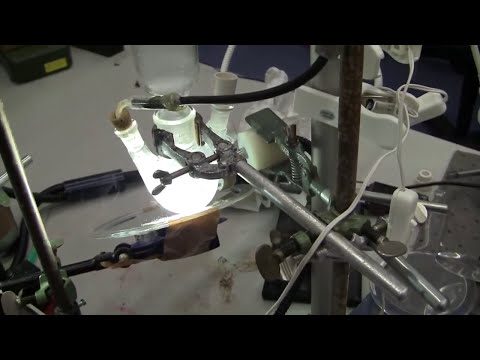 24:59
High speed camera reveals why sodium explodes!
484K views • 11 years ago
Thunderf00t
Thunderf00t presents high-speed camera footage of alkali metals such as sodium and NaK reacting with water. The footage shows that the explosion is not caused by hydrogen ignition, as the usual explanation says. It is a Coulomb explosion driven by electrons leaving the metal.
 19:37
Why is Japan So Weak in Software?
968K views • 2 years ago
Asianometry
Asianometry examines why Japan's software industry has lagged despite its hardware strengths. It looks at dependence on US software and the low prestige of programming.
 28:09
How does Starlink Satellite Internet Work?📡☄🖥
9.9M views • 4 years ago
Branch Education
Branch Education explains how Starlink works, from the ground dish and satellites to phased-array beam steering and data routing. Animations cover how a beam stays connected to a satellite moving at 27,000 km/h.
 27:12
How They Caught The Golden State Killer
10.1M views • 5 years ago
Veritasium
Veritasium explains how investigators caught the Golden State Killer using forensic genealogy, matching crime scene DNA to distant relatives in public genealogy databases. It also covers the privacy implications of DNA databases.
 8:57
Exponential growth and epidemics
6.1M views • 6 years ago
3Blue1Brown
A short 3Blue1Brown primer on exponential and logistic growth, using early COVID-19 case data to show how epidemics grow and eventually level off. It explains why small changes in growth rate make enormous differences in outcomes.
 12:24
The 1988 VIDEO Floppy Disk Camera: Canon Xap Shot RC-250
452K views • 8 years ago
LGR
LGR looks at the 1988 Canon Xap Shot, a still video camera that records photos to a floppy disk as analog NTSC signal rather than digital data.
 20:58
“Too Much Thermal Paste” – Benchmark of Thermal Paste Quantity
3.3M views • 8 years ago
Gamers Nexus
Gamers Nexus benchmarks how the amount and application method of thermal paste affect CPU cooling. It compares pea-sized dots, thin spreads and large blobs with Thermal Grizzly Kryonaut.
 22:44
The Art Market is a Scam (And Rich People Run It)
3.2M views • 5 years ago
Wendover Productions
A Wendover Productions video on how the art market works, arguing that prices are driven by wealth, storage and tax mechanics rather than artistic value.
 1:20
Paul Otlet, visioning a web in 1934
102K views • 18 years ago
Attila Gárdos
A one-minute clip about Paul Otlet, the Belgian bibliographer who in 1934 imagined users accessing a remote database through an electric telescope over a phone line. It presents his vision as a precursor of the web.
 35:13
I built a QR code with my bare hands to see how it works
9.7M views • 2 years ago
Veritasium
Veritasium builds a QR code by hand to explain how it works. It covers the history of Morse code and barcodes, how QR codes encode data, why damaged codes still scan, and how safe they are.
 12:05
Why Traffic Congestion Grows Exponentially, Why It Matters, and What To Do About It // An Explainer
100K views • 4 years ago
Ray Delahanty | CityNerd
CityNerd explains why traffic congestion grows nonlinearly as more cars use a road network, and why adding road capacity tends not to fix it. It covers the consequences for drivers, bus riders, cyclists and pedestrians, and discusses alternatives such as true bus rapid transit.
 1:08:15
Gas stoves aren't really that fast - even standard electric is faster!
827K views • 3 years ago
Technology Connextras
Technology Connections tests how quickly gas, induction and standard electric stoves boil water, with CO2 measurements and a discussion of the advantages and disadvantages of each.