default mode network
 8:25
Large Language Models from scratch
375K views • 4 years ago
Graphics in 5 Minutes
A short cartoon explaining how language models like ChatGPT work, from autocomplete and conditional probabilities to neural networks, gradient descent and backpropagation. It shows how networks act as universal function approximators.
 4:34
This giant model stopped a terrible plan
10M views • 9 years ago
Tom Scott
Tom Scott tells how John Reber's plan to dam San Francisco Bay was disproved by the Army Corps of Engineers' giant hydraulic Bay Model in Sausalito. The model showed the plan would have been dangerously wrong.
 20:39
AI Language Models & Transformers - Computerphile
354K views • 7 years ago
Computerphile
Rob Miles explains on Computerphile how language models generate plausible text and how transformers improved on recurrent networks, with a look at what comes next.
 5:50
You Need to Be Bored. Here's Why.
17.9M views • 1 year ago
Harvard Business Review
Harvard professor Arthur Brooks explains why boredom is useful rather than something to avoid. He describes how a wandering mind engages the brain's default mode network, which supports creativity and curiosity, and suggests it may protect against depression.
 8:14
The Lightning Network Explained (Litecoin/Bitcoin)
119K views • 9 years ago
Franklyn
An 8-minute explainer on the Lightning Network and how it relates to Segwit, Bitcoin and Litecoin. It covers how off-chain payment channels route payments to scale blockchain transactions.
 25:57
GPT3: An Even Bigger Language Model - Computerphile
446K views • 6 years ago
Computerphile
Rob Miles discusses GPT-3 on Computerphile, covering how scaling parameters kept improving results over GPT-2 and how the model nearly learned arithmetic without anyone knowing exactly how.
 1:14
Sound of the dialup modem explained
512K views • 13 years ago
bialasiczek
A short animation that pairs the sound of a dialup modem handshake with a graphic explaining what each phase of the sound means.
 18:40
But what is a neural network? | Deep learning chapter 1
25.1M views • 9 years ago
3Blue1Brown
3Blue1Brown's first chapter on deep learning explains what neurons and layers are and the math underlying a basic neural network, using handwritten digit recognition with visual animations.
 28:39
AMD Ryzen Eco Mode Deep-Dive & Benchmarks on R9 7950X (Zen 4)
422K views • 4 years ago
Gamers Nexus
Gamers Nexus benchmarks the Ryzen 9 7950X in its BIOS Eco Mode presets (65W, 105W and stock 170W). It measures the performance cost against the power and heat savings.
 12:08
Tesla Model 3's motor - The Brilliant Engineering behind it
8M views • 5 years ago
Sabin Civil Engineering
An engineering explainer on why Tesla abandoned the induction motor for the Model 3 and used an IPM-SynRM design. It covers the reluctance torque and permanent magnet principles behind the choice.
 5:26
Neural Network Learns The Physics of Fluids and Smoke | Two Minute Papers #118
209K views • 9 years ago
Two Minute Papers
Two Minute Papers covers a paper on speeding up fluid and smoke simulation with convolutional networks. It contrasts the approach with earlier regression forest methods.
 17:52
Training AI Without Writing A Reward Function, with Reward Modelling
259K views • 6 years ago
Robert Miles AI Safety
Robert Miles explains reward modelling, in which an AI learns what humans want from their preference comparisons instead of a hand-written reward function. He walks through the 2017 paper on deep reinforcement learning from human preferences.
 20:33
Gradient descent, how neural networks learn | Deep Learning Chapter 2
9.7M views • 9 years ago
3Blue1Brown
3Blue1Brown's second neural network chapter explains cost functions and gradient descent, showing how a network learns by minimizing error during training.
 16:43
The Equation That Explains (Nearly) Everything!
1.6M views • 4 years ago
PBS Space Time
PBS Space Time explains the Standard Model Lagrangian, the single equation encapsulating the particle physics theory, and visualizes what its terms mean.
 10:56
Model Y E36: The Octovalve Episode
317K views • 6 years ago
Munro Live
Munro Live's Model Y episode 36 has Sandy Munro walk through the disassembled Tesla Octovalve and heat pump system. He explains how the components are made and what each one does.
 12:27
Mach-E Thermal System Part 2: A Detailed Comparison to the Model Y
225K views • 5 years ago
Munro Live
Munro Live's team breaks down the thermal management system of the Ford Mustang Mach-E and compares it with the Tesla Model Y. They look at parts count, coolant loops and heating approaches.
 23:12
Simulating an epidemic
5.2M views • 6 years ago
3Blue1Brown
3Blue1Brown builds toy SIR models to simulate how an epidemic spreads and tests scenarios like social distancing, travel restrictions, central gathering places and quarantine. It was made during the early COVID-19 outbreak.
 4:47
Noam Chomsky: The five filters of the mass media machine | The Listening Post
2.9M views • 9 years ago
Al Jazeera English
A short Al Jazeera animation narrated by Amy Goodman presenting Noam Chomsky's five filters of the mass media: ownership, advertising, media elite sourcing, flak and a common enemy. It is part of the MediaTheorised series.
 10:48
PHP doesn't suck (anymore)
223K views • 3 years ago
Aaron Francis
Aaron Francis walks through how PHP has changed from 2012 to 2023, covering traits, array destructuring, generators, typed properties and more. It is a quick chaptered tour of modern PHP features.
 10:15
Using ground relays with Starlink
506K views • 6 years ago
Mark Handley
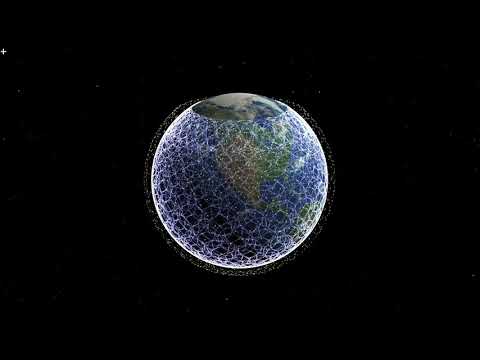
Mark Handley of UCL explains, with simulation visualizations, how early Starlink satellites without inter-satellite links could still give low-latency wide-area communication by hopping via ground relays. He shows it can beat fibre on many long paths.
 24:07
AI can't cross this line and we don't know why.
2.5M views • 2 years ago
Welch Labs
A Welch Labs explainer on neural scaling laws and the compute-efficient frontier, asking why model loss seems to hit a line it cannot cross. It draws an analogy to an ideal gas law for AI.
 21:37
I wasn't worried about climate change. Now I am.
2.5M views • 2 years ago
Sabine Hossenfelder
Sabine Hossenfelder explains climate sensitivity and why recent observations suggest climate models may have underestimated warming. She says this changed her view on how worried to be.
 55:02
GradIEEEnt half decent: The hidden power of imprecise lines
391K views • 3 years ago
suckerpinch
Tom 7 (suckerpinch) delivers a long, comedic digression on gradient descent and floating-point imprecision. He shows how rounding behavior can supply the nonlinearity needed to build a neural network.
 21:05
Who is Manipulating Facebook? - Smarter Every Day 215
1M views • 7 years ago
SmarterEveryDay
Destin Sandlin of Smarter Every Day investigates manipulation on Facebook, interviewing the company's team about content moderation. It is the third video in his series on social media manipulation.
 4:12
Correlation CAN Imply Causation! | Statistics Misconceptions
744K views • 9 years ago
minutephysics
A four-minute minutephysics video arguing that causal models and causal networks let statistics infer causation from correlation. It touches on Reichenbach's principle, common causes, feedback and quantum causal discovery.
 27:14
Transformers, the tech behind LLMs | Deep Learning Chapter 5
11.6M views • 2 years ago
3Blue1Brown
3Blue1Brown's visual explanation of how transformers and GPT-style language models work, tracing data through tokens, embeddings and attention.
 21:42
Future Computers Will Be Radically Different (Analog Computing)
13.2M views • 4 years ago
Veritasium
Veritasium explains why analog computing may suit AI workloads, covering old analog computers, The Analog Thing and Mythic's analog chips that use flash memory for neural network inference. It argues digital hardware is hitting limits.
 10:22
How Far Are The Nearest Stars?
3.7M views • 9 years ago
Cody'sLab
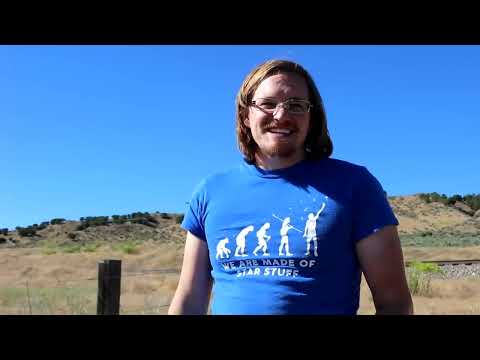
Cody's Lab builds a 200-billionth-scale model to show how far away the nearest stars are, using parallax and light speed. A short astronomy explainer on interstellar distances.
 41:35
The Alt-Right Playbook: How to Radicalize a Normie
4.5M views • 7 years ago
Innuendo Studios
A video essay from the Alt-Right Playbook series that explains how extremist movements draw ordinary people in, using deniable rhetoric, bad-faith games, and gradual escalation. It draws on books about the alt-right, male radicalization, and cult-style brainwashing.
 12:47
Backpropagation, intuitively | Deep Learning Chapter 3
6.4M views • 9 years ago
3Blue1Brown
3Blue1Brown's third deep learning chapter gives a visual, intuitive account of backpropagation and what happens to a neural network as it learns. A follow-up video covers the underlying calculus.
 4:07
Why do competitors open their stores next to one another? - Jac de Haan
7.4M views • 14 years ago
TED-Ed
A short animated TED-Ed lesson in which two competing ice cream vendors on a beach illustrate why rival shops cluster together. It introduces game theory and the Nash equilibrium through the Hotelling model.
 18:15
So... the minute hand shows progression — apparently we think of time in wildly different ways
706K views • 4 years ago
Technology Connextras
A Technology Connections video essay on how analog and digital clocks shape different mental models of time, with the minute hand acting as a progress indicator.
 6:47
Starlink revisions, Nov 2018
173K views • 7 years ago
Mark Handley
Mark Handley of UCL looks at how SpaceX's November 2018 revisions to the Starlink constellation affect network behavior. The video visualizes the orbits and routing and estimates latencies, building on his earlier video and research paper.
 10:56
Tesla Is Lightyears Ahead Of... Tesla
1.4M views • 5 years ago
SuperfastMatt
SuperfastMatt looks at how the Tesla Model S retracting door handles were redesigned over time, from many parts to a motor plus sensor, with a focus on engineering and reliability.
 9:34
Was Roman Concrete Better?
2.7M views • 8 years ago
Practical Engineering
Practical Engineering compares modern concrete with that of the Roman Empire, covering modern techniques like roller compacted concrete and water-reducing admixtures. It explains the tradeoffs of Roman construction versus reinforced concrete.
 5:08
Money creation in the modern economy - Quarterly Bulletin
281K views • 12 years ago
Bank of England
A short Bank of England video accompanying its 2014 Quarterly Bulletin article on money creation. It explains that most money is bank deposits and that commercial banks create new money by making loans, which simultaneously create matching deposits.
 15:53
Quantum Field Theory visualized
2.7M views • 6 years ago
ScienceClic English
ScienceClic gives a 15-minute animated introduction to quantum field theory, covering fields, spin, conserved quantities, the standard model and interactions.
 12:36
Why the Muon g-2 Results Are So Exciting!
1.5M views • 5 years ago
PBS Space Time
A PBS Space Time episode explaining the Fermilab Muon g-2 results and why a discrepancy with the Standard Model prediction could point to new physics.
 10:18
Backpropagation calculus | Deep Learning Chapter 4
4M views • 9 years ago
3Blue1Brown
3Blue1Brown's chapter 4 on deep learning gives a more formal, symbol-based account of backpropagation calculus, connecting the intuition from the previous chapter to the math found in textbooks and code.
 19:48
How Dollar Stores Quietly Consumed America
4.2M views • 3 years ago
Wendover Productions
A Wendover Productions video on how dollar store chains expanded across America and why they displace grocery stores in small towns. It covers their business model and supplier leverage.