distributed computing
 46:15
AWS re:Invent 2014 | (SPOT302) Under the Covers of AWS: Its Core Distributed Systems
10K views • 11 years ago
Amazon Web Services
An AWS re:Invent 2014 talk on the core distributed systems primitives behind AWS and Amazon.com, such as consensus, key-value stores and transactional logging. It describes how AWS builds large services from a few common building blocks.
 41:06
"Unison: a new distributed programming language" by Paul Chiusano
45K views • 7 years ago
Strange Loop Conference
Paul Chiusano's Strange Loop 2019 talk introduces Unison, an open-source functional language for distributed, elastic systems. It covers content-addressed code identified by hashes of the syntax tree, a codebase manager, and algebraic effects called abilities.
 34:52
Liberating Distributed Consensus - Heidi Howard
7K views • 7 years ago
Reactive Summit
Heidi Howard's Reactive Summit 2018 talk on generalizing Paxos by weakening its original requirements. She shows Paxos is one point on a broad spectrum of consensus approaches.
 1:14:51
Lisp at the Frontier of Computation, by Robert Smith at Rigetti Computing
16K views • 8 years ago
Arthur Gleckler
Robert Smith of Rigetti Computing talks at a Bay Area Lisp and Scheme meetup about using Common Lisp for quantum computing. He covers the technical, sociological and psychological sides of working across disciplines.
 14:46
Robust-first computing: Beyond efficiency
8K views • 13 years ago
Dave Ackley
Dave Ackley gives a high-level introduction to robust-first computing, which prioritizes robustness over efficiency in computer architecture. A sorting demo illustrates the idea.
 1:28:23
Quantum Computing for Computer Scientists
2.2M views • 8 years ago
Microsoft Research
An 88-minute Microsoft Research talk that explains how quantum computers beat classical ones using basic linear algebra, qubits, superposition and gates. It works through the Deutsch oracle problem and ends with entanglement, teleportation and a live demo.
 40:20
"Testing Distributed Systems w/ Deterministic Simulation" by Will Wilson
55K views • 12 years ago
Strange Loop Conference
Will Wilson of FoundationDB explains how the team tested their distributed database using deterministic simulation. By running the whole system in a simulator with injected faults and reproducible seeds, they could find rare concurrency and network bugs.
 1:10:23
Civil War General-Purpose Computing | Cory Doctorow | Talks at Google
91K views • 14 years ago
Talks at Google
Cory Doctorow's Talks at Google lecture on the coming civil war over general-purpose computing. He argues that locked-down devices, DRM, and surveillance threaten user control of computers.
 52:29
"I See What You Mean" by Peter Alvaro
59K views • 11 years ago
Strange Loop Conference
Peter Alvaro's Strange Loop 2015 talk argues that query languages let you state what you mean, and applies that to distributed programming. It covers Datalog, Dedalus and the Bloom lineage for reasoning about distributed systems.
 43:39
CRDTs and the Quest for Distributed Consistency
68K views • 8 years ago
InfoQ
Martin Kleppmann's QCon London 2018 talk on keeping data consistent in distributed systems without a central leader. It surveys CRDT algorithms for syncing devices and collaborative editing over peer-to-peer networks.
 1:07:26
Alan Kay - Normal Considered Harmful
60K views • 14 years ago
powerfuloutlet
Alan Kay's 2009 UIUC talk arguing that computing is more a pop culture than a science and that ignoring history and fundamentals leads to inferior solutions. He touches on the history of interactive environments and what the web should have been.
 42:13
Clojure is Not Afraid of the GPU - Dragan Djuric
7K views • 9 years ago
ClojureTV
Dragan Djuric presents Clojure libraries for GPU and numerical computing, including ClojureCL, ClojureCUDA and Neanderthal. He shows how a dynamic REPL workflow can be combined with low-level hardware acceleration for machine learning and data science.
 29:48
Trace Driven Development: Unifying Testing and Observability - Ted Young, LightStep
2K views • 7 years ago
CNCF [Cloud Native Computing Foundation]
Ted Young of LightStep proposes trace testing, using distributed tracing data to unify testing and observability. The KubeCon-era talk argues for testing against trace data rather than treating tests and monitoring separately.
 1:37:45
Alan Kay: Doing with Images Makes Symbols (Full Version)
44K views • 11 years ago
Kenneth Friedman
A full upload of Alan Kay's 1987 talk, with demos of several Smalltalk-era software systems and ideas about visual, kinesthetic and symbolic reasoning. It includes a Smalltalk program written by a 12-year-old and footage of the Rand tablet.
 51:07
Alan Kay, 2015: Power of Simplicity
145K views • 11 years ago
Kenneth Friedman
Alan Kay's 2015 talk on the power of simplicity, arguing that systems become simpler by building on more sophisticated fundamental building blocks and that big research horizons drove invention at Xerox PARC. It ranges across computing, tools and scaling software.
 32:56
Bret Victor The Future of Programming
305K views • 13 years ago
Joey Reid
Bret Victor's DBX 2013 talk, delivered in the guise of a 1973 IBM engineer with an overhead projector. It surveys forgotten ideas from 1960s and early 70s computing and warns against assuming you know what you're doing.
 1:02:50
The Language of the System - Rich Hickey
174K views • 13 years ago
ClojureTV
Rich Hickey's 2013 talk applies language-design thinking to whole systems, covering names, queues, data, failure, and the interfaces between programs. It ends with a call to action for building systems holistically.
 59:50
Leslie Lamport: Thinking Above the Code
403K views • 12 years ago
Microsoft Research
Leslie Lamport argues that programmers, like architects, should write rigorous specifications before coding, especially for concurrent and distributed systems. The talk introduces the case for writing specs (the TLA+ mindset) as a way of thinking above the code.
 1:49:07
I Shot You First: Networking the Gameplay of Halo: Reach
58K views • 8 years ago
GDC Festival of Gaming
Bungie's David Aldridge explains the networking programming behind Halo: Reach in a 2011 GDC session. It covers how gameplay stays in sync online, including forecasting and state reconciliation.
 49:36
Joe Armstrong - Keynote: The Forgotten Ideas in Computer Science - Code BEAM SF 2018
40K views • 8 years ago
Code Sync
Erlang co-creator Joe Armstrong's Code BEAM SF 2018 keynote revisits good ideas from the history of computing that were dropped, and asks which should be revived. It also touches on Erlang and Elixir.
 44:19
ARCHIVE TEAM: A Distributed Preservation of Service Attack
29K views • 15 years ago
textfilesdotcom
Jason Scott of Archive Team describes how a loose band of volunteers rushes to copy sites like Geocities, Friendster and Yahoo Video before their owners delete them. The talk covers the tactics they use and the argument that this data is history worth saving.
 40:05
"Uptime 15,364 days - The Computers of Voyager" by Aaron Cummings
349K views • 7 years ago
Strange Loop Conference
A Strange Loop 2019 talk by Aaron Cummings on the computing systems aboard Voyager 1 and 2, which control the spacecraft and record and return data decades after launch in 1977.
 47:57
Here I Stand, at Age 80
25K views • 9 years ago
TheTedNelson
Ted Nelson, the originator of hypertext and Project Xanadu, gives a personal account at age 80 of his ideals, his career, and how a poor career plan led to discoveries and adventures. It works as an alternative history of personal computing and hypertext.
 42:45
RustConf 2017 - Closing Keynote: Safe Systems Software and the Future of Computing by Joe Duffy
2K views • 9 years ago
Confreaks
Joe Duffy's RustConf 2017 closing keynote on his experience at Microsoft building Midori, an operating system written in a Rust-like safe systems language. He covers the technical and cultural challenges of applying those lessons to Windows.
 45:27
Avoiding Microservice Megadisasters - Jimmy Bogard
439K views • 9 years ago
NDC Conferences
Jimmy Bogard presents a post-mortem of a real microservices migration that turned into a slow distributed monolith. He covers the modeling, development and production problems and how the team recovered.
 53:43
AWS re:Invent 2018: Amazon DynamoDB Under the Hood: How We Built a Hyper-Scale Database (DAT321)
112K views • 7 years ago
Amazon Web Services
An AWS re:Invent 2018 session on how DynamoDB was built as a hyper-scale NoSQL database. It discloses underpinnings of the service and how it is run for over 100,000 customers.
 1:04:29
The Computer Revolution Hasn't Happened Yet OOPSLA 97 Keynote (VPRI 0719)
9K views • 6 years ago
Yoshiki Ohshima (大島芳樹)
Alan Kay's 1997 OOPSLA keynote argues that the computer revolution has not really happened yet, reflecting on how computing, objects and the web fall short of their potential.
 1:02:06
Building Brains to Understand the World's Data
84K views • 13 years ago
Google TechTalks
Jeff Hawkins presents his view that the neocortex works on principles different from traditional computers. He describes sparse distributed representations and how they are learned, then shows how Numenta applies them to predict from high-velocity data streams.
 1:00:38
The History of Unix, Rob Pike
120K views • 8 years ago
Stephanie Borgman
Rob Pike gives an insider's account of the history of Unix and the development of key pieces of modern computing, including Bell Labs anecdotes.
 23:32
Industrial Strength High Performance RISC V Processors For Energy Efficient Computing
8K views • 8 years ago
RISC-V International
David Ditzel of Esperanto Technologies presents their massively parallel, energy-efficient RISC-V processors at the 7th RISC-V Workshop in 2017. It covers the high-performance many-core design aimed at machine learning.
 1:00:28
Keynote. Fortress Features and Lessons Learned | Guy Steele | JuliaCon 2016
15K views • 10 years ago
The Julia Programming Language
Guy Steele's JuliaCon 2016 keynote on the Fortress language, its features and the lessons learned from the project.
 42:43
"Propositions as Types" by Philip Wadler
143K views • 11 years ago
Strange Loop Conference
Philip Wadler's Strange Loop talk on Propositions as Types, the link between logic and computation (the Curry-Howard correspondence). He traces its history through Church, Godel and Turing and shows how it shaped theorem provers and programming languages.
 51:36
Conflict Resolution for Eventual Consistency • Martin Kleppmann • GOTO 2016
46K views • 9 years ago
GOTO Conferences
Martin Kleppmann's GOTO Berlin 2016 talk on how collaborative editors, offline apps, and multi-datacenter databases handle concurrent updates. It covers conflict resolution approaches including operational transformation and CRDTs, with a worked look at text CRDTs.
 5:34
On The Turing Completeness of PowerPoint (SIGBOVIK)
1.2M views • 9 years ago
Tom Wildenhain
A short SIGBOVIK 2017 presentation by Tom Wildenhain showing that PowerPoint animations are Turing complete, with a working Turing machine built in slides. The talk is delivered deadpan as a serious research result.
 54:35
28c3: The coming war on general computation
267K views • 14 years ago
28c3
Cory Doctorow's 28c3 keynote argues that the copyright wars were just a skirmish and that the real fight will be a war on the general-purpose computer. He explains why locked-down devices, DRM and surveillance tools all depend on removing general computation.
 40:13
Zach Tellman - Everything Will Flow
27K views • 11 years ago
ClojureTV
Zach Tellman's Clojure West talk covers the basics of queueing theory and its practical use in systems, including backpressure, how queues break down under load, and pitfalls of naive core.async use.
 46:37
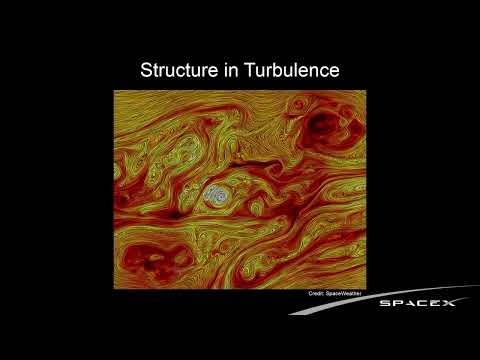
GPUs to Mars: Full-Scale Simulation of SpaceX's Mars Rocket Engine
126K views • 11 years ago
insideHPC Report
SpaceX engineers present at NVIDIA's GPU Technology Conference on a multi-physics code that simulates the full-scale Raptor methane engine. It covers GPU-based turbulent combustion modeling with adaptive grids and wavelet compression.
 32:02
Autonomous Testing and the Future of Software Development - Will Wilson
7K views • 7 years ago
The Linux Foundation
Will Wilson explains autonomous testing: using deterministic simulation and fuzzing, building on FoundationDB's approach, to test software continuously. It sets out the ideas behind his later company Antithesis.
 1:01:15
25c3: The Ultimate Commodore 64 Talk
160K views • 15 years ago
Christiaan008
Michael Steil's 25C3 talk covers the Commodore 64's architecture, quirks and demoscene tricks in about an hour. It aims to convey everything about the machine in a compact, nostalgic tour.
 51:57
27c3: Reverse Engineering the MOS 6502 CPU (en)
477K views • 15 years ago
Christiaan008
Michael Steil's 27c3 talk on reverse engineering the MOS 6502 from die shots into a transistor-level simulation, as in the Visual6502 project. It covers going from chip package to a digital model.