erv
 12:07
Why Are 96,000,000 Black Balls on This Reservoir?
112.9M views • 7 years ago
Veritasium
Veritasium rides a boat across the Los Angeles reservoir covered in 96 million black plastic balls. He explains why they were really introduced, which was not primarily to reduce evaporation.
 5:41
I visited the US National Helium Reserve
2.4M views • 6 years ago
Tom Scott
Tom Scott visits the US National Helium Reserve in Amarillo, Texas, and explains why headlines that the world is running out of helium are misleading. He covers the Federal Helium Program and its planned privatization.
 11:46
Zipline - How Rwanda Built A Drone Delivery Service
1.6M views • 7 years ago
Real Engineering
Real Engineering explains how Zipline built a drone delivery network for medical supplies in Rwanda. It covers the fixed-wing drones, catapult launch, parachute drop and the logistics behind the service.
 5:13
Overview of Illumina Sequencing by Synthesis Workflow | Standard SBS chemistry
2.7M views • 10 years ago
Illumina
Illumina's 3D animation of its sequencing-by-synthesis workflow, from sample preparation and cluster generation to sequencing on a flow cell and data analysis.
 8:44
MMO Economies - Hyperinflation, Reserve Currencies & You! - Extra Credits
1.5M views • 9 years ago
Extra Credits
An Extra Credits episode on how MMO economies get overrun by inflation when players can mint unlimited gold by killing monsters. It covers approaches borrowed from real-world economics, such as anchoring or pegging currency, as alternatives to simple gold sinks.
 11:11
The Agricultural Revolution: Crash Course World History #1
17.7M views • 14 years ago
CrashCourse
The first episode of Crash Course World History, in which John Green covers the shift from hunting and gathering to agriculture and how it shaped civilization. It is delivered fast and with jokes.
Topic match · Environment, agriculture & food systems 12:23
Xanadu Basics 1a - VISIBLE CONNECTION
20K views • 8 years ago
TheTedNelson
Ted Nelson explains the original Xanadu hypertext idea of visible connection, the notion that links between documents should be shown and preserved. He argues that the Web and current document standards lost this concept.
Topic match · Tech pioneers & interviews 11:41
TRUE Limits Of Humanity – The Final Border We Will Never Cross
23.6M views • 5 years ago
Kurzgesagt – In a Nutshell
Kurzgesagt explains why, even with science-fiction technology, most of the universe is permanently out of reach because of cosmic expansion and finite resources.
Topic match · Cosmology & astrophysics 13:02
Noether's Theorem and The Symmetries of Reality
1.1M views • 8 years ago
PBS Space Time
PBS Space Time explains Noether's theorem: conservation laws such as energy and momentum are consequences of deeper symmetries. It also covers why those laws hold only under certain conditions.
 8:03
Why You Can't Name A File CON In Windows
7.8M views • 6 years ago
Tom Scott
Tom Scott explains why Windows does not let you name a file CON, tracing the reserved device names back to backwards compatibility with DOS.
 5:43
The EU Has Orbits, and the UK Fell Out of All of Them
0 views • 7 years ago
CGP Grey
CGP Grey's six-minute explainer of the relationships the UK could have with the EU, based on Barnier's slide, shown as orbits of different closeness. It explains why the UK's red lines ruled out the closer options.
Topic match · Geopolitics & foreign policy 7:16
Unix and Google
9K views • 10 years ago
FOAM
A short animated simulation comparing how Multics and Unix were developed, showing why Unix's small composable programs and pipes gave it a efficiency advantage. It frames Unix as a moonshot achievable by a small team.
Topic match · Software architecture & design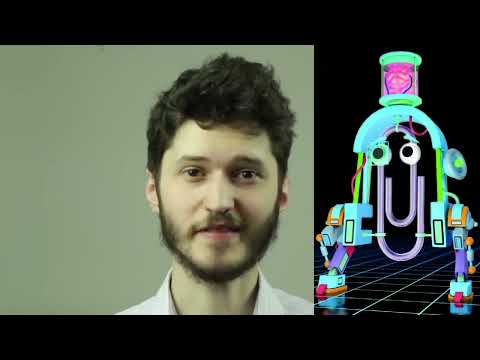 10:36
Why Would AI Want to do Bad Things? Instrumental Convergence
274K views • 8 years ago
Robert Miles AI Safety
Robert Miles explains instrumental convergence: why an AGI with almost any goal would tend to pursue sub-goals like self-preservation and resource acquisition. It builds on Omohundro's basic AI drives and his orthogonality thesis video.
Topic match · AI safety, AGI & impact 16:39
Feeding Bill Gates a Fake Burger (to save the world)
83.4M views • 6 years ago
Mark Rober
Mark Rober makes a plant-based burger for Bill Gates and explains why meat production strains the environment. Gates also appears and discusses his worry about steel and cement.
Topic match · Environment, agriculture & food systems 4:42
The US-Canada Border Is 5,500 Miles of Pure Nonsense
37.4M views • 13 years ago
CGP Grey
CGP Grey walks through the odd history and quirks of the US-Canada border, including how it was surveyed and its irregularities such as exclaves.
Topic match · Geopolitics & foreign policy 16:07
The Geometry of Causality
1.8M views • 9 years ago
PBS Space Time
PBS Space Time explains how spacetime geometry and light cones determine the order of events and what can cause what. It visualizes causality in special relativity.
Topic match · Cosmology & astrophysics 11:50
Dark Matter: The Situation has Changed
830K views • 5 years ago
Sabine Hossenfelder
Sabine Hossenfelder explains how her opinion on dark matter has shifted, weighing the evidence for and against it and the case for modified gravity. It runs through what dark matter is and why it has not been detected.
Topic match · Cosmology & astrophysics 8:20
Is Organic Really Better? Healthy Food or Trendy Scam?
12.6M views • 7 years ago
Kurzgesagt – In a Nutshell
A Kurzgesagt explainer asking whether organic food is really healthier or better for the environment. It defines what organic means and looks at pesticide use, nutrition and environmental impact, with sources.
Topic match · Environment, agriculture & food systems 11:48
Superluminal Time Travel + Time Warp Challenge Answer
1M views • 9 years ago
PBS Space Time
A PBS Space Time episode explaining why faster-than-light travel is equivalent to travelling back in time, using relativity and Minkowski diagrams for different observers.
Topic match · Cosmology & astrophysics 8:14
The Lightning Network Explained (Litecoin/Bitcoin)
119K views • 9 years ago
Franklyn
An 8-minute explainer on the Lightning Network and how it relates to Segwit, Bitcoin and Litecoin. It covers how off-chain payment channels route payments to scale blockchain transactions.
Topic match · Distributed systems 15:48
How to Detect Extra Dimensions
1.6M views • 8 years ago
PBS Space Time
A PBS Space Time episode on how gravitational wave observations of a neutron star merger, GW170817, can limit the number of spacetime dimensions. It is based on a 2018 paper.
Topic match · Cosmology & astrophysics 16:36
JWST just made the "Crisis in Cosmology" WORSE
1.3M views • 3 years ago
Dr. Becky
Astrophysicist Dr. Becky explains the Hubble tension, the disagreement between expansion-rate measurements from the cosmic microwave background and the distance ladder, and what early JWST Cepheid observations add.
Topic match · Cosmology & astrophysics 12:21
What If Dark Matter Is Just Black Holes?
988K views • 5 years ago
PBS Space Time
PBS Space Time asks whether dark matter could be made of primordial black holes. It walks through the observational constraints that limit this idea.
Topic match · Cosmology & astrophysics 11:06
The Map of Mathematics
16.3M views • 9 years ago
Domain of Science
An animated 11-minute tour of the whole field of mathematics as a single map, showing how pure and applied math and their sub-fields relate to each other.
 6:47
The US Has More Tribes Than the World Has Countries
7.3M views • 6 years ago
CGP Grey
CGP Grey explains why "Indian" is often preferred over "Native American" in the United States, especially near reservations, and how many tribes exist in the US. He draws on conversations with people who identify as Indian.
 13:39
How is this Website so fast!?
2.4M views • 2 years ago
Wes Bos
Wes Bos breaks down the techniques behind the McMaster-Carr website's speed: server-rendered HTML, prefetching, CDN and service worker caching, preloading, critical CSS and fixed-size images. He also notes its old-school jQuery and YUI JavaScript.
 6:49
Quantitative Easing Explained
6.4M views • 16 years ago
malekanoms
An animated xtranormal explainer on quantitative easing, what the Federal Reserve was doing and how things got there. It was made by Omid Malekan.
 15:01
What Happened to Horses Is Happening to Us
19.8M views • 12 years ago
CGP Grey
CGP Grey's video "Humans Need Not Apply" argues that automation will make a large part of the workforce economically obsolete, much as engines did for horses. It surveys robots and software replacing both physical and mental labor.
Topic match · AI safety, AGI & impact 18:20
FIXING the ENTIRE SM64 Source Code (INSANE N64 performance)
3.2M views • 4 years ago
Kaze Emanuar
Kaze Emanuar explains how he rewrote and optimized the Super Mario 64 source code so it runs far faster on real N64 hardware. He covers performance bottlenecks and fixes in detail for his ROM hacks.
Topic match · Game history & retro gaming 11:33
A new way to visualize General Relativity
3.6M views • 6 years ago
ScienceClic English
ScienceClic explains why the rubber sheet analogy for general relativity is misleading and offers a new visualization that includes the curvature of time and shows gravity as motion through curved spacetime.
Topic match · Cosmology & astrophysics 13:03
Intelligence and Stupidity: The Orthogonality Thesis
710K views • 8 years ago
Robert Miles AI Safety
Robert Miles explains the orthogonality thesis: how an agent can be highly intelligent while pursuing goals that seem stupid or alien to humans. He separates intelligence from goals and touches on the stamp-collector example.
Topic match · AI safety, AGI & impact 7:39
Propaganda Games: Sesame Credit - The True Danger of Gamification - Extra Credits
2M views • 10 years ago
Extra Credits
An Extra Credits episode on China's Sesame Credit, which gamifies obedient citizenship through a social score. It covers how the system rewards conformity and pressures people through their friends' behavior.
Topic match · Geopolitics & foreign policy 6:51
Star Size Comparison 2
48.7M views • 10 years ago
morn1415
A visual scale comparison of stars and cosmic objects, from planets up to some of the largest known stars, set to music. It is meant to convey the vastness of the universe.
Topic match · Cosmology & astrophysics 17:34
What Everyone Gets Wrong About Gravity
15.6M views • 6 years ago
Veritasium
Veritasium explains, with expert input, that in general relativity gravity is not a force and objects follow straight paths through curved spacetime, including why standing on the ground means you are accelerating.
Topic match · Cosmology & astrophysics 10:22
How Far Are The Nearest Stars?
3.7M views • 9 years ago
Cody'sLab
Cody's Lab builds a 200-billionth-scale model to show how far away the nearest stars are, using parallax and light speed. A short astronomy explainer on interstellar distances.
Topic match · Cosmology & astrophysics 9:37
Characters, Symbols and the Unicode Miracle - Computerphile
2.1M views • 13 years ago
Computerphile
Tom Scott explains for Computerphile how Unicode and UTF-8 grew out of messy older character encodings to become the web's standard. It covers why the design works and how it handles worldwide text.
Topic match · Networking & internet infrastructure 15:27
Why Not Just: Think of AGI Like a Corporation?
163K views • 7 years ago
Robert Miles AI Safety
Robert Miles asks whether corporations can be thought of as artificial general superintelligences and how far the analogy holds. He argues the differences, such as being limited by employees' capabilities, matter for AI safety.
Topic match · AI safety, AGI & impact 8:39
How to Move the Sun: Stellar Engines
19.5M views • 6 years ago
Kurzgesagt – In a Nutshell
Kurzgesagt explains stellar engines such as the Shkadov thruster and Caplan thruster, which could move the Sun and solar system across the galaxy over millions of years to avoid hazards and reach new regions.
Topic match · Cosmology & astrophysics 15:29
How Time Becomes Space Inside a Black Hole | Space Time
2.5M views • 9 years ago
PBS Space Time
A PBS Space Time episode explaining how space and time swap roles inside a black hole's event horizon. It is part of the channel's black hole series.
Topic match · Cosmology & astrophysics 4:44
Debt Metaphor
95K views • 17 years ago
Ward Cunningham
Ward Cunningham explains the history and intent of the debt metaphor, which he coined while refactoring the WyCash product. He says debt means code reflecting an incomplete understanding of the problem, not sloppy programming.
Topic match · Software architecture & design