eu
 24:28
Euler's formula with introductory group theory
2.8M views • 9 years ago
3Blue1Brown
3Blue1Brown builds intuition for Euler's formula, e^(pi i) = -1, using the core ideas of group theory. It treats exponentiation geometrically as rotation and scaling instead of repeated multiplication.
 18:40
But what is a neural network? | Deep learning chapter 1
25.1M views • 9 years ago
3Blue1Brown
3Blue1Brown's first chapter on deep learning explains what neurons and layers are and the math underlying a basic neural network, using handwritten digit recognition with visual animations.
 7:55
Is the EU Democratic? Does Your Vote Matter?
5.6M views • 7 years ago
Kurzgesagt – In a Nutshell
Kurzgesagt explains how the European Union is governed, how its officials are elected or appointed, and whether a citizen's vote actually matters.
 5:51
Europe Is Actually Five Different Groups of Countries
14.9M views • 13 years ago
CGP Grey
A short CGP Grey explainer on the overlapping and inconsistent membership arrangements of European countries across the EU, Schengen, the euro and the EEA. It shows why "the EU" is full of exceptions.
 11:45
The History of Europe: Every Year
33.9M views • 8 years ago
Cottereau
An animated map showing the borders and populations of European countries for every year since 400 BC. Vassal states and colonies are excluded from population counts.
 4:08
e^(iπ) in 3.14 minutes, using dynamics | DE5
3.4M views • 7 years ago
3Blue1Brown
A short 3Blue1Brown video explaining Euler's formula e^(i*pi) = -1 through dynamics, treating velocity as the thing that moves a point to a new position. It builds geometric intuition for why an exponent with i produces rotation.
Topic match · Pure mathematics 20:33
Gradient descent, how neural networks learn | Deep Learning Chapter 2
9.7M views • 9 years ago
3Blue1Brown
3Blue1Brown's second neural network chapter explains cost functions and gradient descent, showing how a network learns by minimizing error during training.
 5:26
Neural Network Learns The Physics of Fluids and Smoke | Two Minute Papers #118
209K views • 9 years ago
Two Minute Papers
Two Minute Papers covers a paper on speeding up fluid and smoke simulation with convolutional networks. It contrasts the approach with earlier regression forest methods.
 5:43
The EU Has Orbits, and the UK Fell Out of All of Them
0 views • 7 years ago
CGP Grey
CGP Grey's six-minute explainer of the relationships the UK could have with the EU, based on Barnier's slide, shown as orbits of different closeness. It explains why the UK's red lines ruled out the closer options.
 3:49
Gender Neutral Pronouns: They're Here, Get Used To Them
4.6M views • 13 years ago
Tom Scott
Tom Scott argues that grammatical gender is a silly concept and that the singular 'they' is an established gender-neutral pronoun. The description carries later corrections and reflections he added in 2019.
 12:47
Backpropagation, intuitively | Deep Learning Chapter 3
6.4M views • 9 years ago
3Blue1Brown
3Blue1Brown's third deep learning chapter gives a visual, intuitive account of backpropagation and what happens to a neural network as it learns. A follow-up video covers the underlying calculus.
Topic match · Machine learning & deep learning 4:17
AI Learns Noise Filtering For Photorealistic Videos | Two Minute Papers #215
65K views • 8 years ago
Two Minute Papers
A Two Minute Papers episode on NVIDIA's recurrent denoising autoencoder, which cleans up noisy Monte Carlo path-traced image sequences. It shows how a neural network can produce usable renders from very few samples.
Topic match · Machine learning & deep learning 10:18
Backpropagation calculus | Deep Learning Chapter 4
4M views • 9 years ago
3Blue1Brown
3Blue1Brown's chapter 4 on deep learning gives a more formal, symbol-based account of backpropagation calculus, connecting the intuition from the previous chapter to the math found in textbooks and code.
Topic match · Machine learning & deep learning 4:58
You Actually Share Your Brain With a Silent Stranger
20.2M views • 10 years ago
CGP Grey
CGP Grey explains split-brain patients, where severing the corpus callosum lets the two hemispheres act independently. He uses this to explore the idea of two minds in one head.
Topic match · Neuroscience & the brain 14:06
Testing 432 Hz Frequencies (and temperaments)
4M views • 7 years ago
Adam Neely
Adam Neely tests the claims for tuning to A=432 Hz by trying the unusual tuning systems that its proponents' numerology requires. He compares how they sound against standard tuning and temperaments.
Topic match · Religion, belief & skepticism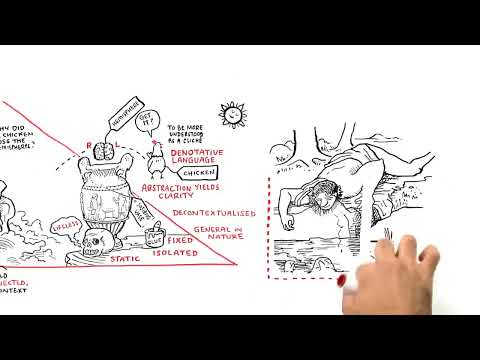 11:48
RSA ANIMATE: The Divided Brain
2.2M views • 15 years ago
Royal Society of Arts
An RSA Animate summary of Iain McGilchrist's lecture on the divided brain, arguing the brain's two hemispheres attend to the world differently and that this has shaped culture and society.
Topic match · Neuroscience & the brain 15:15
WHY Exercise is so Underrated (Brain Power & Movement Link)
4.3M views • 9 years ago
Joseph Everett - WIL
A video arguing that exercise matters for the brain as much as the body, linking movement, the nervous system and BDNF to learning and memory. It draws on research connecting complex movement to brain development.
Topic match · Neuroscience & the brain 4:45
How playing an instrument benefits your brain - Anita Collins
15.2M views • 12 years ago
TED-Ed
A short TED-Ed animated lesson by Anita Collins on what happens in the brain when people play a musical instrument. It argues that playing engages many brain areas at once, like a full-body workout, with long-term benefits.
Topic match · Neuroscience & the brain 20:22
Boeing 737 Stall Escape manoeuvre, why MAX needs MCAS!!
1.2M views • 7 years ago
Mentour Pilot
Mentour Pilot, a 737 instructor, explains the approach-to-stall and escape manoeuvre and why the 737 MAX needs MCAS while the 737NG did not. He covers the jackscrew and pitch behavior in terms a general viewer can follow.
 3:36
Hold music used to sound better. Here's why.
2.9M views • 8 years ago
Tom Scott
Tom Scott explains why hold music sounds worse than it used to, tracing it to old telephone exchanges and the audio compression applied by modern switches. It is a short visit to the Milton Keynes Museum.
Topic match · History of computing 13:04
VACNET Anti-cheat
574K views • 8 years ago
3kliksphilip
3kliksphilip summarizes Valve's GDC talk on VACNet, a deep-learning system that flags CS:GO cheaters and feeds the Overwatch review queue. It covers Trust Factor, VAC, and how the data is collected and analyzed.
Topic match · Machine learning & deep learning 10:26
Tiny meteorites are everywhere. Here’s how to find them.
1.2M views • 7 years ago
Verge Science
Verge Science's pilot of its Trial & Error series follows amateur scientist Jon Larsen on a hunt for micrometeorites. It shows how tiny space rocks can be found on rooftops and confirmed under a microscope.
 5:44
Why Teleportation Would Kill You
7.3M views • 10 years ago
CGP Grey
CGP Grey asks whether Star Trek-style teleportation would kill you and recreate a copy, working through the philosophy of identity and the Ship of Theseus. It is a short animated explainer.
 14:28
A Scientist Spilled 2 Drops Organic Mercury On Her Hand. This Is What Happened To Her Brain.
15.8M views • 8 years ago
Chubbyemu
Chubbyemu narrates the true case of a professor who spilled two drops of dimethylmercury on her hand and suffered fatal neurological damage.
 32:11
Darts in Higher Dimensions (with 3blue1brown) - Numberphile
2.1M views • 6 years ago
Numberphile
Numberphile talks with Grant Sanderson of 3Blue1Brown about a darts puzzle with a shrinking bullseye. Solving it takes the volumes of high-dimensional spheres, and the answer turns up Euler's number.
 19:42
But what is the Fourier Transform? A visual introduction.
12.6M views • 8 years ago
3Blue1Brown
3Blue1Brown's animated visual introduction to the Fourier Transform, showing how a signal breaks into frequency components.
Topic match · Pure mathematics 11:15
The hardest problem on the hardest test
16.5M views • 8 years ago
3Blue1Brown
3Blue1Brown walks through a very hard Putnam competition problem and its elegant solution, emphasizing the visual intuition and the thought process behind solving it.
Topic match · Pure mathematics 10:03
The determinant | Chapter 6, Essence of linear algebra
5M views • 10 years ago
3Blue1Brown
A 10-minute 3Blue1Brown chapter explaining the determinant as the factor by which a linear transformation scales area or volume. It builds the idea geometrically with animations before any formulas.
Topic match · Pure mathematics 7:16
Unix and Google
9K views • 10 years ago
FOAM
A short animated simulation comparing how Multics and Unix were developed, showing why Unix's small composable programs and pipes gave it a efficiency advantage. It frames Unix as a moonshot achievable by a small team.
Topic match · History of computing 21:36
Fractals are typically not self-similar
4.6M views • 9 years ago
3Blue1Brown
3Blue1Brown explains fractal dimension and shows why many fractals are not strictly self-similar. Self-similarity turns out to be a special case of the broader idea of fractional dimension.
Topic match · Pure mathematics 24:14
The Banach–Tarski Paradox
49.1M views • 11 years ago
Vsauce
Vsauce's roughly 24 minute explainer on the Banach-Tarski paradox, building from infinity and set theory to the decomposition of a sphere into pieces that form two spheres.
Topic match · Pure mathematics 25:13
Thinking outside the 10-dimensional box
3.2M views • 9 years ago
3Blue1Brown
3Blue1Brown visualizes high-dimensional spheres to explain a surprising puzzle about how a sphere fits in a box as dimensions grow. It builds geometric intuition for counterintuitive properties of high-dimensional space.
Topic match · Pure mathematics 3:39
(1/4) Intro/History: Introducing a 100-year-old mechanical computer
476K views • 12 years ago
engineerguy
The first of four short videos from Bill Hammack (engineerguy) introducing and giving the history of a 100-year-old mechanical computer, Michelson's harmonic analyzer. The series goes on to explain Fourier synthesis, analysis and operation of the machine.
Topic match · History of computing 6:34
Why Is It So Hard to Do Something That Should Be Easy? (Wall of Awful pt. 1)
2.1M views • 7 years ago
How to ADHD
A short How to ADHD explainer, featuring Brendan Mahan, on why simple tasks can feel impossible for people with ADHD. It introduces the 'wall of awful', a pile of past failures, shame and anxiety that builds up in front of a task and blocks starting it.
Topic match · Mental health & neurodiversity 17:16
Eigenvectors and eigenvalues | Chapter 14, Essence of linear algebra
6.4M views • 10 years ago
3Blue1Brown
3Blue1Brown's chapter on eigenvectors and eigenvalues in the Essence of Linear Algebra series. It builds a visual intuition for what they mean, why an eigenbasis is useful, and ends with a puzzle.
Topic match · Pure mathematics 14:27
All the Numbers - Numberphile
1.8M views • 7 years ago
Numberphile
Matt Parker talks Numberphile through the different kinds of numbers: algebraic, transcendental, computable, normal, and beyond. It shows how few numbers we can actually name or describe.
Topic match · Pure mathematics 31:51
Visualizing the 4d numbers Quaternions
5.6M views • 8 years ago
3Blue1Brown
3Blue1Brown builds visual intuition for quaternions, showing how to think about this four-dimensional number system using stereographic projection and rotations in 3D space. It is part one of a two-part series with an interactive companion site.
Topic match · Pure mathematics 34:25
Ramanujan: Making sense of 1+2+3+... = -1/12 and Co.
3.6M views • 10 years ago
Mathologer
Mathologer examines how identities like 1+2+3+... = -1/12 arise in Ramanujan's work, starting from his 1913 letter to Hardy. The video explains the rules for summing infinite series and why such results are meaningful but not naive sums.
Topic match · Pure mathematics 15:08
What does it feel like to invent math?
4.6M views • 11 years ago
3Blue1Brown
3Blue1Brown explores infinite sums from convergent to divergent, with an introduction to the 2-adic metric, themed on the cycle between discovering and inventing mathematics.
Topic match · Pure mathematics 22:11
But what is the Riemann zeta function? Visualizing analytic continuation
5.4M views • 9 years ago
3Blue1Brown
3Blue1Brown visualizes the Riemann zeta function and the analytic continuation that extends it beyond where its series converges, building toward the Riemann hypothesis.
Topic match · Pure mathematics