eu
 24:28
Euler's formula with introductory group theory
2.8M views • 9 years ago
3Blue1Brown
3Blue1Brown builds intuition for Euler's formula, e^(pi i) = -1, using the core ideas of group theory. It treats exponentiation geometrically as rotation and scaling instead of repeated multiplication.
 18:40
But what is a neural network? | Deep learning chapter 1
25.1M views • 9 years ago
3Blue1Brown
3Blue1Brown's first chapter on deep learning explains what neurons and layers are and the math underlying a basic neural network, using handwritten digit recognition with visual animations.
 9:33
The British Museum is full of stolen artifacts
6.7M views • 6 years ago
Vox
A Vox explainer on how many of the British Museum's treasures were taken during British imperial rule, focusing on the Benin Bronzes and requests for their return.
 17:20
The Extreme Engineering of ASML’s EUV Light Source
698K views • 4 years ago
Asianometry
Asianometry explains the EUV light source inside ASML's lithography machines, where lasers hit falling tin droplets twice to produce 13.5 nm light. It walks through the engineering of the droplet generator, the pre-pulse and main laser, and the plasma that results.
 7:55
Is the EU Democratic? Does Your Vote Matter?
5.6M views • 7 years ago
Kurzgesagt – In a Nutshell
Kurzgesagt explains how the European Union is governed, how its officials are elected or appointed, and whether a citizen's vote actually matters.
 5:51
Europe Is Actually Five Different Groups of Countries
14.9M views • 13 years ago
CGP Grey
A short CGP Grey explainer on the overlapping and inconsistent membership arrangements of European countries across the EU, Schengen, the euro and the EEA. It shows why "the EU" is full of exceptions.
 11:45
The History of Europe: Every Year
33.9M views • 8 years ago
Cottereau
An animated map showing the borders and populations of European countries for every year since 400 BC. Vassal states and colonies are excluded from population counts.
 4:08
e^(iπ) in 3.14 minutes, using dynamics | DE5
3.4M views • 7 years ago
3Blue1Brown
A short 3Blue1Brown video explaining Euler's formula e^(i*pi) = -1 through dynamics, treating velocity as the thing that moves a point to a new position. It builds geometric intuition for why an exponent with i produces rotation.
Topic match · Pure mathematics 20:33
Gradient descent, how neural networks learn | Deep Learning Chapter 2
9.7M views • 9 years ago
3Blue1Brown
3Blue1Brown's second neural network chapter explains cost functions and gradient descent, showing how a network learns by minimizing error during training.
 5:26
Neural Network Learns The Physics of Fluids and Smoke | Two Minute Papers #118
209K views • 9 years ago
Two Minute Papers
Two Minute Papers covers a paper on speeding up fluid and smoke simulation with convolutional networks. It contrasts the approach with earlier regression forest methods.
 5:43
The EU Has Orbits, and the UK Fell Out of All of Them
0 views • 7 years ago
CGP Grey
CGP Grey's six-minute explainer of the relationships the UK could have with the EU, based on Barnier's slide, shown as orbits of different closeness. It explains why the UK's red lines ruled out the closer options.
 38:31
The $200M Machine that Prints Microchips: The EUV Photolithography System
2.4M views • 1 year ago
Branch Education
Branch Education's animated deep dive into ASML's EUV photolithography machine and how it prints nanometer-scale transistors onto chips. It covers the system's components and the process of chip manufacturing.
 21:42
Future Computers Will Be Radically Different (Analog Computing)
13.2M views • 4 years ago
Veritasium
Veritasium explains why analog computing may suit AI workloads, covering old analog computers, The Analog Thing and Mythic's analog chips that use flash memory for neural network inference. It argues digital hardware is hitting limits.
Topic match · Machine learning & deep learning 55:02
GradIEEEnt half decent: The hidden power of imprecise lines
391K views • 3 years ago
suckerpinch
Tom 7 (suckerpinch) delivers a long, comedic digression on gradient descent and floating-point imprecision. He shows how rounding behavior can supply the nonlinearity needed to build a neural network.
Topic match · Machine learning & deep learning 55:00
The Closest Thing We Have to Alien Technology
64.9M views • 10 months ago
Veritasium
Veritasium explains how ASML's EUV lithography machines make the most advanced computer chips, covering the engineering of the light source, mirrors and the supply chain around them. It is a long-form explainer on the world's most complex commercial machine.
 3:49
Gender Neutral Pronouns: They're Here, Get Used To Them
4.6M views • 13 years ago
Tom Scott
Tom Scott argues that grammatical gender is a silly concept and that the singular 'they' is an established gender-neutral pronoun. The description carries later corrections and reflections he added in 2019.
 12:47
Backpropagation, intuitively | Deep Learning Chapter 3
6.4M views • 9 years ago
3Blue1Brown
3Blue1Brown's third deep learning chapter gives a visual, intuitive account of backpropagation and what happens to a neural network as it learns. A follow-up video covers the underlying calculus.
Topic match · Machine learning & deep learning 8:25
Large Language Models from scratch
375K views • 4 years ago
Graphics in 5 Minutes
A short cartoon explaining how language models like ChatGPT work, from autocomplete and conditional probabilities to neural networks, gradient descent and backpropagation. It shows how networks act as universal function approximators.
Topic match · Machine learning & deep learning 24:07
AI can't cross this line and we don't know why.
2.5M views • 2 years ago
Welch Labs
A Welch Labs explainer on neural scaling laws and the compute-efficient frontier, asking why model loss seems to hit a line it cannot cross. It draws an analogy to an ideal gas law for AI.
Topic match · Machine learning & deep learning 4:17
AI Learns Noise Filtering For Photorealistic Videos | Two Minute Papers #215
65K views • 8 years ago
Two Minute Papers
A Two Minute Papers episode on NVIDIA's recurrent denoising autoencoder, which cleans up noisy Monte Carlo path-traced image sequences. It shows how a neural network can produce usable renders from very few samples.
Topic match · Machine learning & deep learning 10:18
Backpropagation calculus | Deep Learning Chapter 4
4M views • 9 years ago
3Blue1Brown
3Blue1Brown's chapter 4 on deep learning gives a more formal, symbol-based account of backpropagation calculus, connecting the intuition from the previous chapter to the math found in textbooks and code.
Topic match · Machine learning & deep learning 4:58
You Actually Share Your Brain With a Silent Stranger
20.2M views • 10 years ago
CGP Grey
CGP Grey explains split-brain patients, where severing the corpus callosum lets the two hemispheres act independently. He uses this to explore the idea of two minds in one head.
Topic match · Neuroscience & the brain 14:06
Testing 432 Hz Frequencies (and temperaments)
4M views • 7 years ago
Adam Neely
Adam Neely tests the claims for tuning to A=432 Hz by trying the unusual tuning systems that its proponents' numerology requires. He compares how they sound against standard tuning and temperaments.
Topic match · Religion, belief & skepticism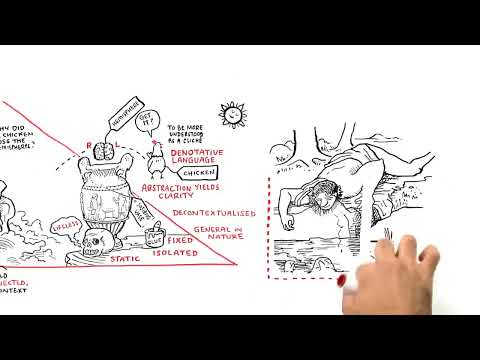 11:48
RSA ANIMATE: The Divided Brain
2.2M views • 15 years ago
Royal Society of Arts
An RSA Animate summary of Iain McGilchrist's lecture on the divided brain, arguing the brain's two hemispheres attend to the world differently and that this has shaped culture and society.
Topic match · Neuroscience & the brain 12:41
My Video Got 2 Companies Shut Down! (And even worse negative ion products)
5.6M views • 5 years ago
The Thought Emporium
The Thought Emporium follows up on his earlier video showing negative ion products are radioactive, reporting that Amazon pulled listings and companies shut down. He tests more radioactive quack products with a Geiger counter and cloud chamber.
Topic match · Religion, belief & skepticism 15:15
WHY Exercise is so Underrated (Brain Power & Movement Link)
4.3M views • 9 years ago
Joseph Everett - WIL
A video arguing that exercise matters for the brain as much as the body, linking movement, the nervous system and BDNF to learning and memory. It draws on research connecting complex movement to brain development.
Topic match · Neuroscience & the brain 4:45
How playing an instrument benefits your brain - Anita Collins
15.2M views • 12 years ago
TED-Ed
A short TED-Ed animated lesson by Anita Collins on what happens in the brain when people play a musical instrument. It argues that playing engages many brain areas at once, like a full-body workout, with long-term benefits.
Topic match · Neuroscience & the brain 1:20
Paul Otlet, visioning a web in 1934
102K views • 18 years ago
Attila Gárdos
A one-minute clip about Paul Otlet, the Belgian bibliographer who in 1934 imagined users accessing a remote database through an electric telescope over a phone line. It presents his vision as a precursor of the web.
Topic match · History of computing 20:27
Negative Ion/Anti-5g Products Are Actually RADIOACTIVE
2.2M views • 6 years ago
The Thought Emporium
The Thought Emporium tests so-called negative ion and anti-5G wellness products and finds they are radioactive, with some coated in powdered thorium.
Topic match · Religion, belief & skepticism 18:20
The Problem with Solar Energy in Africa
8.1M views • 5 years ago
Real Engineering
Real Engineering looks at why Africa's abundant solar potential is hard to turn into usable power, especially for Europe. It covers the transmission, infrastructure and economic obstacles, and the pivot from concentrated solar to photovoltaics.
 4:01
Spherical Geometry Is Stranger Than Hyperbolic - Hyperbolica Devlog #2
1.8M views • 6 years ago
CodeParade
CodeParade's short devlog on how spherical geometry looks in 2D and 3D and why it feels so unusual, part of the Hyperbolica series on a non-Euclidean game.
 20:22
Boeing 737 Stall Escape manoeuvre, why MAX needs MCAS!!
1.2M views • 7 years ago
Mentour Pilot
Mentour Pilot, a 737 instructor, explains the approach-to-stall and escape manoeuvre and why the 737 MAX needs MCAS while the 737NG did not. He covers the jackscrew and pitch behavior in terms a general viewer can follow.
 16:52
Why Swiss Trains are the Best in Europe
2.3M views • 4 years ago
Not Just Bikes
Not Just Bikes explains why Swiss trains are considered among the best in Europe and the world, covering frequency, connections and what riding them is like.
 18:39
This equation will change how you see the world (the logistic map)
17.1M views • 6 years ago
Veritasium
A Veritasium video on the logistic map, showing how a simple population equation leads to chaos and bifurcation. It connects the idea to convection, neuron firing and the Mandelbrot set, with interactive animations.
Topic match · Pure mathematics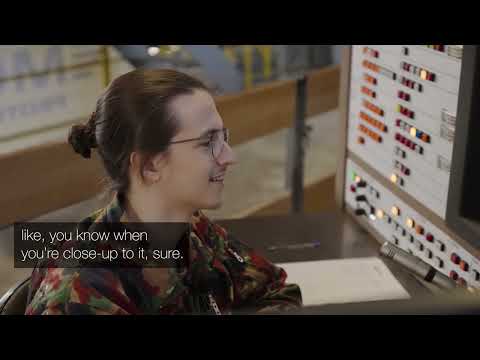 4:40
This 1970s tank simulator drives through a tiny world
12M views • 4 years ago
Tom Scott
Tom Scott visits the Swiss Military Museum to see the last surviving 1970s tank-driving simulator. It uses a real camera moving over a miniature model landscape rather than any computer graphics.
Topic match · History of computing 3:36
Hold music used to sound better. Here's why.
2.9M views • 8 years ago
Tom Scott
Tom Scott explains why hold music sounds worse than it used to, tracing it to old telephone exchanges and the audio compression applied by modern switches. It is a short visit to the Milton Keynes Museum.
Topic match · History of computing 13:04
VACNET Anti-cheat
574K views • 8 years ago
3kliksphilip
3kliksphilip summarizes Valve's GDC talk on VACNet, a deep-learning system that flags CS:GO cheaters and feeds the Overwatch review queue. It covers Trust Factor, VAC, and how the data is collected and analyzed.
Topic match · Machine learning & deep learning 10:26
Tiny meteorites are everywhere. Here’s how to find them.
1.2M views • 7 years ago
Verge Science
Verge Science's pilot of its Trial & Error series follows amateur scientist Jon Larsen on a hunt for micrometeorites. It shows how tiny space rocks can be found on rooftops and confirmed under a microscope.
 5:44
Why Teleportation Would Kill You
7.3M views • 10 years ago
CGP Grey
CGP Grey asks whether Star Trek-style teleportation would kill you and recreate a copy, working through the philosophy of identity and the Ship of Theseus. It is a short animated explainer.
 14:28
A Scientist Spilled 2 Drops Organic Mercury On Her Hand. This Is What Happened To Her Brain.
15.8M views • 8 years ago
Chubbyemu
Chubbyemu narrates the true case of a professor who spilled two drops of dimethylmercury on her hand and suffered fatal neurological damage.