evolution simulation
 4:10
Karl Sims - Evolved Virtual Creatures, Evolution Simulation, 1994
797K views • 17 years ago
MediaArtTube
Karl Sims's 1994 demonstration of evolved virtual creatures: block-bodied creatures whose bodies and controllers are evolved through selection, mutation and recombination to swim, walk and compete.
 13:23
Simulating Green Beard Altruism
4.5M views • 5 years ago
Primer
Primer simulates green beard altruism, where individuals recognize and help others carrying a shared marker, and shows how imposters affect its evolution. It is an animated evolution simulation based on published papers.
 1:01:45
Information, Evolution, and intelligent Design - With Daniel Dennett
586K views • 11 years ago
The Royal Institution
Daniel Dennett gives a Royal Institution talk toward a unified theory of information, tying together evolution, learning and engineering. He argues that design can arise bottom-up through small steps without a designer.
 55:59
Jailbreaking the Simulation with George Hotz | SXSW 2019
573K views • 7 years ago
SXSW
George Hotz gives a SXSW 2019 talk on the idea that we live in a simulation and asks what actions would be available from inside it. He takes a hacker's view of whether it could be escaped.
 23:28
Nick Bostrom - The Simulation Argument (Full)
615K views • 13 years ago
Science, Technology & the Future
An interview with Nick Bostrom at Oxford's Future of Humanity Institute presenting his simulation argument: at least one of three propositions about posthuman civilizations and ancestor simulations must be true.
 1:20:35
Anton: A Special-Purpose Machine That Achieves a Hundred-Fold Speedup in Biomolecular Simulations
12K views • 14 years ago
NC State
David Shaw of D. E. Shaw Research presents Anton, a special-purpose machine that speeds up biomolecular simulations about a hundred-fold. The lecture covers molecular dynamics and how simulation helps understand how drugs bind.
 2:00:59
Is the Universe a Simulation? | 2016 Isaac Asimov Memorial Debate
5.9M views • 10 years ago
American Museum of Natural History
The 2016 Isaac Asimov Memorial Debate, moderated by Neil deGrasse Tyson, in which a panel of physicists and philosophers debates whether the universe is a simulation. Participants include David Chalmers, Zohreh Davoudi and James Gates.
 1:06:40
Polyworld: Using Evolution to Design Artificial Intelligence
220K views • 18 years ago
Google TechTalks
A 2007 Google Tech Talk introducing Polyworld, an artificial life simulator used to evolve artificial intelligence by designing worlds rather than minds. It presents results from ongoing attempts to evolve intelligent behavior.
 17:17
The Longest-Running Evolution Experiment
7M views • 5 years ago
Veritasium
Veritasium visits Richard Lenski's lab to explain the decades-long E. coli evolution experiment, which asks how repeatable evolution is and shows bacteria evolving to use a new food source.
 17:54
Coding Adventure: Ant and Slime Simulations
2.2M views • 5 years ago
Sebastian Lague
Sebastian Lague explores an ant-inspired algorithm and simulates ant and slime mold behavior, using compute shaders. Source code for both simulations is available.
 1:55
The Evolution of Bacteria on a “Mega-Plate” Petri Dish (Kishony Lab)
3M views • 10 years ago
Harvard Medical School
A two-minute time-lapse from the Kishony Lab showing bacteria spreading across a giant petri dish with increasing antibiotic doses, evolving resistance as they go.
 1:36:57
2. Behavioral Evolution
7.8M views • 15 years ago
Stanford
Stanford biologist Robert Sapolsky lectures on the evolution of behavior, including the Prisoner's Dilemma and tit-for-tat strategies in animals. It is part of his Human Behavioral Biology course.
 0:31
ants simulation
2K views • 12 years ago
Hugh Lomas
A one-minute visualization of a simulated ant colony in which ants follow pheromone trails, with the source code on GitHub. It shows emergent behavior arising from simple rules.
 4:09
Evolved Virtual Creatures (1994)
43K views • 6 years ago
karlsims
A restored 1994 video of Karl Sims' research on evolved virtual creatures, where simulated block creatures are bred through artificial evolution to swim, walk, follow and compete. It is a landmark demonstration of genetic algorithms in physics simulation.
 4:46
Discovery Channel - Large Asteroid Impact Simulation
64.8M views • 15 years ago
Anselmo La Manna
A Discovery Channel computer simulation of a large asteroid impact on Earth, showing the scale of the devastation. It sits in a broader context of early Earth impacts and the moon-forming collision.
 40:20
"Testing Distributed Systems w/ Deterministic Simulation" by Will Wilson
55K views • 12 years ago
Strange Loop Conference
Will Wilson of FoundationDB explains how the team tested their distributed database using deterministic simulation. By running the whole system in a simulator with injected faults and reproducible seeds, they could find rare concurrency and network bugs.
 14:10
Richard Dawkins demonstrates the evolution of the eye
238K views • 14 years ago
poejavlo
An excerpt from Richard Dawkins's lecture on Climbing Mount Improbable demonstrating how a complex eye can evolve through incremental steps. It answers the creationist irreducible complexity argument.
 46:37
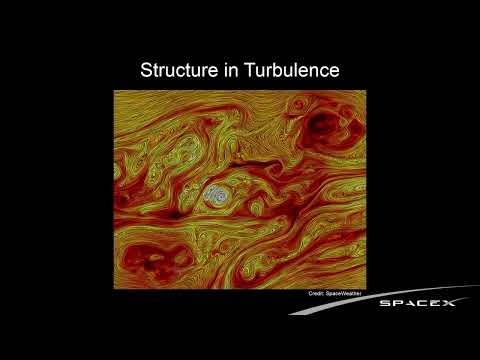
GPUs to Mars: Full-Scale Simulation of SpaceX's Mars Rocket Engine
126K views • 11 years ago
insideHPC Report
SpaceX engineers present at NVIDIA's GPU Technology Conference on a multi-physics code that simulates the full-scale Raptor methane engine. It covers GPU-based turbulent combustion modeling with adaptive grids and wavelet compression.
 21:51
Do we see reality as it is? | Donald Hoffman | TED
3.1M views • 11 years ago
TED
Cognitive scientist Donald Hoffman argues in this TED talk that evolution shaped perception to track fitness rather than truth. He uses evolutionary simulations and the Australian jewel beetle as examples.
 7:28
Why Do Things Keep Evolving Into Crabs?
10.9M views • 6 years ago
PBS Eons
A short PBS Eons episode on carcinization, the repeated independent evolution of crab-like bodies in unrelated crustaceans, and what makes that form so successful.
 1:51
New Supercomputer Simulation Sheds Light on Moon’s Origin
12.5M views • 4 years ago
NASA's Ames Research Center
A NASA and Durham University supercomputer simulation suggesting the Moon may have formed within hours of a giant impact between Earth and a Mars-sized body. It is one of the highest-resolution giant-impact simulations run.
 2:44:46
Prof. Timur Kuran on "The Portal", Episode #004: "The Economics of Revolution and Mass Deception."
220K views • 7 years ago
Eric Weinstein
Eric Weinstein interviews economist Timur Kuran on The Portal about preference falsification and how societies where people hide their real views can tip into revolutions.
 11:11
The Agricultural Revolution: Crash Course World History #1
17.7M views • 14 years ago
CrashCourse
The first episode of Crash Course World History, in which John Green covers the shift from hunting and gathering to agriculture and how it shaped civilization. It is delivered fast and with jokes.
 12:04
Simulating an Entire Car Engine (yes, it makes noise)
2.1M views • 4 years ago
AngeTheGreat
AngeTheGreat describes building a physically realistic internal combustion engine simulator in C++, drawing on fluid dynamics, physics and chemistry. It generates procedural audio for engines such as a V8.
 4:04
Richard Dawkins demonstrates laryngeal nerve of the giraffe
612K views • 16 years ago
MysOxen
A clip from Channel 4's Inside Nature's Giants in which Richard Dawkins shows the recurrent laryngeal nerve of the giraffe during a dissection. The nerve takes a long detour down the neck and back up.
 5:26
Neural Network Learns The Physics of Fluids and Smoke | Two Minute Papers #118
209K views • 9 years ago
Two Minute Papers
Two Minute Papers covers a paper on speeding up fluid and smoke simulation with convolutional networks. It contrasts the approach with earlier regression forest methods.
 31:00
Exploring the Tech and Design of Noita
288K views • 6 years ago
GDC Festival of Gaming
In this 2019 GDC session, Petri Purho of Nolla Games explains the technical side of Noita's physics engine, including scaling a falling-sand simulation to large continuous worlds and adding destructible rigid bodies. It also shows how the emergent physics drives the gameplay.
 32:02
Autonomous Testing and the Future of Software Development - Will Wilson
7K views • 7 years ago
The Linux Foundation
Will Wilson explains autonomous testing: using deterministic simulation and fuzzing, building on FoundationDB's approach, to test software continuously. It sets out the ideas behind his later company Antithesis.
 1:48:56
"Energy Revolution? More like a Crawl" - Dr. Vaclav Smil
59K views • 11 years ago
Trottier Institute for Sustainability in Engineering and Design
Energy scholar Vaclav Smil argues that global energy transitions are slow and that renewable targets should not rest on wishful thinking. He appraises how energy dependencies are likely to change and asks for using much less.
 1:25:10
Revolution OS
208K views • 14 years ago
Von Hash
Revolution OS is a feature-length documentary on the history of free software and Linux. It covers Stallman and the GNU project, Torvalds and the kernel, and Raymond and Perens on open source, starting from the era of freely shared hobbyist code.
 42:53
Ross's Game Dungeon: Deus Ex - Human Revolution
1M views • 10 years ago
Accursed Farms
Ross Scott's Game Dungeon episode critiques Deus Ex: Human Revolution, looking at its design, politics and visual style. It is part of his series of opinionated game reviews.
 57:37
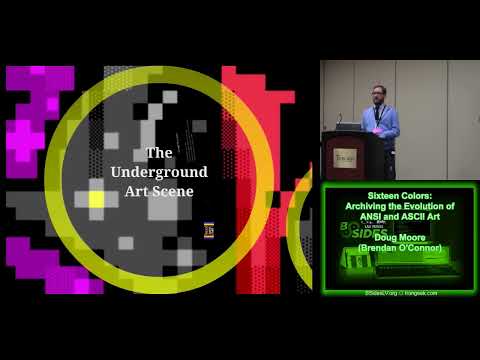
BSidesLV 2013 3 2 7 Sixteen Colors Archiving the Evolution of ANSI and ASCII Art Doug Moore Bren
16K views • 13 years ago
Adrian Crenshaw
A BSidesLV 2013 talk from the Sixteen Colors project on archiving the ANSI and ASCII art scene. It traces the scene's evolution from BBSs to the NFO and IRC era.
 40:45
Jake Vanderplas - Statistics for Hackers - PyCon 2016.mp4
93K views • 10 years ago
PyCon 2016
Jake Vanderplas's PyCon 2016 talk shows how sampling-based methods such as simulation, shuffling and bootstrapping make statistics intuitive. His pitch is that if you can write a for-loop, you can do statistics.
 2:32:25
OODA Loop & Evolutionary Epistemology of John Boyd by Chuck Spinney
6K views • 5 years ago
52 Living Ideas
Chuck Spinney, a long-time associate of John Boyd, presents Boyd's thinking on the OODA loop and evolutionary epistemology. The talk runs about two and a half hours and includes Q&A.
 3:00:21
Michael Levin: Biology, Life, Aliens, Evolution, Embryogenesis & Xenobots | Lex Fridman Podcast #325
5.8M views • 4 years ago
Lex Fridman
Lex Fridman talks with Tufts biologist Michael Levin about bioelectricity, embryogenesis, xenobots and how cells collectively pursue goals. They range into cognition, evolution and the possibility of aliens.
 1:04:29
The Computer Revolution Hasn't Happened Yet OOPSLA 97 Keynote (VPRI 0719)
9K views • 6 years ago
Yoshiki Ohshima (大島芳樹)
Alan Kay's 1997 OOPSLA keynote argues that the computer revolution has not really happened yet, reflecting on how computing, objects and the web fall short of their potential.
 22:59
Terry Davis Demos SimStructure (2016-08-25)
762K views • 8 years ago
TheChristIsKing
Terry Davis, author of TempleOS, demonstrates his SimStructure physics simulator and builds a PID controller using math from Numerical Recipes in C. The description notes PID controllers are used in everything from rockets to espresso machines.
 47:54
Elon Musk and Y Combinator President on Thinking for the Future - FULL CONVERSATION
881K views • 11 years ago
Vanity Fair
A Vanity Fair Summit conversation between Elon Musk and Sam Altman, moderated by Andrew Ross Sorkin. They discuss the future of technology, including AI and the simulation hypothesis.
 5:58
MarI/O - Machine Learning for Video Games
11.5M views • 11 years ago
SethBling
SethBling shows MarI/O, a program using neural networks and the NEAT genetic algorithm to learn to play Super Mario World. The description links the source code, the paper and background reading.
 12:04
Why Being Delusional is a Superpower
15.2M views • 6 years ago
Veritasium
Veritasium examines the role of luck in success, with simulations and examples showing how small advantages and chance can compound. It argues that top outcomes are disproportionately luck-driven while still crediting effort.