evolution simulation
 4:10
Karl Sims - Evolved Virtual Creatures, Evolution Simulation, 1994
797K views • 17 years ago
MediaArtTube
Karl Sims's 1994 demonstration of evolved virtual creatures: block-bodied creatures whose bodies and controllers are evolved through selection, mutation and recombination to swim, walk and compete.
 13:23
Simulating Green Beard Altruism
4.5M views • 5 years ago
Primer
Primer simulates green beard altruism, where individuals recognize and help others carrying a shared marker, and shows how imposters affect its evolution. It is an animated evolution simulation based on published papers.
 17:17
The Longest-Running Evolution Experiment
7M views • 5 years ago
Veritasium
Veritasium visits Richard Lenski's lab to explain the decades-long E. coli evolution experiment, which asks how repeatable evolution is and shows bacteria evolving to use a new food source.
 17:54
Coding Adventure: Ant and Slime Simulations
2.2M views • 5 years ago
Sebastian Lague
Sebastian Lague explores an ant-inspired algorithm and simulates ant and slime mold behavior, using compute shaders. Source code for both simulations is available.
 4:09
Evolved Virtual Creatures (1994)
43K views • 6 years ago
karlsims
A restored 1994 video of Karl Sims' research on evolved virtual creatures, where simulated block creatures are bred through artificial evolution to swim, walk, follow and compete. It is a landmark demonstration of genetic algorithms in physics simulation.
 4:46
Discovery Channel - Large Asteroid Impact Simulation
64.8M views • 15 years ago
Anselmo La Manna
A Discovery Channel computer simulation of a large asteroid impact on Earth, showing the scale of the devastation. It sits in a broader context of early Earth impacts and the moon-forming collision.
 14:10
Richard Dawkins demonstrates the evolution of the eye
238K views • 14 years ago
poejavlo
An excerpt from Richard Dawkins's lecture on Climbing Mount Improbable demonstrating how a complex eye can evolve through incremental steps. It answers the creationist irreducible complexity argument.
 7:28
Why Do Things Keep Evolving Into Crabs?
10.9M views • 6 years ago
PBS Eons
A short PBS Eons episode on carcinization, the repeated independent evolution of crab-like bodies in unrelated crustaceans, and what makes that form so successful.
 11:11
The Agricultural Revolution: Crash Course World History #1
17.7M views • 14 years ago
CrashCourse
The first episode of Crash Course World History, in which John Green covers the shift from hunting and gathering to agriculture and how it shaped civilization. It is delivered fast and with jokes.
 12:04
Simulating an Entire Car Engine (yes, it makes noise)
2.1M views • 4 years ago
AngeTheGreat
AngeTheGreat describes building a physically realistic internal combustion engine simulator in C++, drawing on fluid dynamics, physics and chemistry. It generates procedural audio for engines such as a V8.
 4:04
Richard Dawkins demonstrates laryngeal nerve of the giraffe
612K views • 16 years ago
MysOxen
A clip from Channel 4's Inside Nature's Giants in which Richard Dawkins shows the recurrent laryngeal nerve of the giraffe during a dissection. The nerve takes a long detour down the neck and back up.
 5:26
Neural Network Learns The Physics of Fluids and Smoke | Two Minute Papers #118
209K views • 9 years ago
Two Minute Papers
Two Minute Papers covers a paper on speeding up fluid and smoke simulation with convolutional networks. It contrasts the approach with earlier regression forest methods.
 5:58
MarI/O - Machine Learning for Video Games
11.5M views • 11 years ago
SethBling
SethBling shows MarI/O, a program using neural networks and the NEAT genetic algorithm to learn to play Super Mario World. The description links the source code, the paper and background reading.
 12:04
Why Being Delusional is a Superpower
15.2M views • 6 years ago
Veritasium
Veritasium examines the role of luck in success, with simulations and examples showing how small advantages and chance can compound. It argues that top outcomes are disproportionately luck-driven while still crediting effort.
 7:10
The Intense 8 Hour Hunt | Attenborough Life of Mammals | BBC Earth
17.1M views • 17 years ago
BBC Earth
A clip from Attenborough's Life of Mammals following a San tribesman in the Kalahari on an eight-hour persistence hunt, running down a kudu through harsh heat. It shows tracking, endurance running and the hunter's reaction after the kill.
 6:18
Animated Voting Methods
16K views • 9 years ago
Unify The Vote
An animated simulation comparing single-winner voting methods such as plurality, instant runoff and STAR. Colored regions show which candidate wins as a randomized electorate shifts across a two-dimensional political space, building on Ka-Ping Yee's earlier diagrams.
 13:07
Loneliness
28.1M views • 7 years ago
Kurzgesagt – In a Nutshell
Kurzgesagt explains why humans feel loneliness, its evolutionary role, and how modern life can turn it into a harmful downward spiral. It cites research and offers ideas on what to do about it.
 9:02
India's Water Revolution #1: Solving the Crisis in 45 days with the Paani Foundation
1.5M views • 6 years ago
Andrew Millison
Permaculture instructor Andrew Millison visits the village of Garavadi in Maharashtra, India, which took part in the Paani Foundation's Water Cup competition. It shows the water harvesting structures the villagers built in 45 days and how they restored groundwater and the local economy.
 10:59
Pentagon Wars - Bradley Fighting Vehicle Evolution
4.1M views • 15 years ago
66NOVA66
A roughly ten-minute scene from the movie The Pentagon Wars showing how the Bradley Fighting Vehicle's requirements ballooned through committee demands into a compromised design. It is a satirical dramatization of military procurement.
 10:15
Using ground relays with Starlink
506K views • 6 years ago
Mark Handley
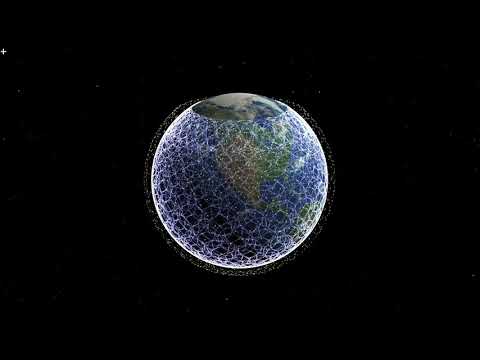
Mark Handley of UCL explains, with simulation visualizations, how early Starlink satellites without inter-satellite links could still give low-latency wide-area communication by hopping via ground relays. He shows it can beat fibre on many long paths.
 4:40
This 1970s tank simulator drives through a tiny world
12M views • 4 years ago
Tom Scott
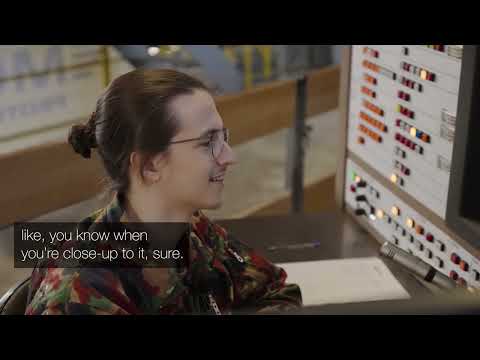
Tom Scott visits the Swiss Military Museum to see the last surviving 1970s tank-driving simulator. It uses a real camera moving over a miniature model landscape rather than any computer graphics.
 7:09
What Is the RNA World Hypothesis?
886K views • 10 years ago
Stated Clearly
Stated Clearly explains the RNA world hypothesis, which resolves the chicken-or-egg problem of genes versus enzymes by proposing that RNA once did both jobs. It outlines how evolution could begin with RNA chains alone.
 17:54
Giga Castings with Sandy | Evolution of Tesla Bodies In White
426K views • 4 years ago
Munro Live
Sandy Munro and Cory discuss how Tesla Model 3 and Model Y bodies in white have evolved over five years, including giga castings and lean design.
 9:39
What Happened Before History? Human Origins
24.3M views • 10 years ago
Kurzgesagt – In a Nutshell
Kurzgesagt's animated overview of human origins and the vast prehistory before recorded history. It covers how modern humans emerged and spread.
 14:03
Simulating alternate voting systems
4.5M views • 6 years ago
Primer
Primer uses simulations to compare voting systems such as first-past-the-post, approval, ranked choice and others. It shows how each system behaves and can be manipulated, with links to further voting theory resources.
 12:34
Feature Discovery Series Episode 3: Aerodynamics
196K views • 6 years ago
Microsoft Flight Simulator
A Microsoft Flight Simulator Feature Discovery episode in which CEO Sebastian Wloch explains the new aerodynamics simulation for the 2020 release.
 4:33
strandbeest evolution
14.5M views • 13 years ago
theo jansen
Theo Jansen shows many of his Strandbeests, wind-powered walking kinetic sculptures, set to Khachaturian's Spartacus. It presents his work since 1990 on creating new forms of life on beaches.
 11:13
1979: Will WORD PROCESSORS start a HOME WORKING revolution? | Past Predictions | BBC Archive
461K views • 4 years ago
BBC Archive
A 1979 BBC Nationwide report asking whether word processors and networked microprocessors could end office commuting. It shows early word processing and a woman working from home, with surprisingly prophetic predictions.
 19:00
Optical illusions show how we see | Beau Lotto
3.5M views • 17 years ago
TED
Neuroscientist Beau Lotto runs the audience through color and pattern illusions to show that perception is shaped by context and evolutionary history rather than being a direct readout of the world. The talk is playful and hands-on, and it argues that the brain interprets ambiguous signals.
 6:08
Traffic flow measured on 30 different 4-way junctions
33.6M views • 8 years ago
euverus
Cities: Skylines experiment measuring traffic flow across 30 different four-way junction designs, comparing vanilla traffic AI with the TMPE mod.
 8:28
The Fastest Way to Board a Plane Feels Like the Slowest
37.5M views • 7 years ago
CGP Grey
CGP Grey compares airplane boarding methods, based on an arXiv paper, and shows why the intuitive back-to-front approach is slow while random or outside-in boarding does better.
 17:08
Playing a Neural Network's version of GTA V: GAN Theft Auto
766K views • 5 years ago
sentdex
Sentdex demonstrates GAN Theft Auto, a GameGAN-based neural network that recreates GTA V so the network itself is the playable environment. He shows the results and releases the code.
 11:48
John Rauser keynote: "Statistics Without the Agonizing Pain" -- Strata + Hadoop 2014
61K views • 12 years ago
O'Reilly
John Rauser's Strata 2014 keynote argues that programmers can learn statistics quickly by simulating random processes and shuffling data. He explains p-values through resampling rather than formulas.
 14:57
The 1751 Machine that Made Everything
6.1M views • 8 years ago
Machine Thinking
Machine Thinking argues the 1751 machine, a metal-cutting lathe associated with Vaucanson, triggered the biggest explosion of wealth in history by enabling precise manufacturing of other machines.
 7:55
Low Latency Routing in Space
106K views • 8 years ago
HotNets Anonymous
A short visualization from HotNets researchers of routing and latency over SpaceX's proposed Starlink constellation, based on its FCC filings. It shows orbital shells, link topology and how inter-satellite routes could beat terrestrial fiber on long distances.
 16:04
Jonathan Diegelman - Modeling Spacecraft Separation Dynamics in Julia
12K views • 5 years ago
The Julia Programming Language
A JuliaCon talk by a NASA Launch Services Program engineer on modeling spacecraft separation dynamics in Julia. He describes replacing a Simulink-based workflow for checking launch vehicle separation requirements with Julia and ModelingToolkit, with large speedups and much shorter code.
 16:01
How life emerges from a simple particle motion law: Introducing the Primordial Particle System
497K views • 9 years ago
Artificial Life Lab Graz
Researchers from the Artificial Life Lab Graz introduce the Primordial Particle System, where a simple motion law for self-propelled particles produces cell-like structures that self-reproduce and show life cycles.
 5:21
Flexible Muscle-Based Locomotion for Bipedal Creatures
1.9M views • 12 years ago
Goatstream
A 2013 research demo of simulated bipedal creatures whose natural gaits are found by optimizing muscle-based controllers, with no motion capture or keyframe animation. It shows physics-based walking and running emerging from musculoskeletal models.
 7:16
Unix and Google
9K views • 10 years ago
FOAM
A short animated simulation comparing how Multics and Unix were developed, showing why Unix's small composable programs and pipes gave it a efficiency advantage. It frames Unix as a moonshot achievable by a small team.
 14:34
Visualization of Quantum Physics (Quantum Mechanics)
2.8M views • 9 years ago
udiprod
An animated visualization of basic quantum mechanics using a free particle, with simulations based on the actual equations. It covers waves, particles, and how measurement collapses the wavefunction.