hidden image
 8:09
Google Earth’s Incredible 3D Imagery, Explained
3.1M views • 9 years ago
Nat and Friends
A short explainer from Nat and Friends on where Google Earth's 3D imagery comes from, how it is stitched together, and how often it is updated. It describes aircraft carrying camera rigs and photogrammetry that turns the photos into 3D models.
 37:20
But how do AI images and videos actually work? | Guest video by Welch Labs
2.2M views • 1 year ago
3Blue1Brown
A guest video by Welch Labs on 3Blue1Brown explaining how text-to-image and video models work. It covers CLIP, shared embedding spaces, diffusion models (DDPM, DDIM), conditioning, guidance and negative prompts.
 20:55
Why ChatGPT Can't Draw a Full Glass of Wine
6.3M views • 1 year ago
Alex O'Connor
Alex O'Connor shows that ChatGPT cannot draw a wine glass filled to the brim, and ties the failure to David Hume's missing shade of blue. It asks what the failure says about how image models learn.
 29:35
The IOU Machine: How Currency Is Created | Hidden Secrets of Money Ep. 4
11.1M views • 13 years ago
GoldSilver
Episode 4 of Mike Maloney's Hidden Secrets of Money, explaining how currency is created through a chain of IOUs among the Treasury, banks and the Federal Reserve. It covers bonds, Fed checks, debt, taxes and fractional reserve lending, from a gold-and-silver advocate's viewpoint.
 30:53
I Saved a PNG Image To A Bird
2.1M views • 1 year ago
Benn Jordan
Benn Jordan's video about storing a PNG image in a living bird, a starling that learns to reproduce encoded sounds. It mixes ornithology, audio engineering, and data encoding.
 27:16
How Do Night Vision Goggles Work?
8.4M views • 3 years ago
Veritasium
Veritasium visits the US Navy's Crane facility to test top night vision goggles. It explains how image intensifier tubes and thermal or digital systems work and compares the generations of the technology.
 9:16
Quantum Entanglement & Spooky Action at a Distance
4.5M views • 11 years ago
Veritasium
Veritasium explains quantum entanglement and spooky action at a distance, walking through Bell's inequality and the experiments that rule out hidden variables, in under ten minutes.
 4:14
Computer Color is Broken
4.3M views • 11 years ago
minutephysics
MinutePhysics explains that computers store brightness nonlinearly, so blurring and blending colors in raw RGB gives wrong, dark results. It shows why mixed colors, such as in gradients, look off.
 17:35
Bell's Theorem: The Quantum Venn Diagram Paradox
8.1M views • 9 years ago
minutephysics
MinutePhysics, with 3Blue1Brown, explains Bell's theorem using a Venn diagram paradox and polarizing filters. It shows why no local hidden variable theory can reproduce quantum correlations.
 5:31
The hidden background noise that can catch criminals
5.8M views • 4 years ago
Tom Scott
Tom Scott explains Electrical Network Frequency analysis, where hum from the power grid in a recording is matched against grid logs to date and place it. He talks to a researcher and sets them a challenge.
 20:30
Does Superdeterminism save Quantum Mechanics? Or does it kill free will and destroy science?
989K views • 4 years ago
Sabine Hossenfelder
Sabine Hossenfelder explains superdeterminism as an interpretation of quantum mechanics, addressing common objections and misconceptions, including the worry that it kills free will or science. She ties it to Bell's theorem and hidden variables.
 4:42
Why Your Webcam Still SUCKS!
552K views • 6 years ago
Techquickie
A short Techquickie explainer on why laptop webcams are much worse than phone cameras. It covers sensor size, image processing, and the interface differences between laptops and phones, with input from a Logitech engineer.
 55:02
GradIEEEnt half decent: The hidden power of imprecise lines
391K views • 3 years ago
suckerpinch
Tom 7 (suckerpinch) delivers a long, comedic digression on gradient descent and floating-point imprecision. He shows how rounding behavior can supply the nonlinearity needed to build a neural network.
 5:33
The Hidden Rules of Conversation
5.8M views • 6 years ago
Tom Scott
Tom Scott explains Gricean maxims, the unwritten guidelines that shape how we understand each other. He uses examples such as why 'asbestos-free cereal' sounds suspicious.
 15:12
JPEG DCT, Discrete Cosine Transform (JPEG Pt2)- Computerphile
697K views • 11 years ago
Computerphile
Mike Pound explains the discrete cosine transform and how it underpins JPEG compression. It is part two of Computerphile's JPEG series.
 9:19
How to Understand What Black Holes Look Like
11M views • 7 years ago
Veritasium
Veritasium explains what a black hole should look like, using J.P. Luminet's 1979 work and a cardboard 3D model to show how light bends around it. It was made just as the first black hole image was released.
 16:32
Pilot Wave Theory and Quantum Realism | Space Time | PBS Digital Studios
1.9M views • 9 years ago
PBS Space Time
A PBS Space Time episode introducing de Broglie-Bohm pilot wave theory, an interpretation of quantum mechanics that avoids much of the strangeness of the mainstream views. It is aimed at curious lay viewers.
 4:17
The Hubble Ultra Deep Field in 3D
9.6M views • 17 years ago
Deep Astronomy
A short video built around an animation of the roughly 10,000 galaxies in the Hubble Ultra Deep Field, placed at their measured redshift distances. It gives a brief history of deep field images and ends with a 3D fly-through.
 23:32
The Solar Gravitational Lens will Map Exoplanets. Seriously.
582K views • 6 years ago
Launch Pad Astronomy
Explains the proposed NASA JPL plan to use the Sun as a gravitational lens, sending solar sail craft to its focal region to image an exoplanet's surface. It covers the distances involved, how imaging with the Sun would work and the mission design.
 21:15
The REAL Possibility of Mapping Alien Planets!
778K views • 4 years ago
PBS Space Time
PBS Space Time explains the proposal to use the Sun's gravity as a giant lens, sending a train of small light-sail spacecraft to the focal point roughly 550 AU out. It covers how such a telescope could image exoplanets in surprising detail and the engineering challenges involved.
 21:25
Gimbal UFO - A New Analysis
208K views • 4 years ago
Mick West
Mick West analyzes the Navy's Gimbal UFO video and gives four checkable observations suggesting it is an infrared glare that appears to rotate because the camera rotates while tracking. He argues the object is likely a hot craft hidden behind the glare.
 7:49
Your Post Code Is the Directions, Not the Destination
3.9M views • 1 year ago
CGP Grey
CGP Grey explains that postal codes are routing instructions for mail rather than geographic regions. He looks at the quirks and problems this causes.
 18:18
Hilbert's Curve: Is infinite math useful?
2.4M views • 9 years ago
3Blue1Brown
3Blue1Brown explains space-filling curves and the Hilbert curve, and how infinite mathematical constructions connect to finite, practical approximations. It touches on mapping between dimensions and sensory ideas.
 13:39
How is this Website so fast!?
2.4M views • 2 years ago
Wes Bos
Wes Bos breaks down the techniques behind the McMaster-Carr website's speed: server-rendered HTML, prefetching, CDN and service worker caching, preloading, critical CSS and fixed-size images. He also notes its old-school jQuery and YUI JavaScript.
 13:20
How Kodak Exposed Nuclear Testing
6.7M views • 6 years ago
Veritasium
Veritasium tells how Kodak film was fogged by radioactive fallout from the first atomic tests, letting the company detect nuclear testing before anyone announced it. The video also covers the deal to keep it quiet and how fallout contaminated packaging.
 11:39
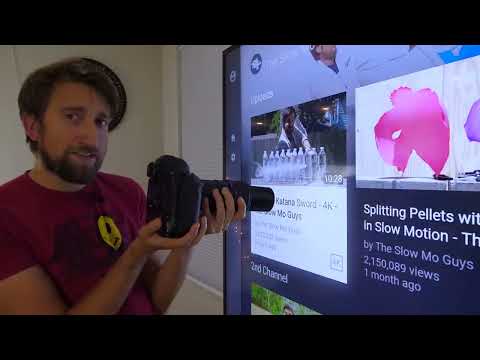
How a TV Works in Slow Motion - The Slow Mo Guys
45.7M views • 8 years ago
The Slow Mo Guys
The Slow Mo Guys film a TV and screens with a high-speed camera to show how displays build an image. The footage includes CRT-style scanning and how pixels light up over time.
 11:13
What if you could only see the world in UV?
5.6M views • 8 years ago
Veritasium
Veritasium shows what the world looks like through a UV camera. It covers how pigments absorb UV, how fluorescence works, and how UV imaging reveals sunscreen effectiveness and skin damage.
 4:17
AI Learns Noise Filtering For Photorealistic Videos | Two Minute Papers #215
65K views • 8 years ago
Two Minute Papers
A Two Minute Papers episode on NVIDIA's recurrent denoising autoencoder, which cleans up noisy Monte Carlo path-traced image sequences. It shows how a neural network can produce usable renders from very few samples.
 3:05
Why does PUNCHING Sonic 3D trigger a Secret Level Select?
510K views • 6 years ago
Coding Secrets
A short Coding Secrets episode explaining why hitting a Sonic 3D cartridge triggers a hidden level select. The cause was a custom crash handler that redirected CPU error interrupts to the level select screen.
 38:26
Racing the Beam Explained - Atari 2600 CPU vs. CRT Television
400K views • 5 years ago
Retro Game Mechanics Explained
Retro Game Mechanics Explained shows how the Atari 2600 draws images with almost no video memory, by having the CPU race the CRT beam line by line. It walks through the techniques in detail.
 2:26
Milton Friedman - I, Pencil
802K views • 14 years ago
Free To Choose Network
A two-minute clip in which Milton Friedman uses a humble pencil to show how thousands of strangers across many countries cooperate, without central direction, to make a simple product. It is a short visual version of the 'I, Pencil' essay's argument about free markets and dispersed knowledge.
 3:45
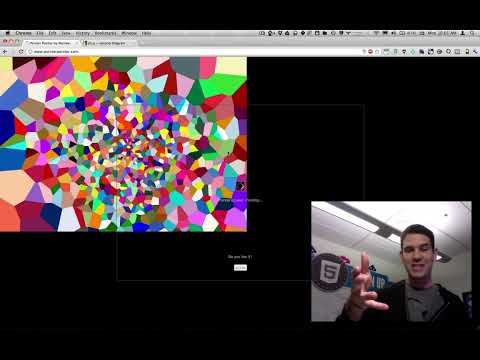
pointerpointer.com's use of voronoi, canvas, and javascript
40K views • 14 years ago
Paul Irish
Paul Irish explains how pointerpointer.com works. It uses a hidden canvas of colored Voronoi regions to look up which photo matches the cursor position.
 16:47
Lines of Light: How Analog Television Works
1.5M views • 9 years ago
Technology Connections
Technology Connections explains how analog television produced moving images without computers, covering scanning, CRTs and standards like NTSC and PAL. It is part of a series on analog TV.
 6:36
Intel ME explained (intel management engine) from insider
12K views • 8 years ago
jessie
A short video explaining the Intel Management Engine, a hidden embedded computer inside Intel machines with deep access to hardware. It is presented from an insider's perspective and raises backdoor and NSA concerns.
 5:51
Bitcoin Q&A: Energy Consumption
96K views • 8 years ago
aantonop
Andreas Antonopoulos answers a Bitcoin Q&A question about energy consumption in mining. He argues that mining is arbitrage for the cheapest electricity, drives investment in renewables, and that the traditional financial system has hidden externalities.
 6:43
The high cost of free parking
4.6M views • 9 years ago
Vox
A Vox explainer on how mandatory parking minimums and free parking impose hidden costs on cities. It draws on Donald Shoup's work and gives the history of parking requirements.