isis
 59:16
Ep. 1 - Awakening from the Meaning Crisis - Introduction
844K views • 7 years ago
John Vervaeke’s Lectern
The first episode of John Vervaeke's lecture series on the modern meaning crisis, tracing its history through philosophy, cognitive science, religion and psychology. It introduces the series and its themes.
 1:14:16
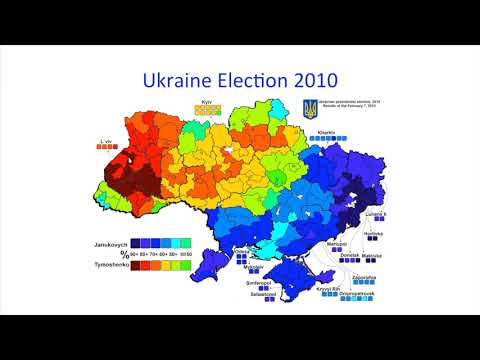
Why is Ukraine the West's Fault? Featuring John Mearsheimer
30.4M views • 11 years ago
The University of Chicago
University of Chicago lecture in which John Mearsheimer argues the West, through NATO and EU expansion, bears primary responsibility for the Ukraine crisis. He also discusses how to end it and its consequences.
 44:19
Hamming, "You and Your Research" (June 6, 1995)
368K views • 14 years ago
securitylectures
Richard Hamming's 1995 recording of his talk 'You and Your Research', drawn from his graduate engineering course. He discusses how great scientists pick important problems and build careers, drawing on his years at Bell Labs.
Topic match · Scientific method & science communication 9:59
Feynman on Scientific Method.
2.4M views • 15 years ago
seabala
A short clip of Richard Feynman explaining the scientific method: guess, compute consequences, compare to experiment, and why vague theories like astrology cannot be proven wrong.
Topic match · Scientific method & science communication 6:33
The Biggest Ideas in the Universe: Introduction
384K views • 6 years ago
Sean Carroll
Sean Carroll introduces his video series on the biggest ideas in physics, such as symmetry, space and matter, as informal discussions with follow-up Q&A videos. This is the short opening video of the series.
Topic match · Scientific method & science communication 1:27:10
Jancovici : Can we save energy, jobs and growth at the same time ? 08/01/2018
46K views • 8 years ago
Jean-Marc Jancovici
Jean-Marc Jancovici lectures at ENS Paris on whether energy use, jobs and growth can all be preserved. He argues for a physical approach to economics, since resource depletion and climate limits make perpetual GDP growth unrealistic.
Topic match · Macroeconomics & financial crises 56:11
A Brief History of Quantum Mechanics - with Sean Carroll
4.7M views • 6 years ago
The Royal Institution
Sean Carroll gives a Royal Institution talk tracing the history of quantum mechanics from Einstein and Bohr to today. He covers the Copenhagen interpretation and the many worlds interpretation.
Topic match · Scientific method & science communication 3:19
Introduction: The Chemical History of a Candle by Michael Faraday (1/6)
207K views • 10 years ago
engineerguy
Bill Hammack of engineerguy introduces his series on Michael Faraday's lectures on The Chemical History of a Candle. He describes the free companion book and the commentary and caption features that help modern viewers.
Topic match · Scientific method & science communication 44:24
31 Hamming, Learning to Learn: You and Your Research, 6 June 1995
9K views • 8 years ago
Hamming on Hamming: Learning to Learn
The final lecture of Richard Hamming's Learning to Learn course, from 1995, based on his well-known talk 'You and Your Research'. It covers how to do important work and build a career.
Topic match · Scientific method & science communication 1:26:03
Mark Blyth ─ Global Trumpism
492K views • 10 years ago
Watson School of International and Public Affairs
Mark Blyth's 2016 Brown University lecture on global Trumpism, explaining the rise of populism through economics, the decline of Western middle classes and revolt against technocracy.
Topic match · Macroeconomics & financial crises 47:20
Hamming, Intro to The Art of Doing Science and Engineering: Learning to Learn (March 28, 1995)
171K views • 14 years ago
securitylectures
The introductory lecture of Richard Hamming's capstone course, The Art of Doing Science and Engineering: Learning to Learn. It focuses on style of thinking and on educating rather than training, using technical material only as illustration.
Topic match · Scientific method & science communication 1:26:04
Milton Friedman Speaks: Money and Inflation (B1230) - Full Video
1.5M views • 10 years ago
Free To Choose Network
An 86-minute Milton Friedman talk arguing that inflation is a monetary phenomenon caused by money supply growing faster than goods, and that the cure is less government spending and money printing.
Topic match · Macroeconomics & financial crises 1:31:54
Noam Chomsky - "The machine, the ghost, and the limits of understanding"
472K views • 14 years ago
Andy80o
Noam Chomsky's 2011 University of Oslo lecture on Newton's contributions to the study of mind. He argues Newton abandoned mechanical explanation and lowered the bar for scientific intelligibility, with consequences for the limits of human understanding. Q&A starts at 45:33.
Topic match · Scientific method & science communication 1:21:55
Irving Kirsch: The Emperor's New Drugs
13K views • 12 years ago
Mizzou Visual Productions
Psychologist Irving Kirsch gives a distinguished lecture on antidepressant trials and the placebo effect. He argues drug-placebo differences are small outside severe depression.
Topic match · Scientific method & science communication 1:03
The Scientific Method-Richard Feynman
180K views • 13 years ago
Sképseis
A one-minute clip of Richard Feynman describing the scientific method: guess a law, compute its consequences, and compare with experiment. If it disagrees with experiment, it is wrong.
Topic match · Scientific method & science communication 1:27:14
Mark Blyth - A Brief History of How We Got Here and Why
248K views • 7 years ago
McMaster Humanities
Political economist Mark Blyth gives a lecture tracing two versions of capitalist 'software': the postwar Great Compression era and the neoliberal era from 1980 to 2008. He explains the bug that crashed the first and the design of the second.
Topic match · Macroeconomics & financial crises 1:02:04
1. Introduction for 15.S12 Blockchain and Money, Fall 2018
7.2M views • 6 years ago
MIT OpenCourseWare
The opening lecture of MIT's Blockchain and Money course taught by Gary Gensler, covering the course plan, the history of failed digital currencies, cryptography and what a blockchain is.
Topic match · Macroeconomics & financial crises 0:55
Richard Feynman on hungry philosophers (or do we see objects or only their light)
272K views • 17 years ago
Zero
A one-minute clip from Richard Feynman's 1979 Auckland lecture in which he answers whether you see an object or only its light. It is a short, playful take on perception and on the use of philosophy.
Topic match · Scientific method & science communication 5:37
Feynman: Knowing versus Understanding
2.7M views • 14 years ago
TehPhysicalist
A short clip of Richard Feynman on the difference between merely knowing how to reason mathematically and understanding why physical theories work. He discusses holding multiple equivalent ideas and guessing new laws.
Topic match · Scientific method & science communication 10:20
Feynman: 'Greek' versus 'Babylonian' mathematics
377K views • 14 years ago
TehPhysicalist
A clip of Richard Feynman contrasting the Greek and Babylonian traditions of mathematical reasoning. It compares the axiomatic approach of mathematicians with how physicists use mathematics.
Topic match · Scientific method & science communication 2:49
Feynman :: Rules of Chess
1.4M views • 19 years ago
defjam99b
A three-minute clip of Richard Feynman using the rules of chess as an analogy for how science works, discovering rules by observation and sometimes meeting surprises like castling. It touches on incremental progress versus revolutions.
Topic match · Scientific method & science communication 1:52
R. P. Feynman on social sciences
210K views • 16 years ago
x1x2x3ct
A two-minute clip of Richard Feynman on the social sciences, discussing what counts as real science versus pseudo science.
Topic match · Scientific method & science communication 1:04:39
Gauge Theory and Inflation: Enlarging the Wu-Yang Dictionary
38K views • 12 years ago
Tom Henderson
A talk by Eric Weinstein on gauge theory and its possible application to economics and inflation. It proposes extending the Wu-Yang dictionary into a geometric tool beyond physics.
Topic match · Macroeconomics & financial crises 1:03:01
DECLINE of EMPIRES: The Signs of Decay
624K views • 18 years ago
eon3
Chalmers Johnson, author of Blowback and Sorrows of Empire, lectures on parallels between the decline of the Roman and Soviet empires and the United States. He argues the US shows the same symptoms: overextension, corruption, and an inability to reform.