language learning
 5:25
Does the language you speak change how you think?
1.6M views • 3 years ago
Tom Scott
Tom Scott, with linguists Gretchen McCulloch and Molly Ruhl, examines whether the language you speak changes how you think. The short answer is mostly no, with caveats about the weak version of the Sapir-Whorf hypothesis.
 5:49
Can Japanese Actually Write Japanese Kanji?
5.5M views • 10 years ago
That Japanese Man Yuta
Yuta asks whether native Japanese speakers can actually write kanji by hand, showing that many struggle to recall characters from memory.
Topic match · Language & linguistics 8:25
Large Language Models from scratch
375K views • 4 years ago
Graphics in 5 Minutes
A short cartoon explaining how language models like ChatGPT work, from autocomplete and conditional probabilities to neural networks, gradient descent and backpropagation. It shows how networks act as universal function approximators.
 18:40
But what is a neural network? | Deep learning chapter 1
25.1M views • 9 years ago
3Blue1Brown
3Blue1Brown's first chapter on deep learning explains what neurons and layers are and the math underlying a basic neural network, using handwritten digit recognition with visual animations.
 14:27
The Biggest Myth In Education
15.5M views • 5 years ago
Veritasium
Veritasium debunks the idea of learning styles, such as being a visual learner, with an interview with Daniel Willingham and a memory experiment. It argues that a multimodal approach helps everyone.
 12:47
Backpropagation, intuitively | Deep Learning Chapter 3
6.4M views • 9 years ago
3Blue1Brown
3Blue1Brown's third deep learning chapter gives a visual, intuitive account of backpropagation and what happens to a neural network as it learns. A follow-up video covers the underlying calculus.
 6:46
The surprising pattern behind color names around the world
8.4M views • 9 years ago
Vox
Vox explains the Berlin and Kay research showing that languages around the world tend to invent color words in the same order. It walks through the hierarchy and the debate around it.
Topic match · Language & linguistics 4:31
why typing like this is sometimes okay.
5.4M views • 7 years ago
Tom Scott
Tom Scott makes a short descriptivist argument that language keeps changing and that casual internet writing conventions, like lowercase typing and dropped full stops, are legitimate. It is part of his Language Files series, written with Gretchen McCulloch.
Topic match · Language & linguistics 13:59
MENACE: the pile of matchboxes which can learn
453K views • 8 years ago
Stand-up Maths
Matt Parker of Stand-up Maths demonstrates MENACE, Donald Michie's 1961 machine made of matchboxes that learns to play noughts and crosses through reinforcement. He builds and trains a physical version.
 8:14
Why are British place names so hard to pronounce?
6.6M views • 5 years ago
Map Men
The Map Men explain why British place names are so hard to pronounce, tracing it to layers of Viking, Anglo-Saxon, Celtic and Norman influence, with a pronunciation guide.
Topic match · Language & linguistics 6:02
OpenAI Plays Hide and Seek…and Breaks The Game! 🤖
11M views • 7 years ago
Two Minute Papers
Two Minute Papers covers OpenAI's multi-agent hide-and-seek experiment, in which agents learned emergent tool use and found ways to break the game's rules. It summarizes the 'Emergent Tool Use from Multi-Agent Interaction' paper.
 10:18
Backpropagation calculus | Deep Learning Chapter 4
4M views • 9 years ago
3Blue1Brown
3Blue1Brown's chapter 4 on deep learning gives a more formal, symbol-based account of backpropagation calculus, connecting the intuition from the previous chapter to the math found in textbooks and code.
 13:04
VACNET Anti-cheat
574K views • 8 years ago
3kliksphilip
3kliksphilip summarizes Valve's GDC talk on VACNet, a deep-learning system that flags CS:GO cheaters and feeds the Overwatch review queue. It covers Trust Factor, VAC, and how the data is collected and analyzed.
 18:10
A London Accent from the 14th to the 21st Centuries
7.2M views • 5 years ago
Simon Roper
Linguist Simon Roper reconstructs how a London accent would have sounded from the 14th to the 21st centuries, reading passages in period pronunciation. It draws on the Cambridge History of the English Language.
Topic match · Language & linguistics 9:37
Can Japanese People Read Chinese? (Kanji)
691K views • 7 years ago
That Japanese Man Yuta
Yuta, a Japanese YouTuber, explains whether Japanese speakers can read Chinese text. He shows how shared kanji let people guess meanings while the two languages remain completely different.
Topic match · Language & linguistics 8:26
Why don't subtitles match dubbing?
2M views • 2 years ago
Tom Scott
Tom Scott explains why subtitles often differ from dubbed dialogue, covering how translation, timing and reading speed shape each. It features translators and voice talent working in several languages.
Topic match · Language & linguistics 17:59
The Expert Myth
16M views • 4 years ago
Veritasium
Veritasium examines which experts have real expertise, drawing on chess research and work by Klein and Kahneman. It explains that expertise comes from pattern recognition built through deliberate practice in valid, feedback-rich environments.
 17:52
Training AI Without Writing A Reward Function, with Reward Modelling
259K views • 6 years ago
Robert Miles AI Safety
Robert Miles explains reward modelling, in which an AI learns what humans want from their preference comparisons instead of a hand-written reward function. He walks through the 2017 paper on deep reinforcement learning from human preferences.
 8:04
Khan Academy and the Effectiveness of Science Videos
1.7M views • 15 years ago
Veritasium
Veritasium examines research suggesting science explainer videos like Khan Academy's make students feel they understand while tests show they have not learned, because misconceptions go unaddressed. It suggests how to partly fix this.
 4:45
How playing an instrument benefits your brain - Anita Collins
15.2M views • 12 years ago
TED-Ed
A short TED-Ed animated lesson by Anita Collins on what happens in the brain when people play a musical instrument. It argues that playing engages many brain areas at once, like a full-body workout, with long-term benefits.
 12:10
The Science of Thinking
9.3M views • 9 years ago
Veritasium
A Veritasium explainer on how the brain works and how we learn. It is inspired by Kahneman's Thinking, Fast and Slow and covers System 1 and System 2 thinking and why harder learning builds skill.
 5:26
Neural Network Learns The Physics of Fluids and Smoke | Two Minute Papers #118
209K views • 9 years ago
Two Minute Papers
Two Minute Papers covers a paper on speeding up fluid and smoke simulation with convolutional networks. It contrasts the approach with earlier regression forest methods.
 6:47
The US Has More Tribes Than the World Has Countries
7.3M views • 6 years ago
CGP Grey
CGP Grey explains why "Indian" is often preferred over "Native American" in the United States, especially near reservations, and how many tribes exist in the US. He draws on conversations with people who identify as Indian.
Topic match · Language & linguistics 12:04
Anagrams, but where you can break apart letters: "Anagraphs"
256K views • 8 years ago
suckerpinch
Tom Scott-style exploration by suckerpinch (Tom7) of generalized anagrams where letters can be broken into pieces, called anagraphs, with a whimsical computational approach.
Topic match · Language & linguistics 12:44
Rapping, deconstructed: The best rhymers of all time
16.3M views • 10 years ago
Vox
Vox breaks down how great rappers build rhymes, from Kurtis Blow's simple bars to Biggie's smooth flow and Kendrick Lamar's dense, fast delivery. It uses on-screen visualizations of rhyme structure.
Topic match · Language & linguistics 10:22
Shakespeare: Original pronunciation (The Open University)
5.6M views • 15 years ago
OpenLearn from The Open University
David and Ben Crystal introduce the Original Pronunciation production of Shakespeare and show what it reveals about the history of English, including puns and rhymes lost in modern speech.
Topic match · Language & linguistics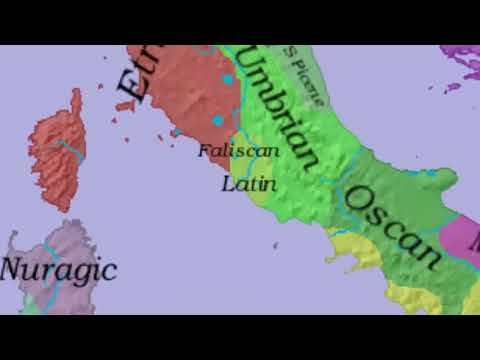 18:28
w
3.7M views • 7 years ago
jan Misali
jan Misali traces the history of the letter W, including why it is called double u. The video is part of a series of deep dives into individual letters.
Topic match · Language & linguistics 14:18
Accent Expert Gives a Tour of U.S. Accents - (Part 2) | WIRED
2.7M views • 5 years ago
WIRED
Dialect coach Erik Singer tours a range of accents across North America with linguists in Part 2 of WIRED's accent series. It covers regional distinctions such as Southern Mississippi, Miami and Utah English.
Topic match · Language & linguistics 6:00
Rhyme: Why Eminem is one of the most impressive lyricists ever
3.7M views • 13 years ago
Library of Alexandria
A re-upload of a video breaking down Eminem's rhyme schemes, showing multi-syllable and internal rhymes in songs such as Lose Yourself. It aims to show why he is considered a standout lyricist.
Topic match · Language & linguistics 16:04
One Typo, Wrong Continent
11.6M views • 3 years ago
CGP Grey
CGP Grey explains why airport codes are inconsistent and sometimes confusing, from their origins in old weather station codes to the quirks that cause mistakes. He builds the story around a single typo that sent a flight to the wrong continent.
Topic match · Language & linguistics 8:56
Tiffany: The Name That Cheats Death
6M views • 5 years ago
CGP Grey
CGP Grey investigates why the name Tiffany spiked in popularity and then faded, with help from onomastics experts. It is a short, playful look at how names spread.
Topic match · Language & linguistics 9:42
How big is a billion? - Numberphile
1.8M views • 14 years ago
Numberphile
Numberphile explains the long and short scales for naming large numbers, covering millions, billions, trillions, milliards and the Greek myriad, with James Grime and Tony Padilla.
Topic match · Language & linguistics 5:33
The Hidden Rules of Conversation
5.8M views • 6 years ago
Tom Scott
Tom Scott explains Gricean maxims, the unwritten guidelines that shape how we understand each other. He uses examples such as why 'asbestos-free cereal' sounds suspicious.
Topic match · Language & linguistics 16:41
Movie Accent Expert Breaks Down 32 Actors' Accents | WIRED
15.8M views • 9 years ago
WIRED
Dialect coach Erik Singer analyzes how accurate the accents are of 32 well-known actors, including Brad Pitt and Will Smith, in WIRED's breakdown.
Topic match · Language & linguistics 11:06
Why Does Portuguese Sound Like Russian?! (or Polish)
2.5M views • 7 years ago
Langfocus
A Langfocus video examining why Portuguese, especially European Portuguese, sounds like Russian or Polish. It compares shared sounds such as vowel reduction and palatalization.
Topic match · Language & linguistics 11:06
The Map of Mathematics
16.3M views • 9 years ago
Domain of Science
An animated 11-minute tour of the whole field of mathematics as a single map, showing how pure and applied math and their sub-fields relate to each other.
 10:48
PHP doesn't suck (anymore)
223K views • 3 years ago
Aaron Francis
Aaron Francis walks through how PHP has changed from 2012 to 2023, covering traits, array destructuring, generators, typed properties and more. It is a quick chaptered tour of modern PHP features.
 13:52
Ch(e)at GPT? - Computerphile
617K views • 3 years ago
Computerphile
Computerphile video in which Mike Pound explains a University of Maryland paper on watermarking LLM output. The method biases token choices so generated text can later be detected statistically.
 11:47
We Were Right! Real Inner Misalignment
271K views • 5 years ago
Robert Miles AI Safety
Robert Miles covers a paper where researchers ran real versions of his earlier mesa-optimizer thought experiments. They show inner misalignment, where an AI learns the wrong goal in training and misbehaves when deployed.
 16:26
Why Adults Can't Develop Perfect Pitch
1.8M views • 9 years ago
Rick Beato
Rick Beato argues that adults cannot develop true perfect pitch, which he ties to critical-period brain plasticity and language acquisition. He says it can only be developed in young children, and discusses the research behind this.