light
 4:57
Why Heathrow Airport Had Empty Flights to Nowhere
3.1M views • 8 years ago
Half as Interesting
Half as Interesting explains why airlines flew empty 'ghost flights' out of Heathrow to keep their landing slots under use-it-or-lose-it rules.
 8:14
The Lightning Network Explained (Litecoin/Bitcoin)
119K views • 9 years ago
Franklyn
An 8-minute explainer on the Lightning Network and how it relates to Segwit, Bitcoin and Litecoin. It covers how off-chain payment channels route payments to scale blockchain transactions.
 18:31
The LED Traffic Light and the Danger of "But Sometimes!"
4.2M views • 8 years ago
Technology Connections
Technology Connections explains how LED traffic lights, which do not melt snow, drew complaints and were blamed for accidents. He uses it to illustrate the 'but sometimes' fallacy against new technology.
 16:30
Why is light slower in glass? - Sixty Symbols
848K views • 13 years ago
Sixty Symbols
Professor Mike Merrifield of Nottingham explains in a mostly uncut conversation why light travels slower in glass. He treats light as a wave and describes how the material's electrons produce secondary waves that combine to slow it.
 12:46
The Speed of Light is NOT About Light
7.1M views • 11 years ago
PBS Space Time
PBS Space Time argues that the speed of light is better understood as the speed of causality, the universal limit on how fast cause and effect propagate. Light travels at that speed because it is massless, but the limit itself is a property of spacetime.
 10:24
Why does light slow down in water?
1.3M views • 7 years ago
Fermilab
Fermilab's Don Lincoln explains why light travels slower in water and glass. He knocks down common wrong explanations such as absorption and re-emission, then gives the wave-mechanics reason tied to refractive index.
 11:57
We all move at the Speed of Light
1.4M views • 8 years ago
ScienceClic English
ScienceClic explains why nothing can go faster than light by treating motion through space and time together, so everything moves at the speed of light through spacetime. It uses animated visuals to cover relativity basics in 12 minutes.
 10:08
Big Plane vs Little Plane (The Economics of Long-Haul Flights)
4.3M views • 10 years ago
Wendover Productions
Wendover Productions explains why Boeing's efficient 787 beat Airbus's giant A380, contrasting hub-and-spoke with point-to-point routes. It covers the economics of long-haul flights.
 3:54
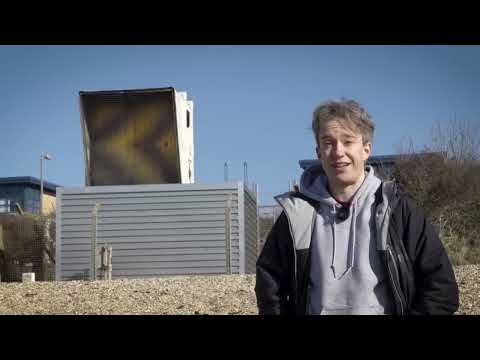
The moiré effect lights that guide ships home
3.1M views • 8 years ago
Tom Scott
Tom Scott investigates moire-effect beacons, called Inogon leading marks, a Swedish invention from the 1980s that shows different patterns depending on the viewer's position. He visits one used to mark an undersea cable and tracks down its history.
 5:06
Ion drive: The first flight
2.4M views • 7 years ago
nature video
Nature video showing MIT researchers flying the first plane with no moving parts, powered by an ion drive that creates an ionic wind from high-powered electrodes. The 5m-wide craft flies across a sports hall.
 22:22
Some light quantum mechanics (with minutephysics)
2.2M views • 9 years ago
3Blue1Brown
3Blue1Brown, in collaboration with minutephysics, introduces the math of superposition and quantum states using polarized light. It builds up the quantum behavior of photons as a simple counting and probability problem.
 16:47
Lines of Light: How Analog Television Works
1.5M views • 9 years ago
Technology Connections
Technology Connections explains how analog television produced moving images without computers, covering scanning, CRTs and standards like NTSC and PAL. It is part of a series on analog TV.
 17:34
The Halo Drive
526K views • 7 years ago
Cool Worlds
Astrophysicist David Kipping presents the halo drive, a proposed way to propel a starship to a good fraction of light speed by gaining energy from a black hole. The video is based on his peer-reviewed paper and explains why energy is the main obstacle to interstellar flight.
Topic match · Space exploration & spaceflight 17:32
'Oumuamua Is Not Aliens
790K views • 7 years ago
PBS Space Time
PBS Space Time examines the interstellar object 'Oumuamua and the popular theories about it, including the light-sail hypothesis. It argues that a natural rock is the likeliest explanation.
Topic match · Space exploration & spaceflight 16:19
KSP Doesn't Teach: Rocket Engine Plumbing
1.1M views • 10 years ago
Scott Manley
Scott Manley explains the plumbing of rocket engines, including pressure-fed, gas generator, expander and staged combustion cycles. He shows why more complex designs exist and what they gain.
Topic match · Space exploration & spaceflight 9:17
The Incredible Sounds of the Falcon Heavy Launch (BINAURAL AUDIO IMMERSION) - Smarter Every Day 189
7.2M views • 8 years ago
SmarterEveryDay
Smarter Every Day shares a binaural audio recording of the SpaceX Falcon Heavy launch made by Trevor Mahlmann, with explanations of the sounds including the sonic booms of the landing boosters. It is meant to be heard with headphones.
Topic match · Space exploration & spaceflight 4:14
Experiment! How Does An Owl Fly So Silently? | Super Powered Owls | BBC
25.7M views • 10 years ago
BBC Earth
A BBC Earth clip from Super Powered Owls in which the team uses sensitive sound equipment to compare owl flight with other birds. It shows why owls fly almost silently.
 21:40
The LED's Challenge to High Pressure Sodium
1.6M views • 8 years ago
Technology Connections
A Technology Connections video weighing LED streetlights against high pressure sodium lamps, covering efficiency, color, cost and light pollution. It is a follow-up to his earlier explanation of why street lights are orange.
 7:00
1,000km Cable to the Stars - The Skyhook
13M views • 6 years ago
Kurzgesagt – In a Nutshell
Kurzgesagt explains the skyhook, a rotating cable with a counterweight that could catapult spacecraft from Earth orbit toward deep space. It covers why it would make space travel cheaper and more efficient.
Topic match · Space exploration & spaceflight 22:19
The Weird World in RGB
2.7M views • 7 years ago
Technology Connections
Technology Connections explains how RGB light and color work, from hue and saturation to color vision and how objects appear under different lighting. It uses a studio setup with colored lights to demonstrate the effects.
 10:22
How Far Are The Nearest Stars?
3.7M views • 9 years ago
Cody'sLab
Cody's Lab builds a 200-billionth-scale model to show how far away the nearest stars are, using parallax and light speed. A short astronomy explainer on interstellar distances.
Topic match · Space exploration & spaceflight 15:41
Why SpaceX is Making Starlink
7.4M views • 7 years ago
Real Engineering
Real Engineering explains why SpaceX is building Starlink, including the economics of satellite internet. It covers the latency advantage of light in vacuum over fiber for long-distance links.
Topic match · Space exploration & spaceflight 20:22
Boeing 737 Stall Escape manoeuvre, why MAX needs MCAS!!
1.2M views • 7 years ago
Mentour Pilot
Mentour Pilot, a 737 instructor, explains the approach-to-stall and escape manoeuvre and why the 737 MAX needs MCAS while the 737NG did not. He covers the jackscrew and pitch behavior in terms a general viewer can follow.
Topic match · Aviation & aerospace engineering 30:36
Orbital Rings
421K views • 9 years ago
Isaac Arthur
Isaac Arthur explains the orbital ring, a megastructure launch-assist system that could move bulk cargo cheaply to orbit and beyond. He compares it with space elevators and discusses power transmission.
Topic match · Space exploration & spaceflight 29:52
Turning Earth Into a Telescope | The Terrascope
613K views • 7 years ago
Cool Worlds
David Kipping presents his proposed Terrascope, a telescope that uses Earth's atmosphere as a lens to achieve enormous magnification. He covers the history of telescopes and his path to the idea, plus Sol-scope and Jupiter-scope variants.
Topic match · Space exploration & spaceflight 7:35
End of Space – Creating a Prison for Humanity
14.6M views • 7 years ago
Kurzgesagt – In a Nutshell
Kurzgesagt explains how accumulating space junk could trigger a collision cascade (Kessler syndrome) that makes launches too dangerous and traps humanity on Earth.
Topic match · Space exploration & spaceflight 49:02
Is SpaceX's Raptor engine the king of rocket engines?
5.4M views • 7 years ago
Everyday Astronaut
Everyday Astronaut explains the basic physics of rocket engines, the main engine cycles and fuel types, then compares SpaceX's methane-fueled full-flow staged combustion Raptor to other engines. It runs nearly 50 minutes with chapter markers.
Topic match · Space exploration & spaceflight 8:39
How to Move the Sun: Stellar Engines
19.5M views • 6 years ago
Kurzgesagt – In a Nutshell
Kurzgesagt explains stellar engines such as the Shkadov thruster and Caplan thruster, which could move the Sun and solar system across the galaxy over millions of years to avoid hazards and reach new regions.
Topic match · Space exploration & spaceflight 34:32
Colonizing Mars
819K views • 9 years ago
Isaac Arthur
Isaac Arthur's in-depth look at what it would take to settle and eventually terraform Mars. He covers the challenges and the scale of the work needed to make it a home for humanity.
Topic match · Space exploration & spaceflight 7:37
Should We Colonize Venus Instead of Mars?
4.8M views • 11 years ago
PBS Space Time
A PBS Space Time episode asking whether Venus would be a better colonization target than Mars. It covers Venus's habitable altitudes, floating balloon habitats, and the term surfacism.
Topic match · Space exploration & spaceflight 7:56
Building a Marsbase is a Horrible Idea: Let’s do it!
21.9M views • 7 years ago
Kurzgesagt – In a Nutshell
A Kurzgesagt animation walking through how a Mars base could be built and why it would be punishing, covering radiation, temperature extremes, toxic dust and the need for shielding.
Topic match · Space exploration & spaceflight 5:07
7 Minutes of Terror: Curiosity Rover's Risky Mars Landing | Video
1.2M views • 14 years ago
VideoFromSpace
NASA's animated explanation of the Curiosity rover's Mars landing, which relied on a complex automated sequence taking about seven minutes. It features NASA engineers discussing the risks before the 2012 landing.
Topic match · Space exploration & spaceflight 6:47
Starlink revisions, Nov 2018
173K views • 8 years ago
Mark Handley
Mark Handley of UCL looks at how SpaceX's November 2018 revisions to the Starlink constellation affect network behavior. The video visualizes the orbits and routing and estimates latencies, building on his earlier video and research paper.
Topic match · Space exploration & spaceflight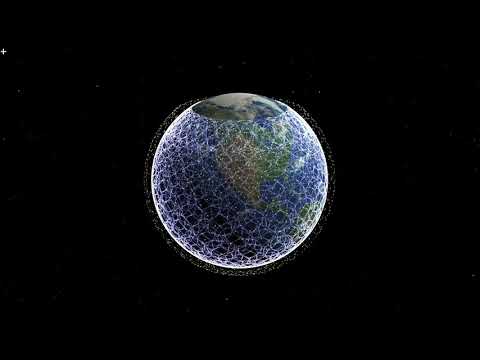 10:15
Using ground relays with Starlink
506K views • 6 years ago
Mark Handley
Mark Handley of UCL explains, with simulation visualizations, how early Starlink satellites without inter-satellite links could still give low-latency wide-area communication by hopping via ground relays. He shows it can beat fibre on many long paths.
Topic match · Space exploration & spaceflight 30:14
Power Satellites & Space Based Solar Power
254K views • 8 years ago
Isaac Arthur
Isaac Arthur explores space-based solar power, in which satellites beam energy down via microwaves to rectennas on Earth. He discusses feasibility, profitability and its role in spurring space colonization.
Topic match · Space exploration & spaceflight 29:02
Colonizing Venus
731K views • 9 years ago
Isaac Arthur
Isaac Arthur examines options for colonizing Venus, from vast floating habitats in the temperate upper atmosphere to full terraforming of the planet. It is a long-form speculative futurism episode in his solar system colonization series.
Topic match · Space exploration & spaceflight 13:09
Moon Landings Faked? Filmmaker Says Not!
1.4M views • 13 years ago
VideoFromSpace
A filmmaker explains why the Apollo moon landing footage could not have been faked in a studio, based on the video and film technology of the late 1960s. He walks through the limits of cameras, frame rates and effects of the era.
Topic match · Space exploration & spaceflight 7:49
How to Build a Dyson Sphere - The Ultimate Megastructure
24.5M views • 7 years ago
Kurzgesagt – In a Nutshell
A Kurzgesagt animated explainer on how humanity could build a Dyson sphere, a swarm of structures capturing the sun's energy. It covers using Mercury's materials and a step-by-step construction approach.
Topic match · Space exploration & spaceflight 3:13
Hitting the Sun is HARD
3M views • 10 years ago
minutephysics
A three-minute minutephysics video on the orbital mechanics of why crashing into the Sun takes far more energy than leaving the solar system.
Topic match · Space exploration & spaceflight 6:18
The artificial gravity lab
7.2M views • 7 years ago
Tom Scott
Tom Scott tours the rotating room artificial gravity facility at Brandeis University's Graybiel lab. It shows how humans cope with rotation-based gravity and the odd effects such as Coriolis forces.
Topic match · Space exploration & spaceflight