mainframe
 23:33
Why Do Mainframes Still Exist? What's Inside One? 40TB, 200+ Cores, AI, and more!
1.2M views • 3 years ago
Dave's Garage
Dave Plummer tours the IBM z16 mainframe from design through factory assembly, test lab, accelerators and water cooling. He explains why mainframes still exist and what makes them reliable.
 45:12
Here's What Happens When an 18 Year Old Buys a Mainframe
3.2M views • 10 years ago
SHARE Association
Connor Krukosky, an 18-year-old college student and vintage computer collector, tells how he bought an IBM z890 mainframe and got it running at home. The talk was given at SHARE in San Antonio in March 2016.
 11:09
The IBM 1401 mainframe runs "Edith"
224K views • 8 years ago
CuriousMarc
CuriousMarc runs the program 'Edith' on a 1959 IBM 1401 mainframe at the Computer History Museum. The program prints a famous line-printer image on the vintage machine. The video is part retro-computing demo and part joke.
 29:44
EEVblog #1341 - AMAZING $250,000 IBM Processor TEARDOWN!
714K views • 6 years ago
EEVblog
Dave Jones of EEVblog tears down a 1991 IBM 9121 thermal conduction module from a System/390 mainframe, a 63-layer ceramic hybrid module with 2772 pins worth about $250,000, and demonstrates a BGA desoldering technique.
Topic match · History of computing 23:41
The IBM 1401 compiles and runs FORTRAN II
1.4M views • 8 years ago
CuriousMarc
CuriousMarc and colleagues at the Computer History Museum try to compile and run a FORTRAN II program on a 1959 IBM 1401. The machine has only 16k of memory and a CPU not meant for scientific work, so success is far from guaranteed.
Topic match · History of computing 25:23
The Computer Programme (1): It's Happening Now (Introduction to Computing)
84K views • 14 years ago
Jesús Zafra (Lobogris)
The first episode of the BBC's 1982 television series The Computer Programme, introducing home computing to a general audience. It surveys mainframes, early personal computers such as the BBC Micro and Commodore PET, and the changing computer market of the time.
Topic match · History of computing 28:03
AT&T Archives: Similiarities of Wave Behavior (Bonus Edition)
473K views • 14 years ago
AT&T Tech Channel
A Bell Labs film in which Dr. J.N. Shive uses a mechanical wave machine to demonstrate reflection, standing waves, resonance and impedance matching. He includes some equations but relies mostly on real-world examples a layperson can follow.
Topic match · History of computing 1:24:13
Micro Men - 720p (2009)
461K views • 13 years ago
gimpymoo
Micro Men is a 2009 BBC comic drama about the early 1980s British home computer boom. It follows the rivalry between Clive Sinclair and Acorn founder Chris Curry over the BBC Micro contract and the ZX Spectrum.
Topic match · History of computing 6:53
8-bit computer update
2.8M views • 10 years ago
Ben Eater
Ben Eater's short update announcing his plan to build another 8-bit computer from scratch on camera. It kicks off the breadboard computer series that became widely known.
Topic match · Computer architecture & CPUs 1:21:22
Light Years Ahead | The 1969 Apollo Guidance Computer
2.8M views • 6 years ago
TNMoC
Robert Wills of TNMoC explains the Apollo Guidance Computer hardware and software, then walks through the Apollo 11 landing procedure step by step, including the 1202 alarms.
Topic match · History of computing 27:25
“Hello, world” from scratch on a 6502 — Part 1
5.9M views • 7 years ago
Ben Eater
Ben Eater starts a series building a working computer on breadboards around the 6502 microprocessor. In this first part he gets a 'hello world' running from scratch.
Topic match · Computer architecture & CPUs 41:53
Mechanical Computer (All Parts) - Basic Mechanisms In Fire Control Computers
483K views • 15 years ago
Excelsior10000
A 1953 US Navy training film explaining the basic mechanisms in mechanical fire control computers aboard ships. It shows how gears, differentials and cams solved mathematical problems in permanent mechanical form.
Topic match · History of computing 56:09
Project Code Rush - The Beginnings of Netscape / Mozilla Documentary
337K views • 13 years ago
The Documentary Network
Code Rush is a one-hour documentary following Netscape engineers in Silicon Valley through the company's last year as an independent firm. It covers the Mozilla open-source announcement, the frantic push to ready the source for release by March 31, 1998, and the toll on engineers' lives before the AOL acquisition.
Topic match · History of computing 32:56
Bret Victor The Future of Programming
305K views • 13 years ago
Joey Reid
Bret Victor's DBX 2013 talk, delivered in the guise of a 1973 IBM engineer with an overhead projector. It surveys forgotten ideas from 1960s and early 70s computing and warns against assuming you know what you're doing.
Topic match · History of computing 19:10
Velocity NY 2013: Richard Cook, "Resilience In Complex Adaptive Systems"
47K views • 13 years ago
O'Reilly
Richard Cook's short Velocity 2013 talk on resilience in complex adaptive systems, arguing systems operate near the edge of failure and that the surprise is how rarely they fail. He presents a model of how pressures push systems toward failure boundaries.
Topic match · Cloud, DevOps & reliability 52:35
Debugging Under Fire: Keep your Head when Systems have Lost their Mind • Bryan Cantrill • GOTO 2017
101K views • 9 years ago
GOTO Conferences
Bryan Cantrill's GOTO Chicago 2017 talk on debugging production systems under pressure, centered on the incident where an operator's mistyped command rebooted an entire Joyent datacenter. It covers human factors, automation and architecture.
Topic match · Cloud, DevOps & reliability 47:52
Finding the Missing Memristor - R. Stanley Williams
133K views • 16 years ago
The Qualcomm Institute
R. Stanley Williams of HP Labs gives a keynote on the memristor, covering the physics, crossbar computation, and potential for memory and new computer architectures.
Topic match · Computer architecture & CPUs 1:07:26
Alan Kay - Normal Considered Harmful
60K views • 14 years ago
powerfuloutlet
Alan Kay's 2009 UIUC talk arguing that computing is more a pop culture than a science and that ignoring history and fundamentals leads to inferior solutions. He touches on the history of interactive environments and what the web should have been.
Topic match · History of computing 1:48:55
The Thirty Million Line Problem
326K views • 8 years ago
Molly Rocket
Casey Muratori's long talk arguing that modern software has ballooned to tens of millions of lines because of hardware and OS diversity. He proposes a stable ISA for entire system-on-a-chip packages and recalls when games shipped with their own boot disk.
Topic match · Computer architecture & CPUs 1:01:07
The Ultimate Game Boy Talk (33c3)
241K views • 9 years ago
media.ccc.de
Michael Steil's 33c3 talk explains essentially everything about the Game Boy: CPU, video hardware, peripherals, and the tricks used by games and demos. It revives the era of counting clock cycles around hardware limits.
Topic match · Computer architecture & CPUs 19:43
U.S. NAVY BASIC MECHANISMS OF FIRE CONTROL COMPUTERS MECHANICAL COMPUTER INSTRUCTIONAL FILM 27794
225K views • 8 years ago
PeriscopeFilm
A 1953 US Navy training film on the basic mechanisms in fire control computers: shafts, gears, cams and differentials. It shows how these mechanical parts compute ship and target firing solutions.
Topic match · History of computing 1:03:51
VCF East: Ken Thompson interviewed by Brian Kernighan
417K views • 7 years ago
Vintage Computer Federation
Brian Kernighan interviews Unix co-creator Ken Thompson at VCF East 2019. Thompson recounts how he was hired at Bell Labs, writing the Unix kernel in about three weeks, the origins of B and TMG, pipes, and other anecdotes.
Topic match · History of computing 59:56
AWS re:Invent 2018: Amazon DynamoDB Deep Dive: Advanced Design Patterns for DynamoDB (DAT401)
468K views • 7 years ago
Amazon Web Services
Rick Houlihan's AWS re:Invent 2018 deep dive on advanced DynamoDB design patterns. It covers index overloading, GSI sharding, composite keys, graph processing and transactions.
Topic match · Cloud, DevOps & reliability 17:33
Alan Kay's tribute to Ted Nelson at "Intertwingled" Festival
41K views • 12 years ago
TheTedNelson
Alan Kay's tribute to Ted Nelson at the Intertwingled festival, presented using a revived Smalltalk-78 system running on emulated 1970s Xerox PARC hardware. It shows live, user-programmable software from that era.
Topic match · History of computing 1:06:20
USENIX ATC '21/OSDI '21 Joint Keynote Address-It's Time for Operating Systems to Rediscover Hardware
46K views • 5 years ago
USENIX
Timothy Roscoe of ETH Zurich delivers the joint USENIX ATC/OSDI 2021 keynote arguing that operating systems must reckon with modern hardware, which is a heterogeneous collection of processors, firmware and coprocessors rather than a simple machine. It shows how much runs below and beside Linux.
Topic match · Computer architecture & CPUs 1:40:53
The Mother of All Demos, presented by Douglas Engelbart (1968)
1.2M views • 14 years ago
Marcel
The full recording of Douglas Engelbart's 1968 demonstration, which introduced the mouse, hypertext, video conferencing, word processing, and real-time collaborative editing. It runs about 100 minutes.
Topic match · History of computing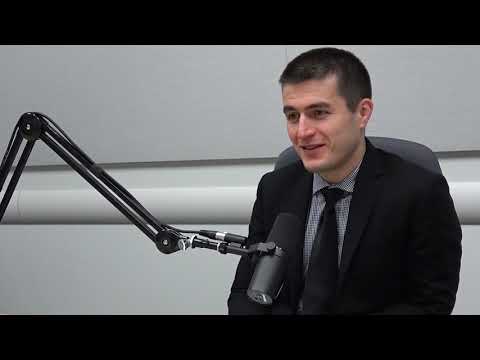 1:34:44
Jim Keller: Moore's Law, Microprocessors, and First Principles | Lex Fridman Podcast #70
742K views • 6 years ago
Lex Fridman
Lex Fridman interviews legendary chip architect Jim Keller about Moore's Law, microprocessor design, and first-principles thinking. Keller draws on his work at AMD, Apple, Tesla and Intel, discussing instruction sets, transistor budgets, and self-driving.
Topic match · Computer architecture & CPUs 28:36
Literate Devops with Emacs
105K views • 11 years ago
Howard Abrams
Howard Abrams demonstrates, in an EmacsConf 2015 talk, how he uses org-mode's Babel and Tramp to configure and operate remote servers from a single document. Code blocks, their results and the explanatory text all live together.
Topic match · Cloud, DevOps & reliability 27:27
AT&T Archives: The UNIX Operating System
2.2M views • 14 years ago
AT&T Tech Channel
A 1982 Bell Labs film hosted by Victor Vyssotsky on the origins and design philosophy of the UNIX operating system, with appearances by Kernighan, Thompson and Ritchie. It shows pipes, filters and a shell one-liner spell checker being built.
Topic match · History of computing 1:01:42
34C3 - The Ultimate Apollo Guidance Computer Talk
324K views • 8 years ago
media.ccc.de
Michael Steil and Christian Hessmann's 34C3 talk explaining the Apollo Guidance Computer end to end: hardware design, operating system, and mission software.
Topic match · Computer architecture & CPUs 1:04:53
Jim Keller: Moore’s Law is Not Dead
77K views • 7 years ago
UC Berkeley EECS
Jim Keller gives a UC Berkeley EECS colloquium arguing that Moore's Law is not dead. He surveys upcoming technologies and the multiple innovation curves that can keep transistor density and performance scaling.
Topic match · Computer architecture & CPUs 40:13
"Programming a 144-computer chip to minimize power" - Chuck Moore (2013)
19K views • 5 years ago
Strange Loop Conference
Chuck Moore, inventor of Forth, presents GreenArrays' 144-core asynchronous chip at Strange Loop 2013. He explains how idle cores draw almost no power and how tight code minimizes energy use.
Topic match · Computer architecture & CPUs 19:08
NaN Gates and Flip FLOPS
314K views • 7 years ago
suckerpinch
Tom Murphy (suckerpinch) presents a deliberately trollish computer architecture built on IEEE-754 floating point, using NaN and infinity to define logic gates. He builds working hardware around the idea.
Topic match · Computer architecture & CPUs 44:29
Breaking the x86 Instruction Set
381K views • 9 years ago
Black Hat
Christopher Domas presents at Black Hat 2017 how page fault analysis and processor fuzzing can exhaustively search the x86 instruction set. The talk uncovers undocumented instructions and hardware bugs and shows limits of disassemblers.
Topic match · Computer architecture & CPUs 58:05
Guarding Against Physical Attacks: The Xbox One Story — Tony Chen, Microsoft
95K views • 7 years ago
Platform Security Summit
Microsoft's Tony Chen explains how the Xbox One was designed to resist physical attacks, including secure boot, encrypted memory, a security processor and a hypervisor. The goal was to make any hardware attack cost more than the price of many games.
Topic match · Computer architecture & CPUs 1:15:47
Richard Feynman Computer Science Lecture - Hardware, Software and Heuristics
978K views • 14 years ago
Muon Ray
A lecture by Richard Feynman on how computers work, using the analogy of a filing clerk that becomes progressively dumber and faster. It also covers heuristics and how computers handle data and solve problems in finite time.
Topic match · Computer architecture & CPUs 51:07
Alan Kay, 2015: Power of Simplicity
145K views • 11 years ago
Kenneth Friedman
Alan Kay's 2015 talk on the power of simplicity, arguing that systems become simpler by building on more sophisticated fundamental building blocks and that big research horizons drove invention at Xerox PARC. It ranges across computing, tools and scaling software.
Topic match · History of computing 7:16
Unix and Google
9K views • 10 years ago
FOAM
A short animated simulation comparing how Multics and Unix were developed, showing why Unix's small composable programs and pipes gave it a efficiency advantage. It frames Unix as a moonshot achievable by a small team.
Topic match · History of computing 2:50:14
Simple Code, High Performance
463K views • 5 years ago
Molly Rocket
Casey Muratori's University of Twente guest lecture is a case study in how straightforward code can cut thousands of lines and tens of seconds of runtime down to a few dozen lines running in under a second. It uses concrete examples to show why software is often an order of magnitude slower than it should be.
Topic match · Computer architecture & CPUs 58:02
How to Invent the Future I - Stanford CS183F: Startup School
40K views • 9 years ago
Stanford Online
Alan Kay's Stanford Startup School lecture covers his career at Xerox PARC and how to think about inventing the future. He goes through what came out of PARC and why companies fail to capitalize on such ideas.
Topic match · History of computing