mainframe
 23:33
Why Do Mainframes Still Exist? What's Inside One? 40TB, 200+ Cores, AI, and more!
1.2M views • 3 years ago
Dave's Garage
Dave Plummer tours the IBM z16 mainframe from design through factory assembly, test lab, accelerators and water cooling. He explains why mainframes still exist and what makes them reliable.
 7:16
Unix and Google
9K views • 10 years ago
FOAM
A short animated simulation comparing how Multics and Unix were developed, showing why Unix's small composable programs and pipes gave it a efficiency advantage. It frames Unix as a moonshot achievable by a small team.
Topic match · History of computing 3:39
(1/4) Intro/History: Introducing a 100-year-old mechanical computer
476K views • 11 years ago
engineerguy
The first of four short videos from Bill Hammack (engineerguy) introducing and giving the history of a 100-year-old mechanical computer, Michelson's harmonic analyzer. The series goes on to explain Fourier synthesis, analysis and operation of the machine.
Topic match · History of computing 11:27
CGA Graphics - Not as bad as you thought!
2.4M views • 10 years ago
The 8-Bit Guy
The 8-Bit Guy covers IBM's 1981 CGA graphics system, including how composite output and artifacting produced extra colors beyond the nominal palette. He argues CGA looked better in period than it does on RGB monitors.
Topic match · Computer architecture & CPUs 15:09
Mouse Cursor History (and why I made my own)
3M views • 8 years ago
Posy
Posy gives a short history of the computer mouse cursor, from early straight pointers to the tilted arrow, comparing Apple and Windows designs. He then explains why he designed his own cursor set and offers it as a free download.
Topic match · History of computing 21:42
Future Computers Will Be Radically Different (Analog Computing)
13.2M views • 4 years ago
Veritasium
Veritasium explains why analog computing may suit AI workloads, covering old analog computers, The Analog Thing and Mythic's analog chips that use flash memory for neural network inference. It argues digital hardware is hitting limits.
Topic match · Computer architecture & CPUs 20:13
The Most Powerful Computers You've Never Heard Of
13.7M views • 4 years ago
Veritasium
Veritasium traces analog computers from the Antikythera mechanism and Kelvin's tide-predicting machines to fire control and modern analog approaches. It explains how these machines computed continuously rather than digitally.
Topic match · History of computing 3:05
IBM Selectric Typewriter & its digital to analogue converter
1.1M views • 16 years ago
engineerguy
Bill Hammack of engineerguy uses slow motion video to show how the IBM Selectric typewriter works. He focuses on its fully mechanical digital-to-analog converter, which turns key presses into rotation of the type ball.
Topic match · History of computing 35:33
How does Computer Memory Work? 💻🛠
5.5M views • 4 years ago
Branch Education
A 36-minute animated deep dive from Branch Education into how DRAM works. It shows how memory connects to the CPU and how billions of bits are stored in nanoscale capacitor cells. It also covers why DRAM sits between SSDs and the processor.
Topic match · Computer architecture & CPUs 25:10
How an Atomic Clock Really Works: Inside the HP 5061A Cesium Clock
464K views • 6 years ago
CuriousMarc
CuriousMarc powers up a vintage HP 5061A cesium beam clock and explains both the quantum principle and the HP implementation in detail. It is part of a longer atomic clock series.
Topic match · History of computing 29:05
Datacenters Behaving Like Acoustic Weapons
1.8M views • 8 months ago
Benn Jordan
Benn Jordan investigates infrasound and low-frequency noise from data centers, including xAI's Colossus and a crypto mine, and reports his own experiments on the effects. The video covers the health and community impacts on nearby residents.
Topic match · Cloud, DevOps & reliability 10:58
Flaw in the Enigma Code - Numberphile
5.4M views • 13 years ago
Numberphile
Numberphile's Dr James Grime explains the flaw in the Enigma machine, namely that a letter could never be encrypted to itself, and how that helped the Allies break the code. It touches on the Bombe and Alan Turing.
Topic match · History of computing 12:23
Xanadu Basics 1a - VISIBLE CONNECTION
20K views • 8 years ago
TheTedNelson
Ted Nelson explains the original Xanadu hypertext idea of visible connection, the notion that links between documents should be shown and preserved. He argues that the Web and current document standards lost this concept.
Topic match · History of computing 19:25
New computers don't speed up old code
187K views • 1 year ago
Matthias random stuff
Matthias Wandel tests old and new code on a range of PCs, including a new mini PC, to measure how much faster modern hardware really is. He also shows optimization techniques such as branchless code, with benchmark programs on GitHub.
Topic match · Computer architecture & CPUs 14:32
Orbital Data Centers Yes or No
18K views • 1 year ago
Eager Space
Eager Space examines the practicality of putting data centers in orbit, walking through three scenarios with cost calculations and the launch cost reductions that would be required.
Topic match · Cloud, DevOps & reliability 21:20
Cracking Enigma in 2021 - Computerphile
2.9M views • 5 years ago
Computerphile
Dr Mike Pound of Computerphile shows how a modern laptop can crack Enigma, using a ciphertext-only attack based on an older paper. He compares it with the tooling in CrypTool.
Topic match · History of computing 7:08
How "oldschool" graphics worked Part 1 - Commodore and Nintendo
5.7M views • 11 years ago
The 8-Bit Guy
The 8-Bit Guy explains the color limitations of 1980s computers and consoles such as the NES and Commodore 64. It shows how sprites, attributes and palettes shaped the look of old games.
Topic match · Computer architecture & CPUs 18:41
Emulating the DX7 the HARD way
23K views • 5 years ago
plgDavid
An episode of Plogue's chipresearch series on emulating the Yamaha DX7 from the hardware up. It covers the sub CPU and main CPU, address map investigation, cartridges, firmware analysis and a skeleton MAME driver.
Topic match · Computer architecture & CPUs 26:13
The Smartphone CPU Review You NEED to Watch!
345K views • 4 years ago
Geekerwan
Geekerwan reviews smartphone CPUs by power efficiency rather than benchmark scores, with test methodology and chapters on Qualcomm, Apple, Samsung and Google chips. It explains why high benchmark scores can coexist with heat and poor battery life.
Topic match · Computer architecture & CPUs 23:04
The Computer-free Automation of a Jukebox (Electromechanics)
1.3M views • 6 years ago
Technology Connections
Technology Connections takes apart a 1970 Wurlitzer 3400 jukebox to show how electromechanical relays and switches automated its behavior without a computer.
Topic match · History of computing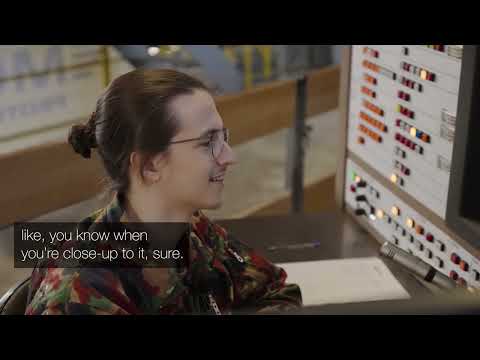 4:40
This 1970s tank simulator drives through a tiny world
12M views • 4 years ago
Tom Scott
Tom Scott visits the Swiss Military Museum to see the last surviving 1970s tank-driving simulator. It uses a real camera moving over a miniature model landscape rather than any computer graphics.
Topic match · History of computing 28:11
Why Everyone Is Talking About Data Centers In Space
408K views • 10 months ago
Scott Manley
Scott Manley examines why SpaceX, Google and others are looking at orbital data centers. He walks through the economics, heat rejection and solar power arguments, with links to the Lumen/Starcloud and Google Suncatcher papers.
Topic match · Cloud, DevOps & reliability 24:30
Is It Really Impossible To Cool A Datacenter In Space?
1.1M views • 7 months ago
Scott Manley
Scott Manley explains the thermal balance of spacecraft and how a satellite could be configured to radiate away the heat from datacenter-scale computing in space. His rough numbers suggest it is feasible.
Topic match · Computer architecture & CPUs 16:29
Why Sony's Beta Videotape System Failed--and failed hard (Part 1)
1.5M views • 9 years ago
Technology Connections
Part one of Technology Connections' account of the VHS versus Betamax format war. It argues Sony was caught off guard by JVC's cheaper, more practical VHS system.
Topic match · History of computing 9:16
Floating Point Numbers - Computerphile
2.5M views • 12 years ago
Computerphile
Tom Scott explains for Computerphile how floating point numbers work, why moving the binary point is fast, and why it handles money badly.
Topic match · Computer architecture & CPUs 13:59
MENACE: the pile of matchboxes which can learn
453K views • 8 years ago
Stand-up Maths
Matt Parker of Stand-up Maths demonstrates MENACE, Donald Michie's 1961 machine made of matchboxes that learns to play noughts and crosses through reinforcement. He builds and trains a physical version.
Topic match · History of computing 28:39
AMD Ryzen Eco Mode Deep-Dive & Benchmarks on R9 7950X (Zen 4)
422K views • 4 years ago
Gamers Nexus
Gamers Nexus benchmarks the Ryzen 9 7950X in its BIOS Eco Mode presets (65W, 105W and stock 170W). It measures the performance cost against the power and heat savings.
Topic match · Computer architecture & CPUs 12:40
Tomb Raider on the Nintendo Game Boy Advance is incredible | MVG
906K views • 4 years ago
Modern Vintage Gamer
Modern Vintage Gamer looks at OpenLara, an open source Tomb Raider engine, running on the Game Boy Advance. The video explains how the port achieves playable speeds on the GBA's slow ARM CPU, with input from the developer XProger.
Topic match · Computer architecture & CPUs 16:37
Does It Make Sense To Put Data Centers In Space? Can They Really Cost Less To Operate?
502K views • 2 years ago
Scott Manley
Scott Manley analyzes the idea of putting data centers in orbit, prompted by Lumen Orbit's funding. He examines the claimed advantage of constant solar power against launch cost, cooling and mass.
Topic match · Cloud, DevOps & reliability 27:48
How are Microchips Made? 🖥️🛠️ CPU Manufacturing Process Steps
11.9M views • 2 years ago
Branch Education
Branch Education walks through a semiconductor fab and the dozens of steps used to turn silicon wafers into microchips, with 3D animation. It covers lithography, deposition and etching at a high level.
Topic match · Computer architecture & CPUs 28:43
Why build an entire computer on breadboards?
3.4M views • 6 years ago
Ben Eater
Ben Eater explains why he builds computers on breadboards, including testing their signal behavior on an oscilloscope. It is a companion to his 6502 breadboard computer series.
Topic match · Computer architecture & CPUs 19:37
Why is Japan So Weak in Software?
968K views • 2 years ago
Asianometry
Asianometry examines why Japan's software industry has lagged despite its hardware strengths. It looks at dependence on US software and the low prestige of programming.
Topic match · History of computing 38:26
Racing the Beam Explained - Atari 2600 CPU vs. CRT Television
400K views • 5 years ago
Retro Game Mechanics Explained
Retro Game Mechanics Explained shows how the Atari 2600 draws images with almost no video memory, by having the CPU race the CRT beam line by line. It walks through the techniques in detail.
Topic match · Computer architecture & CPUs 3:36
Hold music used to sound better. Here's why.
2.9M views • 8 years ago
Tom Scott
Tom Scott explains why hold music sounds worse than it used to, tracing it to old telephone exchanges and the audio compression applied by modern switches. It is a short visit to the Milton Keynes Museum.
Topic match · History of computing 9:20
An astonishing old calculator - Numberphile
794K views • 8 years ago
Numberphile
Cliff Stoll shows and explains his two Friden EC-132 electronic calculators for Numberphile. The video covers how these early machines worked, including their unusual acoustic delay line memory.
Topic match · History of computing 8:26
AT&T Archives: The Step-By-Step Switch
774K views • 15 years ago
AT&T Tech Channel
A 1951 Bell System training film showing how telephone calls are routed through a step-by-step (Strowger) switching office.
Topic match · History of computing 23:03
The Universe is Hostile to Computers
26.5M views • 5 years ago
Veritasium
Veritasium explains how cosmic rays and other particles flip bits in computer memory, with examples including a Belgian election count error, plane incidents and game glitches. It is inspired by a RadioLab episode on bit flips.
Topic match · Computer architecture & CPUs 20:58
“Too Much Thermal Paste” – Benchmark of Thermal Paste Quantity
3.3M views • 8 years ago
Gamers Nexus
Gamers Nexus benchmarks how the amount and application method of thermal paste affect CPU cooling. It compares pea-sized dots, thin spreads and large blobs with Thermal Grizzly Kryonaut.
Topic match · Computer architecture & CPUs 12:23
Typesetters in the '80s - Computerphile
105K views • 12 years ago
Computerphile
Professor Brailsford of the University of Nottingham describes how the university set out to print its own mathematics exam papers in the 1980s. The story centers on getting a Mergenthaler Linotron 202 typesetter to work with their own software.
Topic match · History of computing 17:49
How Japan Learned Semiconductors
228K views • 4 years ago
Asianometry
Asianometry traces the 30-year rise and peak of Japan's semiconductor industry from the 1950s to the 1980s, covering how a postwar country gained competence in an emerging technology.
Topic match · History of computing