mathematica
 33:26
On Mathematical Maturity (1) Thomas Garrity
172K views • 9 years ago
IAS | PCMI Park City Mathematics Institute
Thomas Garrity discusses mathematical maturity, a concept mathematicians use for professional development, and how it can inform teaching, mentoring and careers. It was given at the IAS/PCMI Park City Mathematics Institute.
 23:34
Why Democracy Is Mathematically Impossible
10.1M views • 2 years ago
Veritasium
Veritasium explains why no voting system can be perfectly fair, drawing on Arrow's theorem and the work of Eric Maskin. It looks at problems with systems like first-past-the-post and ranked-choice voting.
 1:01:08
1. A strange determinant
30K views • 5 years ago
Timothy Gowers
Timothy Gowers thinks aloud, in real time, as he tries to understand why Pascal's determinant equals 1. He does not fully solve it in this episode, but shows his exploratory process.
Topic match · Pure mathematics 11:15
The hardest problem on the hardest test
16.5M views • 8 years ago
3Blue1Brown
3Blue1Brown walks through a very hard Putnam competition problem and its elegant solution, emphasizing the visual intuition and the thought process behind solving it.
Topic match · Pure mathematics 44:09
Lec 1 | MIT 6.042J Mathematics for Computer Science, Fall 2010
2.8M views • 13 years ago
MIT OpenCourseWare
The first lecture of MIT 6.042J Mathematics for Computer Science, taught by Tom Leighton, introducing mathematical proofs. It covers propositions, implication and basic proof methods.
Topic match · Pure mathematics 10:20
Feynman: 'Greek' versus 'Babylonian' mathematics
377K views • 14 years ago
TehPhysicalist
A clip of Richard Feynman contrasting the Greek and Babylonian traditions of mathematical reasoning. It compares the axiomatic approach of mathematicians with how physicists use mathematics.
Topic match · Pure mathematics 7:42
Triangle of Power
812K views • 10 years ago
3Blue1Brown
3Blue1Brown presents the Triangle of Power, an alternate notation that unifies powers, logarithms and roots in a single triangular symbol. The video shows how the inverse operations relate and how the notation could help.
Topic match · Pure mathematics 19:20
Conrad Wolfram: Teaching kids real math with computers
363K views • 15 years ago
TED
Conrad Wolfram argues that the part of math taught in schools, hand calculation, is tedious and mostly irrelevant to real mathematics. He proposes teaching math through computer programming so students can tackle real problems.
Topic match · Math & theory (other) 18:18
Hilbert's Curve: Is infinite math useful?
2.4M views • 9 years ago
3Blue1Brown
3Blue1Brown explains space-filling curves and the Hilbert curve, and how infinite mathematical constructions connect to finite, practical approximations. It touches on mapping between dimensions and sensory ideas.
Topic match · Pure mathematics 9:16
Graham's Number - Numberphile
3M views • 14 years ago
Numberphile
Numberphile's Tony Padilla and Matt Parker discuss Graham's number, once the largest number used in a mathematical proof, and how enormous it is.
Topic match · Pure mathematics 21:58
Group theory, abstraction, and the 196,883-dimensional monster
3.8M views • 6 years ago
3Blue1Brown
3Blue1Brown introduces group theory and abstract groups, then builds toward classification of finite simple groups and the enormous Monster group with its 196,883 dimensions.
Topic match · Pure mathematics 3:50
Hitler Learns Topology
470K views • 16 years ago
Benjatastic
A parody in the Downfall meme format where Hitler rages over confusing topology terminology about open, closed and clopen sets. It was made for a math summer program.
Topic match · Pure mathematics 27:45
Gerald Jay Sussman: The Role of Programming (Dan Friedman's 60th Birthday)
22K views • 11 years ago
William Byrd
Gerald Jay Sussman speaks at Dan Friedman's 60th birthday celebration about how programming helps formulate and clarify ideas. He argues that ambiguous mathematical notation hinders understanding.
Topic match · Pure mathematics 34:00
Math's Fundamental Flaw
30.8M views • 5 years ago
Veritasium
Veritasium's explainer on Godel's incompleteness theorems and the limits of mathematical proof, tracing set theory, Hilbert's program and the road to Turing and modern computing.
 3:11:09
Stephen Wolfram: Cellular Automata, Computation, and Physics | Lex Fridman Podcast #89
1.8M views • 6 years ago
Lex Fridman
Lex Fridman interviews Stephen Wolfram for about three hours on cellular automata, computation, the Wolfram Physics Project and his career with Mathematica and Wolfram Alpha.
 1:07:34
What Happens When Maths Goes Wrong? - with Matt Parker
3.3M views • 7 years ago
The Royal Institution
Matt Parker's Royal Institution talk based on his book Humble Pi, covering everyday mathematical mistakes and spurious patterns that went wrong in engineering and software. It mixes stand-up comedy with stories of coincidence and error.
 9:52
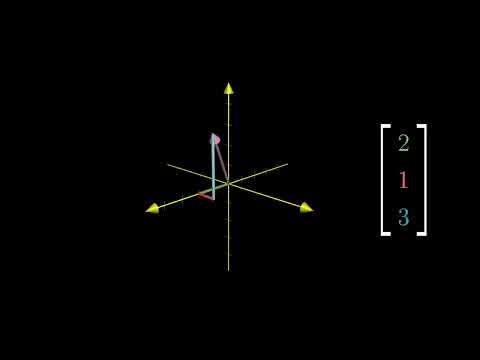
Vectors | Chapter 1, Essence of linear algebra
13M views • 10 years ago
3Blue1Brown
The first chapter of 3Blue1Brown's Essence of Linear Algebra series, introducing vectors with animated geometric visuals. It begins a series that builds intuition for linear algebra from the basics.
Topic match · Pure mathematics 19:42
But what is the Fourier Transform? A visual introduction.
12.6M views • 8 years ago
3Blue1Brown
3Blue1Brown's animated visual introduction to the Fourier Transform, showing how a signal breaks into frequency components.
Topic match · Pure mathematics 39:49
Lec 1 | MIT 18.06 Linear Algebra, Spring 2005
4.9M views • 17 years ago
MIT OpenCourseWare
The first lecture of Gilbert Strang's MIT 18.06 Linear Algebra course, covering the geometry of linear equations. It opens a full 35-lecture university course.
Topic match · Pure mathematics 9:18
The Most IMPORTANT Video You'll Ever See (part 1 of 8)
5.4M views • 19 years ago
wonderingmind42
Part 1 of a lecture by physicist Albert Bartlett on the exponential function and its consequences for population growth, resource use and energy. It argues that steady growth rates quickly lead to enormous quantities.
Topic match · Pure mathematics 1:37:22
Siggraph2019 Geometric Algebra
87K views • 7 years ago
Bivector
A SIGGRAPH 2019 course on geometric algebra. Charles Gunn gives an intro, then Steven De Keninck gives a programmer-focused course with live examples in ganja.js.
Topic match · Pure mathematics 17:05
The essence of calculus
11.9M views • 9 years ago
3Blue1Brown
The first video of 3Blue1Brown's Essence of Calculus series, which builds toward integrals, derivatives, and the fundamental theorem of calculus from a simple geometry question. It aims to make viewers feel they could have invented calculus themselves.
Topic match · Pure mathematics 46:46
Category Theory 1.1: Motivation and Philosophy
394K views • 10 years ago
Bartosz Milewski
The first lecture in Bartosz Milewski's category theory series for programmers. It covers the motivation and philosophy behind category theory and why composition matters for handling complexity.
Topic match · Pure mathematics 5:09
Essence of linear algebra preview
2.8M views • 10 years ago
3Blue1Brown
A five-minute preview of 3Blue1Brown's Essence of Linear Algebra series, which uses animation to build geometric intuition for topics from a standard linear algebra course.
Topic match · Pure mathematics 44:23
A Swift Introduction to Geometric Algebra
1.1M views • 6 years ago
sudgylacmoe
An animated introduction to geometric algebra, presented as a language that can describe most of physics. It was made with manim and covers multivectors and how they generalize familiar tools like cross products and quaternions.
Topic match · Pure mathematics 5:47
Imaginary Numbers Are Real [Part 1: Introduction]
8.6M views • 11 years ago
Welch Labs
The first part of Welch Labs' series on imaginary numbers, presenting them as the natural extension of the number line into two dimensions. It covers the history and the math with strong visuals.
Topic match · Pure mathematics 10:03
The determinant | Chapter 6, Essence of linear algebra
5M views • 10 years ago
3Blue1Brown
A 10-minute 3Blue1Brown chapter explaining the determinant as the factor by which a linear transformation scales area or volume. It builds the idea geometrically with animations before any formulas.
Topic match · Pure mathematics 21:36
Fractals are typically not self-similar
4.6M views • 9 years ago
3Blue1Brown
3Blue1Brown explains fractal dimension and shows why many fractals are not strictly self-similar. Self-similarity turns out to be a special case of the broader idea of fractional dimension.
Topic match · Pure mathematics 24:14
The Banach–Tarski Paradox
49.1M views • 11 years ago
Vsauce
Vsauce's roughly 24 minute explainer on the Banach-Tarski paradox, building from infinity and set theory to the decomposition of a sphere into pieces that form two spheres.
Topic match · Pure mathematics 25:13
Thinking outside the 10-dimensional box
3.2M views • 9 years ago
3Blue1Brown
3Blue1Brown visualizes high-dimensional spheres to explain a surprising puzzle about how a sphere fits in a box as dimensions grow. It builds geometric intuition for counterintuitive properties of high-dimensional space.
Topic match · Pure mathematics 1:14:48
The Future of Mathematics?
116K views • 7 years ago
Microsoft Research
Mathematician Kevin Buzzard explains why he believes the Lean theorem prover will shape the future of mathematics, and describes digitizing his university curriculum in Lean with undergraduates, plus the cultural challenges.
Topic match · Pure mathematics 17:16
Eigenvectors and eigenvalues | Chapter 14, Essence of linear algebra
6.4M views • 10 years ago
3Blue1Brown
3Blue1Brown's chapter on eigenvectors and eigenvalues in the Essence of Linear Algebra series. It builds a visual intuition for what they mean, why an eigenbasis is useful, and ends with a puzzle.
Topic match · Pure mathematics 14:27
All the Numbers - Numberphile
1.8M views • 7 years ago
Numberphile
Matt Parker talks Numberphile through the different kinds of numbers: algebraic, transcendental, computable, normal, and beyond. It shows how few numbers we can actually name or describe.
Topic match · Pure mathematics 31:51
Visualizing the 4d numbers Quaternions
5.6M views • 8 years ago
3Blue1Brown
3Blue1Brown builds visual intuition for quaternions, showing how to think about this four-dimensional number system using stereographic projection and rotations in 3D space. It is part one of a two-part series with an interactive companion site.
Topic match · Pure mathematics 48:55
Pythagoras' theorem (a) | Math History | NJ Wildberger
517K views • 15 years ago
Insights into Mathematics
The first lecture of N J Wildberger's History of Mathematics course, starting with Pythagoras' theorem and following Stillwell's text. It emphasizes the flow of ideas over proofs.
Topic match · Pure mathematics 34:25
Ramanujan: Making sense of 1+2+3+... = -1/12 and Co.
3.6M views • 10 years ago
Mathologer
Mathologer examines how identities like 1+2+3+... = -1/12 arise in Ramanujan's work, starting from his 1913 letter to Hardy. The video explains the rules for summing infinite series and why such results are meaningful but not naive sums.
Topic match · Pure mathematics 8:23
How Big is Graham's Number? (feat Ron Graham)
1.7M views • 12 years ago
Numberphile
Numberphile talks with mathematician Ron Graham about the magnitude of Graham's number, building up from arrow notation to show how impossibly large it is. It is part of a series of videos on this number.
Topic match · Pure mathematics 51:16
Why can't you multiply vectors?
524K views • 3 years ago
Freya Holmér
Freya Holmer's Dutch Game Day 2023 talk asking why vectors can't be multiplied, building from complex numbers to a single axiom and arriving at geometric algebra, quaternions and multivectors.
Topic match · Pure mathematics 19:12
Taking Vector Transposes Seriously | Jiahao Chen | JuliaCon 2017
7K views • 9 years ago
The Julia Programming Language
Jiahao Chen's JuliaCon 2017 talk argues that vector transposes should be taken seriously in type systems and linear algebra libraries. It explains why treating vectors as matrices causes trouble in languages.
Topic match · Pure mathematics 1:14:46
Arithmetic, Population and Energy - a talk by Al Bartlett
201K views • 13 years ago
lXlSalemlXl
Physicist Al Bartlett's well-known lecture on the arithmetic of exponential growth, applied to population, energy consumption and resource depletion. He argues that steady percentage growth cannot be sustained on a finite planet and that most public discussion ignores this.
Topic match · Pure mathematics