perception
 19:00
Optical illusions show how we see | Beau Lotto
3.5M views • 17 years ago
TED
Neuroscientist Beau Lotto runs the audience through color and pattern illusions to show that perception is shaped by context and evolutionary history rather than being a direct readout of the world. The talk is playful and hands-on, and it argues that the brain interprets ambiguous signals.
Topic match · Neuroscience & the brain 7:41
Why Life Seems to Speed Up as We Age
8M views • 10 years ago
Veritasium
Veritasium explores why time seems to speed up as we age, covering chronoception and several competing explanations beyond the common proportional-theory argument.
Topic match · Neuroscience & the brain 9:35
Is Your Red The Same as My Red?
34M views • 13 years ago
Vsauce
Vsauce explores qualia and whether different people experience colors the same way. It draws on color blindness, Mary's room, the explanatory gap and subjective experience.
Topic match · Consciousness & cognition 17:01
Your Brain Hallucinates Your Conscious Reality | Anil Seth | TED
12M views • 9 years ago
TED
Neuroscientist Anil Seth argues in this TED talk that perception is a controlled hallucination: the brain constantly predicts the world and our shared agreement is what we call reality. He also touches on the construction of the self.
Topic match · Consciousness & cognition 14:28
How Google's Self-Driving Car Works
647K views • 15 years ago
IEEE Spectrum
Part 2 of the IROS 2011 keynote by Sebastian Thrun and Chris Urmson on Google's self-driving car. It shows how the car perceives its surroundings with a lidar point cloud and recognizes traffic lights and pedestrians. The audio is poor because it was recorded on a pocket camcorder.
Topic match · Self-driving & autonomous vehicles 15:30
Chris Urmson: How a driverless car sees the road
886K views • 11 years ago
TED
Chris Urmson, head of Google's self-driving car program, shows footage of how the car perceives the road and decides what to do. Examples include cyclist hand signals, school buses, police officers and complex intersections.
Topic match · Self-driving & autonomous vehicles 19:09
A Better Default Colormap for Matplotlib | SciPy 2015 | Nathaniel Smith and Stéfan van der Walt
177K views • 11 years ago
Enthought
SciPy 2015 talk by Nathaniel Smith and Stefan van der Walt on choosing a new default colormap for Matplotlib. It covers why Jet misleads, how perceptual color spaces work, and how viridis was designed.
 7:49
Crash Course - The SMIDSY
288K views • 17 years ago
lbtv
A motorcycle safety video on the SMIDSY (sorry mate, I didn't see you) accident, explaining the perception and optical illusion that makes drivers fail to see riders, and how riders can spot the signs and avoid it.
 7:00
CD / Color
2.9M views • 6 years ago
Captain Disillusion
Captain Disillusion's comedic, fast-paced explainer on how color works in cameras, displays and video. It covers the biology of color perception and what it means for screens.
 18:15
So... the minute hand shows progression — apparently we think of time in wildly different ways
706K views • 4 years ago
Technology Connextras
A Technology Connections video essay on how analog and digital clocks shape different mental models of time, with the minute hand acting as a progress indicator.
 8:41
Invisibility Training for Motorcyclists
1.8M views • 8 years ago
FortNine
FortNine's tongue-in-cheek guide to why drivers fail to see motorcyclists and how riders can make themselves more visible. It touches on perception psychology, including the role of saccades.
 16:29
The great porn experiment | Gary Wilson | TEDxGlasgow
17.8M views • 14 years ago
TEDx Talks
Gary Wilson's TEDxGlasgow talk argues that internet pornography hyperstimulates the brain's reward system and can cause symptoms that reverse when people stop. TED notes that several claims are not supported by respected academic studies.
Topic match · Neuroscience & the brain 8:06
The Egg - A Short Story
36.5M views • 7 years ago
Kurzgesagt – In a Nutshell
Kurzgesagt animates Andy Weir's short story The Egg, in which a person learns that they are every human who has ever lived. It adds music and narration to the original text.
Topic match · Consciousness & cognition 4:58
You Actually Share Your Brain With a Silent Stranger
20.2M views • 10 years ago
CGP Grey
CGP Grey explains split-brain patients, where severing the corpus callosum lets the two hemispheres act independently. He uses this to explore the idea of two minds in one head.
Topic match · Neuroscience & the brain 15:12
JPEG DCT, Discrete Cosine Transform (JPEG Pt2)- Computerphile
697K views • 11 years ago
Computerphile
Mike Pound explains the discrete cosine transform and how it underpins JPEG compression. It is part two of Computerphile's JPEG series.
Topic match · Computer vision, speech & NLP 18:31
Fourier Optics used for Optical Pattern Recognition
103K views • 6 years ago
Huygens Optics
Huygens Optics explains the Fourier transform and shows how a lens performs one optically. A DLP projector is used as a Fourier filter to do simple pattern recognition on lithographic character patterns.
Topic match · Computer vision, speech & NLP 4:30
Traffic Has a Perfect Solution. Humans Are the Problem.
44.6M views • 10 years ago
CGP Grey
CGP Grey explains how traffic jams come from human driving behavior such as tailgating and reaction delays, and how leaving gaps and smoothing speed would reduce congestion. It also touches on self-driving cars.
Topic match · Self-driving & autonomous vehicles 10:18
Why You Should Put YOUR MASK On First (My Brain Without Oxygen) - Smarter Every Day 157
11.6M views • 10 years ago
SmarterEveryDay
Destin Sandlin of Smarter Every Day undergoes hypoxia training and experiences his own impaired thinking as oxygen is withdrawn. The video shows how quickly and unnoticeably oxygen deprivation degrades judgment, illustrating why you put your own mask on first.
Topic match · Neuroscience & the brain 6:24
Feynman: How to think 1 of 2 FUN TO IMAGINE 11
388K views • 17 years ago
Christopher Sykes
An excerpt from the 1983 BBC series Fun to Imagine in which Richard Feynman describes how he and a mathematician friend counted in their heads in different ways, one verbally and one visually. It shows that people can reach the same goal through quite different mental methods.
Topic match · Consciousness & cognition 16:40
Massive-scale online collaboration | Luis von Ahn
315K views • 14 years ago
TED
Luis von Ahn, creator of CAPTCHA and reCAPTCHA, explains how small contributions from many people online can digitize books. He then introduces Duolingo as a way to translate the web while people learn languages.
Topic match · Computer vision, speech & NLP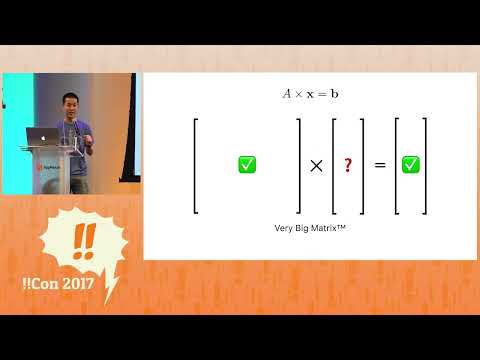 11:47
!!Con 2017: HDR Photography in Microsoft Excel?! by Kevin Chen
119K views • 9 years ago
Confreaks
A short conference talk from !!Con 2017 in which Kevin Chen explains the HDR imaging algorithm from a foundational paper, framing it as a system of linear equations, and implements it in a Microsoft Excel spreadsheet. No prior image processing knowledge is needed.
Topic match · Computer vision, speech & NLP 5:10
Dual Photography
24K views • 17 years ago
mm648230
The SIGGRAPH 2005 demo of dual photography from Stanford, which swaps the roles of projector and camera to render a scene from the light's point of view. It includes the reveal of a hidden playing card.
Topic match · Computer vision, speech & NLP 4:04
The effects of DBS on the motor symptoms of Parkinson's Disease
2.4M views • 13 years ago
Andrew Johnson
Andrew, diagnosed with early onset Parkinson's at 35, shows how deep brain stimulation surgery has controlled his motor symptoms. The short video shows his tremors with the stimulator off and on.
Topic match · Neuroscience & the brain 15:09
Why you DON'T want Perfect Pitch
2.5M views • 5 years ago
Adam Neely
Adam Neely explains what perfect (absolute) pitch is, how it differs from relative and quasi-absolute pitch, and why he would not want it. He covers its drawbacks, including drift with age.
Topic match · Neuroscience & the brain 16:26
Why Adults Can't Develop Perfect Pitch
1.8M views • 9 years ago
Rick Beato
Rick Beato argues that adults cannot develop true perfect pitch, which he ties to critical-period brain plasticity and language acquisition. He says it can only be developed in young children, and discusses the research behind this.
Topic match · Neuroscience & the brain 7:58
The Backwards Brain Bicycle - Smarter Every Day 133
31.6M views • 11 years ago
SmarterEveryDay
Destin of Smarter Every Day learns to ride a bicycle whose steering is reversed, taking about eight months, and compares it with how his young son learned much faster. It illustrates knowledge versus understanding and brain plasticity in adults versus children.
Topic match · Neuroscience & the brain 8:39
Terence Mckenna - Culture is your operating system
848K views • 19 years ago
Dani Dögenigt
A short edited excerpt of Terence McKenna arguing that culture acts as an operating system for the mind, set to imagery and music. It touches on psychedelics and how they change thinking.
Topic match · Consciousness & cognition 18:41
Why our IQ levels are higher than our grandparents' | James Flynn
3.2M views • 13 years ago
TED
Moral philosopher James Flynn explains the Flynn effect, the steady rise of IQ scores across the 20th century. He argues the shift reflects a move toward abstract, hypothetical thinking as cognitively demanding professions grew.
Topic match · Consciousness & cognition 13:30
Stealing Baseball Signs with a Phone (Machine Learning)
30M views • 7 years ago
Mark Rober
Mark Rober and Jabril build an app that uses machine learning to decode baseball sign sequences. The video also explains neural networks in a simple, accessible way.
Topic match · Computer vision, speech & NLP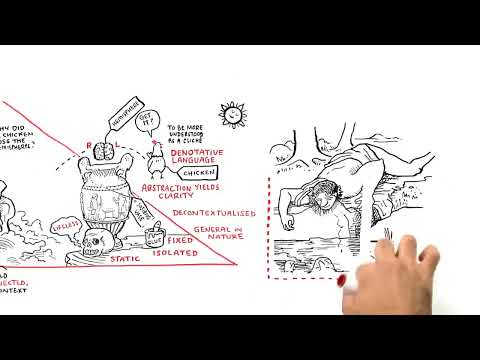 11:48
RSA ANIMATE: The Divided Brain
2.2M views • 15 years ago
Royal Society of Arts
An RSA Animate summary of Iain McGilchrist's lecture on the divided brain, arguing the brain's two hemispheres attend to the world differently and that this has shaped culture and society.
Topic match · Neuroscience & the brain 10:50
#NSDR (Non-Sleep Deep Rest) with Dr. Andrew Huberman
9.2M views • 4 years ago
Virtusan
A roughly 10-minute guided Non-Sleep Deep Rest session voiced by neuroscientist Andrew Huberman. It is meant to reduce daytime fatigue, improve focus and aid sleep.
Topic match · Neuroscience & the brain 17:19
Growing Human Neurons on a Home Made Electrode Array
3.4M views • 6 years ago
The Thought Emporium
The Thought Emporium builds a homemade multi-electrode array, grows human neurons on it and attempts to take readings. It is the first part of a series aimed at connecting living neurons to a computer.
Topic match · Neuroscience & the brain 17:40
3D Gaussian Splatting! - Computerphile
273K views • 2 years ago
Computerphile
A Computerphile video in which Dr Mike Pound and PhD student Lewis Stuart explain 3D Gaussian splatting, a quick technique that turns photos of a scene into a 3D model without much compute. It includes a demo and compares the approach to NeRFs.
Topic match · Computer vision, speech & NLP 7:53
How the US Postal Service reads terrible handwriting
7M views • 4 years ago
Tom Scott
Tom Scott visits the USPS Remote Encoding Center in Salt Lake City, where keyers decipher mail images machines cannot read. It shows the lengths taken to decode bad handwriting.
Topic match · Computer vision, speech & NLP 13:11
Jordan Peterson - Controversial Facts about IQ
2.2M views • 9 years ago
Bite-sized Philosophy
A clip of psychologist Jordan Peterson lecturing on intelligence and IQ, covering how it is defined and its correlation with academic and work success.
Topic match · Consciousness & cognition 7:47
This AI actually WORKS!!! - NVIDIA RTX Voice
1.8M views • 6 years ago
ShortCircuit
A ShortCircuit (Linus Tech Tips) review of Nvidia's RTX Voice, which uses GPU-based neural networks to remove background noise from microphone audio. It demonstrates how well the filtering works.
Topic match · Computer vision, speech & NLP 4:33
Amputee Makes History with APL’s Modular Prosthetic Limb
10.9M views • 11 years ago
Johns Hopkins Applied Physics Laboratory
Johns Hopkins APL shows Les Baugh, a bilateral shoulder-level amputee, controlling two Modular Prosthetic Limbs by thought after a short training period. Nerves rerouted to his chest drive the arms.
Topic match · Neuroscience & the brain 15:13
Free Energy Principle — Karl Friston
171K views • 9 years ago
Serious Science
Neuroscientist Karl Friston gives a 15-minute talk on the free energy principle, covering Markov blankets, Bayesian model evidence and global brain theories.
Topic match · Neuroscience & the brain 5:51
3-Sweep: Extracting Editable Objects from a Single Photo, SIGGRAPH ASIA 2013
2.3M views • 13 years ago
Daniel CohenOr
A SIGGRAPH Asia 2013 research demo of 3-Sweep, a tool for extracting editable 3D objects from a single photo using a few user strokes. It predates modern AI image tools.
Topic match · Computer vision, speech & NLP 12:54
I have APHANTASIA (and you may too...without realising it!)
8M views • 8 years ago
JAMIEvstheVOID
An artist describes discovering she has aphantasia, the inability to form mental images, and how it affects her work. She asks viewers about their own visualization.
Topic match · Consciousness & cognition