physics engine
 16:19
KSP Doesn't Teach: Rocket Engine Plumbing
1.1M views • 10 years ago
Scott Manley
Scott Manley explains the plumbing of rocket engines, including pressure-fed, gas generator, expander and staged combustion cycles. He shows why more complex designs exist and what they gain.
 4:21
The Disaster That Changed Engineering: The Hyatt Regency Collapse
2.7M views • 9 years ago
Tom Scott
A Tom Scott guest video by Grady Hillhouse of Practical Engineering on the 1981 Hyatt Regency walkway collapse. A seemingly minor change to the support design led to catastrophic failure, which is why the case is taught as a lesson to check and double-check everything.
 8:39
How to Move the Sun: Stellar Engines
19.5M views • 6 years ago
Kurzgesagt – In a Nutshell
Kurzgesagt explains stellar engines such as the Shkadov thruster and Caplan thruster, which could move the Sun and solar system across the galaxy over millions of years to avoid hazards and reach new regions.
 5:04
Why Can't we Remake the Rocketdyne F1 Engine?
4.2M views • 8 years ago
Curious Droid
Short Curious Droid video on why NASA could not simply rebuild the Saturn V's Rocketdyne F-1 engine for the SLS boosters. It explains that the engines were hand-tailored and that much of the know-how was never documented, so the blueprints were not enough.
 7:53
Sand Castle Holds Up A Car! - Mechanically Stabilized Earth
5M views • 10 years ago
Practical Engineering
Practical Engineering explains Mechanically Stabilized Earth, where layers of reinforcement make soil strong enough to hold heavy loads, shown with a sand structure supporting a car. It notes that MSE walls are everywhere in infrastructure.
 1:47
The Counterintuitive Physics of Turning a Bike
855K views • 11 years ago
minutephysics
A two-minute minutephysics video explaining why turning a bicycle requires first steering briefly the other way. It covers counter-steering and balance with slow-motion footage and 3D animation.
 7:23
How Trees Bend the Laws of Physics
5M views • 14 years ago
Veritasium
Veritasium explains how trees lift water from roots to the top of tall trunks, using transpiration pull and the negative pressure that liquid water can sustain. It explains why trees do not need pumps or valves.
 49:02
Is SpaceX's Raptor engine the king of rocket engines?
5.4M views • 7 years ago
Everyday Astronaut
Everyday Astronaut explains the basic physics of rocket engines, the main engine cycles and fuel types, then compares SpaceX's methane-fueled full-flow staged combustion Raptor to other engines. It runs nearly 50 minutes with chapter markers.
 13:41
The Physics of Life (ft. It's Okay to be Smart & PBS Eons!)
771K views • 8 years ago
PBS Space Time
PBS Space Time, together with It's Okay to be Smart and PBS Eons, asks how a universe drifting toward disorder produced something as complex as life. It presents the idea that the laws of physics, through thermodynamics, may actually favor the emergence of life.
 9:11
What is Concrete?
2.5M views • 8 years ago
Practical Engineering
Practical Engineering gives a short introduction to concrete, covering the difference between concrete and cement, the ingredients, and reinforcement. It includes a hydraulic press demonstration of compressive strength.
 12:48
Can We Terraform the Sahara to Stop Climate Change?
2.9M views • 8 years ago
Real Engineering
Real Engineering examines whether greening the Sahara could draw down carbon and slow climate change. It concludes that the effort would be enormously costly and that changes in albedo and other effects undercut the climate benefit.
 4:34
This giant model stopped a terrible plan
10M views • 9 years ago
Tom Scott
Tom Scott tells how John Reber's plan to dam San Francisco Bay was disproved by the Army Corps of Engineers' giant hydraulic Bay Model in Sausalito. The model showed the plan would have been dangerously wrong.
 6:26
Slow Motion Flipping Cat Physics | Smarter Every Day 58
11.3M views • 14 years ago
SmarterEveryDay
Destin of Smarter Every Day films a cat falling in high-speed slow motion to show how cats right themselves in midair, and introduces the physics behind it.
 16:04
Genetic Engineering Will Change Everything Forever – CRISPR
30.8M views • 10 years ago
Kurzgesagt – In a Nutshell
Kurzgesagt's animated explainer on CRISPR gene editing, covering how the technology works and what it could mean for curing disease, designer babies and aging. It frames genetic engineering as an irreversible change coming to humanity.
 7:04
Genetic Engineering and Diseases – Gene Drive & Malaria
9.9M views • 10 years ago
Kurzgesagt – In a Nutshell
A Kurzgesagt animation on using gene drives to modify mosquitoes against malaria, and whether we should. It explains the mechanism and the ethical trade-offs.
 5:26
Neural Network Learns The Physics of Fluids and Smoke | Two Minute Papers #118
209K views • 9 years ago
Two Minute Papers
Two Minute Papers covers a paper on speeding up fluid and smoke simulation with convolutional networks. It contrasts the approach with earlier regression forest methods.
 6:36
Intel ME explained (intel management engine) from insider
12K views • 8 years ago
jessie
A short video explaining the Intel Management Engine, a hidden embedded computer inside Intel machines with deep access to hardware. It is presented from an insider's perspective and raises backdoor and NSA concerns.
 18:02
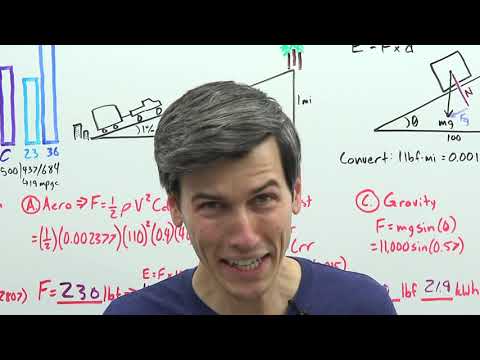
Why Teslas Are Bad At Towing (Today)
768K views • 6 years ago
Engineering Explained
Engineering Explained uses physics to show why today's electric cars, including Teslas, are poor at towing, pointing to battery energy density and weight. It examines Cybertruck and F-150 towing claims.
 14:34
Visualization of Quantum Physics (Quantum Mechanics)
2.8M views • 9 years ago
udiprod
An animated visualization of basic quantum mechanics using a free particle, with simulations based on the actual equations. It covers waves, particles, and how measurement collapses the wavefunction.
 11:39
The Ingenious Design of the Aluminum Beverage Can
19.5M views • 11 years ago
engineerguy
Bill Hammack of Engineer Guy explains the engineering behind the aluminum beverage can: why it is cylindrical, how it is manufactured, why it narrows at the top, the double seam, and how the pull tab works.
 3:05
IBM Selectric Typewriter & its digital to analogue converter
1.1M views • 16 years ago
engineerguy
Bill Hammack of engineerguy uses slow motion video to show how the IBM Selectric typewriter works. He focuses on its fully mechanical digital-to-analog converter, which turns key presses into rotation of the type ball.
 9:13
World's Largest Batteries - (Pumped Storage)
1.9M views • 7 years ago
Practical Engineering
Practical Engineering explains pumped storage hydropower, which makes up most grid-scale electricity storage. It covers how it works and why it fits only certain geographies.
 10:24
Are Electric Planes Possible?
2.3M views • 8 years ago
Real Engineering
Real Engineering analyzes whether electric planes are feasible, focusing on battery energy density limits compared with jet fuel. It concludes electric flight works mainly for short ranges.
 3:12
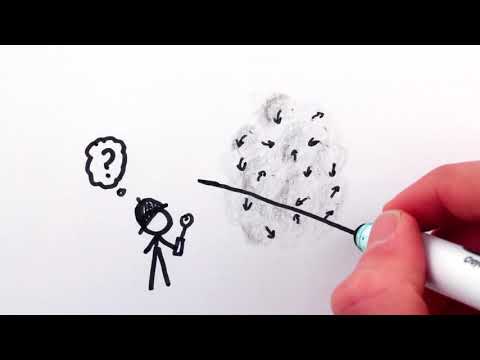
Why is the Solar System Flat?
9.5M views • 12 years ago
minutephysics
A minutephysics explainer on why the planets orbit in a flat plane. It shows how conserved angular momentum flattens a collapsing cloud of matter into a disk.
 4:20
Why It's Impossible to Tune a Piano
4.1M views • 11 years ago
minutephysics
A minutephysics video explaining why a piano cannot be perfectly tuned, comparing equal temperament with just intonation and the math of harmonics.
 9:34
Was Roman Concrete Better?
2.7M views • 8 years ago
Practical Engineering
Practical Engineering compares modern concrete with that of the Roman Empire, covering modern techniques like roller compacted concrete and water-reducing admixtures. It explains the tradeoffs of Roman construction versus reinforced concrete.
 3:34
Complete Solution To The Twins Paradox
2.3M views • 10 years ago
minutephysics
A minutephysics explainer on the twins paradox in special relativity. It shows why the traveling twin ends up younger and how acceleration resolves the paradox.
 7:45
The 100 Year Flood Is Not What You Think It Is (Maybe)
2.3M views • 10 years ago
Practical Engineering
Practical Engineering explains what a 100-year flood actually means, combining statistics, hydrology and how society treats risk. Grady walks through local drainage infrastructure and the caveats in estimating flood probability.
 3:57
How Do Bikes Stay Up?
1.7M views • 11 years ago
minutephysics
A short minutephysics video explaining why bicycles stay upright. It looks at gyroscopic precession, head angle and centre of mass, and shows that bikes self-steer toward the direction they lean.
 12:32
Protecting Privacy with MATH (Collab with the Census)
451K views • 7 years ago
minutephysics
minutephysics, in collaboration with the US Census Bureau, explains differential privacy and why the 2020 census adds noise to protect individuals' data. It walks through how statistics can leak private information.
 6:22
The Unreasonable Efficiency of Black Holes
4.5M views • 8 years ago
minutephysics
Minutephysics compares how efficiently different processes convert mass to energy per E=mc^2, from fire and fission to fusion, antimatter and black holes, which can convert a large fraction of mass to energy.
 3:13
Hitting the Sun is HARD
3M views • 10 years ago
minutephysics
A three-minute minutephysics video on the orbital mechanics of why crashing into the Sun takes far more energy than leaving the solar system.
 10:31
Wendelstein 7-X – from concept to reality
497K views • 12 years ago
Max-Planck-Institut für Plasmaphysik
A CAD-based animation from the Max Planck Institute for Plasma Physics showing how the Wendelstein 7-X stellarator is configured and what its fusion research aims to achieve. It runs about 11 minutes.
 22:22
Some light quantum mechanics (with minutephysics)
2.2M views • 9 years ago
3Blue1Brown
3Blue1Brown, in collaboration with minutephysics, introduces the math of superposition and quantum states using polarized light. It builds up the quantum behavior of photons as a simple counting and probability problem.
 37:23
Walls, Floors, & Ceilings
385K views • 9 years ago
UncommentatedPannen
Pannenkoek explains how Super Mario 64 handles wall, floor and ceiling collisions, including triangles, normal vectors, quarter steps and out of bounds. It is a detailed 37-minute technical walkthrough of the game's physics.
Topic match · Game programming & engines 18:28
The Antique Toaster that's Better than Yours
3.4M views • 7 years ago
Technology Connections
Technology Connections takes apart a 1940s Sunbeam Radiant Control toaster. It senses the toast's own browning and lowers and raises it automatically using purely mechanical parts and no electronics.
 42:36
30 Weird Chess Algorithms: Elo World
965K views • 7 years ago
suckerpinch
Tom Scott-style absurdist tour by Tom7 of SIGBOVIK chess projects: a tournament of 30 weird chess algorithms used to rate a color- and piece-blind chess program. Topics include mirrors, arithmetic encoding, perverted game tree search and a diluted Stockfish.
 10:48
The True Nature of Matter and Mass | Space Time | PBS Digital Studios
1.8M views • 10 years ago
PBS Space Time
A PBS Space Time episode asking what matter, mass, and energy really are, starting with inertial versus gravitational mass and what mass-energy equivalence means.
 12:52
Why Machines That Bend Are Better
13.3M views • 7 years ago
Veritasium
Veritasium explores compliant mechanisms, devices that move by flexing rather than using hinges and joints, with researchers at BYU. It covers advantages such as fewer parts and precision, including uses in nuclear weapon safety.
 8:55
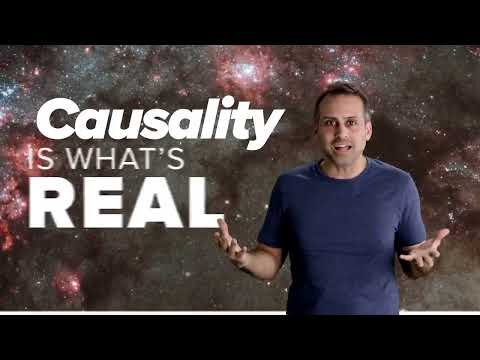
Are Space and Time An Illusion?
3.3M views • 11 years ago
PBS Space Time
A PBS Space Time episode hosted by Gabe Perez-Giz on the nature of spacetime and whether space and time are fundamental. It builds up reference frames and causality in a short, dense format.