queueing theory
 46:46
Category Theory 1.1: Motivation and Philosophy
394K views • 10 years ago
Bartosz Milewski
The first lecture in Bartosz Milewski's category theory series for programmers. It covers the motivation and philosophy behind category theory and why composition matters for handling complexity.
 1:01:51
Lecture 1: Introduction to Information Theory
411K views • 12 years ago
Jakob Foerster
The first lecture of David MacKay's Cambridge course on information theory, pattern recognition and neural networks. It introduces the core ideas of his book Information Theory, Inference, and Learning Algorithms.
 1:04:39
Gauge Theory and Inflation: Enlarging the Wu-Yang Dictionary
38K views • 12 years ago
Tom Henderson
A talk by Eric Weinstein on gauge theory and its possible application to economics and inflation. It proposes extending the Wu-Yang dictionary into a geometric tool beyond physics.
 1:45:38
The Unanswered Question 1973 1 Musical Phonology Bernstein Norton
742K views • 12 years ago
cagin
Leonard Bernstein's 1973 Norton Lectures at Harvard, starting with Musical Phonology. He draws analogies between music and linguistics, including references to Chomsky.
 2:48:23
A Portal Special Presentation- Geometric Unity: A First Look
902K views • 6 years ago
Eric Weinstein
Eric Weinstein's roughly three-hour presentation of Geometric Unity, his proposed theory unifying physics, given as a special episode of The Portal. It includes clarifications at the end.
 1:00:34
1. Introduction, Finite Automata, Regular Expressions
626K views • 5 years ago
MIT OpenCourseWare
The first lecture of Michael Sipser's MIT 18.404J Theory of Computation course, covering course mechanics, finite automata, regular languages and regular expressions. It proves closure of regular languages under union and begins concatenation.
 59:15
Clayton Christensen: Disruptive innovation
455K views • 13 years ago
Saïd Business School, University of Oxford
Clayton Christensen explains his theory of disruptive innovation at Oxford's Said Business School, using examples from steel, Toyota, Sony, Walmart and Godrej. He applies the theory to why some economies stagnate and others grow.
 19:32
Control Bootcamp: Overview
560K views • 9 years ago
Steve Brunton
The opening lecture of Steve Brunton's Control Bootcamp, covering the kinds of control and why closed-loop feedback matters. It starts a series that follows the control chapter of the Brunton and Kutz data-driven science book.
 1:00:18
Quantum Fields: The Real Building Blocks of the Universe - with David Tong
6.9M views • 9 years ago
The Royal Institution
David Tong, a Cambridge theoretical physicist, explains at the Royal Institution that the fundamental building blocks of nature are quantum fields rather than particles. He covers what we know about these fields and how they fit into the Standard Model.
 1:37:55
Particles, Fields and The Future of Physics - A Lecture by Sean Carroll
1.8M views • 13 years ago
Fermilab
Sean Carroll's 2013 Fermilab Users Meeting lecture on particles, fields and the future of particle physics. He explains that particles are vibrations in underlying quantum fields and touches on the Higgs, neutrinos and dark matter.
 55:27
Leonard Susskind on The World As Hologram | TVO Docs
4.1M views • 15 years ago
TVO Docs
Stanford physicist Leonard Susskind gives a public lecture on the holographic principle, the indestructibility of information and the nature of black holes. It asks whether the world could be a hologram.
 1:52:48
Sir Roger Penrose & Dr. Stuart Hameroff: CONSCIOUSNESS AND THE PHYSICS OF THE BRAIN
889K views • 6 years ago
The Qualcomm Institute
A 2020 UC San Diego event with Roger Penrose and Stuart Hameroff presenting their Orch OR theory that consciousness arises from quantum processes in brain microtubules, followed by a conversation with Roger Bingham.
 57:32
Five Stages of Accepting Constructive Mathematics - Andrej Bauer
34K views • 10 years ago
Institute for Advanced Study
Andrej Bauer's IAS talk introduces constructive mathematics and what it feels like to do mathematics without excluded middle. It is framed as a tour for classical mathematicians.
 1:37:33
21. Chaos and Reductionism
1.8M views • 15 years ago
Stanford
Robert Sapolsky's Stanford lecture on chaos and reductionism, which he calls one of the hardest of the course. It examines the limits of breaking systems into parts to understand them and introduces chaotic systems.
 1:33:37
Adventure with Types in Haskell - Simon Peyton Jones (Lecture 1)
69K views • 12 years ago
jasonofthel33t
Simon Peyton Jones's first lecture on types in Haskell from the Oregon Programming Languages Summer School 2013. It covers type classes and how they relate to OOP, subtyping and polymorphism.
 1:02:38
The Cardboard Box Reform - Nixon's Ghost Bill & A Crucial Flaw in Democracy
109K views • 12 years ago
CRI
James D'Angelo argues that the 1970 Legislative Reorganization Act made congressional votes public, opening the door to lobbyists and special interests. He proposes restoring secret voting as a cheap fix for corruption and many social ills.
 2:31:27
Lecture: 2017 Maps of Meaning 01: Context and Background
6.4M views • 9 years ago
Jordan B Peterson
The first lecture of Jordan Peterson's 2017 Maps of Meaning course, setting out the Cold War context for his theory of belief and culture. He introduces the narrative structure of culture and archetypal characters for the individual, the known and the unknown.
 54:54
The Physics and Philosophy of Time - with Carlo Rovelli
1.4M views • 8 years ago
The Royal Institution
Physicist Carlo Rovelli gives a public lecture at the Royal Institution on how our understanding of time has changed, from Boltzmann and Einstein to quantum theory and loop quantum gravity. He blends physics, philosophy and art to argue that time is stranger than everyday intuition suggests.
 50:28
Competition is for Losers with Peter Thiel (How to Start a Startup 2014: 5)
2.5M views • 9 years ago
Y Combinator
Peter Thiel's lecture from the How to Start a Startup course on business strategy and monopoly theory, arguing that competition destroys profits and that startups should aim to build monopolies. It covers the ideas of Zero to One.
 14:36
Distributed Systems 1.1: Introduction
382K views • 6 years ago
Martin Kleppmann
The first lecture in Martin Kleppmann's 8-lecture distributed systems series from the University of Cambridge undergraduate course. It introduces the subject, and accompanying lecture notes are available.
 1:33:25
Collapse of Complex Societies by Dr. Joseph Tainter
207K views • 14 years ago
vlada888
Joseph Tainter lectures at a 2010 sustainability conference on why complex societies such as Rome collapse. His thesis is that rising complexity brings diminishing returns until societies cannot afford to maintain it.
 1:38:06
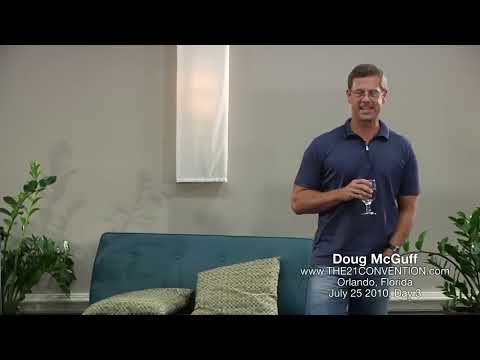
Paleo Diet & Strength Training Biochemistry | Doug McGuff M.D. | Full Length HD
655K views • 15 years ago
21 Studios
Doug McGuff presents the biochemistry behind high-intensity strength training and the paleo diet, including how the body stores and burns fat. It is a roughly hour-and-a-half full-length lecture.
 44:30
Prof. Thomas Seyfried - 'Cancer as a Metabolic Disease: Implications for Novel Therapies'
193K views • 6 years ago
Low Carb Down Under
A lecture by Prof. Thomas Seyfried arguing that cancer is primarily a metabolic disease rather than a genetic one. It covers the Warburg effect, mitochondrial damage and implications for therapies.
 1:14:25
Entanglement and Complexity: Gravity and Quantum Mechanics
370K views • 11 years ago
Stanford Institute for Theoretical Physics
Leonard Susskind lectures at Stanford on how gravity and quantum information theory have merged into a new way of thinking about physics. He covers entanglement and complexity, with applications from black holes to strange metals and the foundations of quantum mechanics.
 1:36:57
2. Behavioral Evolution
7.8M views • 15 years ago
Stanford
Stanford biologist Robert Sapolsky lectures on the evolution of behavior, including the Prisoner's Dilemma and tit-for-tat strategies in animals. It is part of his Human Behavioral Biology course.
 49:35
How did consciousness evolve? - with Nicholas Humphrey
333K views • 3 years ago
The Royal Institution
A Royal Institution lecture in which Nicholas Humphrey presents his theory of phenomenal consciousness and its evolution. He draws on the book Sentience and discusses evidence for animal sentience.
 1:06:15
The Hyperbolic Geometry of DMT Experiences (@Harvard Science of Psychedelics Club)
1.4M views • 7 years ago
Qualia Research Institute
Andres Gomez Emilsson of the Qualia Research Institute presents a model of DMT experiences using hyperbolic geometry and dynamical systems theory. He describes how different intoxication levels correspond to changing curvature and information content of experience.
 1:03
The Scientific Method-Richard Feynman
180K views • 13 years ago
Sképseis
A one-minute clip of Richard Feynman describing the scientific method: guess a law, compute its consequences, and compare with experiment. If it disagrees with experiment, it is wrong.
 33:47
Why is Life the Way it Is? with Nick Lane
102K views • 11 years ago
The Royal Institution
Nick Lane's Royal Institution lecture on the origin of life and why it is the way it is. It draws on his book The Vital Question and the alkaline hydrothermal vent theory of abiogenesis.