rain effect
 4:58
You Actually Share Your Brain With a Silent Stranger
20.2M views • 10 years ago
CGP Grey
CGP Grey explains split-brain patients, where severing the corpus callosum lets the two hemispheres act independently. He uses this to explore the idea of two minds in one head.
 31:56
Why Russia is Invading Ukraine
21.7M views • 4 years ago
RealLifeLore
RealLifeLore explains with maps why Russia invaded Ukraine, focusing on energy resources, security buffers, Black Sea access and Crimea's strategic value.
 11:48
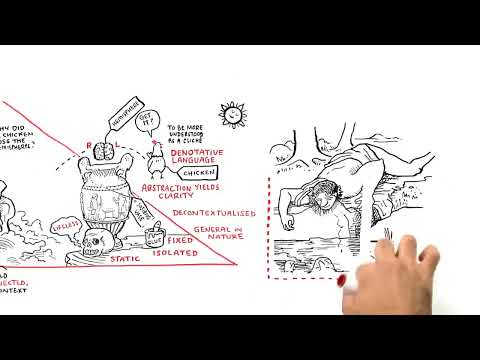
RSA ANIMATE: The Divided Brain
2.2M views • 15 years ago
Royal Society of Arts
An RSA Animate summary of Iain McGilchrist's lecture on the divided brain, arguing the brain's two hemispheres attend to the world differently and that this has shaped culture and society.
 19:19
Was Penrose Right? NEW EVIDENCE For Quantum Effects In The Brain
1.1M views • 2 years ago
PBS Space Time
PBS Space Time examines Roger Penrose's idea that consciousness arises from quantum processes in the brain, and reviews new evidence about microtubules. It ends with an estimate of what replicating consciousness would demand.
 15:37
Everything About Grain Bins (Farmers are Geniuses) - Smarter Every Day 218
7.8M views • 7 years ago
SmarterEveryDay
Destin Sandlin of Smarter Every Day explores how grain bins work and the engineering and know-how involved in farming. His point is that farmers are exceptionally capable.
 15:15
WHY Exercise is so Underrated (Brain Power & Movement Link)
4.3M views • 9 years ago
Joseph Everett - WIL
A video arguing that exercise matters for the brain as much as the body, linking movement, the nervous system and BDNF to learning and memory. It draws on research connecting complex movement to brain development.
 23:55
Matrioshka Brains: Star-Powered Computers
505K views • 10 years ago
Isaac Arthur
Isaac Arthur explains the Matrioshka Brain, a hypothetical computer or artificial mind powered by an entire star using nested shells. It covers how such megastructures relate to Dyson spheres and superintelligence.
 4:45
How playing an instrument benefits your brain - Anita Collins
15.2M views • 12 years ago
TED-Ed
A short TED-Ed animated lesson by Anita Collins on what happens in the brain when people play a musical instrument. It argues that playing engages many brain areas at once, like a full-body workout, with long-term benefits.
 2:27
Feynman: How the train stays on the track FUN TO IMAGINE 7
820K views • 18 years ago
Christopher Sykes
A short clip from the 1983 BBC series Fun to Imagine in which Richard Feynman explains how a train stays on the track. He covers the geometry of tapered wheels that steer the train back toward the center of the rails.
 16:30
"NO CGI" is really just INVISIBLE CGI - 1
1.5M views • 3 years ago
The Movie Rabbit Hole
VFX supervisor Jonas Ussing examines what studios mean by "no CGI", showing how much invisible CGI hides behind practical-effects marketing. It is the first part of a multi-part series that includes analysis of doctored behind-the-scenes footage.
 19:07
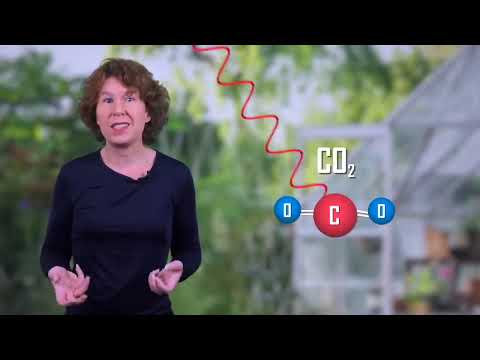
I Misunderstood the Greenhouse Effect. Here's How It Works.
989K views • 3 years ago
Sabine Hossenfelder
Sabine Hossenfelder explains how the greenhouse effect actually works, given that infrared is mostly absorbed low in the atmosphere already. She walks through why more CO2 still warms the surface.
 12:39
Why Trains are so Expensive
3.2M views • 9 years ago
Wendover Productions
A Wendover Productions explainer on why train tickets, especially Amtrak in the US, cost so much compared with flying. It breaks down staffing, speed and the cost components behind a ticket.
 10:45
Back to the Future | VFXcool (1/2)
2.2M views • 9 years ago
Captain Disillusion
Captain Disillusion explains the visual effects behind the Back to the Future trilogy. He covers ILM's motion-control, computer-controlled camera work and clever pre-CGI tricks.
 57:21
How Corruption Destroys Armies - Theft, Graft, and Russian failure in Ukraine
2.7M views • 4 years ago
Perun
Perun analyzes how corruption and theft in defence procurement hollowed out the Russian military before its invasion of Ukraine. It explains the mechanics of graft and how it degrades capability.
 9:33
Avoiding Negative Side Effects: Concrete Problems in AI Safety part 1
161K views • 9 years ago
Robert Miles AI Safety
Robert Miles introduces the first of several videos on the paper 'Concrete Problems in AI Safety', focusing on how AI systems can cause accidental negative side effects. It explains the problem in accessible terms.
 9:26
CBTC: Communications-Based Train Control
767K views • 11 years ago
mtainfo
An MTA video on communications-based train control, the system meant to replace the New York City subway's century-old signaling. It also shows the mechanical interlocks and signals in use today.
 2:27
What keeps a train on the track?
191K views • 17 years ago
BoreMeScience
A short clip of Richard Feynman explaining how a train stays on its tracks, through the conical shape of wheels and how it handles curves without differentials.
 3:54
The moiré effect lights that guide ships home
3.1M views • 8 years ago
Tom Scott
Tom Scott investigates moire-effect beacons, called Inogon leading marks, a Swedish invention from the 1980s that shows different patterns depending on the viewer's position. He visits one used to mark an undersea cable and tracks down its history.
 16:52
Why Swiss Trains are the Best in Europe
2.3M views • 4 years ago
Not Just Bikes
Not Just Bikes explains why Swiss trains are considered among the best in Europe and the world, covering frequency, connections and what riding them is like.
 20:41
Training an unbeatable AI in Trackmania
17.7M views • 3 years ago
Yosh
Yosh trains a reinforcement learning agent to drive Trackmania until he can no longer beat it. The video explains how the training works and the design choices involved.
 10:59
Your Brain Thinks Your Whole Home Is One Room
6.8M views • 6 years ago
CGP Grey
CGP Grey argues that your brain treats a whole home as one room during lockdown, blurring work, rest and leisure. He recommends creating separate spaces and routines for different activities to stay balanced.
 8:25
Why Trains Suck in America
6M views • 10 years ago
Wendover Productions
Wendover Productions explains why US passenger rail lags behind other countries. It covers freight companies owning most of the track, geography and population density, and the economics of competing with flying.
 16:26
Why Adults Can't Develop Perfect Pitch
1.8M views • 9 years ago
Rick Beato
Rick Beato argues that adults cannot develop true perfect pitch, which he ties to critical-period brain plasticity and language acquisition. He says it can only be developed in young children, and discusses the research behind this.
 5:51
This Is Your Brain On Stale Air
4.2M views • 7 years ago
Tom Scott
Tom Scott features Kurtis Baute inside a sealed homemade biodome as carbon dioxide builds up, showing how stale air with elevated CO2 affects cognitive function. Sources include studies on CO2 and cognitive scores.
 11:18
The simple, clever sensor behind automatic windshield wipers
1.8M views • 2 years ago
Technology Connections
Technology Connections explains how automatic windshield wiper rain sensors work, using an infrared light source and total internal reflection in the glass.
 22:40
This 30-Year-Old Terminator VFX BLEW OUR MINDS!
10.6M views • 5 years ago
Corridor Crew
Corridor Crew dive into the visual effects of Terminator 2 and try recreating the T-1000 bars scene with modern tools. They explain how the original effects were achieved.
 17:43
A man asked AI for health advice and it cooked every brain cell
4.5M views • 11 months ago
Chubbyemu
Chubbyemu presents a case study of a man who followed AI health advice, replaced salt with sodium bromide and developed bromism with severe neurological effects. It is told as a dramatized medical case by a doctor.
 7:38
Does Hot Water Freeze Faster Than Cold Water?
5M views • 9 years ago
Sciencium
Sciencium examines the Mpemba effect, the claim that hot water freezes faster than cold water. It walks through experiments and a published paper questioning the effect.
 4:27
The Voting System That Should Replace Every Election
4.7M views • 15 years ago
CGP Grey
A short CGP Grey explainer on the alternative vote (instant runoff voting) versus first past the post, made around the 2011 UK referendum. It shows how ranked ballots are tallied and why they avoid spoiler effects.
 43:57
Civilizations at the End of Time: Iron Stars
2.1M views • 9 years ago
Isaac Arthur
An Isaac Arthur episode on civilizations in the far future, past the Black Hole Era. It covers iron stars, Boltzmann brains, reversible computing and the idea of reversing entropy.
 11:22
Most People Don't Know How Bikes Work
24.9M views • 4 years ago
Veritasium
Veritasium explains why bicycles are stable, arguing that gyroscopic effects are not the answer. The video shows countersteering and an experiment where riders blocked from steering the opposite way cannot turn.
 3:35
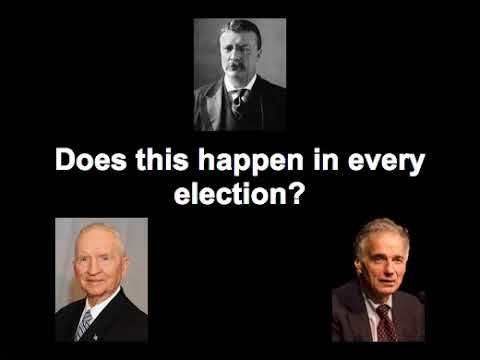
How our voting system (and IRV) betrays your favourite candidate
35K views • 12 years ago
The Center for Election Science
The Center for Election Science explains favorite betrayal in instant-runoff voting: in some elections, ranking your favorite first can cause your least favorite to win. It contrasts this with plurality voting's spoiler problem.
 17:52
Training AI Without Writing A Reward Function, with Reward Modelling
259K views • 6 years ago
Robert Miles AI Safety
Robert Miles explains reward modelling, in which an AI learns what humans want from their preference comparisons instead of a hand-written reward function. He walks through the 2017 paper on deep reinforcement learning from human preferences.
 14:28
Superpositions, Sudoku, the Wave Function Collapse algorithm.
764K views • 6 years ago
Martin Donald
Martin Donald explains the Wave Function Collapse algorithm using Sudoku-like constraint solving and shows how he implemented it with Blender and Godot. It links demos and reference articles.
 8:41
Invisibility Training for Motorcyclists
1.8M views • 8 years ago
FortNine
FortNine's tongue-in-cheek guide to why drivers fail to see motorcyclists and how riders can make themselves more visible. It touches on perception psychology, including the role of saccades.
 8:04
Khan Academy and the Effectiveness of Science Videos
1.7M views • 15 years ago
Veritasium
Veritasium examines research suggesting science explainer videos like Khan Academy's make students feel they understand while tests show they have not learned, because misconceptions go unaddressed. It suggests how to partly fix this.
 20:55
Why ChatGPT Can't Draw a Full Glass of Wine
6.3M views • 1 year ago
Alex O'Connor
Alex O'Connor shows that ChatGPT cannot draw a wine glass filled to the brim, and ties the failure to David Hume's missing shade of blue. It asks what the failure says about how image models learn.
 15:27
Can The Human Body Handle Rotating Artificial Gravity?
3M views • 5 years ago
Scott Manley
Scott Manley surveys the research on whether people can adapt to rotating artificial gravity, from early Soviet centrifuge tests to modern studies. He concludes it is an engineering problem and discusses Coriolis effects and station radius.
 14:49
The Bizarre Behavior of Rotating Bodies
14M views • 7 years ago
Veritasium
Veritasium explains the Dzhanibekov effect, also called the tennis racket theorem, where a spinning object flips unexpectedly about its intermediate axis. The video gives an intuitive account of the underlying rotational dynamics, drawing on Terry Tao's explanation and the original papers.
 14:28
A Scientist Spilled 2 Drops Organic Mercury On Her Hand. This Is What Happened To Her Brain.
15.8M views • 8 years ago
Chubbyemu
Chubbyemu narrates the true case of a professor who spilled two drops of dimethylmercury on her hand and suffered fatal neurological damage.