rain effect
 46:05
Timothy Snyder: The Making of Modern Ukraine. Class 1: Ukrainian Questions Posed by Russian Invasion
1.8M views • 4 years ago
YaleCourses
The first class of Timothy Snyder's Yale course on the making of modern Ukraine. It introduces the course and asks what it means for a nation to exist in light of the Russian invasion.
 1:14:16
Why is Ukraine the West's Fault? Featuring John Mearsheimer
30.4M views • 11 years ago
The University of Chicago
University of Chicago lecture in which John Mearsheimer argues the West, through NATO and EU expansion, bears primary responsibility for the Ukraine crisis. He also discusses how to end it and its consequences.
 47:43
Sulforaphane and Its Effects on Cancer, Mortality, Aging, Brain and Behavior, Heart Disease & More
2.9M views • 9 years ago
FoundMyFitness
Rhonda Patrick of FoundMyFitness makes a case for isothiocyanates such as sulforaphane from cruciferous vegetables and broccoli sprouts. It covers cancer, aging, heart disease, brain and behavior, and neurodegeneration, with chapter timestamps.
 1:38:06
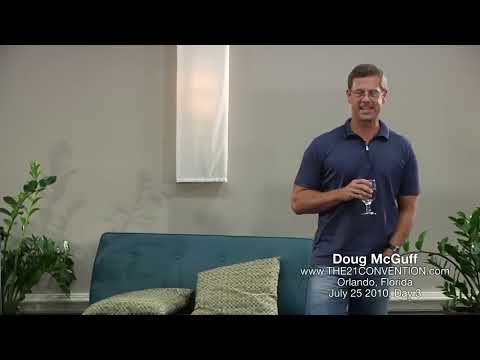
Paleo Diet & Strength Training Biochemistry | Doug McGuff M.D. | Full Length HD
655K views • 15 years ago
21 Studios
Doug McGuff presents the biochemistry behind high-intensity strength training and the paleo diet, including how the body stores and burns fat. It is a roughly hour-and-a-half full-length lecture.
 1:21:52
LEADERSHIP LAB: The Craft of Writing Effectively
9.3M views • 12 years ago
UChicago Social Sciences
Larry McEnerney of the University of Chicago Writing Program gives a graduate-student session on writing effectively. His core idea is that readers care about value to them, not the writer's thinking process.
 2:19:51
[LIVE] How to Achieve Proper Grounding - Rick Hartley - Expert Live Training (US)
1M views • 6 years ago
Altium
Rick Hartley gives a roughly two-hour live training on proper grounding in PCB design. He explains how energy actually flows in the space between conductors, and how that governs noise, EMI, return paths and signal reflections.
 1:16:22
If Brains are Computers, Who Designs the Software? - with Daniel Dennett
873K views • 9 years ago
The Royal Institution
Daniel Dennett's Royal Institution lecture on whether the brain is a computer and where its software comes from. He argues that minds are built by evolution and culture, with competence arising without comprehension.
 1:09:24
Effective ML
30K views • 10 years ago
Jane Street
Yaron Minsky of Jane Street gave this talk to Harvard's OCaml-based CS51 class in 2010. It collects advice on being an effective ML programmer in an industrial setting.
 15:13
Free Energy Principle — Karl Friston
171K views • 9 years ago
Serious Science
Neuroscientist Karl Friston gives a 15-minute talk on the free energy principle, covering Markov blankets, Bayesian model evidence and global brain theories.
 1:52:48
Sir Roger Penrose & Dr. Stuart Hameroff: CONSCIOUSNESS AND THE PHYSICS OF THE BRAIN
889K views • 6 years ago
The Qualcomm Institute
A 2020 UC San Diego event with Roger Penrose and Stuart Hameroff presenting their Orch OR theory that consciousness arises from quantum processes in brain microtubules, followed by a conversation with Roger Bingham.
 3:31:24
Deep Dive into LLMs like ChatGPT
10.2M views • 1 year ago
Andrej Karpathy
Andrej Karpathy's three-hour-plus general-audience deep dive into how ChatGPT-style LLMs are built, covering the full training stack from pretraining to post-training. It also gives mental models for their quirks, like hallucination, and how to use them well.
 1:53:04
Vladimir Pozner: How the United States Created Vladimir Putin
9.5M views • 8 years ago
Yale University
Russian-American journalist Vladimir Pozner lectures at Yale on how US foreign policy toward Russia after the Soviet collapse shaped Putin, then takes audience questions on election interference, the Skripal poisoning and media independence.
 1:00:14
The Neuroscience of Consciousness – with Anil Seth
1.9M views • 9 years ago
The Royal Institution
Neuroscientist Anil Seth gives a Royal Institution lecture on the science of consciousness. He separates conscious level, content and self, and argues that experience arises from the brain's predictive inference.
 11:01
Milton Friedman - The Real World Effects Of Unions
432K views • 12 years ago
LibertyPen
An 11-minute clip of Milton Friedman explaining the incentives of unions and how they affect employment. He argues unions restrict labor supply, raising pay for some workers while hurting low-skill workers.
 44:30
Prof. Thomas Seyfried - 'Cancer as a Metabolic Disease: Implications for Novel Therapies'
193K views • 6 years ago
Low Carb Down Under
A lecture by Prof. Thomas Seyfried arguing that cancer is primarily a metabolic disease rather than a genetic one. It covers the Warburg effect, mitochondrial damage and implications for therapies.
 1:42:47
23. Language
1.2M views • 15 years ago
Stanford
Robert Sapolsky's Stanford lecture on language, comparing human and animal communication, ape language projects like Koko and Kanzi, and how language is acquired. It is part of his human behavioral biology course.
 1:02:57
Peter Norvig - The Unreasonable Effectiveness of Data
74K views • 15 years ago
UBC Computer Science
Peter Norvig's UBC distinguished lecture on how massive amounts of simple data, such as for language modeling, can yield understanding that hand-built models could not.
 1:13:39
Why is Time a One-Way Street?
1.7M views • 13 years ago
Santa Fe Institute
Leonard Susskind's Santa Fe Institute talk on the arrow of time: why the past differs from the future when physics equations are time-symmetric. He covers entropy, cosmology and Boltzmann brains.
 11:29
Automation Dependency - Part One, by Capt. VanderBurgh (restored)
18K views • 5 years ago
flightcrewguide.com
Part one of an American Airlines training video presented by Captain Warren VanderBurgh on automation dependency. It grew out of a program on wake turbulence avoidance, and this restored version has the audio cleaned up.
 39:34
Control Malfunctions & Flight Instrument Anomalies, by Captain Warren VanderBurgh.
153K views • 12 years ago
flightcrewguide.com
An American Airlines training video by Captain Warren VanderBurgh on control malfunctions and flight instrument anomalies. It discusses real incidents such as runaway trim and instrument failures and how crews should respond.
 25:33
Children Of The Magenta Line
176K views • 7 years ago
Mossie Fly
A re-upload of American Airlines captain Warren Vanderburgh's 1997 presentation warning that pilots who over-rely on cockpit automation lose manual flying skills and awareness. The uploader adds context from his own flying.
 39:08
Understanding the Toyota RAV4 Hybrid
1.7M views • 5 years ago
WeberAuto
Weber State's Professor Kelly explains the Toyota RAV4 Hybrid transaxle, including its planetary gearset eCVT and all nine operating modes. It also covers how the engine reaches nearly 40 percent thermal efficiency.
 33:51
Peter Singer - ordinary people are evil
5.6M views • 6 years ago
Jeffrey Kaplan
Philosopher Jeffrey Kaplan summarizes Peter Singer's 1972 essay 'Famine, Affluence, and Morality', arguing that failing to give to save lives is morally comparable to letting a child drown. It is a short lecture on the argument's structure.
 2:25:52
The spelled-out intro to neural networks and backpropagation: building micrograd
4.4M views • 4 years ago
Andrej Karpathy
Andrej Karpathy's first Neural Networks: Zero to Hero lecture, which builds micrograd, a tiny autograd engine, from scratch in Python. It explains backpropagation and neural network training step by step, assuming only basic Python and some high-school calculus.
 2:51:44
Essential Ideas for Parents
1.1M views • 14 years ago
Jason Salotti
Dr. Russell Barkley's roughly three-hour lecture on ADHD for parents of affected children. It explains what ADHD is and how the ADHD brain differs.
 2:51:44
ADHD: Essential Ideas for Parents - Dr. Russell Barkely
702K views • 13 years ago
ADHDtips
Dr. Russell Barkley gives a nearly three-hour lecture of essential ideas about ADHD for parents, covering what ADHD is, its effects on executive function, motivation and emotion, and how it affects children.
 57:38
The Coming Collapse of the Middle Class with Elizabeth Warren
1.5M views • 18 years ago
University of California Television (UCTV)
Elizabeth Warren's 2007 Berkeley lecture, when she was a Harvard law professor, on why middle-class families are under growing financial strain. She draws on bankruptcy research to examine rising costs of housing, health care and education.
 59:56
Marty Lobdell - Study Less Study Smart
25.5M views • 15 years ago
Pierce College District WA
Psychology professor Marty Lobdell gives a one-hour lecture on how to study effectively, covering short focused sessions with breaks, study environment, note-taking and memory techniques. It was aimed at students who cram without improving.
 56:04
Richard Feynman - The.Character of Physical Law - Part 1 The Law of Gravitation (full version)
1.4M views • 15 years ago
Tinkerin' Thinkers
The first of Richard Feynman's 1964 Cornell Messenger Lectures, The Character of Physical Law, focusing on the law of gravitation. Feynman builds up from planetary motion to the nature of physical laws.
 1:26:15
Fat Chance: Fructose 2.0
7.3M views • 13 years ago
University of California Television (UCTV)
Robert Lustig of UCSF updates his sugar talk, arguing that fructose and processed foods drive obesity and metabolic syndrome through their endocrine effects. It is a roughly 90-minute university lecture.
 47:20
Hamming, Intro to The Art of Doing Science and Engineering: Learning to Learn (March 28, 1995)
171K views • 14 years ago
securitylectures
The introductory lecture of Richard Hamming's capstone course, The Art of Doing Science and Engineering: Learning to Learn. It focuses on style of thinking and on educating rather than training, using technical material only as illustration.
 59:39
2012 Burnett Lecture Part 1 Keynote Speaker: Russell A. Barkley, Ph.D.
0 views • 14 years ago
UNC Learning Center
Russell Barkley gives the keynote at UNC's 2012 Burnett Seminar on ADHD. He presents it as an executive function disorder and discusses its effects and how to help.
 47:15
Will AI outsmart human intelligence? - with 'Godfather of AI' Geoffrey Hinton
878K views • 1 year ago
The Royal Institution
Geoffrey Hinton's 2025 Royal Institution Discourse on what AI has learned from biological intelligence and how it might surpass it. He explains neural networks and argues that human language use resembles what backpropagation-trained networks do.
 37:56
The Neuroanatomy of ADHD and thus how to treat ADHD - CADDAC - Dr Russel Barkley part 3ALL
1.3M views • 12 years ago
Adhd Videos
Dr. Russell Barkley lectures on the neuroanatomy of ADHD and how to treat it, linking executive function and working memory to the disorder. It is part 3 of a CADDAC series.
 1:06:15
The Hyperbolic Geometry of DMT Experiences (@Harvard Science of Psychedelics Club)
1.4M views • 7 years ago
Qualia Research Institute
Andres Gomez Emilsson of the Qualia Research Institute presents a model of DMT experiences using hyperbolic geometry and dynamical systems theory. He describes how different intoxication levels correspond to changing curvature and information content of experience.
 1:21:55
Irving Kirsch: The Emperor's New Drugs
13K views • 12 years ago
Mizzou Visual Productions
Psychologist Irving Kirsch gives a distinguished lecture on antidepressant trials and the placebo effect. He argues drug-placebo differences are small outside severe depression.
 1:23:44
Jaron Lanier – Who is Civilization for? (+ Q&A with Ulrich Kelber) Willy Brandt Lecture 2018
152K views • 7 years ago
Bundeskanzler-Willy-Brandt-Stiftung
Jaron Lanier delivers the 2018 Willy Brandt Lecture in Berlin on who civilization is for, covering data, AI, tech platforms and the economics of who benefits, followed by a Q&A with Germany's data protection commissioner Ulrich Kelber.
 55:55
Richard Feynman - The.Character.of.Physical.Law - Part 2 (full version)
638K views • 15 years ago
Tinkerin' Thinkers
Part 2 of Richard Feynman's Messenger Lectures at Cornell, The Character of Physical Law, on the relation of mathematics to physics. He explains why understanding nature requires mathematics.
 1:28:44
14. Limbic System
2M views • 15 years ago
Stanford
Robert Sapolsky's Stanford lecture on the limbic system as the emotional part of the nervous system, covering its role in decision making, links to the cortex and the functions of its subparts.