road test
 18:14
Stroads are Ugly, Expensive, and Dangerous (and they're everywhere) [ST05]
8.3M views • 5 years ago
Not Just Bikes
Not Just Bikes introduces the "stroad", a street-road hybrid common in the US and Canada that fails at both jobs. He contrasts it with Dutch design, where each road has a single purpose, and covers cost, danger and ugliness.
 2:52
If money was no object, should you run every medical test?
263K views • 8 years ago
Medlife Crisis
A doctor from Medlife Crisis explains in under three minutes why even a rich patient should not simply order every medical test, touching on pre-test probability and Bayesian reasoning. False positives make blanket testing counterproductive.
 4:12
Why this British crossroads was so dangerous
3.9M views • 6 years ago
Tom Scott
Tom Scott explains why Ipley Cross in England's New Forest was one of Britain's most dangerous junctions. The angled crossroads lets a car's A-pillar hide approaching traffic and cyclists because there is no relative motion in the driver's view.
 34:29
I took an IQ test to explain what's wrong with them
13.1M views • 3 years ago
Veritasium
Veritasium takes an IQ test and examines what IQ measures, its history including military use and eugenics, its controversies, and how it correlates with life outcomes. Experts including Cecil Reynolds and Stuart Ritchie contribute.
 21:14
The medical test paradox, and redesigning Bayes' rule
1.4M views • 5 years ago
3Blue1Brown
3Blue1Brown explains why positive results on accurate medical tests are often false positives, and reframes Bayes' rule using likelihood ratios (Bayes factors) to update odds. It uses visual examples to make the reasoning intuitive.
 13:20
How Kodak Exposed Nuclear Testing
6.7M views • 6 years ago
Veritasium
Veritasium tells how Kodak film was fogged by radioactive fallout from the first atomic tests, letting the company detect nuclear testing before anyone announced it. The video also covers the deal to keep it quiet and how fallout contaminated packaging.
 14:24
DNA Testing and Privacy (Behind the scenes at the 23andMe Lab) - Smarter Every Day 176
1.5M views • 9 years ago
SmarterEveryDay
Destin of Smarter Every Day goes behind the scenes at the 23andMe lab to show how genotyping works. He also discusses DNA testing and privacy.
 32:01
EEVblog #632 - Solar Roadways Are RUBBISH!
543K views • 12 years ago
EEVblog
Dave Jones of EEVblog debunks the Solar Roadways project, which raised millions through Indiegogo and government funding. He works through the solar generation and LED power calculations to show the idea isn't viable.
 11:09
The Wrong Way to Set Speed Limits [ST06]
2.1M views • 5 years ago
Not Just Bikes
Not Just Bikes explains how North American speed limits are set and why posted limits matter far less than street design. It argues that drivers follow the road's cues, so safe speeds have to be built into the street.
 27:25
How American Fire Departments are Getting People Killed
2M views • 2 years ago
Not Just Bikes
Not Just Bikes argues that oversized American fire trucks and fire department requirements push cities toward wide roads and dangerous street design. He compares this with the Dutch approach to emergency response.
 38:01
I published music on Tidal to test MQA - MQA Review
610K views • 5 years ago
GoldenSound
GoldenSound publishes music on Tidal to test MQA, a deep dive into the format's claims and problems including its leaky filter. Testing begins around the 5:45 mark.
 15:53
Why Railroads Don't Need Expansion Joints
5.3M views • 2 years ago
Practical Engineering
Practical Engineering explains how continuous welded rail copes with thermal expansion by restraining it, using the relationship between temperature, stress and strain. The video is part of a series on railways.
 3:38
The Shortest-Splitline Algorithm: a Gerrymandering Solution [Bonus Video]
692K views • 15 years ago
CGP Grey
A short CGP Grey bonus video explaining the shortest-splitline algorithm, which draws electoral districts by repeatedly splitting a state along its shortest dividing line while balancing population. It is offered as a neutral, algorithmic fix for gerrymandering.
 5:52
Equipment Review: Best Carbon-Steel Skillets (Can This One Pan Do It All?) & Our Testing Winner
2M views • 11 years ago
America's Test Kitchen
America's Test Kitchen tests eight carbon-steel skillets to find the best one, asking whether a single pan can replace stainless, cast iron and nonstick. It names a winner and covers how the pans perform.
 11:54
Tested: Where Does The Tone Come From In An Electric Guitar?
2.9M views • 4 years ago
Jim Lill
Guitarist Jim Lill methodically tests what in an electric guitar affects its tone, swapping parts on a partscaster and even trying a 2x4 body. He finds that wood and construction matter far less than people assume.
 5:12
Traffic Calming is Everywhere in the Netherlands
404K views • 6 years ago
Not Just Bikes
Not Just Bikes shows how traffic calming is built into streets across the Netherlands, from city centres to villages. Street design naturally slows cars and makes roads safer.
 14:06
Testing 432 Hz Frequencies (and temperaments)
4M views • 7 years ago
Adam Neely
Adam Neely tests the claims for tuning to A=432 Hz by trying the unusual tuning systems that its proponents' numerology requires. He compares how they sound against standard tuning and temperaments.
 1:19:08
A Million Dollars vs A Billion Dollars, Visualized: A Road Trip
8.3M views • 6 years ago
Tom Scott
Tom Scott makes the difference between a million and a billion dollars tangible by using distance on a road trip instead of volume. The drive makes the scale of a billion intuitively felt.
 10:33
Testing if 60 minutes of silence drives you crazy
32.8M views • 12 years ago
Veritasium
Veritasium's Derek Muller spends an hour in a silent, dark anechoic chamber at BYU to test the claim that 45 minutes is the most anyone can bear. He reports on his experience and other people's reactions.
 31:25
Crossing the Street Shouldn't Be Deadly (but it is)
1.9M views • 4 years ago
Not Just Bikes
Not Just Bikes explains why crossing streets is dangerous in the US and Canada, where roads are designed to move cars fast, and contrasts it with Dutch designs for pedestrians.
 11:17
Can A Metal Bowling Ball Survive Inside a Nuclear Explosion?
737K views • 6 years ago
Scott Manley
Scott Manley explains the Cold War experiments in which steel and aluminium spheres, known as Lew Allen's Balls, were placed near nuclear detonations. The spheres survived the fireball, and he walks through what the declassified results show.
 14:03
The Computer Designed To Die In Microseconds
408K views • 3 years ago
Scott Manley
Scott Manley tells the story of a computerized telemetry system built to sit at the heart of a nuclear test device in place of the plutonium pit, designed to transmit data in the microseconds before it was destroyed.
 11:15
The hardest problem on the hardest test
16.5M views • 8 years ago
3Blue1Brown
3Blue1Brown walks through a very hard Putnam competition problem and its elegant solution, emphasizing the visual intuition and the thought process behind solving it.
 20:58
The Epidemic of Fake Disease
2.4M views • 6 years ago
Medlife Crisis
A Medlife Crisis video by cardiologist Rohin Francis on overdiagnosis and over-screening. It explains how detecting more disease does not necessarily mean saving more lives, and covers harms such as unnecessary treatment.
 8:28
The Fastest Way to Board a Plane Feels Like the Slowest
37.5M views • 7 years ago
CGP Grey
CGP Grey compares airplane boarding methods, based on an arXiv paper, and shows why the intuitive back-to-front approach is slow while random or outside-in boarding does better.
 26:29
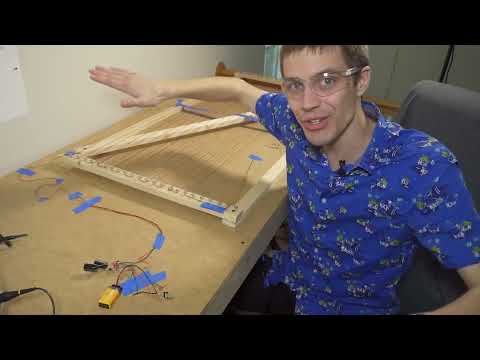
Watch electricity hit a fork in the road at half a billion frames per second
3M views • 2 years ago
AlphaPhoenix
AlphaPhoenix uses a custom high-speed measurement setup to watch voltage waves travel down wires and split at a fork. It answers how electricity knows where to go and how quickly that process happens.
 6:17
Why Cars Rarely Crash into Buildings in the Netherlands
1M views • 6 years ago
Not Just Bikes
Not Just Bikes explains why cars rarely crash into buildings in the Netherlands, attributing it to street design that forgives mistakes and to systematic crash investigation. It contrasts this with North American acceptance of such crashes.
 26:33
The Most Underrated Algorithm
10.8M views • 4 years ago
Veritasium
Veritasium tells the story of the Fast Fourier Transform, from its use in detecting nuclear tests to Cold War politics, and how it could have changed the arms race. It includes a short, intuitive explanation of what the Fourier transform does.
 22:52
2016/2017 MUST-KNOW WEB DEVELOPMENT TECH - Watch this if you want to be a web developer
916K views • 10 years ago
LearnCode.academy
LearnCode.academy presents a roadmap of web development technologies to learn in 2016 and 2017, spanning front-end, back-end and DevOps tools.
 14:54
Induced Demand & Roadway Widening: Everything You Always Wanted to Know (and Weren't Afraid to Ask)
120K views • 4 years ago
Ray Delahanty | CityNerd
CityNerd Ray Delahanty explains induced demand and what happens when freeways are widened. He walks through the economics of supply and demand applied to traffic and asks how much new traffic appears and whether congestion returns.
 3:58
The 'duck curve' is solar energy's greatest challenge
2.7M views • 8 years ago
Vox
A short Vox explainer on the duck curve, the shape electricity demand takes in California as solar output grows. It explains why grid operators struggle to balance supply and demand with lots of solar.
 5:21
The Best Kind of Dutch Cycling Infrastructure
355K views • 6 years ago
Not Just Bikes
Not Just Bikes explains Dutch bicycle-only roads, which let people travel long distances in and out of cities with almost no car interaction. It shows how this changes cycling from a chore into something enjoyable.
 29:57
The tech which can charge an electric car in 10 minutes
1.3M views • 4 years ago
Technology Connections
Technology Connections explains how modern EV fast charging can fill a battery in about 10 to 20 minutes, covering charging standards and EV road trips.
 35:07
These Stupid Trucks are Literally Killing Us
7.3M views • 3 years ago
Not Just Bikes
Not Just Bikes explains how SUVs and light trucks have grown in size and share of US sales, and why that is dangerous for pedestrians, cyclists and city life. He covers the regulatory loopholes, such as fuel economy rules and the chicken tax, that favored them.
 24:55
Why don't Americans use electric kettles?
5.3M views • 4 years ago
Technology Connections
Technology Connections explains why electric kettles are uncommon in the US, centering on 120V circuits limiting power. He tests ways of boiling water on gas, electric ranges and kettles.
 8:21
The Grille Trend that Kills 509 People per Year
1.3M views • 2 years ago
FortNine
FortNine looks at the data on why newer pickup trucks with tall, blunt grilles kill so many pedestrians, cyclists and motorcyclists. It argues that lowering hood height would substantially cut fatalities.
 8:05
What People Get Wrong About Induced Demand
291K views • 5 years ago
Oh The Urbanity!
Explains induced demand beyond roads, showing that it applies to transit, walking and cycling infrastructure too but with different consequences. It corrects common misunderstandings of the concept.
 6:03
Do Your Buses Get Stuck in Traffic? (The Downs-Thomson Paradox)
693K views • 6 years ago
Not Just Bikes
Not Just Bikes explains the Downs-Thomson paradox using Amsterdam and Toronto: road widening doesn't fix congestion, and buses stuck in traffic make transit slow. It argues for giving transit its own priority infrastructure.
 3:45
The Dutch Solution for Safer Sidewalks - Continuous Sidewalks
452K views • 6 years ago
Not Just Bikes
A short Not Just Bikes video on continuous sidewalks in the Netherlands, where the sidewalk runs unbroken across side streets so cars must visibly cross pedestrian space. It places them within Dutch sustainable safety and Vision Zero efforts.
 8:41
Invisibility Training for Motorcyclists
1.8M views • 8 years ago
FortNine
FortNine's tongue-in-cheek guide to why drivers fail to see motorcyclists and how riders can make themselves more visible. It touches on perception psychology, including the role of saccades.