route finding
 13:03
How Command & Conquer: Tiberian Sun Solved Pathfinding | War Stories | Ars Technica
1.2M views • 7 years ago
Ars Technica
Westwood Studios co-founder Louis Castle talks about how pathfinding was solved in Command & Conquer: Tiberian Sun, in an Ars Technica War Stories episode. It also touches on other challenges in Westwood's RTS games.
 4:53
How the pantorouter works
1.2M views • 15 years ago
MatthiasWandel
Matthias Wandel shows how his pantorouter, a template router machine, works. The flexible machine cuts joints such as mortise and tenon and dovetails, and plans are available.
 27:46
Laser diode self-mixing: Range-finding and sub-micron vibration measurement
491K views • 7 years ago
Applied Science
Ben Krasnow of Applied Science shows that a plain laser diode can measure sub-micron vibrations from centimeters away using self-mixing interferometry, and can also be used for range-finding.
 40:27
"Finding bugs without running or even looking at code" by Jay Parlar
42K views • 7 years ago
Strange Loop Conference
Jay Parlar's Strange Loop talk shows how model checkers such as Alloy can find complex bugs in a system's design without running or reading any code. He walks through modeling architectures and checking every possible sequence of operations, including a real security bug and a UI feature-interaction bug.
 25:09
Who's faster around London: a taxi driver or a GPS?
3.5M views • 3 years ago
Tom Scott plus
Tom Scott races a London black-cab driver who has memorized The Knowledge against a phone GPS across the city, comparing local expertise to navigation software.
 40:01
Keynote - Preventing, Finding, and Fixing Bugs On a Time Budget | Raymond Hettinger @ PyBay2018
27K views • 8 years ago
SF Python
Raymond Hettinger's PyBay 2018 keynote on preventing, finding and fixing bugs under a time budget. He covers testing practice, type annotation tradeoffs and the limits of coverage metrics.
 47:52
Finding the Missing Memristor - R. Stanley Williams
133K views • 16 years ago
The Qualcomm Institute
R. Stanley Williams of HP Labs gives a keynote on the memristor, covering the physics, crossbar computation, and potential for memory and new computer architectures.
 1:11
Infinite Mario AI - Long Level
1.3M views • 17 years ago
Robin Baumgarten
A bot built by Robin Baumgarten plays Infinite Mario using A* path-finding, shown as a red planned path that updates as new obstacles appear. It won the Mario AI competitions and uses only on-screen information.
 26:41
Finding the BEST sine function for Nintendo 64
418K views • 3 years ago
Kaze Emanuar
Kaze Emanuar searches for the best sine approximation for the Nintendo 64, comparing the lookup tables in Mario 64 and Ocarina of Time with polynomial alternatives. It walks through numerics and 3rd, 4th and 5th order approximations.
 0:37
Charger prototype finding its way to Model S
8.3M views • 11 years ago
Tesla
A one-minute Tesla clip showing a prototype robotic snake charger that finds a Model S's charge port and plugs itself in.
 54:47
Social Physics: How Good Ideas Spread | Sandy Pentland | Talks at Google
53K views • 12 years ago
Talks at Google
Sandy Pentland of MIT presents his book on social physics, which uses big-data studies of how people interact to explain how ideas spread. He describes findings on collective intelligence and social influence.
 26:28
Nicholas Carlini - Black-hat LLMs | [un]prompted 2026
388K views • 7 months ago
unprompted
Nicholas Carlini of Anthropic talks at [un]prompted 2026 about how adversaries could misuse current LLMs for attacks. He shows recent models finding zero-day vulnerabilities in heavily tested software, including a SQL injection in Ghost.
 14:34
Steve Jobs Stanford Commencement Speech 2005
12.4M views • 20 years ago
JoshuaG
Steve Jobs's 2005 Stanford commencement address, built around three stories: connecting the dots, love and loss including being fired from Apple, and death. It is a 15-minute talk on finding work you love.
 1:12:56
Lecture 1A: Overview and Introduction to Lisp
420K views • 7 years ago
MIT OpenCourseWare
The first lecture of MIT's 6.001 (SICP) with Abelson and Sussman, giving an overview of the course and an introduction to Lisp. It argues that computer science is about managing complexity and abstraction, not computers.
 16:18
Computer program that learns to play classic NES games
2.2M views • 13 years ago
suckerpinch
Tom7 explains and demos software that learns to play NES games by finding score patterns in memory and then searching for inputs that raise it. It is the video companion to his SIGBOVIK paper.
 12:22
Is Most Published Research Wrong?
6.2M views • 10 years ago
Veritasium
Veritasium explains why a large share of published research findings may be false, covering p-values, p-hacking, publication bias and low replication rates. It draws on John Ioannidis's well-known paper and describes reforms such as preregistration.
 41:06
"Unison: a new distributed programming language" by Paul Chiusano
45K views • 7 years ago
Strange Loop Conference
Paul Chiusano's Strange Loop 2019 talk introduces Unison, an open-source functional language for distributed, elastic systems. It covers content-addressed code identified by hashes of the syntax tree, a codebase manager, and algebraic effects called abilities.
 44:29
Breaking the x86 Instruction Set
381K views • 9 years ago
Black Hat
Christopher Domas presents at Black Hat 2017 how page fault analysis and processor fuzzing can exhaustively search the x86 instruction set. The talk uncovers undocumented instructions and hardware bugs and shows limits of disassemblers.
 58:02
How to Invent the Future I - Stanford CS183F: Startup School
40K views • 9 years ago
Stanford Online
Alan Kay's Stanford Startup School lecture covers his career at Xerox PARC and how to think about inventing the future. He goes through what came out of PARC and why companies fail to capitalize on such ideas.
 1:15:08
Demystifying the Higgs Boson with Leonard Susskind
1.1M views • 14 years ago
Stanford
Stanford physicist Leonard Susskind explains what the Higgs mechanism is and what it means to give mass to particles. He also covers what is at stake for physics and cosmology.
 30:46
Alex Evans at Umbra Ignite 2015: Learning From Failure
68K views • 11 years ago
Media Molecule
Media Molecule's Alex Evans recounts the journey, including the failures, of finding the Dreams engine, based on his Siggraph 2015 talk. It covers the signed-distance-field and splat-based rendering approach and the artistic goals behind it.
 1:13:57
Floyd Toole - Sound reproduction – art and science/opinions and facts
144K views • 11 years ago
CIRMMT
Floyd Toole's CIRMMT distinguished lecture on the science of sound reproduction, drawing on decades of blind listening research. It covers what listeners prefer in loudspeakers and why measured accuracy and anechoic response matter.
 51:16
Why can't you multiply vectors?
524K views • 3 years ago
Freya Holmér
Freya Holmer's Dutch Game Day 2023 talk asking why vectors can't be multiplied, building from complex numbers to a single axiom and arriving at geometric algebra, quaternions and multivectors.
 56:30
How to Invent the Future II - Stanford CS183F: Startup School
26K views • 9 years ago
Stanford Online
Part two of Alan Kay's Stanford Startup School lecture on inventing the future. He draws on his time at Xerox PARC and elsewhere to discuss how to think about new technology and what makes ideas useful.
 10:08
Big Plane vs Little Plane (The Economics of Long-Haul Flights)
4.3M views • 10 years ago
Wendover Productions
Wendover Productions explains why Boeing's efficient 787 beat Airbus's giant A380, contrasting hub-and-spoke with point-to-point routes. It covers the economics of long-haul flights.
 37:07
Who Destroyed Three Mile Island? - Nickolas Means | The Lead Developer Austin 2018
762K views • 8 years ago
LeadDev
Nickolas Means recounts the 1979 Three Mile Island accident minute by minute, from the control rod insertion to the operator's decision to switch off emergency cooling. He argues that finding systemic causes is more useful than blaming individuals.
 24:54
The Vanishing of Flight 370
30.1M views • 7 years ago
LEMMiNO
LEMMiNO's 25-minute documentary on the 2014 disappearance of Malaysia Airlines Flight 370. It walks through the official investigation's findings and the leading theories, including satellite data and hydrophone recordings.
 15:41
Why SpaceX is Making Starlink
7.4M views • 7 years ago
Real Engineering
Real Engineering explains why SpaceX is building Starlink, including the economics of satellite internet. It covers the latency advantage of light in vacuum over fiber for long-distance links.
 8:57
Small Planes Over Big Oceans (ETOPS Explained)
3.3M views • 9 years ago
Wendover Productions
A short Wendover Productions explainer on ETOPS, the rules that let twin-engine jets fly long routes over oceans. It covers the economics that favored twinjets like the 787 over four-engine aircraft like the A380 and 747.
 19:28
Scientific Studies: Last Week Tonight with John Oliver (HBO)
18.1M views • 10 years ago
LastWeekTonight
John Oliver's Last Week Tonight segment on how media outlets report incomplete or untrue findings as settled science. It covers sensational headlines, small studies and pressure on researchers.
 34:43
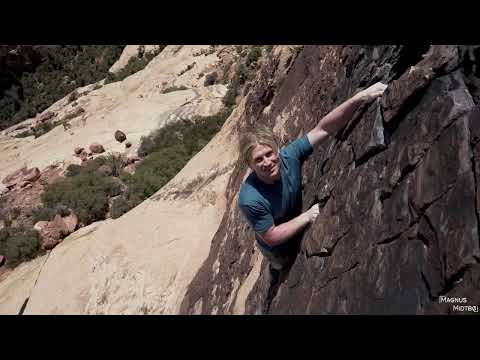
Climbing SOLO with Alex Honnold **INSANE EXPERIENCE**
14.4M views • 4 years ago
Magnus Midtbø
Norwegian climber Magnus Midtbo spends a day climbing with Alex Honnold on exposed routes, shot as a vlog. The video shows the stark contrast between Midtbo's visible nerves and Honnold's calm.
 25:21
5 steps to designing the life you want | Bill Burnett | TEDxStanford
11.4M views • 9 years ago
TEDx Talks
TEDxStanford talk by Bill Burnett, executive director of Stanford's design program, on applying design thinking to your own life and career. He offers five practical tips such as getting curious, talking to people and trying things.
 1:46:33
Lecture 1 | The Theoretical Minimum
969K views • 14 years ago
Stanford
Leonard Susskind opens Stanford Continuing Studies' Theoretical Minimum series with an introduction to quantum mechanics, a course for people who want real physics rather than popularization. It assumes some calculus and linear algebra.
 7:55
Low Latency Routing in Space
106K views • 8 years ago
HotNets Anonymous
A short visualization from HotNets researchers of routing and latency over SpaceX's proposed Starlink constellation, based on its FCC filings. It shows orbital shells, link topology and how inter-satellite routes could beat terrestrial fiber on long distances.
 8:18
Why Alien Life Would be our Doom - The Great Filter
27.9M views • 8 years ago
Kurzgesagt – In a Nutshell
A short Kurzgesagt animation explaining the Great Filter, the idea that finding alien life might be bad news because it implies something usually destroys civilizations. It connects the concept to the Fermi paradox.
 30:06
"Tackling Concurrency Bugs with TLA+" by Hillel Wayne
24K views • 9 years ago
Strange Loop Conference
Hillel Wayne's Strange Loop talk introducing TLA+ as a specification language for finding concurrency bugs in designs. It covers stalling, race conditions and dropped messages, with PlusCal examples.
 54:52
Why We Sleep: Science of Sleep & Dreams | Matthew Walker | Talks at Google
751K views • 8 years ago
Talks at Google
Berkeley sleep scientist Matthew Walker presents the science of sleep and dreams and how sleep affects health and lifespan, based on his book Why We Sleep.
 17:31
How Quantum Computers Break Encryption | Shor's Algorithm Explained
3.4M views • 7 years ago
minutephysics
MinutePhysics explains Shor's algorithm, showing how a quantum computer factors large integers by finding the period of a number modulo N. It walks through the modular arithmetic and number theory that give the exponential speedup over classical factoring, and why this threatens encryption.
 23:19
The One Tiny Law That Keeps Amtrak Terrible
3.6M views • 3 years ago
Wendover Productions
Wendover Productions explains why Amtrak trains run late: most Amtrak routes run on freight-owned track, and the law giving passenger trains priority is rarely enforced. The video covers rail ownership versus control and how freight carriers hold the leverage.
 14:05
The Five Freedoms of Aviation
3.7M views • 9 years ago
Wendover Productions
A Wendover Productions explainer on the political agreements, from the Chicago Convention onward, that determine which airlines can fly where. It lays out the five freedoms of the air.