scale model
 4:34
This giant model stopped a terrible plan
10M views • 9 years ago
Tom Scott
Tom Scott tells how John Reber's plan to dam San Francisco Bay was disproved by the Army Corps of Engineers' giant hydraulic Bay Model in Sausalito. The model showed the plan would have been dangerously wrong.
 20:39
AI Language Models & Transformers - Computerphile
354K views • 7 years ago
Computerphile
Rob Miles explains on Computerphile how language models generate plausible text and how transformers improved on recurrent networks, with a look at what comes next.
 8:25
Large Language Models from scratch
375K views • 4 years ago
Graphics in 5 Minutes
A short cartoon explaining how language models like ChatGPT work, from autocomplete and conditional probabilities to neural networks, gradient descent and backpropagation. It shows how networks act as universal function approximators.
 25:57
GPT3: An Even Bigger Language Model - Computerphile
446K views • 6 years ago
Computerphile
Rob Miles discusses GPT-3 on Computerphile, covering how scaling parameters kept improving results over GPT-2 and how the model nearly learned arithmetic without anyone knowing exactly how.
 12:08
Tesla Model 3's motor - The Brilliant Engineering behind it
8M views • 5 years ago
Sabin Civil Engineering
An engineering explainer on why Tesla abandoned the induction motor for the Model 3 and used an IPM-SynRM design. It covers the reluctance torque and permanent magnet principles behind the choice.
 6:51
Star Size Comparison 2
48.7M views • 10 years ago
morn1415
A visual scale comparison of stars and cosmic objects, from planets up to some of the largest known stars, set to music. It is meant to convey the vastness of the universe.
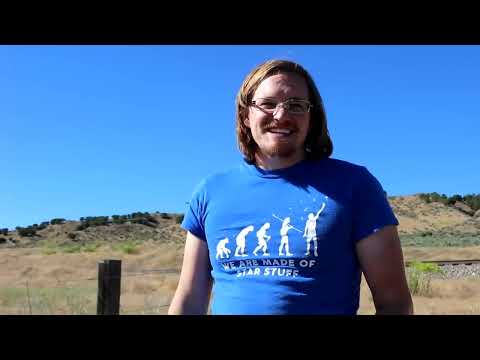 10:22
How Far Are The Nearest Stars?
3.7M views • 9 years ago
Cody'sLab
Cody's Lab builds a 200-billionth-scale model to show how far away the nearest stars are, using parallax and light speed. A short astronomy explainer on interstellar distances.
 17:52
Training AI Without Writing A Reward Function, with Reward Modelling
259K views • 6 years ago
Robert Miles AI Safety
Robert Miles explains reward modelling, in which an AI learns what humans want from their preference comparisons instead of a hand-written reward function. He walks through the 2017 paper on deep reinforcement learning from human preferences.
 16:43
The Equation That Explains (Nearly) Everything!
1.6M views • 4 years ago
PBS Space Time
PBS Space Time explains the Standard Model Lagrangian, the single equation encapsulating the particle physics theory, and visualizes what its terms mean.
 10:56
Model Y E36: The Octovalve Episode
317K views • 6 years ago
Munro Live
Munro Live's Model Y episode 36 has Sandy Munro walk through the disassembled Tesla Octovalve and heat pump system. He explains how the components are made and what each one does.
 12:27
Mach-E Thermal System Part 2: A Detailed Comparison to the Model Y
225K views • 5 years ago
Munro Live
Munro Live's team breaks down the thermal management system of the Ford Mustang Mach-E and compares it with the Tesla Model Y. They look at parts count, coolant loops and heating approaches.
 23:12
Simulating an epidemic
5.2M views • 6 years ago
3Blue1Brown
3Blue1Brown builds toy SIR models to simulate how an epidemic spreads and tests scenarios like social distancing, travel restrictions, central gathering places and quarantine. It was made during the early COVID-19 outbreak.
 4:47
Noam Chomsky: The five filters of the mass media machine | The Listening Post
2.9M views • 9 years ago
Al Jazeera English
A short Al Jazeera animation narrated by Amy Goodman presenting Noam Chomsky's five filters of the mass media: ownership, advertising, media elite sourcing, flak and a common enemy. It is part of the MediaTheorised series.
 9:42
How big is a billion? - Numberphile
1.8M views • 14 years ago
Numberphile
Numberphile explains the long and short scales for naming large numbers, covering millions, billions, trillions, milliards and the Greek myriad, with James Grime and Tony Padilla.
 8:44
A4 Paper Is Too Perfect
10.5M views • 5 years ago
CGP Grey
CGP Grey explains the elegant ratio of A4 and the metric paper sizes, then zooms out across scales from the Planck length to the observable universe.
 21:37
I wasn't worried about climate change. Now I am.
2.5M views • 2 years ago
Sabine Hossenfelder
Sabine Hossenfelder explains climate sensitivity and why recent observations suggest climate models may have underestimated warming. She says this changed her view on how worried to be.
 27:14
Transformers, the tech behind LLMs | Deep Learning Chapter 5
11.6M views • 2 years ago
3Blue1Brown
3Blue1Brown's visual explanation of how transformers and GPT-style language models work, tracing data through tokens, embeddings and attention.
 4:07
Why do competitors open their stores next to one another? - Jac de Haan
7.4M views • 14 years ago
TED-Ed
A short animated TED-Ed lesson in which two competing ice cream vendors on a beach illustrate why rival shops cluster together. It introduces game theory and the Nash equilibrium through the Hotelling model.
 18:15
So... the minute hand shows progression — apparently we think of time in wildly different ways
706K views • 4 years ago
Technology Connextras
A Technology Connections video essay on how analog and digital clocks shape different mental models of time, with the minute hand acting as a progress indicator.
 1:19:08
A Million Dollars vs A Billion Dollars, Visualized: A Road Trip
8.3M views • 6 years ago
Tom Scott
Tom Scott makes the difference between a million and a billion dollars tangible by using distance on a road trip instead of volume. The drive makes the scale of a billion intuitively felt.
 10:56
Tesla Is Lightyears Ahead Of... Tesla
1.4M views • 5 years ago
SuperfastMatt
SuperfastMatt looks at how the Tesla Model S retracting door handles were redesigned over time, from many parts to a motor plus sensor, with a focus on engineering and reliability.
 4:17
The Hubble Ultra Deep Field in 3D
9.6M views • 17 years ago
Deep Astronomy
A short video built around an animation of the roughly 10,000 galaxies in the Hubble Ultra Deep Field, placed at their measured redshift distances. It gives a brief history of deep field images and ends with a 3D fly-through.
 15:53
Quantum Field Theory visualized
2.7M views • 6 years ago
ScienceClic English
ScienceClic gives a 15-minute animated introduction to quantum field theory, covering fields, spin, conserved quantities, the standard model and interactions.
 12:36
Why the Muon g-2 Results Are So Exciting!
1.5M views • 5 years ago
PBS Space Time
A PBS Space Time episode explaining the Fermilab Muon g-2 results and why a discrepancy with the Standard Model prediction could point to new physics.
 19:48
How Dollar Stores Quietly Consumed America
4.2M views • 3 years ago
Wendover Productions
A Wendover Productions video on how dollar store chains expanded across America and why they displace grocery stores in small towns. It covers their business model and supplier leverage.
 4:12
Correlation CAN Imply Causation! | Statistics Misconceptions
744K views • 9 years ago
minutephysics
A four-minute minutephysics video arguing that causal models and causal networks let statistics infer causation from correlation. It touches on Reichenbach's principle, common causes, feedback and quantum causal discovery.
 37:20
But how do AI images and videos actually work? | Guest video by Welch Labs
2.2M views • 1 year ago
3Blue1Brown
A guest video by Welch Labs on 3Blue1Brown explaining how text-to-image and video models work. It covers CLIP, shared embedding spaces, diffusion models (DDPM, DDIM), conditioning, guidance and negative prompts.
 9:41
Spinning Levers - How A Transmission Works (1936)
11.5M views • 14 years ago
US Auto Industry
A 1936 Chevrolet-sponsored film that explains how a car transmission works by treating gears as spinning levers. It uses physical models to make the mechanism clear.
 8:39
How to Move the Sun: Stellar Engines
19.5M views • 6 years ago
Kurzgesagt – In a Nutshell
Kurzgesagt explains stellar engines such as the Shkadov thruster and Caplan thruster, which could move the Sun and solar system across the galaxy over millions of years to avoid hazards and reach new regions.
 18:04
How the Higgs Mechanism Give Things Mass
1.9M views • 4 years ago
PBS Space Time
A PBS Space Time episode on how the Higgs mechanism gives particles mass, prompted by Fermilab's heavier-than-expected W boson measurement. It goes beyond the usual pop-science treatment without heavy math.
 16:45
How Airlines Quietly Became Banks
7.4M views • 4 years ago
Wendover Productions
A Wendover Productions explainer arguing that major airlines make much of their profit from loyalty programs and co-branded credit cards rather than flying. It frames airlines as quasi-banks that sell points in bulk, using United's pandemic-era loan as a hook.
 13:23
Simulating Green Beard Altruism
4.5M views • 5 years ago
Primer
Primer simulates green beard altruism, where individuals recognize and help others carrying a shared marker, and shows how imposters affect its evolution. It is an animated evolution simulation based on published papers.
 45:55
Turning Waves Into Particles
194K views • 1 year ago
Huygens Optics
Huygens Optics explores the idea that space is a non-linear elastic medium, and uses simulations to show how wave energy might be confined locally into particle-like objects. It touches on inertia, the Schwinger limit and the vacuum as a medium.
 40:54
Fermi Paradox: The Dyson Dilemma v2.0
397K views • 10 years ago
Isaac Arthur
Isaac Arthur examines the Dyson Dilemma, the puzzle of why we see no Dyson spheres or megastructures if growth-oriented civilizations should build them. He covers detectability and whether such structures could hide.
 20:55
Why ChatGPT Can't Draw a Full Glass of Wine
6.3M views • 1 year ago
Alex O'Connor
Alex O'Connor shows that ChatGPT cannot draw a wine glass filled to the brim, and ties the failure to David Hume's missing shade of blue. It asks what the failure says about how image models learn.
 24:07
AI can't cross this line and we don't know why.
2.5M views • 2 years ago
Welch Labs
A Welch Labs explainer on neural scaling laws and the compute-efficient frontier, asking why model loss seems to hit a line it cannot cross. It draws an analogy to an ideal gas law for AI.
 40:47
Dyson Spheres
838K views • 9 years ago
Isaac Arthur
Isaac Arthur examines Dyson spheres and swarms, including common myths and misconceptions. He covers uses such as interstellar travel, black hole generation, and computing large enough to simulate universes.
 13:52
Ch(e)at GPT? - Computerphile
617K views • 3 years ago
Computerphile
Computerphile video in which Mike Pound explains a University of Maryland paper on watermarking LLM output. The method biases token choices so generated text can later be detected statistically.
 16:31
The TRUTH About How LTT Makes Money
1.9M views • 1 year ago
Linus Tech Tips
Linus Tech Tips breaks down the company's income streams, including sponsors, YouTube Premium, merch and other products. It gives percentages for each revenue source.
 12:01
Why Electronic Voting Is Still A Bad Idea
5.1M views • 6 years ago
Tom Scott
Tom Scott explains why electronic voting is a bad idea. Elections must be trusted by everyone and attacks on software scale in ways attacks on paper do not, so open source or blockchain fixes do not solve it.