sci-fi
 9:59
Feynman on Scientific Method.
2.4M views • 15 years ago
seabala
A short clip of Richard Feynman explaining the scientific method: guess, compute consequences, compare to experiment, and why vague theories like astrology cannot be proven wrong.
 1:03
The Scientific Method-Richard Feynman
180K views • 13 years ago
Sképseis
A one-minute clip of Richard Feynman describing the scientific method: guess a law, compute its consequences, and compare with experiment. If it disagrees with experiment, it is wrong.
 1:52
R. P. Feynman on social sciences
210K views • 16 years ago
x1x2x3ct
A two-minute clip of Richard Feynman on the social sciences, discussing what counts as real science versus pseudo science.
 2:49
Feynman :: Rules of Chess
1.4M views • 19 years ago
defjam99b
A three-minute clip of Richard Feynman using the rules of chess as an analogy for how science works, discovering rules by observation and sometimes meeting surprises like castling. It touches on incremental progress versus revolutions.
Topic match · Scientific method & science communication 1:52:48
Sir Roger Penrose & Dr. Stuart Hameroff: CONSCIOUSNESS AND THE PHYSICS OF THE BRAIN
889K views • 6 years ago
The Qualcomm Institute
A 2020 UC San Diego event with Roger Penrose and Stuart Hameroff presenting their Orch OR theory that consciousness arises from quantum processes in brain microtubules, followed by a conversation with Roger Bingham.
 5:37
Feynman: Knowing versus Understanding
2.7M views • 14 years ago
TehPhysicalist
A short clip of Richard Feynman on the difference between merely knowing how to reason mathematically and understanding why physical theories work. He discusses holding multiple equivalent ideas and guessing new laws.
Topic match · Scientific method & science communication 1:00:14
The Neuroscience of Consciousness – with Anil Seth
1.9M views • 9 years ago
The Royal Institution
Neuroscientist Anil Seth gives a Royal Institution lecture on the science of consciousness. He separates conscious level, content and self, and argues that experience arises from the brain's predictive inference.
 49:35
How did consciousness evolve? - with Nicholas Humphrey
333K views • 3 years ago
The Royal Institution
A Royal Institution lecture in which Nicholas Humphrey presents his theory of phenomenal consciousness and its evolution. He draws on the book Sentience and discusses evidence for animal sentience.
 47:20
Hamming, Intro to The Art of Doing Science and Engineering: Learning to Learn (March 28, 1995)
171K views • 14 years ago
securitylectures
The introductory lecture of Richard Hamming's capstone course, The Art of Doing Science and Engineering: Learning to Learn. It focuses on style of thinking and on educating rather than training, using technical material only as illustration.
 1:00:18
Quantum Fields: The Real Building Blocks of the Universe - with David Tong
6.9M views • 9 years ago
The Royal Institution
David Tong, a Cambridge theoretical physicist, explains at the Royal Institution that the fundamental building blocks of nature are quantum fields rather than particles. He covers what we know about these fields and how they fit into the Standard Model.
 1:37:55
Particles, Fields and The Future of Physics - A Lecture by Sean Carroll
1.8M views • 13 years ago
Fermilab
Sean Carroll's 2013 Fermilab Users Meeting lecture on particles, fields and the future of particle physics. He explains that particles are vibrations in underlying quantum fields and touches on the Higgs, neutrinos and dark matter.
 48:11
How to Find Product Market Fit - Stanford CS183F: Startup School
198K views • 9 years ago
Stanford Online
Segment co-founder and CEO Peter Reinhardt recounts how his company found product-market fit, including how a product grew out of a small feature of another. It is a lecture from Stanford's Startup School course.
 43:57
William Ackman: Everything You Need to Know About Finance and Investing in Under an Hour | Big Think
13.5M views • 13 years ago
Big Think
A Big Think talk in which hedge-fund manager William Ackman goes through the basics of finance and investing in under an hour. It is pitched as a crash course on the most important concepts.
 1:30:50
Lecture 7: Introduction to Galois Fields for the AES by Christof Paar
278K views • 12 years ago
Introduction to Cryptography by Christof Paar
Christof Paar's university lecture introducing Galois fields and finite-field arithmetic as used in AES. It covers the mathematics behind the AES S-box.
 1:09:53
Distinguished Lecturer Series: Building Science - Adventures in Building Science
185K views • 16 years ago
Berkeley Lab
A Berkeley Lab Distinguished Lecturer talk on building science, with an expert covering control layers, insulation and vapour barrier placement, and how buildings fail. The delivery is humorous.
 10:00
SICP / What is "Computer Science" ?
131K views • 20 years ago
LarryNorman
An excerpt from Hal Abelson's opening SICP lecture introducing computer science and contrasting declarative and imperative knowledge. He argues that computer science is not really a science and is more like magic or engineering of ideas.
 1:27:07
Swami Sarvapriyananda at IITK - "Who Am I?" according to Mandukya Upanishad-Part 1
6.2M views • 12 years ago
Vivekananda Samiti, IIT Kanpur
A lecture by Swami Sarvapriyananda at IIT Kanpur on the Mandukya Upanishad and the question 'Who am I?'. It explains the four states of consciousness in Advaita Vedanta.
Topic match · Consciousness & cognition 1:06:15
The Hyperbolic Geometry of DMT Experiences (@Harvard Science of Psychedelics Club)
1.4M views • 7 years ago
Qualia Research Institute
Andres Gomez Emilsson of the Qualia Research Institute presents a model of DMT experiences using hyperbolic geometry and dynamical systems theory. He describes how different intoxication levels correspond to changing curvature and information content of experience.
 52:04
Lecture by Douglas Hofstadter: Albert Einstein on Light; Light on Albert Einstein
23K views • 8 years ago
Uppsala universitet
Douglas Hofstadter lectures at Uppsala University on how analogy and daring thinking drove Einstein's discovery of light quanta. He argues deep insight in physics comes from imaginative leaps rather than rigid logic.
Topic match · Consciousness & cognition 1:04:01
Great Earthquakes of the Pacific Northwest
1.7M views • 10 years ago
Central Washington University
Geologist Nick Zentner of Central Washington University gives an hour-long public lecture on the great earthquakes of the Pacific Northwest, including the Cascadia subduction zone and the evidence for past megaquakes. It is part of his Downtown Geology Lecture Series, recorded in Ellensburg in 2016.
 3:19
Introduction: The Chemical History of a Candle by Michael Faraday (1/6)
207K views • 10 years ago
engineerguy
Bill Hammack of engineerguy introduces his series on Michael Faraday's lectures on The Chemical History of a Candle. He describes the free companion book and the commentary and caption features that help modern viewers.
Topic match · Scientific method & science communication 43:41
COVID-19 Vaccines: MODERNA | PFIZER/BIONTECH | ASTRAZENECA
6.8M views • 5 years ago
Ninja Nerd
A Ninja Nerd whiteboard lecture on the Moderna, Pfizer/BioNTech and AstraZeneca COVID-19 vaccines. It covers how each works, the preclinical and phase I-III trial process, and Operation Warp Speed.
 44:09
Lec 1 | MIT 6.042J Mathematics for Computer Science, Fall 2010
2.8M views • 13 years ago
MIT OpenCourseWare
The first lecture of MIT 6.042J Mathematics for Computer Science, taught by Tom Leighton, introducing mathematical proofs. It covers propositions, implication and basic proof methods.
 26:05
Identity After Authenticity: Abigail Thorn's Profile
219K views • 5 years ago
Carefree Wandering
A philosophy lecture by Professor Moeller on the philosophy of identity. It builds on a discussion of Abigail Thorn's video and covers authenticity, sincerity and how online profiles reshape identity.
 15:13
Free Energy Principle — Karl Friston
171K views • 9 years ago
Serious Science
Neuroscientist Karl Friston gives a 15-minute talk on the free energy principle, covering Markov blankets, Bayesian model evidence and global brain theories.
Topic match · Consciousness & cognition 1:08:37
Analogy as the Core of Cognition
600K views • 17 years ago
Stanford
Douglas Hofstadter's Stanford Presidential Lecture argues that analogy is the core of cognition, illustrating how concepts, categorization and thought arise from analogy-making.
Topic match · Consciousness & cognition 59:16
Ep. 1 - Awakening from the Meaning Crisis - Introduction
844K views • 7 years ago
John Vervaeke’s Lectern
The first episode of John Vervaeke's lecture series on the modern meaning crisis, tracing its history through philosophy, cognitive science, religion and psychology. It introduces the series and its themes.
Topic match · Consciousness & cognition 1:29:43
Efficient Bayesian inference with Hamiltonian Monte Carlo -- Michael Betancourt (Part 1)
48K views • 11 years ago
MLSS Iceland 2014
Michael Betancourt's lecture at MLSS Iceland 2014 on efficient Bayesian inference with Hamiltonian Monte Carlo. It covers MCMC concepts and motivation and the problems of sampling in high-dimensional distributions.
 1:31:54
Noam Chomsky - "The machine, the ghost, and the limits of understanding"
472K views • 14 years ago
Andy80o
Noam Chomsky's 2011 University of Oslo lecture on Newton's contributions to the study of mind. He argues Newton abandoned mechanical explanation and lowered the bar for scientific intelligibility, with consequences for the limits of human understanding. Q&A starts at 45:33.
Topic match · Consciousness & cognition 44:19
Hamming, "You and Your Research" (June 6, 1995)
368K views • 14 years ago
securitylectures
Richard Hamming's 1995 recording of his talk 'You and Your Research', drawn from his graduate engineering course. He discusses how great scientists pick important problems and build careers, drawing on his years at Bell Labs.
Topic match · Scientific method & science communication 1:15:47
Richard Feynman Computer Science Lecture - Hardware, Software and Heuristics
978K views • 14 years ago
Muon Ray
A lecture by Richard Feynman on how computers work, using the analogy of a filing clerk that becomes progressively dumber and faster. It also covers heuristics and how computers handle data and solve problems in finite time.
 6:33
The Biggest Ideas in the Universe: Introduction
384K views • 6 years ago
Sean Carroll
Sean Carroll introduces his video series on the biggest ideas in physics, such as symmetry, space and matter, as informal discussions with follow-up Q&A videos. This is the short opening video of the series.
Topic match · Scientific method & science communication 1:13:57
Floyd Toole - Sound reproduction – art and science/opinions and facts
144K views • 11 years ago
CIRMMT
Floyd Toole's CIRMMT distinguished lecture on the science of sound reproduction, drawing on decades of blind listening research. It covers what listeners prefer in loudspeakers and why measured accuracy and anechoic response matter.
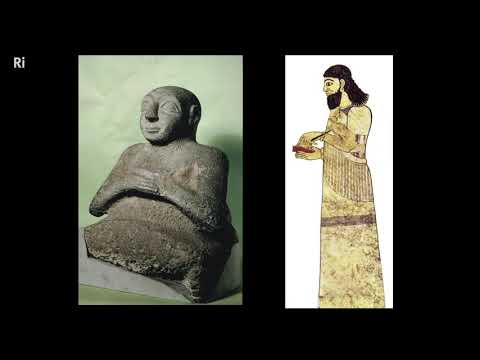 38:55
Cracking Ancient Codes: Cuneiform Writing - with Irving Finkel
2.8M views • 7 years ago
The Royal Institution
Irving Finkel of the British Museum lectures at the Royal Institution on the invention and decipherment of cuneiform writing in Mesopotamia, and why it is so hard to translate.
 2:48:23
A Portal Special Presentation- Geometric Unity: A First Look
902K views • 6 years ago
Eric Weinstein
Eric Weinstein's roughly three-hour presentation of Geometric Unity, his proposed theory unifying physics, given as a special episode of The Portal. It includes clarifications at the end.
 1:27:44
Black hole Firewalls - with Sean Carroll and Jennifer Ouellette
1.8M views • 12 years ago
The Royal Institution
A Royal Institution event with Sean Carroll and Jennifer Ouellette on what happens if you fall into a black hole, covering the firewall paradox, the information problem and the holographic principle.
 1:00:34
1. Introduction, Finite Automata, Regular Expressions
626K views • 5 years ago
MIT OpenCourseWare
The first lecture of Michael Sipser's MIT 18.404J Theory of Computation course, covering course mechanics, finite automata, regular languages and regular expressions. It proves closure of regular languages under union and begins concatenation.
 0:55
Richard Feynman on hungry philosophers (or do we see objects or only their light)
272K views • 17 years ago
Zero
A one-minute clip from Richard Feynman's 1979 Auckland lecture in which he answers whether you see an object or only its light. It is a short, playful take on perception and on the use of philosophy.
Topic match · Scientific method & science communication 1:23:12
The Lighthill debate on Artificial Intelligence: "The general purpose robot is a mirage"
15K views • 8 years ago
Pierre-Yves Oudeyer
The full 1973 BBC Lighthill debate on artificial intelligence, featuring James Lighthill, Donald Michie, Richard Gregory and John McCarthy. It documents the argument that preceded the 1970s AI winter and includes early robot demos.
 1:16:55
LEADERSHIP LAB: Writing Beyond the Academy 1.23.15
1.7M views • 11 years ago
UChicago Social Sciences
Larry McEnerney of the University of Chicago Writing Program argues that good writing is defined by what readers value, not by rules or the writer's own ideas. He explains why academic habits fail outside academia and how to write so readers find the work valuable.
Topic match · Literature & writing craft