software process
 19:37
Why is Japan So Weak in Software?
968K views • 2 years ago
Asianometry
Asianometry examines why Japan's software industry has lagged despite its hardware strengths. It looks at dependence on US software and the low prestige of programming.
 10:08
Software is in Decline - Jonathan Blow
179K views • 4 years ago
gamedev cuts
A ten-minute clip from Jonathan Blow's talk on preventing the collapse of civilization, arguing that software quality and the knowledge to build it are in decline.
 39:32
Andrej Karpathy: Software Is Changing (Again)
2.6M views • 1 year ago
Y Combinator
Andrej Karpathy's keynote at AI Startup School laying out software 1.0, 2.0 and 3.0, with LLMs seen as utilities, fabs and operating systems. It covers LLM quirks, partial-autonomy apps and keeping a human in the generate-and-verify loop.
 27:29
Software Engineering's Greatest Hits
25K views • 5 years ago
Greg Wilson
Greg Wilson surveys what empirical research actually shows about software development, why we believe it, and how to share that knowledge more widely. It covers evidence on practices such as TDD and design patterns.
 1:03:45
How We Diagnosed and Fixed the 2023 Voyager 1 Anomaly from 15 Billion Miles Away
17K views • 1 year ago
Flight Software Workshop
JPL's David Cummings presents at the 2025 Flight Software Workshop how the team diagnosed and fixed the 2023 Voyager 1 anomaly from billions of miles away. It walks through the flight computer and the memory fix.
 1:01:39
"Simple Made Easy" - Rich Hickey (2011)
219K views • 5 years ago
Strange Loop Conference
Rich Hickey's Strange Loop 2011 keynote distinguishing 'simple' (not intertwined) from 'easy' (familiar or near at hand). It argues that software complexity comes from complecting things and that we should pick simple constructs.
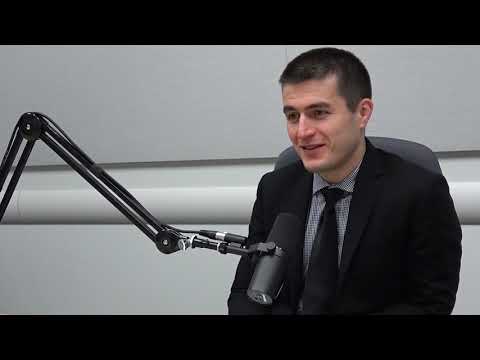 1:34:44
Jim Keller: Moore's Law, Microprocessors, and First Principles | Lex Fridman Podcast #70
742K views • 6 years ago
Lex Fridman
Lex Fridman interviews legendary chip architect Jim Keller about Moore's Law, microprocessor design, and first-principles thinking. Keller draws on his work at AMD, Apple, Tesla and Intel, discussing instruction sets, transistor budgets, and self-driving.
 1:06:59
Music Software & Interface Design: Steinberg's Dorico
949K views • 6 years ago
Tantacrul
Tantacrul critiques the UX and UI of Steinberg's Dorico music notation software, comparing it with Sibelius and user testing it with real musicians alongside his own attempt to compose in it.
 32:48
8LU - Are we *really* engineers? by Hillel Wayne
9K views • 6 years ago
8th Light Inc.
Hillel Wayne reports on interviews with 17 people who have worked as both software and traditional engineers. He argues the fields are fundamentally the same and have much to learn from each other.
 11:13
1979: Will WORD PROCESSORS start a HOME WORKING revolution? | Past Predictions | BBC Archive
461K views • 4 years ago
BBC Archive
A 1979 BBC Nationwide report asking whether word processors and networked microprocessors could end office commuting. It shows early word processing and a woman working from home, with surprisingly prophetic predictions.
 25:16
Debunking Devin: "First AI Software Engineer" Upwork lie exposed!
557K views • 2 years ago
Internet of Bugs
Internet of Bugs analyzes Cognition's Devin demo frame by frame, arguing the video did not show Devin completing paid Upwork jobs as claimed, and showing what the task required versus what Devin produced.
 1:01:39
"Simple Made Easy" - Rich Hickey (2011)
434K views • 5 years ago
ClojureTV
Rich Hickey's Strange Loop 2011 keynote separates 'simple' (not intertwined) from 'easy' (familiar or near at hand) and argues that software complexity comes from complecting things. It offers a vocabulary for judging designs and abstractions.
 38:20
Twitter and Visual Studio Rant
158K views • 6 years ago
Molly Rocket
Casey Muratori responds on-stream to a dismissive Twitter post by demonstrating how slow Visual Studio's startup and debugger watch window are, comparing it to much older software and machines. It is a long rant about software performance and bloat.
 29:44
EEVblog #1341 - AMAZING $250,000 IBM Processor TEARDOWN!
714K views • 6 years ago
EEVblog
Dave Jones of EEVblog tears down a 1991 IBM 9121 thermal conduction module from a System/390 mainframe, a 63-layer ceramic hybrid module with 2772 pins worth about $250,000, and demonstrates a BGA desoldering technique.
 1:21:22
Light Years Ahead | The 1969 Apollo Guidance Computer
2.8M views • 6 years ago
TNMoC
Robert Wills of TNMoC explains the Apollo Guidance Computer hardware and software, then walks through the Apollo 11 landing procedure step by step, including the 1202 alarms.
 53:25
The Only Unbreakable Law
487K views • 4 years ago
Molly Rocket
Casey Muratori's lecture, originally given at the Technical University of Madrid, arguing that Conway's Law is the only viable candidate for a true law of software architecture. He explains how software mimics the organization over time, using examples like Windows' multiple volume controls.
 46:33
How We Made MuseScore 4 - Music App Design is Challenging!
814K views • 3 years ago
Tantacrul
Tantacrul walks through how the MuseScore 4 team was built and how design decisions were made for the overhaul of a huge legacy notation app. It covers playback and engraving quality improvements.
 3:29:21
How Sugar & Processed Foods Impact Your Health | Dr. Robert Lustig
5.1M views • 2 years ago
Andrew Huberman
A long Huberman Lab podcast episode with Dr. Robert Lustig on the calories-in, calories-out model and how sugar, fructose, fiber and processed foods affect insulin, liver and metabolic health.
 48:40
Capt. Grace Hopper on Future Possibilities: Data, Hardware, Software, and People (Part One, 1982)
179K views • 2 years ago
National Security Agency
Part one of Capt. Grace Hopper's 1982 NSA lecture on the future of data, hardware, software and people. It includes her humor, her nanosecond demonstration and views on scaling and resisting old ways of doing things.
 42:21
Where Does Bad Code Come From?
282K views • 5 years ago
Molly Rocket
Casey Muratori's invited lecture on where bad code comes from, rebroadcast from a Twitch stream. He critiques conventional wisdom such as SOLID and Clean Code and argues about how those habits lead to slow, poorly structured software.
 1:35:45
[FOSSi Dial-Up] Tim Ansell - Skywater PDK: Fully open source manufacturable PDK for a 130nm process
34K views • 6 years ago
FOSSi Foundation
Tim Ansell presents the SkyWater PDK, a fully open source manufacturable process development kit for a 130nm process, as the first FOSSi Dial-Up talk. He covers its role in a fully open chip design flow.
 1:00:46
"Design in Practice" by Rich Hickey
65K views • 3 years ago
ClojureTV
Rich Hickey's Clojure Conj 2023 talk on design in practice, covering problem statements, decision matrices, choosing precise words and making decisions in a team.
 2:27:34
Casey Muratori – The Big OOPs: Anatomy of a Thirty-five-year Mistake – BSC 2025
926K views • 1 year ago
Better Software Conference
Casey Muratori's two-hour talk tracing the history of object-oriented programming back to the 1960s and examining how its ideas, and later entity component systems, came about. It is followed by a Q&A.
 1:10:00
A Deep Dive into Nanite Virtualized Geometry
278K views • 5 years ago
SIGGRAPH Advances in Real-Time Rendering
Brian Karis's SIGGRAPH 2021 talk explains how Unreal Engine 5's Nanite virtualized geometry works. It covers mesh import, the data structures, streaming, decompression, culling, software and hardware rasterization, and shading.
 18:41
Refterm Lecture Part 1 - Philosophies of Optimization
93K views • 5 years ago
Molly Rocket
Casey Muratori's first refterm lecture lays out philosophies of optimization, distinguishing optimization from non-pessimization, which means avoiding needless work. It uses his fast terminal renderer project to show how fast computers really are.
 51:04
[EPILEPSY WARNING] How fast should an unoptimized terminal run?
193K views • 5 years ago
Molly Rocket
Casey Muratori shows how fast a terminal renderer can run, building a simple reference renderer that handles Unicode and colored text far quicker than Windows Terminal. He argues that common excuses for slow terminals do not hold up.
 2:50:14
Simple Code, High Performance
463K views • 5 years ago
Molly Rocket
Casey Muratori's University of Twente guest lecture is a case study in how straightforward code can cut thousands of lines and tens of seconds of runtime down to a few dozen lines running in under a second. It uses concrete examples to show why software is often an order of magnitude slower than it should be.
 1:01:59
TigerStyle! (Or How To Design Safer Systems in Less Time) by Joran Dirk Greef
87K views • 3 years ago
TigerBeetle
Joran Dirk Greef's Systems Distributed '23 talk on TigerStyle, the engineering methodology behind TigerBeetle. It covers designing safer systems in less time through up-front design, assertions, and deterministic simulation.
 45:33
"A Political History of X" - Keith Packard (LCA 2020)
52K views • 6 years ago
linux.conf.au
Keith Packard traces the 35-year history of the X Window System at linux.conf.au 2020. He uses X to examine licensing, corporate interests and community dynamics in free software, including Unix workstation vendors and Stallman's influence.
 29:51
Refterm v2 - Resource usage, binary splat, glyph sizing, and more
68K views • 5 years ago
Molly Rocket
Casey Muratori follows up his refterm proof-of-concept, a GPU-based terminal renderer, with a second part covering memory usage, glyph sizing and correct Unicode and VT handling. It is built to show that a terminal can be fast and correct without heroic effort.
 35:25
Saving Voyager 1! - Bruce Waggoner at !!Con 2024
8K views • 2 years ago
!!Con
Bruce Waggoner of the Voyager team describes how engineers diagnosed Voyager 1's 2023 loss of telemetry and patched its flight software from 15 billion miles away. The talk covers the spacecraft's architecture and the scarcity of old documentation.
 20:38
Modular Micro-Reactors – The Future of Nuclear Energy?
169K views • 6 years ago
Illinois EnergyProf
Professor Ruzic explains modular micro-reactors: self-contained nuclear units with passive safety whose fuel lasts about 20 years. He covers their use for process and district heat and where they can compete with diesel generation.
 27:48
How are Microchips Made? 🖥️🛠️ CPU Manufacturing Process Steps
11.9M views • 2 years ago
Branch Education
Branch Education walks through a semiconductor fab and the dozens of steps used to turn silicon wafers into microchips, with 3D animation. It covers lithography, deposition and etching at a high level.
 11:05
Updated BP Texas City Animation on the 15th Anniversary of the Explosion
2.3M views • 6 years ago
USCSB
The US Chemical Safety Board's updated animation of the 2005 BP Texas City refinery explosion, which killed 15 workers. It was released ahead of a process safety training application.
 48:59
Foundry 2022 Operating System Demo
196K views • 4 years ago
Palantir
A 49-minute demo of Palantir Foundry by its chief architect. It walks through data integration, ML and AI workflows, analytics, and application building across the platform.
 20:08
14nm and 7nm are NOT what you think it is - Visiting Tescan Part 3/3
296K views • 6 years ago
der8auer
Der8auer visits Tescan and uses an electron microscope to compare real transistor sizes on Intel 14nm and AMD 7nm chips. It shows that process node names do not match physical measurements.
 58:37
NVIDIA — Securing the Future of Safety and Security of Embedded Software (Captioned)
5K views • 5 years ago
AdaCore
An AdaCore webinar in which NVIDIA engineers explain why and how they adopted Ada and SPARK for security-critical firmware. It covers the business case and the engineering experience of the transition.
 31:06
Jim Keller - Moore's Law in the age of AI Chips
33K views • 6 years ago
Matroid
Jim Keller's talk at the 2020 Scaled Machine Learning conference on Moore's Law in the age of AI chips. He compares scalar, vector and GPU-style parallel approaches to computation.
 15:21
The Story Behind Audacity
517K views • 5 years ago
Tantacrul
Tantacrul tells the story of Audacity, the widely used free audio editor, and announces his involvement in the project. It includes an interview with the original developers and a look at the software's usability.
 17:22
AWS re:Invent 2020: Working backwards: Amazon’s approach to innovation
80K views • 5 years ago
AWS Events
An AWS re:Invent session explaining Amazon's Working Backwards process, where teams start from customer needs and write a press release and FAQ (PR-FAQ) before building. It covers the five customer questions that frame the process.