surface area
 17:51
Does "land area" assume a country is perfectly flat?
859K views • 6 years ago
Stand-up Maths
Matt Parker of Stand-up Maths asks whether a country's reported land area accounts for hills and mountains, working through how surface area depends on the resolution of elevation data. It follows up on a question from a viewer and work by researchers who measured it.
 21:46
Surface-Stable Fractal Dithering Explained
646K views • 1 year ago
runevision
Rune Skovbo Johansen explains Surface-Stable Fractal Dithering, a technique he invented and released as open source. It makes dithering stick to 3D surfaces and covers the experiments and shortcomings along the way, inspired by Return of the Obra Dinn.
 42:02
How to Surface a Submarine in the Arctic Ocean - Smarter Every Day 260
6.4M views • 5 years ago
SmarterEveryDay
Destin Sandlin of Smarter Every Day explains how a US Navy nuclear submarine surfaces through Arctic ice, filmed during the ICEx exercise. It shows ballast and control systems and the physics involved.
 23:32
The Solar Gravitational Lens will Map Exoplanets. Seriously.
582K views • 6 years ago
Launch Pad Astronomy
Explains the proposed NASA JPL plan to use the Sun as a gravitational lens, sending solar sail craft to its focal region to image an exoplanet's surface. It covers the distances involved, how imaging with the Sun would work and the mission design.
 10:03
The determinant | Chapter 6, Essence of linear algebra
5M views • 10 years ago
3Blue1Brown
A 10-minute 3Blue1Brown chapter explaining the determinant as the factor by which a linear transformation scales area or volume. It builds the idea geometrically with animations before any formulas.
 19:07
I Misunderstood the Greenhouse Effect. Here's How It Works.
989K views • 3 years ago
Sabine Hossenfelder
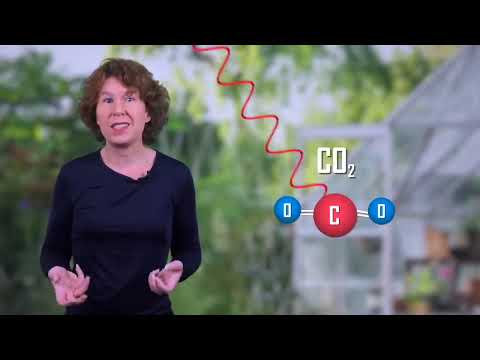
Sabine Hossenfelder explains how the greenhouse effect actually works, given that infrared is mostly absorbed low in the atmosphere already. She walks through why more CO2 still warms the surface.
 10:15
Using ground relays with Starlink
506K views • 6 years ago
Mark Handley
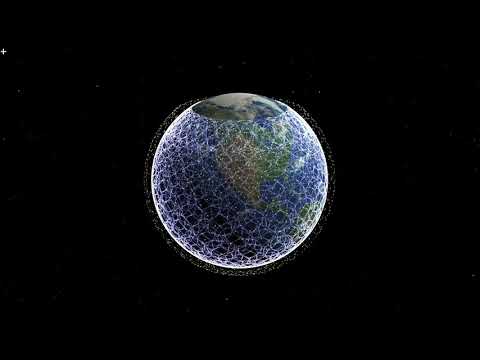
Mark Handley of UCL explains, with simulation visualizations, how early Starlink satellites without inter-satellite links could still give low-latency wide-area communication by hopping via ground relays. He shows it can beat fibre on many long paths.
 15:30
The Black Hole Information Paradox
1.1M views • 8 years ago
PBS Space Time
PBS Space Time episode on the black hole information paradox, covering how black holes seem to destroy information, the no-hair conjecture and the proposed role of the event horizon. It is part of a series on black holes.
 29:02
Colonizing Venus
731K views • 9 years ago
Isaac Arthur
Isaac Arthur examines options for colonizing Venus, from vast floating habitats in the temperate upper atmosphere to full terraforming of the planet. It is a long-form speculative futurism episode in his solar system colonization series.
 2:26
Milton Friedman - I, Pencil
802K views • 14 years ago
Free To Choose Network
A two-minute clip in which Milton Friedman uses a humble pencil to show how thousands of strangers across many countries cooperate, without central direction, to make a simple product. It is a short visual version of the 'I, Pencil' essay's argument about free markets and dispersed knowledge.
 3:58
What if you swam in a nuclear storage pool?
3.2M views • 2 years ago
xkcd's What If?
Randall Munroe of xkcd answers what would happen if you swam in a spent nuclear fuel pool, and how much radiation you would receive at the surface versus at depth.
 4:19
If these pumps ever stop, part of Germany floods.
4.1M views • 6 years ago
Tom Scott
Tom Scott explains how decades of deep coal mining sank parts of Germany's Ruhr Valley and changed its drainage. Pumps run by Emschergenossenschaft must now work permanently to keep towns and cities from flooding.
 4:45
How playing an instrument benefits your brain - Anita Collins
15.2M views • 12 years ago
TED-Ed
A short TED-Ed animated lesson by Anita Collins on what happens in the brain when people play a musical instrument. It argues that playing engages many brain areas at once, like a full-body workout, with long-term benefits.
 18:20
Even Small Towns are Great Here (5 Years in the Netherlands)
1.8M views • 3 years ago
Not Just Bikes
Not Just Bikes reflects on five years in the Netherlands and tours small towns and cities, from Haarlem to Veenendaal. It argues that good urbanism with walkable streets, bike infrastructure and transit is found almost everywhere there, not just in Amsterdam.