talk show
 2:44
Two Monkeys Were Paid Unequally: Excerpt from Frans de Waal's TED Talk
25.4M views • 13 years ago
TED Blog Video
A short excerpt from Frans de Waal's TED talk showing a capuchin monkey fairness experiment in which two monkeys are paid unequally, one with cucumber and one with grapes. The shortchanged monkey reacts angrily.
 10:45
The 5 Most Dangerous Chemicals on Earth
11.9M views • 11 years ago
SciShow
A SciShow episode in which Hank Green introduces five of the most dangerous chemicals, from lethal toxins to substances that explode on contact. It is an entertaining overview of extreme chemical hazards.
 23:53
D/A and A/D | Digital Show and Tell (Monty Montgomery @ xiph.org)
647K views • 13 years ago
FL Studio
Monty Montgomery of Xiph.org gives real-time demonstrations of sampling, quantization, bit depth and dither using real audio equipment, including both digital analysis tools and vintage analog bench gear. It shows that sampled audio is not stair-stepped and corrects common misconceptions about digital audio.
 23:01
Safe Cycling Showdown - Good vs. Bad City Design - Plus 1 Minus 2
1.1M views • 5 years ago
Not Just Bikes
Not Just Bikes compares the same cycling trip to a hardware store in Calgary and in Amsterdam, using a 'plus 1 minus 2' format. It shows how street design shapes how safe and practical cycling is.
 16:35
How The Dutch Economy Shows We Can't Reduce Wealth Inequality With Taxes | Economics Explained
8M views • 5 years ago
Economics Explained
An Economics Explained video arguing that the Netherlands shows taxes alone can't reduce wealth inequality. It distinguishes income inequality from wealth inequality and discusses the Gini index.
 32:57
Are Seed Oils Inflammatory?! (The *Evidence* No One Shows)
480K views • 4 years ago
Nutrition Made Simple!
A nutrition-science explainer reviewing the human evidence on whether seed oils cause inflammation. It looks at nine different seed oils, heated oils, and genetic variability, and compares omega-6 intake with saturated fat.
 3:52
I can't show you how pink this pink is.
9.7M views • 9 years ago
Tom Scott
Tom Scott explains why a vivid pink pigment by artist Stuart Semple cannot be fully shown on a screen, and touches on the dispute over exclusive rights to the blackest black pigment. It is a short explainer on color gamuts and pigment politics.
 8:35
Buster Keaton - The Art of the Gag
8.4M views • 10 years ago
Every Frame a Painting
An Every Frame a Painting video essay on Buster Keaton's visual comedy, examining how he built and framed his gags. It uses clips from his silent films to show the thinking behind them.
Topic match · Stand-up & sketch comedy 55:02
GradIEEEnt half decent: The hidden power of imprecise lines
391K views • 3 years ago
suckerpinch
Tom 7 (suckerpinch) delivers a long, comedic digression on gradient descent and floating-point imprecision. He shows how rounding behavior can supply the nonlinearity needed to build a neural network.
Topic match · Stand-up & sketch comedy 5:55
Richard Feynman talks about light
1.8M views • 19 years ago
sdfhsfh
A PBS clip in which Richard Feynman explains the strange nature of light and electromagnetic radiation. He conveys how little of it we actually see and how radio waves are present everywhere.
 11:11
RSA ANIMATE: Crises of Capitalism
3.3M views • 16 years ago
Royal Society of Arts
An RSA Animate video that illustrates a talk by geographer David Harvey on the crises of capitalism. It covers creative destruction, wage stagnation masked by credit, and the search for a more just economic order.
 18:15
So... the minute hand shows progression — apparently we think of time in wildly different ways
706K views • 4 years ago
Technology Connextras
A Technology Connections video essay on how analog and digital clocks shape different mental models of time, with the minute hand acting as a progress indicator.
 3:51
Why “No Problem” Can Seem Rude: Phatic Expressions
5M views • 7 years ago
Tom Scott
Tom Scott explains phatic expressions such as hello, thank you and how are you, which carry social meaning rather than information, and why replies like no problem can seem rude to some people.
 28:11
Why Everyone Is Talking About Data Centers In Space
408K views • 10 months ago
Scott Manley
Scott Manley examines why SpaceX, Google and others are looking at orbital data centers. He walks through the economics, heat rejection and solar power arguments, with links to the Lumen/Starcloud and Google Suncatcher papers.
 12:59
America Was Wrong About Ethanol - Study Shows
2.9M views • 4 years ago
Engineering Explained
Engineering Explained examines new research suggesting corn ethanol in US gasoline may emit as much or more carbon than gasoline. It covers the Renewable Fuel Standard and why ethanol was assumed to be a green fuel.
 9:04
Jackie Chan - How to Do Action Comedy
25.4M views • 11 years ago
Every Frame a Painting
Every Frame a Painting analyzes how Jackie Chan stages action comedy, with nine principles such as starting from a disadvantage, using the environment, clear shots, and keeping action and reaction in the same frame.
Topic match · Stand-up & sketch comedy 8:00
Edgar Wright - How to Do Visual Comedy
11.4M views • 12 years ago
Every Frame a Painting
An Every Frame a Painting video essay analysing how Edgar Wright creates visual comedy through framing, camera movement, editing, sound effects and music.
Topic match · Stand-up & sketch comedy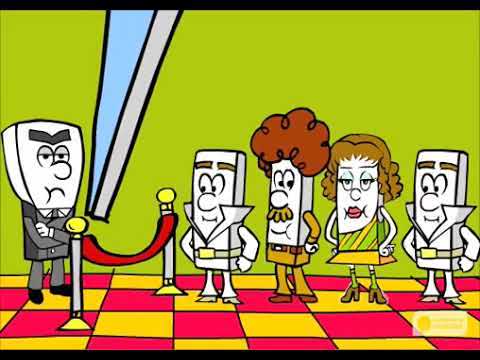 3:25
Get Perpendicular
95K views • 18 years ago
teraera08
A Hitachi promotional cartoon in the style of Schoolhouse Rock explaining perpendicular magnetic recording for hard drives.
Topic match · Arts & entertainment (other) 46:01
Exploring Sid Meier's Pirates! - BASIC Code, Quirks, Bugs on Commodore 64
115K views • 5 years ago
8-Bit Show And Tell
8-Bit Show And Tell walks through the BASIC source code of the original Commodore 64 Sid Meier's Pirates!. It covers bugs, quirks and traces of abandoned features and scenarios left in the code.
 4:48
Hans Rosling's 200 Countries, 200 Years, 4 Minutes - The Joy of Stats - BBC
11.5M views • 15 years ago
BBC
Hans Rosling uses augmented-reality animation to show 200 countries over 200 years in four minutes, built from 120,000 data points. It tracks life expectancy and income to show the world's development.
 14:27
All the Numbers - Numberphile
1.8M views • 7 years ago
Numberphile
Matt Parker talks Numberphile through the different kinds of numbers: algebraic, transcendental, computable, normal, and beyond. It shows how few numbers we can actually name or describe.
 4:01
Who else benefits from the Dutch cycling infrastructure
88K views • 13 years ago
BicycleDutch
A short BicycleDutch episode showing how people with disabilities use Dutch cycle tracks on hand-cycles, tricycles and mobility scooters.
 11:33
Light Waves Visualized using Photon Sieves.
69K views • 6 years ago
Huygens Optics
Huygens Optics shows how DIY photon sieves shape a laser's wave front, explaining how they differ from zone plates and how aperture count affects the focal point, with time-resolved visualizations of the diffraction.
 10:15
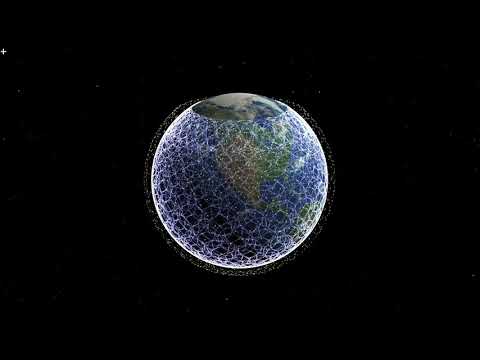
Using ground relays with Starlink
506K views • 6 years ago
Mark Handley
Mark Handley of UCL explains, with simulation visualizations, how early Starlink satellites without inter-satellite links could still give low-latency wide-area communication by hopping via ground relays. He shows it can beat fibre on many long paths.
 32:11
Darts in Higher Dimensions (with 3blue1brown) - Numberphile
2.1M views • 6 years ago
Numberphile
Numberphile talks with Grant Sanderson of 3Blue1Brown about a darts puzzle with a shrinking bullseye. Solving it takes the volumes of high-dimensional spheres, and the answer turns up Euler's number.
 13:20
Your Home Can Survive a Wildfire
164K views • 11 years ago
National Fire Protection Association
NFPA video in which wildfire researcher Jack Cohen explains that embers (firebrands), not the flame front, are the main cause of homes igniting in wildfires. He shows how landscaping and removing debris around the home reduce risk.
 19:42
But what is the Fourier Transform? A visual introduction.
12.6M views • 8 years ago
3Blue1Brown
3Blue1Brown's animated visual introduction to the Fourier Transform, showing how a signal breaks into frequency components.
 2:23
Music and Life - Alan Watts
2.6M views • 19 years ago
seandulac
A two-minute animation of an Alan Watts talk arguing that life is like music: it is meant to be danced to in the moment, not rushed toward a final goal. It is a short, accessible take on living in the present.
 10:48
RSA ANIMATE: Drive: The surprising truth about what motivates us
20.2M views • 16 years ago
Royal Society of Arts
An RSA Animate whiteboard adaptation of Dan Pink's talk on what motivates people at work. It argues that beyond simple tasks, autonomy, mastery and purpose drive performance more than money.
 12:04
Why Being Delusional is a Superpower
15.2M views • 6 years ago
Veritasium
Veritasium examines the role of luck in success, with simulations and examples showing how small advantages and chance can compound. It argues that top outcomes are disproportionately luck-driven while still crediting effort.
 28:23
The Fast Fourier Transform (FFT): Most Ingenious Algorithm Ever?
2.3M views • 5 years ago
Reducible
Reducible's visual walkthrough of the Fast Fourier Transform, motivated by polynomial multiplication. It shows how the FFT's key ideas can be discovered by asking the right questions.
 8:38
Diffie-Hellman Key Exchange
938K views • 14 years ago
Art of the Problem
A short explainer on the history and mechanics of public key cryptography and the Diffie-Hellman key exchange. It uses a mixing-paint-colors analogy to show how two parties can agree on a shared secret in public.
 27:19
Once you understand game theory, you understand the world.
26.5M views • 2 years ago
Veritasium
Veritasium explores the Prisoner's Dilemma and Axelrod's tournaments, showing why tit-for-tat and forgiving strategies win in repeated games. It extends the ideas to cooperation in evolution and conflict.
 12:50
How close is nuclear fusion power?
764K views • 5 years ago
Sabine Hossenfelder
Sabine Hossenfelder explains how close nuclear fusion really is to break-even, and why headlines about ITER and lab milestones are misleading. She distinguishes plasma gain (Q plasma) from whole-system gain (Q total) and shows the latter is still far below one.
 11:15
The hardest problem on the hardest test
16.5M views • 8 years ago
3Blue1Brown
3Blue1Brown walks through a very hard Putnam competition problem and its elegant solution, emphasizing the visual intuition and the thought process behind solving it.
 6:06
The 7 Habits of Highly Miserable People
14.7M views • 9 years ago
CGP Grey
CGP Grey's sarcastic animated video adapted from the book How to Be Miserable, listing habits that reliably make people unhappy. By inverting the advice, it shows what to avoid and prompts reflection on goals and routines.
 5:43
The EU Has Orbits, and the UK Fell Out of All of Them
0 views • 7 years ago
CGP Grey
CGP Grey's six-minute explainer of the relationships the UK could have with the EU, based on Barnier's slide, shown as orbits of different closeness. It explains why the UK's red lines ruled out the closer options.
 4:27
The Voting System That Should Replace Every Election
4.7M views • 15 years ago
CGP Grey
A short CGP Grey explainer on the alternative vote (instant runoff voting) versus first past the post, made around the 2011 UK referendum. It shows how ranked ballots are tallied and why they avoid spoiler effects.
 3:04
mRNA Translation (Advanced)
1.5M views • 16 years ago
DNA Learning Center
A short animation from the DNA Learning Center showing how mRNA carries a gene's message to the ribosome, where tRNA and codons are used to assemble amino acids into a protein.
 23:16
The Machinery Of Freedom: Illustrated summary
164K views • 14 years ago
bitbutter
An illustrated 23-minute summary of David Friedman's talk based on The Machinery of Freedom. It describes how law, police and courts could work as market services in a stateless society, covering private law, polycentric law and objections.