turing machine
 18:27
Richard Feynman: Can Machines Think?
2.5M views • 6 years ago
Lex Clips
An excerpt of Richard Feynman's 1985 lecture Q&A about whether machines can think. He discusses the difficulty of defining what computers can never do and compares machine intelligence to machines that don't copy animals.
 1:19:38
John Hennessy and David Patterson 2017 ACM A.M. Turing Award Lecture
150K views • 8 years ago
Association for Computing Machinery (ACM)
Hennessy and Patterson's 2018 Turing Award lecture at ISCA, A New Golden Age for Computer Architecture. It covers domain-specific hardware, security, open instruction sets and agile chip development.
 51:32
Great Impractical Ideas in Computer Science: PowerPoint Programming
2.2M views • 7 years ago
Tom Wildenhain
Tom Wildenhain's guest lecture for CMU's Esoteric Programming Languages course shows that PowerPoint transitions and slides are Turing complete without macros, building up to a mind-bending fractal ending.
Topic match · Computability & complexity theory 1:19:47
Richard Feynman "Tiny Machines" Nanotechnology Lecture - aka "There's Plenty of Room at the Bottom"
543K views • 14 years ago
Muon Ray
A recording of Richard Feynman's talk on the possibilities of manipulating matter at very small scales, widely seen as an early vision of nanotechnology. This is a later version of his 1959 "There's Plenty of Room at the Bottom" lecture.
 1:20:35
Anton: A Special-Purpose Machine That Achieves a Hundred-Fold Speedup in Biomolecular Simulations
12K views • 14 years ago
NC State
David Shaw of D. E. Shaw Research presents Anton, a special-purpose machine that speeds up biomolecular simulations about a hundred-fold. The lecture covers molecular dynamics and how simulation helps understand how drugs bind.
 56:36
Noam Chomsky Thought Control In Democratic Societies NEW!
12K views • 11 years ago
Riccardo
A lecture by Noam Chomsky on thought control in democratic societies, covering propaganda and manufacturing consent. The upload has no description.
 1:06:43
Scott Aaronson | How Much Math Is Knowable?
58K views • 1 year ago
Harvard CMSA
Scott Aaronson's Harvard CMSA talk traces what mathematical truths are knowable, from Godel and Turing to the Busy Beaver function. He covers recent work on Busy Beaver values.
Topic match · Computability & complexity theory 28:03
AT&T Archives: Similiarities of Wave Behavior (Bonus Edition)
473K views • 14 years ago
AT&T Tech Channel
A Bell Labs film in which Dr. J.N. Shive uses a mechanical wave machine to demonstrate reflection, standing waves, resonance and impedance matching. He includes some equations but relies mostly on real-world examples a layperson can follow.
 39:49
Lec 1 | MIT 18.06 Linear Algebra, Spring 2005
4.9M views • 17 years ago
MIT OpenCourseWare
The first lecture of Gilbert Strang's MIT 18.06 Linear Algebra course, covering the geometry of linear equations. It opens a full 35-lecture university course.
 1:14:16
Why is Ukraine the West's Fault? Featuring John Mearsheimer
30.4M views • 11 years ago
The University of Chicago
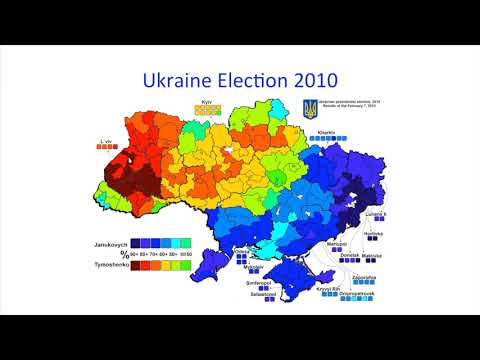
University of Chicago lecture in which John Mearsheimer argues the West, through NATO and EU expansion, bears primary responsibility for the Ukraine crisis. He also discusses how to end it and its consequences.
 1:05:45
Donald B. Gillies Lecture: Dr. Michael Stonebraker
14K views • 8 years ago
Siebel School of Computing and Data Science
Turing Award winner Michael Stonebraker gives the 2018 Donald B. Gillies Memorial Lecture at Illinois. He discusses the gap between academic research and industry problems, publishing incentives, and the influence of large industry users on research.
 1:31:54
Noam Chomsky - "The machine, the ghost, and the limits of understanding"
472K views • 14 years ago
Andy80o
Noam Chomsky's 2011 University of Oslo lecture on Newton's contributions to the study of mind. He argues Newton abandoned mechanical explanation and lowered the bar for scientific intelligibility, with consequences for the limits of human understanding. Q&A starts at 45:33.
 23:23
Building Prototypes Dan Gelbart part 18 of 18 Design
99K views • 13 years ago
Dan Gelbart
The final part of Dan Gelbart's 18-part Building Prototypes series, focused on mechanical design. It opens with a demonstration of stiffness and covers practical design principles for prototype machines.
 1:02:15
Lambda Calculus - Fundamentals of Lambda Calculus & Functional Programming in JavaScript
227K views • 9 years ago
Fullstack Academy
Gabriel Lebec's Fullstack Academy talk introduces lambda calculus syntax, the history of mathematical logic, and the essence of functional programming using JavaScript. It also covers combinators, currying and Church encodings.
Topic match · Computability & complexity theory 1:00:34
1. Introduction, Finite Automata, Regular Expressions
626K views • 5 years ago
MIT OpenCourseWare
The first lecture of Michael Sipser's MIT 18.404J Theory of Computation course, covering course mechanics, finite automata, regular languages and regular expressions. It proves closure of regular languages under union and begins concatenation.
Topic match · Computability & complexity theory 1:02:34
MIT Godel Escher Bach Lecture 1
557K views • 13 years ago
jasonofthel33t
The first lecture of an MIT course on Douglas Hofstadter's Godel, Escher, Bach, covering themes like self-reference, recursion and incompleteness. The full lecture series is on YouTube.
Topic match · Computability & complexity theory 10:00
SICP / What is "Computer Science" ?
131K views • 20 years ago
LarryNorman
An excerpt from Hal Abelson's opening SICP lecture introducing computer science and contrasting declarative and imperative knowledge. He argues that computer science is not really a science and is more like magic or engineering of ideas.
Topic match · Computability & complexity theory 7:45
Electron transport chain
3.7M views • 9 years ago
Harvard Online
A short Harvard Online animated lesson on how the mitochondrial electron transport chain works. It shows proton pumping and the machinery that drives ATP synthesis.
 1:02:57
Peter Norvig - The Unreasonable Effectiveness of Data
74K views • 15 years ago
UBC Computer Science
Peter Norvig's UBC distinguished lecture on how massive amounts of simple data, such as for language modeling, can yield understanding that hand-built models could not.
 1:01:51
Lecture 1: Introduction to Information Theory
411K views • 12 years ago
Jakob Foerster
The first lecture of David MacKay's Cambridge course on information theory, pattern recognition and neural networks. It introduces the core ideas of his book Information Theory, Inference, and Learning Algorithms.
 55:53
Michael Stonebraker | Big Data is (at least) Four Different Problems
30K views • 10 years ago
Michigan Engineering
Database pioneer Michael Stonebraker argues that 'big data' is really at least four different problems: big volumes with small analytics, big analytics, velocity, and variety. He comments on where each market is heading.
 17:26
Lecture 1 | Programming Paradigms (Stanford)
1.2M views • 18 years ago
Stanford
The first lecture of Stanford's CS107 Programming Paradigms, taught by Jerry Cain, giving an overview of the course. The course goes from C and assembly through C++, concurrency, Scheme and Python.
 8:07
Seymour Papert 1983
28K views • 19 years ago
Cynthia Solomon
An eight-minute excerpt of a 1983 video featuring Seymour Papert, creator of Logo, on children learning programming and abstract ideas through embodied play. It shows kids acting out the Logo turtle.
 35:26
Ron Vale (UCSF, HHMI) 1: Molecular Motor Proteins
943K views • 10 years ago
Science Communication Lab
Ron Vale of UCSF and HHMI gives an introductory lecture on kinesin, dynein and myosin motor proteins. He covers their roles in cells and how they turn ATP hydrolysis into directed motion and force.
 1:31:28
Stanford Seminar: Beyond Floating Point: Next Generation Computer Arithmetic
33K views • 9 years ago
Stanford Online
John Gustafson presents posits, a proposed drop-in replacement for IEEE 754 floats that is simpler in hardware and more flexible in precision. The seminar includes a live demo and machine learning results.
 13:11
Jordan Peterson - Controversial Facts about IQ
2.2M views • 9 years ago
Bite-sized Philosophy
A clip of psychologist Jordan Peterson lecturing on intelligence and IQ, covering how it is defined and its correlation with academic and work success.
 1:13:22
Sacha Arnoud, Director of Engineering, Waymo - MIT Self-Driving Cars
109K views • 8 years ago
Lex Fridman
Sacha Arnoud, Waymo's Director of Engineering, gives a lecture in MIT's 2018 deep learning for self-driving cars course on the rise of machine learning in autonomous vehicles. It covers how Waymo uses deep learning and how it handles tricky driving situations.
 1:20:33
Lecture 1 | Convex Optimization I (Stanford)
753K views • 18 years ago
Stanford
The introductory lecture of Stephen Boyd's Stanford Convex Optimization I course (EE 364A). It outlines convex sets, functions and problems, and the course's coverage of least-squares, linear and semidefinite programming, duality and interior-point methods.
 15:13
Free Energy Principle — Karl Friston
171K views • 9 years ago
Serious Science
Neuroscientist Karl Friston gives a 15-minute talk on the free energy principle, covering Markov blankets, Bayesian model evidence and global brain theories.
 1:23:12
The Lighthill debate on Artificial Intelligence: "The general purpose robot is a mirage"
15K views • 8 years ago
Pierre-Yves Oudeyer
The full 1973 BBC Lighthill debate on artificial intelligence, featuring James Lighthill, Donald Michie, Richard Gregory and John McCarthy. It documents the argument that preceded the 1970s AI winter and includes early robot demos.