ui
 1:09:53
Distinguished Lecturer Series: Building Science - Adventures in Building Science
185K views • 16 years ago
Berkeley Lab
A Berkeley Lab Distinguished Lecturer talk on building science, with an expert covering control layers, insulation and vapour barrier placement, and how buildings fail. The delivery is humorous.
 15:25
Stephen Krashen on Language Acquisition
1.5M views • 16 years ago
Mark Rounds
A 15-minute clip of linguist Stephen Krashen discussing language acquisition, drawn from the 1980s. It presents his input hypothesis and the distinction between acquisition and learning.
 15:26
Stephen Krashen: Language Acquisition and Comprehensible Input
186K views • 10 years ago
Tarek Hamza
A lecture from the 1980s by linguist Stephen Krashen on how people acquire language. He explains his comprehensible input hypothesis for second-language acquisition.
 40:12
Immediate-Mode Graphical User Interfaces - 2005
150K views • 10 years ago
Casey Muratori
Casey Muratori's 2005 video introducing immediate-mode GUIs as an alternative to retained widget toolkits. He explains the motivation and shows minimal-state button logic.
Topic match · UX & UI design 4:13:49
Jorge Luis Borges: This Craft of Verse Lectures - thepostarchive
159K views • 9 years ago
thepostarchive
The six Norton Lectures Jorge Luis Borges gave in 1967-68, titled This Craft of Verse, on topics including the riddle of poetry, metaphor, storytelling, translation and a poet's creed. The recording runs over four hours.
 1:14:32
Building Your Own Dynamic Language
21K views • 18 years ago
Stanford
Ian Piumarta's 2007 Stanford EE380 lecture on building a dynamic programming environment from the ground up, from the Viewpoints Research Institute's work. It covers the design of a language and system with a recursive design, parsing through code generation, and the COLA architecture.
 1:42:47
23. Language
1.2M views • 15 years ago
Stanford
Robert Sapolsky's Stanford lecture on language, comparing human and animal communication, ape language projects like Koko and Kanzi, and how language is acquired. It is part of his human behavioral biology course.
Topic match · Language & linguistics 12:55
Building Prototypes Dan Gelbart part 10 of 18 Flexures
114K views • 13 years ago
Dan Gelbart
Part 10 of Dan Gelbart's prototype-building lecture series, covering flexures: flexible joints that give precise, frictionless motion. It shows how a cheap piece of aluminum can become a nanometer-accurate mechanism.
 23:23
Building Prototypes Dan Gelbart part 18 of 18 Design
99K views • 13 years ago
Dan Gelbart
The final part of Dan Gelbart's 18-part Building Prototypes series, focused on mechanical design. It opens with a demonstration of stiffness and covers practical design principles for prototype machines.
 1:21:22
Light Years Ahead | The 1969 Apollo Guidance Computer
2.8M views • 6 years ago
TNMoC
Robert Wills of TNMoC explains the Apollo Guidance Computer hardware and software, then walks through the Apollo 11 landing procedure step by step, including the 1202 alarms.
 59:06
Michael Seibel - Building Product
1.1M views • 8 years ago
Y Combinator
Y Combinator CEO Michael Seibel lectures at Startup School on building a product people want: identifying the problem, the customer, an MVP and which customers to pursue first.
 53:25
The Only Unbreakable Law
487K views • 4 years ago
Molly Rocket
Casey Muratori's lecture, originally given at the Technical University of Madrid, arguing that Conway's Law is the only viable candidate for a true law of software architecture. He explains how software mimics the organization over time, using examples like Windows' multiple volume controls.
Topic match · Management, leadership & organizations 1:45:38
The Unanswered Question 1973 1 Musical Phonology Bernstein Norton
742K views • 12 years ago
cagin
Leonard Bernstein's 1973 Norton Lectures at Harvard, starting with Musical Phonology. He draws analogies between music and linguistics, including references to Chomsky.
Topic match · Music theory, synthesis & production 10:54
RSA ANIMATE: Language as a Window into Human Nature
1.6M views • 15 years ago
Royal Society of Arts
An RSA Animate in which Steven Pinker explains how the mind builds infinite meanings from finite language, and why people often speak indirectly. It covers ambiguity, politeness and mutual knowledge, including the emperor's new clothes example.
Topic match · Language & linguistics 1:16:56
International Colloquia #26: Fusion Reactor First Wall Cooling
10K views • 5 years ago
MIT MechE Lectures & Colloquia
An MIT colloquium by Dennis Whyte on power exhaust and first-wall cooling in fusion reactors, including recent innovations and the SPARC and ARC designs.
 2:25:52
The spelled-out intro to neural networks and backpropagation: building micrograd
4.4M views • 4 years ago
Andrej Karpathy
Andrej Karpathy's first Neural Networks: Zero to Hero lecture, which builds micrograd, a tiny autograd engine, from scratch in Python. It explains backpropagation and neural network training step by step, assuming only basic Python and some high-school calculus.
 58:49
Why our generals were more successful in World War II than in Korea, Vietnam or Iraq/Afghanistan
2.2M views • 15 years ago
UC Berkeley Events
Thomas Ricks's Nimitz Memorial Lecture at UC Berkeley asks why US generals did better in World War II than in Korea, Vietnam or Iraq and Afghanistan. A central point is the WWII practice of quickly reassigning or relieving underperforming generals.
Topic match · Management, leadership & organizations 1:57:00
Origins of the Apple Human Interface
13K views • 7 years ago
Computer History Museum
A 1997 Computer History Museum lecture in which Larry Tesler and Chris Espinosa recount how the Apple human interface was born, from the Lisa through the Macintosh. It covers design decisions such as discoverability and the standard editing keys.
Topic match · GUI, HCI & interface history 1:00:18
Quantum Fields: The Real Building Blocks of the Universe - with David Tong
6.9M views • 9 years ago
The Royal Institution
David Tong, a Cambridge theoretical physicist, explains at the Royal Institution that the fundamental building blocks of nature are quantum fields rather than particles. He covers what we know about these fields and how they fit into the Standard Model.
 2:13:35
Let's build the GPT Tokenizer
1.3M views • 2 years ago
Andrej Karpathy
Andrej Karpathy builds the GPT tokenizer from scratch, implementing byte pair encoding along with encode and decode. He shows how many odd LLM behaviors trace back to tokenization, and covers Unicode byte encodings along the way.
 1:22:45
Building Software Systems At Google and Lessons Learned
257K views • 15 years ago
Stanford
Jeff Dean of Google describes his experiences building Google's systems and how its infrastructure evolved over time. The Stanford talk covers search, scaling tipping points and lessons from building large-scale software.
 52:54
Rust at speed — building a fast concurrent database
225K views • 7 years ago
Jon Gjengset
A guest lecture Jon Gjengset gave at Two Sigma on using Rust for large, high-performance systems. It covers why Rust suits such projects, the Noria research database, a concurrent data structure used in it, and practical experience.
 1:12:38
Assoc Prof Simon Michaux - The quantity of metals required to manufacture just one generation of...
122K views • 4 years ago
Sustainable Minerals Institute UQ
Associate Professor Simon Michaux presents estimates of the metals needed to build one generation of renewable technology to replace fossil fuels. He argues current production and reserves fall far short, with copper a key shortfall.
 36:30
Pricing Design Work & Creativity (The Guide)
4.6M views • 10 years ago
The Futur
The Futur's guide to pricing design and creative work, arguing against hourly rates and for value-based pricing. It features Blair Enns and says to price the client, not the job.
 1:25:00
Lecture 6: Version Control (git) (2020)
751K views • 6 years ago
Missing Semester
A lecture from MIT's Missing Semester course covering version control with git. It builds up git from its data model rather than from commands.
Topic match · Testing, debugging & developer tools 34:10
Anders Hejlsberg on Modern Compiler Construction
25K views • 9 years ago
Kasper
Anders Hejlsberg whiteboards how compilers are taught versus how modern ones are actually built. He explains the shift to compilers as services with incremental, error-tolerant, IDE-oriented design, as in Roslyn and TypeScript.
Topic match · Compilers, interpreters & program analysis 46:29
Lecture 1: Probability and Counting | Statistics 110
1.8M views • 13 years ago
Harvard University
Lecture 1 of Harvard's Statistics 110 with Joe Blitzstein, introducing sample spaces, the naive definition of probability, counting, binomial coefficients and the sampling table.
Topic match · Probability & game theory 33:51
Peter Singer - ordinary people are evil
5.6M views • 6 years ago
Jeffrey Kaplan
Philosopher Jeffrey Kaplan summarizes Peter Singer's 1972 essay 'Famine, Affluence, and Morality', arguing that failing to give to save lives is morally comparable to letting a child drown. It is a short lecture on the argument's structure.
 28:03
AT&T Archives: Similiarities of Wave Behavior (Bonus Edition)
473K views • 14 years ago
AT&T Tech Channel
A Bell Labs film in which Dr. J.N. Shive uses a mechanical wave machine to demonstrate reflection, standing waves, resonance and impedance matching. He includes some equations but relies mostly on real-world examples a layperson can follow.
Topic match · Electronics & circuit design 58:58
George Lakoff: Moral Politics
201K views • 18 years ago
University of California Television (UCTV)
Cognitive scientist George Lakoff lectures on how political debates are framed through language and metaphors tied to values, and on the moral worldviews behind progressive and conservative politics. It was given in 2005 at UC San Diego.
Topic match · Language & linguistics 2:19:51
[LIVE] How to Achieve Proper Grounding - Rick Hartley - Expert Live Training (US)
1M views • 6 years ago
Altium
Rick Hartley gives a roughly two-hour live training on proper grounding in PCB design. He explains how energy actually flows in the space between conductors, and how that governs noise, EMI, return paths and signal reflections.
Topic match · Electronics & circuit design 56:27
In Search of Tomorrow
18K views • 10 years ago
Berkeley Institute for Data Science (BIDS)
Chris Granger, creator of Light Table and the Eve language, gives a Berkeley data science lecture on what computation and programming might look like in ten years. He covers the path that led to Eve and ends with demos.
Topic match · GUI, HCI & interface history 58:19
Irving Finkel | The Ark Before Noah: A Great Adventure
5.1M views • 10 years ago
The Institute for the Study of Ancient Cultures
Irving Finkel of the British Museum tells how a 4,000-year-old cuneiform tablet came to him for examination. It revealed the oldest known account of Noah's Ark and led to a book and a documentary.
Topic match · Language & linguistics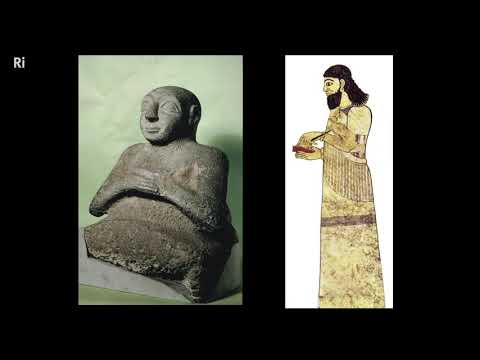 38:55
Cracking Ancient Codes: Cuneiform Writing - with Irving Finkel
2.8M views • 7 years ago
The Royal Institution
Irving Finkel of the British Museum lectures at the Royal Institution on the invention and decipherment of cuneiform writing in Mesopotamia, and why it is so hard to translate.
Topic match · Language & linguistics 3:19
Introduction: The Chemical History of a Candle by Michael Faraday (1/6)
207K views • 10 years ago
engineerguy
Bill Hammack of engineerguy introduces his series on Michael Faraday's lectures on The Chemical History of a Candle. He describes the free companion book and the commentary and caption features that help modern viewers.
Topic match · Everyday physics & science demos 1:36:57
2. Behavioral Evolution
7.8M views • 15 years ago
Stanford
Stanford biologist Robert Sapolsky lectures on the evolution of behavior, including the Prisoner's Dilemma and tit-for-tat strategies in animals. It is part of his Human Behavioral Biology course.
Topic match · Probability & game theory 1:11:48
Math Encounters -- Five Balls, Two Hands: The Patterns of Juggling -- Colin Wright (Presentation)
33K views • 14 years ago
National Museum of Mathematics
Mathematician Colin Wright demonstrates juggling and explains the mathematics of juggling patterns, including notation that led to new throwing patterns. It is a public presentation at the Museum of Mathematics aimed at a general audience.
Topic match · Probability & game theory 2:32:25
OODA Loop & Evolutionary Epistemology of John Boyd by Chuck Spinney
6K views • 5 years ago
52 Living Ideas
Chuck Spinney, a long-time associate of John Boyd, presents Boyd's thinking on the OODA loop and evolutionary epistemology. The talk runs about two and a half hours and includes Q&A.
Topic match · Management, leadership & organizations 9:11
Disruptive Innovation - Clayton Christensen (Part 2)
36K views • 17 years ago
modplanman
Clayton Christensen explains disruptive innovation using the steel industry, showing how mini-mills beat incumbents from the low end. He argues disruption is not about stupid or bad management.
Topic match · Management, leadership & organizations 1:13:22
Sacha Arnoud, Director of Engineering, Waymo - MIT Self-Driving Cars
109K views • 8 years ago
Lex Fridman
Sacha Arnoud, Waymo's Director of Engineering, gives a lecture in MIT's 2018 deep learning for self-driving cars course on the rise of machine learning in autonomous vehicles. It covers how Waymo uses deep learning and how it handles tricky driving situations.
Topic match · Self-driving & autonomous vehicles