zero is initialization
 1:02:47
Secret History of Silicon Valley
491K views • 17 years ago
Computer History Museum
Steve Blank's Computer History Museum lecture argues that Silicon Valley's roots lie in WWII radar and electronic warfare work, Stanford's Fred Terman and Cold War military funding rather than the semiconductor alone.
 59:16
Ep. 1 - Awakening from the Meaning Crisis - Introduction
844K views • 7 years ago
John Vervaeke’s Lectern
The first episode of John Vervaeke's lecture series on the modern meaning crisis, tracing its history through philosophy, cognitive science, religion and psychology. It introduces the series and its themes.
 14:36
Distributed Systems 1.1: Introduction
382K views • 6 years ago
Martin Kleppmann
The first lecture in Martin Kleppmann's 8-lecture distributed systems series from the University of Cambridge undergraduate course. It introduces the subject, and accompanying lecture notes are available.
 1:02:06
Real Analysis, Lecture 1: Constructing the Rational Numbers
613K views • 16 years ago
HarveyMuddCollegeEDU
The first lecture of Francis Su's Harvey Mudd real analysis course, covering the construction of the rational numbers. It begins a full lecture series that follows a standard analysis text.
 1:26:03
Mark Blyth ─ Global Trumpism
492K views • 10 years ago
Watson School of International and Public Affairs
Mark Blyth's 2016 Brown University lecture on global Trumpism, explaining the rise of populism through economics, the decline of Western middle classes and revolt against technocracy.
 5:15
Jordan Peterson - Pareto Distributions
246K views • 9 years ago
Bite-sized Philosophy
A short clip of Jordan Peterson explaining Pareto distributions, using Soviet farm collectivization and the resulting famine as context. It also covers how outcomes concentrate in a few people.
 1:27:14
Mark Blyth - A Brief History of How We Got Here and Why
248K views • 7 years ago
McMaster Humanities
Political economist Mark Blyth gives a lecture tracing two versions of capitalist 'software': the postwar Great Compression era and the neoliberal era from 1980 to 2008. He explains the bug that crashed the first and the design of the second.
 1:37:33
21. Chaos and Reductionism
1.8M views • 15 years ago
Stanford
Robert Sapolsky's Stanford lecture on chaos and reductionism, which he calls one of the hardest of the course. It examines the limits of breaking systems into parts to understand them and introduces chaotic systems.
 59:15
Clayton Christensen: Disruptive innovation
455K views • 13 years ago
Saïd Business School, University of Oxford
Clayton Christensen explains his theory of disruptive innovation at Oxford's Said Business School, using examples from steel, Toyota, Sony, Walmart and Godrej. He applies the theory to why some economies stagnate and others grow.
 1:12:56
Lecture 1A: Overview and Introduction to Lisp
420K views • 7 years ago
MIT OpenCourseWare
The first lecture of MIT's 6.001 (SICP) with Abelson and Sussman, giving an overview of the course and an introduction to Lisp. It argues that computer science is about managing complexity and abstraction, not computers.
 43:11
Who is Yahweh - How a Warrior-Storm God became the God of the Israelites and World Monotheism
3.7M views • 3 years ago
ESOTERICA
An ESOTERICA episode tracing Yahweh from a warrior-storm god near Mt Seir to the god of the Israelites in the Judean highlands. It examines how Yahwism absorbed and contended with Canaanite religion.
 1:18:06
Michael Levin: Anatomical decision-making by cellular collectives
32K views • 5 years ago
Thomas Ouldridge
Michael Levin presents his lab's work on how cellular collectives use bioelectric networks to make anatomical decisions. Topics include pattern memories, regeneration and synthetic living organisms.
 9:11
Disruptive Innovation - Clayton Christensen (Part 2)
36K views • 17 years ago
modplanman
Clayton Christensen explains disruptive innovation using the steel industry, showing how mini-mills beat incumbents from the low end. He argues disruption is not about stupid or bad management.
 57:57
Lecture 1 | Introduction to Convolutional Neural Networks for Visual Recognition
2.9M views • 9 years ago
Stanford University School of Engineering
The first lecture of Stanford's CS231n course on convolutional neural networks for visual recognition. It surveys the history and key challenges of computer vision, from the Cambrian explosion and Hubel and Wiesel to ImageNet.
 1:23:12
The Lighthill debate on Artificial Intelligence: "The general purpose robot is a mirage"
15K views • 8 years ago
Pierre-Yves Oudeyer
The full 1973 BBC Lighthill debate on artificial intelligence, featuring James Lighthill, Donald Michie, Richard Gregory and John McCarthy. It documents the argument that preceded the 1970s AI winter and includes early robot demos.
 15:25
Stephen Krashen on Language Acquisition
1.5M views • 16 years ago
Mark Rounds
A 15-minute clip of linguist Stephen Krashen discussing language acquisition, drawn from the 1980s. It presents his input hypothesis and the distinction between acquisition and learning.
 15:26
Stephen Krashen: Language Acquisition and Comprehensible Input
186K views • 10 years ago
Tarek Hamza
A lecture from the 1980s by linguist Stephen Krashen on how people acquire language. He explains his comprehensible input hypothesis for second-language acquisition.
 1:23:58
Guy Kawasaki: The Top 10 Mistakes of Entrepreneurs
1.4M views • 13 years ago
UC Berkeley Haas
Guy Kawasaki's UC Berkeley Haas talk on the top ten mistakes entrepreneurs make, covering a startup from inception to exit.
 1:00:26
Colossus - The Greatest Secret in the History of Computing
1M views • 6 years ago
The Centre for Computing History
Chris Shore of the Centre for Computing History explains how Colossus was built, how it worked, and how it affected the course of World War II. It is an hour-long museum lecture on the codebreaking computer.
 1:30:50
Lecture 7: Introduction to Galois Fields for the AES by Christof Paar
278K views • 12 years ago
Introduction to Cryptography by Christof Paar
Christof Paar's university lecture introducing Galois fields and finite-field arithmetic as used in AES. It covers the mathematics behind the AES S-box.
 1:57:00
Origins of the Apple Human Interface
13K views • 7 years ago
Computer History Museum
A 1997 Computer History Museum lecture in which Larry Tesler and Chris Espinosa recount how the Apple human interface was born, from the Lisa through the Macintosh. It covers design decisions such as discoverability and the standard editing keys.
 54:56
Justice: What's The Right Thing To Do? Episode 01 "THE MORAL SIDE OF MURDER"
42.7M views • 17 years ago
Harvard University
The first episode of Michael Sandel's Harvard course on moral reasoning, opening with the trolley problem and the choice between killing one to save five. Sandel draws out student arguments and introduces utilitarian and other approaches to justice.
 1:15:47
Richard Feynman Computer Science Lecture - Hardware, Software and Heuristics
978K views • 14 years ago
Muon Ray
A lecture by Richard Feynman on how computers work, using the analogy of a filing clerk that becomes progressively dumber and faster. It also covers heuristics and how computers handle data and solve problems in finite time.
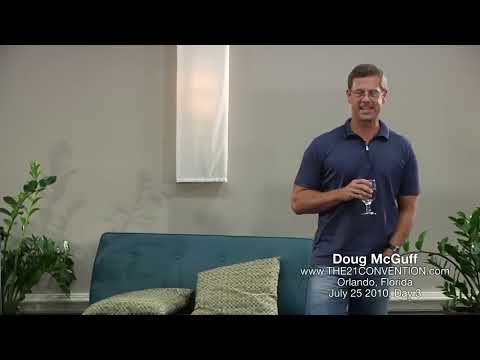 1:38:06
Paleo Diet & Strength Training Biochemistry | Doug McGuff M.D. | Full Length HD
655K views • 15 years ago
21 Studios
Doug McGuff presents the biochemistry behind high-intensity strength training and the paleo diet, including how the body stores and burns fat. It is a roughly hour-and-a-half full-length lecture.
 3:19
Introduction: The Chemical History of a Candle by Michael Faraday (1/6)
207K views • 10 years ago
engineerguy
Bill Hammack of engineerguy introduces his series on Michael Faraday's lectures on The Chemical History of a Candle. He describes the free companion book and the commentary and caption features that help modern viewers.
 1:14:16
Why is Ukraine the West's Fault? Featuring John Mearsheimer
30.4M views • 11 years ago
The University of Chicago
University of Chicago lecture in which John Mearsheimer argues the West, through NATO and EU expansion, bears primary responsibility for the Ukraine crisis. He also discusses how to end it and its consequences.
 58:30
What if Current Foundations of Mathematics are Inconsistent? | Vladimir Voevodsky
57K views • 14 years ago
Institute for Advanced Study
Vladimir Voevodsky's IAS lecture starts from Godel's second incompleteness theorem to explore whether first-order arithmetic could be inconsistent. It motivates his vision of univalent foundations and computer-checked proofs.
 23:07
Enterprise Sales | Startup School
222K views • 2 years ago
Y Combinator
Y Combinator partner Pete Koomen, who led Optimizely to $100M ARR, walks through the enterprise sales funnel. Chapters cover prospecting, outreach, qualification, pricing, closing, procurement and implementation.
 1:12:30
"Understanding Burnout," Prof. Christina Maslach (U.C. Berkeley)
33K views • 11 years ago
Thriving In Science
A Berkeley lecture by psychologist Christina Maslach, a leading burnout researcher, on what burnout is and what causes it. It covers common misunderstandings and the job and workplace factors involved.
 15:13
Free Energy Principle — Karl Friston
171K views • 9 years ago
Serious Science
Neuroscientist Karl Friston gives a 15-minute talk on the free energy principle, covering Markov blankets, Bayesian model evidence and global brain theories.
 55:50
Dan Britt - Orbits and Ice Ages: The History of Climate
883K views • 14 years ago
TheIHMC
Dan Britt lectures on the history of climate, covering orbital cycles, ice ages and conditions millions of years ago. It frames current climate debate with deep-time context.
 1:09:53
Distinguished Lecturer Series: Building Science - Adventures in Building Science
185K views • 16 years ago
Berkeley Lab
A Berkeley Lab Distinguished Lecturer talk on building science, with an expert covering control layers, insulation and vapour barrier placement, and how buildings fail. The delivery is humorous.
 1:16:23
The Psychology of Human Misjudgement - Charlie Munger Full Speech
142K views • 6 years ago
Vikas Ojha
A recording of Charlie Munger's 1995 Harvard speech on the psychology of human misjudgment. He walks through a list of cognitive biases such as incentives, social proof, and overoptimism.
 40:29
What is the Ultraviolet Catastrophe?
2.7M views • 6 years ago
Physics Explained
A detailed 40-minute explanation of the ultraviolet catastrophe, covering Rayleigh and Jeans' classical treatment of blackbody radiation and Planck's quantum hypothesis. It follows the Eisberg and Resnick textbook treatment.
 10:00
SICP / What is "Computer Science" ?
131K views • 20 years ago
LarryNorman
An excerpt from Hal Abelson's opening SICP lecture introducing computer science and contrasting declarative and imperative knowledge. He argues that computer science is not really a science and is more like magic or engineering of ideas.
 1:42:09
Crockford on JavaScript - Volume 1: The Early Years
252K views • 15 years ago
YUI Library
Douglas Crockford's first Yahoo lecture puts JavaScript in historical context. He traces the language's structure and quirks back through the early decades of computer science and programming language history.
 5:04
30 Essential Ideas you should know about ADHD, 1A Intro, Chronic Developmental Disability
792K views • 12 years ago
Adhd Videos
The first clip from Russell Barkley's 30 Essential Ideas about ADHD series, introducing ADHD as a chronic developmental disability. It is part of a lecture series on the disorder by a leading ADHD researcher.
 1:25:34
Democracy at Work: Curing Capitalism | Richard Wolff | Talks at Google
3.3M views • 9 years ago
Talks at Google
Economist Richard Wolff's Talks at Google lecture on his book Democracy at Work. He critiques capitalism and argues for worker-run cooperatives as a path to a more democratic economy.
 50:28
Competition is for Losers with Peter Thiel (How to Start a Startup 2014: 5)
2.5M views • 9 years ago
Y Combinator
Peter Thiel's lecture from the How to Start a Startup course on business strategy and monopoly theory, arguing that competition destroys profits and that startups should aim to build monopolies. It covers the ideas of Zero to One.
 56:11
A Brief History of Quantum Mechanics - with Sean Carroll
4.7M views • 6 years ago
The Royal Institution
Sean Carroll gives a Royal Institution talk tracing the history of quantum mechanics from Einstein and Bohr to today. He covers the Copenhagen interpretation and the many worlds interpretation.