zero is initialization
 59:58
CppCon 2018: Nicolai Josuttis “The Nightmare of Initialization in C++”
79K views • 8 years ago
CppCon
Nicolai Josuttis's CppCon 2018 talk walks through the many forms of initialization in C++, including uniform initialization, and how their rules and effects differ. He argues the situation is confusing enough that nobody can say what to teach beginners.
 1:22:40
29C3 Panel: Jesselyn Radack, Thomas Drake, William Binney on whistleblowing and surveillance
35K views • 13 years ago
thisdayinwikileaks
A 29C3 panel with whistleblowers Jesselyn Radack, Thomas Drake and William Binney. They talk about what happens when exposing secret government power becomes a crime, and about surveillance abuses.
 32:08
Tuesday @ 1130 ISA Shootout – a Comparison of RISC V, ARM, and x86 Chris Celio, UC Berkeley V2
50K views • 10 years ago
RISC-V International
Chris Celio of UC Berkeley compares the RISC-V, ARM and x86 instruction sets, with quantitative data on instruction counts and code density. It examines how the compressed extension fares against Thumb and x86.
 46:24
Chris Crawford Dragon Speech "I Had a Dream"
16K views • 9 years ago
Chris Crawford
Chris Crawford's 'Dragon Speech' from the first Game Developers Conference, in which he reflects on his dream for game design as an art form. This is a cleaned-up version of the old recording.
 23:32
Industrial Strength High Performance RISC V Processors For Energy Efficient Computing
8K views • 8 years ago
RISC-V International
David Ditzel of Esperanto Technologies presents their massively parallel, energy-efficient RISC-V processors at the 7th RISC-V Workshop in 2017. It covers the high-performance many-core design aimed at machine learning.
 2:00:59
Is the Universe a Simulation? | 2016 Isaac Asimov Memorial Debate
5.9M views • 10 years ago
American Museum of Natural History
The 2016 Isaac Asimov Memorial Debate, moderated by Neil deGrasse Tyson, in which a panel of physicists and philosophers debates whether the universe is a simulation. Participants include David Chalmers, Zohreh Davoudi and James Gates.
 47:52
Finding the Missing Memristor - R. Stanley Williams
133K views • 16 years ago
The Qualcomm Institute
R. Stanley Williams of HP Labs gives a keynote on the memristor, covering the physics, crossbar computation, and potential for memory and new computer architectures.
 1:04:04
LISA11 - Fork Yeah! The Rise and Development of illumos
310K views • 14 years ago
USENIX
Bryan Cantrill's LISA11 talk on how illumos arose after Oracle closed OpenSolaris. It covers the history of Sun, ZFS, DTrace and Zones, and the diaspora of kernel engineers, with a famous rant about Oracle and Larry Ellison.
 57:38
Clasp: Common Lisp using LLVM and C++ for Molecular Metaprogramming
52K views • 11 years ago
Google TechTalks
Christian Schafmeister's Google Tech Talk on designing spiroligomer molecules and building Clasp, a Common Lisp on LLVM that interoperates with C++, to program molecular design. It covers the chemistry, automatic differentiation for force fields, and how the compiler is built.
 2:27:34
Casey Muratori – The Big OOPs: Anatomy of a Thirty-five-year Mistake – BSC 2025
926K views • 1 year ago
Better Software Conference
Casey Muratori's two-hour talk tracing the history of object-oriented programming back to the 1960s and examining how its ideas, and later entity component systems, came about. It is followed by a Q&A.
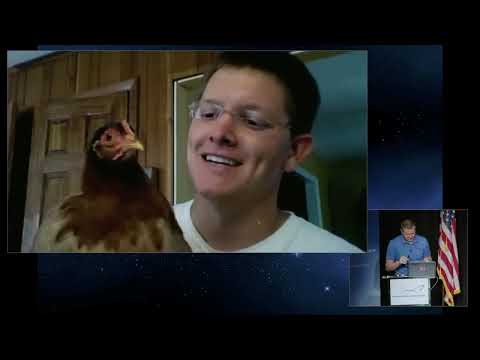 1:05:20
I Was SCARED To Say This To NASA... (But I said it anyway) - Smarter Every Day 293
5M views • 2 years ago
SmarterEveryDay
Destin Sandlin of Smarter Every Day gives a talk to an aerospace audience, comparing how Apollo was engineered and managed with NASA's Artemis program. He raises concerns about unresolved details, the number of launches and in-orbit fuel transfer needed to reach the Moon, and the loss of institutional knowledge.
 41:06
"Unison: a new distributed programming language" by Paul Chiusano
45K views • 7 years ago
Strange Loop Conference
Paul Chiusano's Strange Loop 2019 talk introduces Unison, an open-source functional language for distributed, elastic systems. It covers content-addressed code identified by hashes of the syntax tree, a codebase manager, and algebraic effects called abilities.
 30:12
Casey Muratori | Smart-Pointers, RAII, ZII? Becoming an N+2 programmer
162K views • 2 years ago
xDahl
Casey Muratori argues against smart pointers and RAII, advocating grouped-element thinking, zero-is-initialization and stubs as better ways to structure memory and handle errors.
 35:24
The Unreasonable Effectiveness of Multiple Dispatch | Stefan Karpinski | JuliaCon 2019
79K views • 7 years ago
The Julia Programming Language
Julia co-creator Stefan Karpinski explains why multiple dispatch makes Julia code and types reusable across packages with so little friction. He covers sharing basic types and sharing generic algorithms.
 48:39
4 2 1 Christopher Domas The future of RE Dynamic Binary Visualization
59K views • 14 years ago
Adrian Crenshaw
Christopher Domas presents his Cantor Dust tool at Derbycon 2012, a 3D visual approach to reverse engineering binaries by visualizing their structure dynamically.
 56:33
The Secret History of Silicon Valley
258K views • 18 years ago
Google TechTalks
Steve Blank tells how World War II, Stanford's Frederick Terman and military and intelligence agencies shaped the rise of Silicon Valley. The talk centers on the Cold War electronic warfare and signals intelligence work that seeded the region's tech industry.
 40:20
"Shen: A Sufficiently Advanced Lisp" by Aditya Siram
26K views • 12 years ago
Strange Loop Conference
Aditya Siram introduces Shen, a small hosted Lisp with macros, a built-in Prolog and an optional type system. The talk demos a full web app moving between functional, logic and imperative styles, including turning JSON into a type with macros.
 37:07
Who Destroyed Three Mile Island? - Nickolas Means | The Lead Developer Austin 2018
762K views • 8 years ago
LeadDev
Nickolas Means recounts the 1979 Three Mile Island accident minute by minute, from the control rod insertion to the operator's decision to switch off emergency cooling. He argues that finding systemic causes is more useful than blaming individuals.
 50:23
Old Is the New New • Kevlin Henney • GOTO 2018
125K views • 8 years ago
GOTO Conferences
Kevlin Henney's GOTO 2018 talk argues that much of what looks new in software is a recycling of concepts with long histories. It draws on history to show the slow, steady current beneath constant churn in frameworks and trends.
 34:52
Liberating Distributed Consensus - Heidi Howard
7K views • 7 years ago
Reactive Summit
Heidi Howard's Reactive Summit 2018 talk on generalizing Paxos by weakening its original requirements. She shows Paxos is one point on a broad spectrum of consensus approaches.
 16:36
Mike Mullane - Normalisation of deviance - IAFF - Part 1
179K views • 11 years ago
Stuart Walker
Astronaut Mike Mullane explains normalisation of deviance, where teams gradually come to accept violations of their own safety standards. He uses the Challenger shuttle disaster as the main case, drawing on NASA's ignored warnings before the launch. It is the first part of a talk given to a fire-fighters' association.
 45:33
"A Political History of X" - Keith Packard (LCA 2020)
52K views • 6 years ago
linux.conf.au
Keith Packard traces the 35-year history of the X Window System at linux.conf.au 2020. He uses X to examine licensing, corporate interests and community dynamics in free software, including Unix workstation vendors and Stallman's influence.
 31:23
Concurrency is not Parallelism by Rob Pike
191K views • 10 years ago
gnbitcom
Rob Pike's Go talk distinguishing concurrency, the structuring of independent processes, from parallelism, their simultaneous execution. It uses Go channels and goroutines to illustrate.
 25:58
Germany: Low Crime, Clean Prisons, Lessons for America | Jeff Rosen | TEDxMountainViewHighSchool
3.1M views • 9 years ago
TEDx Talks
Santa Clara County District Attorney Jeff Rosen explains in a TEDx talk why Germany has lower crime and far fewer prisoners than the US, and what American criminal justice could learn from German prisons.
 1:12:10
Practical Common Lisp
98K views • 19 years ago
Google TechTalks
Peter Seibel's 2006 Google TechTalk on Practical Common Lisp, framed by the Sapir-Whorf hypothesis and Paul Graham's Blub paradox. It shows Lisp features such as condition restarts and its generic-function object system.
 1:03:22
REcon 2013 - The Future of RE : Dynamic Binary Visualization (Christopher Domas)
9K views • 12 years ago
Sébastien Duquette
Christopher Domas's REcon 2013 talk on dynamic binary visualization for reverse engineering. He shows how rendering binary data as interactive visual maps and trigraphs reveals structure that hex dumps hide, leading to his Cantor.dust tool.
 38:25
"The Clean Code Talks -- Inheritance, Polymorphism, & Testing"
438K views • 17 years ago
Google TechTalks
Misko Hevery's Clean Code Talk shows how to use object-oriented techniques such as polymorphism to remove repeated if and switch statements. The result is code that is easier to test, understand and maintain.
 40:45
Jake Vanderplas - Statistics for Hackers - PyCon 2016.mp4
93K views • 10 years ago
PyCon 2016
Jake Vanderplas's PyCon 2016 talk shows how sampling-based methods such as simulation, shuffling and bootstrapping make statistics intuitive. His pitch is that if you can write a for-loop, you can do statistics.
 24:28
Ichthyology: Phishing as a Science
38K views • 9 years ago
Black Hat
Karla Burnett presents real phishing campaigns run against a Bay Area tech company, including conversion rates and how existing protections were bypassed. She argues for evidence-based techniques to prevent credential phishing, not just mitigate it.
 1:00:16
Clasp: Common Lisp using LLVM and C++ for Designing Molecules
9K views • 11 years ago
Google TechTalks
Christian Schafmeister's Google Tech Talk on Clasp and CANDO, a Common Lisp implementation on LLVM and C++ used to design molecules, including energy minimization and force-field calculations.
 7:00
David Deutsch on Optimism
46K views • 10 years ago
Royal Society of Arts
An excerpt from an RSA event in which physicist David Deutsch makes the case for optimism as a driver of progress in the 21st century. It is a short highlight of a longer discussion.
 39:40
"Type-Driven Program Synthesis" by Nadia Polikarpova
15K views • 8 years ago
Strange Loop Conference
Nadia Polikarpova's Strange Loop talk on program synthesis driven by refinement types, as in Synquid. It shows how rich type specifications can be turned into verified, executable code.
 59:51
01 The History of Standard ML: Ideas, Principles, Culture
7K views • 11 years ago
ICFP Video
An ICFP 2015 keynote on the history of Standard ML, covering its ideas, principles and culture. It traces ML from Strachey, Landin and Milner through SML's development and its interplay with OCaml.
 1:18:42
Web Development in Emacs, Common Lisp and Clojurescript - Emacs SG
14K views • 10 years ago
Engineers.SG
Elias Martenson presents his Emacs-based workflow for building a web application (the Potato chat platform) with Common Lisp on the backend and ClojureScript on the frontend. He demonstrates SLIME, Paredit, CIDER and debugger-driven interactive development. The talk is 79 minutes and was given at Emacs SG.
 1:14:51
Lisp at the Frontier of Computation, by Robert Smith at Rigetti Computing
16K views • 8 years ago
Arthur Gleckler
Robert Smith of Rigetti Computing talks at a Bay Area Lisp and Scheme meetup about using Common Lisp for quantum computing. He covers the technical, sociological and psychological sides of working across disciplines.
 1:21:05
Where Does Growth Come From? | Clayton Christensen | Talks at Google
802K views • 10 years ago
Talks at Google
Clayton Christensen speaks at Google on where growth comes from, covering disruption, market-creating versus efficiency innovation, and jobs to be done. He also touches on measuring your life.
 1:03:34
Tony Seba: Clean Disruption - Energy & Transportation
802K views • 9 years ago
Colorado Renewable Energy Society (CRES)
Stanford futurist Tony Seba argues that electric vehicles, battery storage, solar and autonomous vehicles form a 10x exponential disruption that will make fossil fuels obsolete within about a decade. It draws on his Clean Disruption book.
 14:28
Can we build AI without losing control over it? | Sam Harris
3.9M views • 10 years ago
TED
Sam Harris argues in a TED talk that we will build superhuman AI and have not grappled with the risk of creating something that may treat us the way we treat ants. He makes a logical case for taking AI risk seriously.
 47:51
Kirk McKusick - A Narrative History of BSD
17K views • 11 years ago
iX
Kirk McKusick gives a narrative history of the Berkeley Software Distributions at MeetBSD California. He covers how BSD originated and evolved, including the origin of the networking releases.
 46:15
AWS re:Invent 2014 | (SPOT302) Under the Covers of AWS: Its Core Distributed Systems
10K views • 11 years ago
Amazon Web Services
An AWS re:Invent 2014 talk on the core distributed systems primitives behind AWS and Amazon.com, such as consensus, key-value stores and transactional logging. It describes how AWS builds large services from a few common building blocks.