Ben Kreuter RWC 2017
Real World CryptoCited 4× on HN, 2017-2018
1K views · 9 years ago · talk · dated
A Real World Crypto 2017 talk by a Google engineer on using private set intersection to match ad views with in-store purchases. It describes privacy-preserving matching that avoids exposing personal transactions.
Cited in threads about Google's purchase tracking as the technical source for how the matching might work.
 24:20
Satoshi Has No Clothes: Failures in On-Chain Privacy by Ian Miers (Devcon4)
Ethereum Foundation
5K views • 7 years ago
 1:06:36
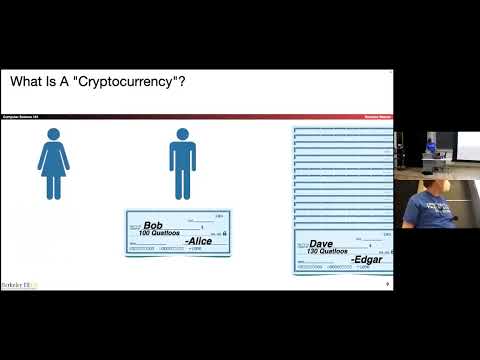
Computer Security 161 Cryptocurrency Lecture
Nicholas C Weaver
128K views • 4 years ago
 29:12
DEF CON 26 CRYPTO AND PRIVACY VILLAGE - Scott Arciszewski - No Way JOSE! Designing Cryptography
DEFCONConference
7K views • 7 years ago
 4:30
Matthew Driver “Trust Is A Critical Component” | Perspectives | Channel NewsAsia
CNA Insider
27K views • 11 years ago
 1:32:08
Theory and Practice of Cryptography
Google TechTalks
73K views • 18 years ago
 5:24
Diffie-Hellman Key Exchange
Art of the Problem
547K views • 14 years ago
 12:24
Elliptic Curve Back Door - Computerphile
Computerphile
554K views • 8 years ago
 8:38
Diffie-Hellman Key Exchange
Art of the Problem
938K views • 14 years ago
 48:02
BlackHat USA 2011: SSL And The Future Of Authenticity
Christiaan008
95K views • 15 years ago
 54:35
Cybersecurity as Realpolitik by Dan Geer presented at Black Hat USA 2014
Black Hat
65K views • 12 years ago
 12:32
Protecting Privacy with MATH (Collab with the Census)
minutephysics
451K views • 7 years ago
 38:22
Kim Nilsson - Cracking MtGox
TheBitcoinArmy
47K views • 9 years ago
 24:28
Ichthyology: Phishing as a Science
Black Hat
38K views • 9 years ago
 42:50
DEF CON 18 - Moxie Marlinspike - Changing Threats To Privacy: From TIA to Google
DEFCONConference
7K views • 13 years ago
 46:22
DEF CON 19 - Moxie Marlinspike - SSL And The Future Of Authenticity
DEFCONConference
11K views • 13 years ago
 17:46
Wiretapping the Secret Service can be easy and fun | Bryan Seely | TEDxKirkland
TEDx Talks
4.3M views • 11 years ago
 40:21
Bitcoin - Unmasking Satoshi Nakamoto
Barely Sociable
1.6M views • 6 years ago
 28:19
Bitcoin 2012 London: Mike Hearn
Independent POV
79K views • 14 years ago
 1:10:01
35C3 - The year in post-quantum crypto
media.ccc.de
8K views • 7 years ago
 18:01
Encryption: Last Week Tonight with John Oliver (HBO)
LastWeekTonight
14.3M views • 10 years ago
4 comments from Hacker News
> Google buys your credit card purchase data. A more accurate explanation of the scare quote: link > IIRC, this was announced as part of a program that uses double-blinded crypto that allows google to perform matching against this data in aggregate (Set intersection knowledge), but not individually identity of what a given user purchased, at the same time preventing the merchants from learning the identities of individuals either. > According to what they presented at a crypto conference, they went to great pains to avoid capturing personally identifiable transactions. The overall strategy is that Google Knows = Set A = (all ads shown for user X at Merchant Y) Merchant/Credit Card Proccessor Knows = Set B = (all $$$ paid by User X at Merchant Y), and that it is possible to cryptographically compute sum($$$ of A intersect B) without either side learning Set(User X). > Now whether you believe in the security of the algorithm and whether there are side channel leaks or attacks is another issue. > Edit: link > About 10 minutes in ▶ this video
IIRC, this was announced as part of a program that uses double-blinded crypto that allows google to perform matching against this data in aggregate (Set intersection knowledge), but not individually identity of what a given user purchased, at the same time preventing the merchants from learning the identities of individuals either. According to what they presented at a crypto conference, they went to great pains to avoid capturing personally identifiable transactions. The overall strategy is that Google Knows = Set A = (all ads shown for user X at Merchant Y) Merchant/Credit Card Proccessor Knows = Set B = (all $$$ paid by User X at Merchant Y), and that it is possible to cryptographically compute sum($$$ of A intersect B) without either side learning Set(User X). Now whether you believe in the security of the algorithm and whether there are side channel leaks or attacks is another issue. Edit: link About 10 minutes in ▶ this video
It's actually not given to Google in a user identifiable way. I am not privy to the details, but an overview was presented at a crypto conference: ▶ this video It looks to me like a form of homomorphic encryption where both the aggregate consumer transactions (people bought X at merchant M), and the aggregate Google ad information (people saw ad for X at merchant M) are encrypted and the set intersection is computed on the ciphertext revealing only the aggregate number of purchases, not the individuals. Now granted, there could be a security hole in this scheme as with any crypto-protocol, so it does need peer review, but the design, as stated in that YouTube presentation, is not to reveal to Google personal purchasing information, nor reveal to merchants, personal profile information. No personal financial data or purchasing information is supposedly transmitted. The problem with this kind of technology is that it is really difficult to explain to the public, and easily demagogued.
A Googler gave a talk at Real World Crypto in January describing a system that might back this. The relevant part of the talk starts around the 10 minute mark: ▶ this video In short, they're able to compute the intersection of the set of users who have viewed an ad with the set of people who purchased a product in a store, without either party disclosing their side of the set.