chain react
 14:34
Blockchains Are a Bad Idea (James Mickens)
68K views • 8 years ago
HBS Digital Initiative
James Mickens of Harvard gives a funny lecture at HBS's Future Assembly arguing that blockchains are a very bad idea. He covers their trust, legal and practical shortcomings for real-world problems.
 20:38
Modular Micro-Reactors – The Future of Nuclear Energy?
169K views • 6 years ago
Illinois EnergyProf
Professor Ruzic explains modular micro-reactors: self-contained nuclear units with passive safety whose fuel lasts about 20 years. He covers their use for process and district heat and where they can compete with diesel generation.
 1:02:04
1. Introduction for 15.S12 Blockchain and Money, Fall 2018
7.2M views • 6 years ago
MIT OpenCourseWare
The opening lecture of MIT's Blockchain and Money course taught by Gary Gensler, covering the course plan, the history of failed digital currencies, cryptography and what a blockchain is.
 7:45
Electron transport chain
3.7M views • 9 years ago
Harvard Online
A short Harvard Online animated lesson on how the mitochondrial electron transport chain works. It shows proton pumping and the machinery that drives ATP synthesis.
 1:16:56
International Colloquia #26: Fusion Reactor First Wall Cooling
10K views • 5 years ago
MIT MechE Lectures & Colloquia
An MIT colloquium by Dennis Whyte on power exhaust and first-wall cooling in fusion reactors, including recent innovations and the SPARC and ARC designs.
 23:10
Economics of Nuclear Reactor
921K views • 7 years ago
Illinois EnergyProf
A professor from Illinois compares the cost of building, fueling and operating a nuclear plant against a natural gas plant, using visual charts. It shows how construction time and interest rates dominate, when the investment pays off and when costs cross over.
 54:24
26. Chernobyl — How It Happened
3.6M views • 7 years ago
MIT OpenCourseWare
MIT 22.01 lecture by Michael Short explaining the Chernobyl accident technically, including RBMK reactor positive feedback, xenon poisoning and the cascade of human errors during the test.
 1:06:36
Computer Security 161 Cryptocurrency Lecture
128K views • 4 years ago
Nicholas C Weaver
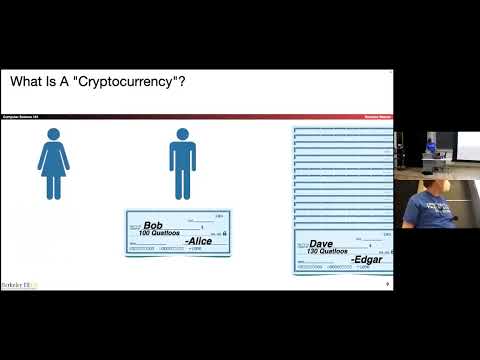
A UC Berkeley CS 161 lecture by Nicholas Weaver on cryptocurrency and blockchains, covering how they work and the case against them. It is aimed at a computer security course audience.
 35:50
Dispelling the Myths of Nuclear Energy (Live Lecture)
342K views • 5 years ago
Illinois EnergyProf
A lecture for high school seniors and college freshmen making the case for nuclear power and answering common objections. It is an overview of the channel's more detailed videos on each topic.
 1:16:17
Terence Tao: The Cosmic Distance Ladder, UCLA
203K views • 16 years ago
UCLA
Terence Tao's AMS Einstein Public Lecture at UCLA on the cosmic distance ladder, the chain of methods astronomers use to measure distances from the Earth to distant galaxies. It is aimed at a general audience.
 2:02:18
The Mill CPU Architecture – The Compiler (10 of 13)
12K views • 11 years ago
Mill Computing, Inc.
A long Mill Computing lecture on the Mill CPU's compiler toolchain, covering the specializer that targets family members, scheduling and latency passes, and the belt. It explains how the compiler handles a wide-issue, exposed-pipeline design.