computer hardware
 2:02:53
Oxide and Friends 7/3/2023 -- Shipping the first Oxide rack: Your questions answered!
4K views • 3 years ago
Oxide Computer Company
A two-hour Oxide and Friends session answering questions after shipping the first Oxide rack. Topics include making hardware as a startup and why Oxide chose illumos.
 1:21:22
Light Years Ahead | The 1969 Apollo Guidance Computer
2.8M views • 6 years ago
TNMoC
Robert Wills of TNMoC explains the Apollo Guidance Computer hardware and software, then walks through the Apollo 11 landing procedure step by step, including the 1202 alarms.
 2:58:24
The Death of Affordable Computing | Tariffs Impact & Investigation
2.3M views • 1 year ago
Gamers Nexus
A long Gamers Nexus investigation into how volatile US tariffs affect the computer hardware industry. It interviews manufacturers and sellers about costs, margins and why moving production to the US is hard.
 21:20
Cracking Enigma in 2021 - Computerphile
2.9M views • 5 years ago
Computerphile
Dr Mike Pound of Computerphile shows how a modern laptop can crack Enigma, using a ciphertext-only attack based on an older paper. He compares it with the tooling in CrypTool.
 1:06:20
USENIX ATC '21/OSDI '21 Joint Keynote Address-It's Time for Operating Systems to Rediscover Hardware
46K views • 5 years ago
USENIX
Timothy Roscoe of ETH Zurich delivers the joint USENIX ATC/OSDI 2021 keynote arguing that operating systems must reckon with modern hardware, which is a heterogeneous collection of processors, firmware and coprocessors rather than a simple machine. It shows how much runs below and beside Linux.
 6:55:03
50TH ANNIVERSARY OF THE COMPUTER SCIENCE DEPARTMENT AT THE UNIVERSITY OF UTAH
4K views • 3 years ago
University of Utah
A full-day recording of the University of Utah computer science department's 50th anniversary event with panels, keynotes and talks by alumni and pioneers. It includes Ivan Sutherland's presentation on single flux quantum electronics.
 49:03
Apollo Core Rope Memory (Apollo Guidance Computer Part 30)
759K views • 3 years ago
CuriousMarc
CuriousMarc's Apollo Guidance Computer restoration series looks at core rope memory, the ROM that held the Moon landing programs. Mike Stewart builds a custom reader to recover lost AGC programs.
 17:40
3D Gaussian Splatting! - Computerphile
273K views • 2 years ago
Computerphile
A Computerphile video in which Dr Mike Pound and PhD student Lewis Stuart explain 3D Gaussian splatting, a quick technique that turns photos of a scene into a 3D model without much compute. It includes a demo and compares the approach to NeRFs.
 13:52
Ch(e)at GPT? - Computerphile
617K views • 3 years ago
Computerphile
Computerphile video in which Mike Pound explains a University of Maryland paper on watermarking LLM output. The method biases token choices so generated text can later be detected statistically.
 25:57
GPT3: An Even Bigger Language Model - Computerphile
446K views • 6 years ago
Computerphile
Rob Miles discusses GPT-3 on Computerphile, covering how scaling parameters kept improving results over GPT-2 and how the model nearly learned arithmetic without anyone knowing exactly how.
 21:42
Future Computers Will Be Radically Different (Analog Computing)
13.2M views • 4 years ago
Veritasium
Veritasium explains why analog computing may suit AI workloads, covering old analog computers, The Analog Thing and Mythic's analog chips that use flash memory for neural network inference. It argues digital hardware is hitting limits.
 20:13
The Most Powerful Computers You've Never Heard Of
13.7M views • 4 years ago
Veritasium
Veritasium traces analog computers from the Antikythera mechanism and Kelvin's tide-predicting machines to fire control and modern analog approaches. It explains how these machines computed continuously rather than digitally.
 35:33
How does Computer Memory Work? 💻🛠
5.5M views • 4 years ago
Branch Education
A 36-minute animated deep dive from Branch Education into how DRAM works. It shows how memory connects to the CPU and how billions of bits are stored in nanoscale capacitor cells. It also covers why DRAM sits between SSDs and the processor.
 32:18
How I hacked a hardware crypto wallet and recovered $2 million
10M views • 4 years ago
Joe Grand
Joe Grand recounts being hired to hack a Trezor One hardware wallet and recover $2 million of cryptocurrency. He describes three months of experimentation, voltage glitching, failures and high-stakes attempts with only one chance to get it right.
 2:31:30
Bryan Johnson: Kernel Brain-Computer Interfaces | Lex Fridman Podcast #186
492K views • 5 years ago
Lex Fridman
Lex Fridman interviews Bryan Johnson, founder of Kernel and previously Braintree, about brain-computer interfaces and Kernel's non-invasive brain monitoring hardware. It covers what the devices can do today and the company's plans.
 28:43
Why build an entire computer on breadboards?
3.4M views • 6 years ago
Ben Eater
Ben Eater explains why he builds computers on breadboards, including testing their signal behavior on an oscilloscope. It is a companion to his 6502 breadboard computer series.
 1:10:58
Trends in Deep Learning Hardware: Bill Dally (NVIDIA)
32K views • 2 years ago
Paul G. Allen School
Bill Dally of NVIDIA gives a University of Washington lecture on trends in deep learning hardware. It covers numeric formats, specialized instructions, energy per operation and co-design of hardware and software.
 1:26:02
Stanford Seminar - The Soul of a New Machine: Rethinking the Computer
76K views • 6 years ago
Stanford Online
Bryan Cantrill of Oxide Computer Company gives a Stanford EE380 talk on rethinking the server. He argues that hyperscaler-style rack-scale machines with open firmware, RISC-V and Rust should be available to everyone, not just the giants.
 56:58
The KGB, The Computer and Me - The Cuckoo’s Egg Story
15K views • 3 years ago
Australian Phoenix CyberOps
A 57-minute account of Clifford Stoll's tracking of a KGB-linked hacker through Lawrence Berkeley Lab computers in 1986, the story of The Cuckoo's Egg. It covers the FBI and Chaos Computer Club involvement.
 1:05:28
HC2023-K2: Hardware for Deep Learning
15K views • 3 years ago
hotchipsvideos
Bill Dally of NVIDIA gives a Hot Chips 2023 keynote on the challenges of building hardware for deep learning. He traces how GPUs have been adapted for machine learning, especially training.
 5:51
Susan Kare explains Macintosh UI ergonomics on the Computer Chronicles (1984)
51K views • 6 years ago
erg0steur
A 1984 Computer Chronicles segment in which Susan Kare explains the ergonomics and interface design of the original Macintosh. She introduces the interface step by step for newcomers.
 3:28:54
COLLAPSE of Personal Computing | Investigation Into the Destruction of Ownership
3.2M views • 5 months ago
Gamers Nexus
A roughly 3.5-hour Gamers Nexus investigation into rising PC component prices, driven largely by AI data-center demand for memory and other hardware. It draws on interviews with industry figures to argue that personal computing and ownership are being eroded.
 12:24
Color Maximite 2 - ARM CPU that runs BASIC!
453K views • 6 years ago
The 8-Bit Guy
The 8-Bit Guy reviews the Color Maximite 2, a modern ARM-based computer that boots straight into BASIC. He shows what it can do as a retro-style machine.
 14:05
Userbenchmark - the April Fools that never ends
2.5M views • 5 years ago
2kliksphilip
2kliksphilip examines UserBenchmark, a hardware comparison site known for strongly biased, pro-Intel writing. The video explains the site's credibility problems and points viewers to better sources for CPU and GPU information.
 18:57
Why the Soviet Computer Failed
4.2M views • 4 years ago
Asianometry
An Asianometry explainer on why the Soviet Union, once a leading computing power, fell far behind the US in computers by the 1980s. It traces the gap from the 1960s onward despite strong state support for science.
 14:03
The Computer Designed To Die In Microseconds
408K views • 3 years ago
Scott Manley
Scott Manley tells the story of a computerized telemetry system built to sit at the heart of a nuclear test device in place of the plutonium pit, designed to transmit data in the microseconds before it was destroyed.
 1:38
"Computer Says No..." | Little Britain | Lucas & Walliams
958K views • 4 years ago
Matt Lucas and David Walliams
The Little Britain sketch in which call-center worker Carol types into her computer and replies 'computer says no' to every request.
 36:02
ChatGPT with Rob Miles - Computerphile
517K views • 3 years ago
Computerphile
Computerphile interviews AI safety researcher Rob Miles about ChatGPT: how it was trained with human feedback, why it tends to produce confident nonsense, and where it may or may not be dangerous.
 23:04
The Computer-free Automation of a Jukebox (Electromechanics)
1.3M views • 6 years ago
Technology Connections
Technology Connections takes apart a 1970 Wurlitzer 3400 jukebox to show how electromechanical relays and switches automated its behavior without a computer.
 10:12
Area 5150 by CRTC & Hornet (Party Version) / IBM PC+CGA Demo, Hardware Capture
69K views • 4 years ago
x86VileR
Area 5150 is a demoscene production for the original 4.77MHz IBM PC with CGA graphics and PC speaker. This is the Evoke 2022 party version, captured from real hardware, and it won the Alternative Demo compo.
 31:07
How I Almost Ruined MrBeast Squid Game
10.2M views • 4 years ago
William Osman
William Osman describes helping build parts of the MrBeast Squid Game event, including hacking together hundreds of wifi-controlled blood packs in about three weeks. He covers the chaos and near-failures along the way.
 23:03
The Universe is Hostile to Computers
26.5M views • 5 years ago
Veritasium
Veritasium explains how cosmic rays and other particles flip bits in computer memory, with examples including a Belgian election count error, plane incidents and game glitches. It is inspired by a RadioLab episode on bit flips.
 49:04
Polyend Tracker // Review and Full Tutorial from Sample to Song
355K views • 6 years ago
loopop
Loopop reviews the Polyend Tracker hardware tracker-style sequencer and walks through a tutorial from sampling to finishing a song. It covers most of the device's features.
 12:09
Build a DIY full-frame CCD camera
207K views • 3 years ago
Wenting Channel
A hobbyist builds a prototype full-frame CCD camera from scratch, with open-source design files and a custom PCB. The video shows the first, still rough prototype.
 19:29
Glitch Tokens - Computerphile
353K views • 3 years ago
Computerphile
Rob Miles explains "glitch" tokens, odd strings in large language model vocabularies that make the model produce gibberish. He covers how they likely arise from tokenizer training data, such as Reddit usernames, that never appeared in the model's own training.
 18:20
FIXING the ENTIRE SM64 Source Code (INSANE N64 performance)
3.2M views • 4 years ago
Kaze Emanuar
Kaze Emanuar explains how he rewrote and optimized the Super Mario 64 source code so it runs far faster on real N64 hardware. He covers performance bottlenecks and fixes in detail for his ROM hacks.
 19:25
New computers don't speed up old code
187K views • 1 year ago
Matthias random stuff
Matthias Wandel tests old and new code on a range of PCs, including a new mini PC, to measure how much faster modern hardware really is. He also shows optimization techniques such as branchless code, with benchmark programs on GitHub.
 2:39:15
Jim Keller: The Future of Computing, AI, Life, and Consciousness | Lex Fridman Podcast #162
1.3M views • 5 years ago
Lex Fridman
Lex Fridman interviews chip architect Jim Keller about the future of computing, AI, life and consciousness. Topics include CPU design, branch prediction and why imperfect designs often win.
 4:40
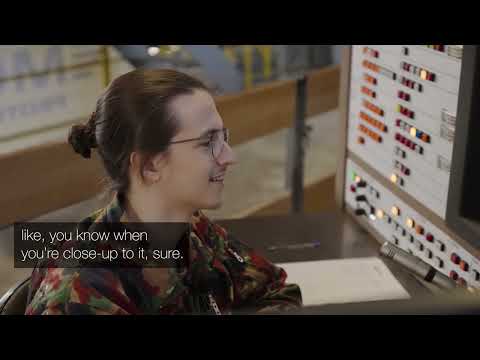
This 1970s tank simulator drives through a tiny world
12M views • 4 years ago
Tom Scott
Tom Scott visits the Swiss Military Museum to see the last surviving 1970s tank-driving simulator. It uses a real camera moving over a miniature model landscape rather than any computer graphics.
 8:51
How I implemented MegaTextures on real Nintendo 64 hardware
398K views • 3 years ago
James Lambert
James Lambert demos a MegaTexture-style technique running on real Nintendo 64 hardware, built for an N64Brew game jam. It streams high-resolution textures onto stained-glass scenes on the console.