eq
 53:34
Thomas Sowell on the Myths of Economic Inequality
9.1M views • 7 years ago
Hoover Institution
Thomas Sowell speaks at the Hoover Institution about economic and racial inequality and what he considers myths about poverty. He also recounts his early life and brief flirtation with Marxism.
 4:47
Milton Friedman - Case Against Equal Pay for Equal Work
867K views • 16 years ago
LibertyPen
A short clip of Milton Friedman arguing with students that equal pay laws are counterproductive, and that markets penalize discrimination because cheaper equally productive workers are an advantage to hire.
 47:26
Have the Boomers Pinched Their Children’s Futures? - with Lord David Willetts
1M views • 6 years ago
The Royal Institution
Lord David Willetts argues at the Royal Institution that the post-war baby boomers gained wealth and security at the expense of younger generations. He draws on his book The Pinch, covering housing, wealth and social policy in the UK.
Topic match · Labor, work & inequality 57:38
The Coming Collapse of the Middle Class with Elizabeth Warren
1.5M views • 18 years ago
University of California Television (UCTV)
Elizabeth Warren's 2007 Berkeley lecture, when she was a Harvard law professor, on why middle-class families are under growing financial strain. She draws on bankruptcy research to examine rising costs of housing, health care and education.
Topic match · Labor, work & inequality 5:15
Jordan Peterson - Pareto Distributions
246K views • 9 years ago
Bite-sized Philosophy
A short clip of Jordan Peterson explaining Pareto distributions, using Soviet farm collectivization and the resulting famine as context. It also covers how outcomes concentrate in a few people.
Topic match · Labor, work & inequality 28:03
AT&T Archives: Similiarities of Wave Behavior (Bonus Edition)
473K views • 14 years ago
AT&T Tech Channel
A Bell Labs film in which Dr. J.N. Shive uses a mechanical wave machine to demonstrate reflection, standing waves, resonance and impedance matching. He includes some equations but relies mostly on real-world examples a layperson can follow.
Topic match · Electronics & circuit design 39:49
Lec 1 | MIT 18.06 Linear Algebra, Spring 2005
4.9M views • 17 years ago
MIT OpenCourseWare
The first lecture of Gilbert Strang's MIT 18.06 Linear Algebra course, covering the geometry of linear equations. It opens a full 35-lecture university course.
 1:12:38
Assoc Prof Simon Michaux - The quantity of metals required to manufacture just one generation of...
122K views • 4 years ago
Sustainable Minerals Institute UQ
Associate Professor Simon Michaux presents estimates of the metals needed to build one generation of renewable technology to replace fossil fuels. He argues current production and reserves fall far short, with copper a key shortfall.
 2:19:51
[LIVE] How to Achieve Proper Grounding - Rick Hartley - Expert Live Training (US)
1M views • 6 years ago
Altium
Rick Hartley gives a roughly two-hour live training on proper grounding in PCB design. He explains how energy actually flows in the space between conductors, and how that governs noise, EMI, return paths and signal reflections.
Topic match · Electronics & circuit design 1:25:34
Democracy at Work: Curing Capitalism | Richard Wolff | Talks at Google
3.3M views • 9 years ago
Talks at Google
Economist Richard Wolff's Talks at Google lecture on his book Democracy at Work. He critiques capitalism and argues for worker-run cooperatives as a path to a more democratic economy.
Topic match · Labor, work & inequality 1:26:03
Mark Blyth ─ Global Trumpism
492K views • 10 years ago
Watson School of International and Public Affairs
Mark Blyth's 2016 Brown University lecture on global Trumpism, explaining the rise of populism through economics, the decline of Western middle classes and revolt against technocracy.
Topic match · Labor, work & inequality 11:01
Milton Friedman - The Real World Effects Of Unions
432K views • 12 years ago
LibertyPen
An 11-minute clip of Milton Friedman explaining the incentives of unions and how they affect employment. He argues unions restrict labor supply, raising pay for some workers while hurting low-skill workers.
Topic match · Labor, work & inequality 1:36:57
2. Behavioral Evolution
7.8M views • 15 years ago
Stanford
Stanford biologist Robert Sapolsky lectures on the evolution of behavior, including the Prisoner's Dilemma and tit-for-tat strategies in animals. It is part of his Human Behavioral Biology course.
Topic match · Probability & game theory 1:11:48
Math Encounters -- Five Balls, Two Hands: The Patterns of Juggling -- Colin Wright (Presentation)
33K views • 14 years ago
National Museum of Mathematics
Mathematician Colin Wright demonstrates juggling and explains the mathematics of juggling patterns, including notation that led to new throwing patterns. It is a public presentation at the Museum of Mathematics aimed at a general audience.
Topic match · Probability & game theory 46:29
Lecture 1: Probability and Counting | Statistics 110
1.8M views • 13 years ago
Harvard University
Lecture 1 of Harvard's Statistics 110 with Joe Blitzstein, introducing sample spaces, the naive definition of probability, counting, binomial coefficients and the sampling table.
Topic match · Probability & game theory 1:27:14
Mark Blyth - A Brief History of How We Got Here and Why
248K views • 7 years ago
McMaster Humanities
Political economist Mark Blyth gives a lecture tracing two versions of capitalist 'software': the postwar Great Compression era and the neoliberal era from 1980 to 2008. He explains the bug that crashed the first and the design of the second.
Topic match · Labor, work & inequality 1:03:07
Clutching at Random Straws, Matt Parker | LMS Popular Lectures 2010
601K views • 12 years ago
London Mathematical Society
Matt Parker's LMS popular lecture on how seemingly incredible results can be meaningless random patterns. He ranges from ancient Woolworths civilisations to shoelaces and DNA.
Topic match · Probability & game theory 57:08
On Bullsh*t Jobs | David Graeber | Meaningless Jobs | Royal Society of Arts | Lecture
693K views • 8 years ago
Royal Society of Arts
David Graeber's RSA lecture on bullshit jobs, expanding on his essay about why so many people do work they believe is pointless. He discusses what this says about the modern economy and the way society values work.
Topic match · Labor, work & inequality 1:13:57
Floyd Toole - Sound reproduction – art and science/opinions and facts
144K views • 11 years ago
CIRMMT
Floyd Toole's CIRMMT distinguished lecture on the science of sound reproduction, drawing on decades of blind listening research. It covers what listeners prefer in loudspeakers and why measured accuracy and anechoic response matter.
 54:56
Justice: What's The Right Thing To Do? Episode 01 "THE MORAL SIDE OF MURDER"
42.7M views • 17 years ago
Harvard University
The first episode of Michael Sandel's Harvard course on moral reasoning, opening with the trolley problem and the choice between killing one to save five. Sandel draws out student arguments and introduces utilitarian and other approaches to justice.
 9:18
The Most IMPORTANT Video You'll Ever See (part 1 of 8)
5.4M views • 19 years ago
wonderingmind42
Part 1 of a lecture by physicist Albert Bartlett on the exponential function and its consequences for population growth, resource use and energy. It argues that steady growth rates quickly lead to enormous quantities.
 3:31:24
Deep Dive into LLMs like ChatGPT
10.2M views • 1 year ago
Andrej Karpathy
Andrej Karpathy's three-hour-plus general-audience deep dive into how ChatGPT-style LLMs are built, covering the full training stack from pretraining to post-training. It also gives mental models for their quirks, like hallucination, and how to use them well.
 1:25:00
Lecture 6: Version Control (git) (2020)
751K views • 6 years ago
Missing Semester
A lecture from MIT's Missing Semester course covering version control with git. It builds up git from its data model rather than from commands.
 9:59
Feynman on Scientific Method.
2.4M views • 15 years ago
seabala
A short clip of Richard Feynman explaining the scientific method: guess, compute consequences, compare to experiment, and why vague theories like astrology cannot be proven wrong.
 1:15:47
Richard Feynman Computer Science Lecture - Hardware, Software and Heuristics
978K views • 14 years ago
Muon Ray
A lecture by Richard Feynman on how computers work, using the analogy of a filing clerk that becomes progressively dumber and faster. It also covers heuristics and how computers handle data and solve problems in finite time.
 1:06:44
01 - Course Introduction & Relational Model (CMU Databases Systems / Fall 2019)
248K views • 7 years ago
CMU Database Group
The first lecture of Andy Pavlo's CMU 15-445 Intro to Database Systems (Fall 2019), covering course introduction and the relational model.
 1:31:53
Gwynne Dyer -- Geopolitics in a Hotter World
82K views • 16 years ago
The University of British Columbia
Historian and journalist Gwynne Dyer gives a long UBC talk on how climate change will reshape international politics. He covers food, borders, refugees and the possibility of unilateral geoengineering by affected nations.
 17:37
Kurt Vonnegut, Shape of Stories (subtitulos castellano)
2.2M views • 8 years ago
Eva CollinsAlonso
Kurt Vonnegut's 2004 Case College lecture, with Spanish subtitles, in which he sketches the shapes of stories on a blackboard. He plots story arcs as good and bad fortune against time.
 56:30
How to Invent the Future II - Stanford CS183F: Startup School
26K views • 9 years ago
Stanford Online
Part two of Alan Kay's Stanford Startup School lecture on inventing the future. He draws on his time at Xerox PARC and elsewhere to discuss how to think about new technology and what makes ideas useful.
 1:07:02
Stanford Lecture: Don Knuth—"A Conjecture That Had To Be True" (2017)
30K views • 8 years ago
Stanford Online
Donald Knuth's 2017 Christmas Tree Lecture at Stanford about a combinatorial geometry problem whose computed numbers matched a striking formula. He tells the story of the conjecture and its sequel.
 1:39:37
Is a Calorie a Calorie? Processed Food, Experiment Gone Wrong
12M views • 11 years ago
Stanford Health Care
Stanford Health Care hosts Christopher Gardner and Robert Lustig on whether all calories are equal, with a focus on processed food and sugar. The talk questions the idea that calories in versus calories out fully explains weight and health.
 1:14:16
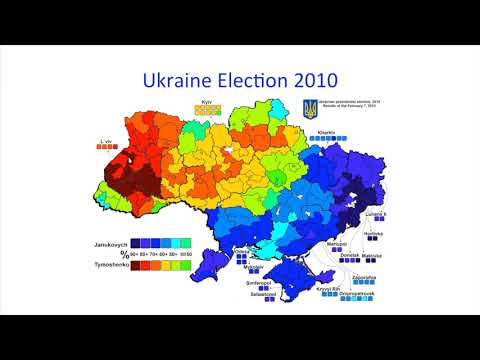
Why is Ukraine the West's Fault? Featuring John Mearsheimer
30.4M views • 11 years ago
The University of Chicago
University of Chicago lecture in which John Mearsheimer argues the West, through NATO and EU expansion, bears primary responsibility for the Ukraine crisis. He also discusses how to end it and its consequences.
 1:01:08
1. A strange determinant
30K views • 5 years ago
Timothy Gowers
Timothy Gowers thinks aloud, in real time, as he tries to understand why Pascal's determinant equals 1. He does not fully solve it in this episode, but shows his exploratory process.
 47:50
Lecture 1 | Modern Physics: Classical Mechanics (Stanford)
1.4M views • 18 years ago
Stanford
The first lecture of Leonard Susskind's Stanford Continuing Studies course on modern physics, beginning with classical mechanics. It is the start of a six-quarter sequence on the theoretical foundations of physics.
 1:31:54
Noam Chomsky - "The machine, the ghost, and the limits of understanding"
472K views • 14 years ago
Andy80o
Noam Chomsky's 2011 University of Oslo lecture on Newton's contributions to the study of mind. He argues Newton abandoned mechanical explanation and lowered the bar for scientific intelligibility, with consequences for the limits of human understanding. Q&A starts at 45:33.
 1:03
The Scientific Method-Richard Feynman
180K views • 13 years ago
Sképseis
A one-minute clip of Richard Feynman describing the scientific method: guess a law, compute its consequences, and compare with experiment. If it disagrees with experiment, it is wrong.
 1:13:39
Why is Time a One-Way Street?
1.7M views • 13 years ago
Santa Fe Institute
Leonard Susskind's Santa Fe Institute talk on the arrow of time: why the past differs from the future when physics equations are time-symmetric. He covers entropy, cosmology and Boltzmann brains.
 5:37
Feynman: Knowing versus Understanding
2.7M views • 14 years ago
TehPhysicalist
A short clip of Richard Feynman on the difference between merely knowing how to reason mathematically and understanding why physical theories work. He discusses holding multiple equivalent ideas and guessing new laws.
 55:55
Richard Feynman - The.Character.of.Physical.Law - Part 2 (full version)
638K views • 15 years ago
Tinkerin' Thinkers
Part 2 of Richard Feynman's Messenger Lectures at Cornell, The Character of Physical Law, on the relation of mathematics to physics. He explains why understanding nature requires mathematics.
 5:23
Milton Friedman - Who Benefits From Licensing?
32K views • 12 years ago
LibertyPen
A short clip of Milton Friedman explaining who benefits from occupational licensing requirements, arguing they mainly protect practitioners from competition.