exercise science
 1:09:53
Distinguished Lecturer Series: Building Science - Adventures in Building Science
185K views • 16 years ago
Berkeley Lab
A Berkeley Lab Distinguished Lecturer talk on building science, with an expert covering control layers, insulation and vapour barrier placement, and how buildings fail. The delivery is humorous.
 10:00
SICP / What is "Computer Science" ?
131K views • 20 years ago
LarryNorman
An excerpt from Hal Abelson's opening SICP lecture introducing computer science and contrasting declarative and imperative knowledge. He argues that computer science is not really a science and is more like magic or engineering of ideas.
 1:52
R. P. Feynman on social sciences
210K views • 16 years ago
x1x2x3ct
A two-minute clip of Richard Feynman on the social sciences, discussing what counts as real science versus pseudo science.
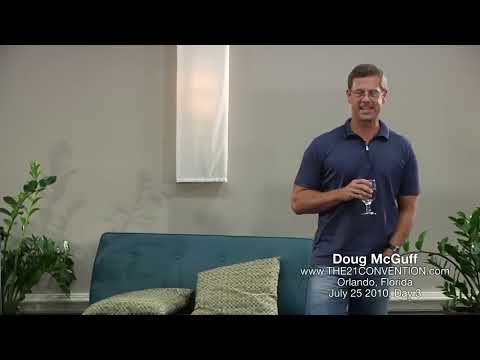 1:38:06
Paleo Diet & Strength Training Biochemistry | Doug McGuff M.D. | Full Length HD
655K views • 15 years ago
21 Studios
Doug McGuff presents the biochemistry behind high-intensity strength training and the paleo diet, including how the body stores and burns fat. It is a roughly hour-and-a-half full-length lecture.
Topic match · Fitness, sleep & longevity 1:00:14
The Neuroscience of Consciousness – with Anil Seth
1.9M views • 9 years ago
The Royal Institution
Neuroscientist Anil Seth gives a Royal Institution lecture on the science of consciousness. He separates conscious level, content and self, and argues that experience arises from the brain's predictive inference.
 47:20
Hamming, Intro to The Art of Doing Science and Engineering: Learning to Learn (March 28, 1995)
171K views • 14 years ago
securitylectures
The introductory lecture of Richard Hamming's capstone course, The Art of Doing Science and Engineering: Learning to Learn. It focuses on style of thinking and on educating rather than training, using technical material only as illustration.
 44:09
Lec 1 | MIT 6.042J Mathematics for Computer Science, Fall 2010
2.8M views • 13 years ago
MIT OpenCourseWare
The first lecture of MIT 6.042J Mathematics for Computer Science, taught by Tom Leighton, introducing mathematical proofs. It covers propositions, implication and basic proof methods.
 1:13:57
Floyd Toole - Sound reproduction – art and science/opinions and facts
144K views • 11 years ago
CIRMMT
Floyd Toole's CIRMMT distinguished lecture on the science of sound reproduction, drawing on decades of blind listening research. It covers what listeners prefer in loudspeakers and why measured accuracy and anechoic response matter.
 1:12:56
Lecture 1A | MIT 6.001 Structure and Interpretation, 1986
995K views • 17 years ago
MIT OpenCourseWare
The first lecture of MIT's 1986 6.001 Structure and Interpretation of Computer Programs, given by Harold Abelson, introducing Lisp and the idea of computer science as the study of process.
 47:43
Sulforaphane and Its Effects on Cancer, Mortality, Aging, Brain and Behavior, Heart Disease & More
2.9M views • 9 years ago
FoundMyFitness
Rhonda Patrick of FoundMyFitness makes a case for isothiocyanates such as sulforaphane from cruciferous vegetables and broccoli sprouts. It covers cancer, aging, heart disease, brain and behavior, and neurodegeneration, with chapter timestamps.
Topic match · Fitness, sleep & longevity 15:13
Free Energy Principle — Karl Friston
171K views • 9 years ago
Serious Science
Neuroscientist Karl Friston gives a 15-minute talk on the free energy principle, covering Markov blankets, Bayesian model evidence and global brain theories.
 13:47
This is how you treat ADHD based off science, Dr Russell Barkley part of 2012 Burnett Lecture
5.1M views • 12 years ago
Adhd Videos
A short excerpt from Dr Russell Barkley's 2012 Burnett Lecture on ADHD, focused on treatment. He argues ADHD is a disorder of executive function and self-regulation, and that environments should be designed to compensate.
 9:59
Feynman on Scientific Method.
2.4M views • 15 years ago
seabala
A short clip of Richard Feynman explaining the scientific method: guess, compute consequences, compare to experiment, and why vague theories like astrology cannot be proven wrong.
 1:15:47
Richard Feynman Computer Science Lecture - Hardware, Software and Heuristics
978K views • 14 years ago
Muon Ray
A lecture by Richard Feynman on how computers work, using the analogy of a filing clerk that becomes progressively dumber and faster. It also covers heuristics and how computers handle data and solve problems in finite time.
 59:16
Ep. 1 - Awakening from the Meaning Crisis - Introduction
844K views • 7 years ago
John Vervaeke’s Lectern
The first episode of John Vervaeke's lecture series on the modern meaning crisis, tracing its history through philosophy, cognitive science, religion and psychology. It introduces the series and its themes.
 3:19
Introduction: The Chemical History of a Candle by Michael Faraday (1/6)
207K views • 10 years ago
engineerguy
Bill Hammack of engineerguy introduces his series on Michael Faraday's lectures on The Chemical History of a Candle. He describes the free companion book and the commentary and caption features that help modern viewers.
 51:32
Great Impractical Ideas in Computer Science: PowerPoint Programming
2.2M views • 7 years ago
Tom Wildenhain
Tom Wildenhain's guest lecture for CMU's Esoteric Programming Languages course shows that PowerPoint transitions and slides are Turing complete without macros, building up to a mind-bending fractal ending.
 1:06:15
The Hyperbolic Geometry of DMT Experiences (@Harvard Science of Psychedelics Club)
1.4M views • 7 years ago
Qualia Research Institute
Andres Gomez Emilsson of the Qualia Research Institute presents a model of DMT experiences using hyperbolic geometry and dynamical systems theory. He describes how different intoxication levels correspond to changing curvature and information content of experience.
 1:03
The Scientific Method-Richard Feynman
180K views • 13 years ago
Sképseis
A one-minute clip of Richard Feynman describing the scientific method: guess a law, compute its consequences, and compare with experiment. If it disagrees with experiment, it is wrong.
 1:00:06
Computer Science - Brian Kernighan on successful language design
332K views • 10 years ago
University of Nottingham
Brian Kernighan gives a talk at the University of Nottingham on how to succeed in language design without really trying. He draws on his experience with awk and other languages.
 2:49
Feynman :: Rules of Chess
1.4M views • 19 years ago
defjam99b
A three-minute clip of Richard Feynman using the rules of chess as an analogy for how science works, discovering rules by observation and sometimes meeting surprises like castling. It touches on incremental progress versus revolutions.
 1:56:10
Sunlight: Optimize Health and Immunity (Light Therapy and Melatonin)
4.2M views • 4 years ago
MedCram - Medical Lectures Explained CLEARLY
Dr. Roger Seheult of MedCram reviews the benefits of sunlight beyond vitamin D, covering the solar spectrum, circadian rhythm, melatonin and infrared light. The lecture runs nearly two hours with timestamps.
Topic match · Fitness, sleep & longevity 1:20:59
Fasting For Survival Lecture by Dr Pradip Jamnadas
11.4M views • 7 years ago
The Galen Foundation
Cardiologist Dr. Pradip Jamnadas lectures on the rationale for dietary restriction and fasting, covering insulin resistance, glucose intolerance, and low-carb eating over about 81 minutes.
Topic match · Fitness, sleep & longevity 56:27
In Search of Tomorrow
18K views • 10 years ago
Berkeley Institute for Data Science (BIDS)
Chris Granger, creator of Light Table and the Eve language, gives a Berkeley data science lecture on what computation and programming might look like in ten years. He covers the path that led to Eve and ends with demos.
 57:15
1. Introduction to Human Behavioral Biology
20.5M views • 15 years ago
Stanford
The opening lecture of Robert Sapolsky's Stanford course on Human Behavioral Biology, explaining the course premise and how to avoid categorical thinking. It starts a roughly 25-lecture series on how biology, genes, hormones and environment shape behavior.
 52:29
Stanford's Sapolsky On Depression in U.S. (Full Lecture)
6.4M views • 17 years ago
Stanford
Stanford professor Robert Sapolsky lectures on depression as a real biological disease. He covers its biological and psychological causes, how it differs from ordinary sadness, and ideas such as learned helplessness. He ties these together into one account.
 1:08:37
Analogy as the Core of Cognition
600K views • 17 years ago
Stanford
Douglas Hofstadter's Stanford Presidential Lecture argues that analogy is the core of cognition, illustrating how concepts, categorization and thought arise from analogy-making.
 56:04
Richard Feynman - The.Character of Physical Law - Part 1 The Law of Gravitation (full version)
1.4M views • 15 years ago
Tinkerin' Thinkers
The first of Richard Feynman's 1964 Cornell Messenger Lectures, The Character of Physical Law, focusing on the law of gravitation. Feynman builds up from planetary motion to the nature of physical laws.
 6:33
The Biggest Ideas in the Universe: Introduction
384K views • 6 years ago
Sean Carroll
Sean Carroll introduces his video series on the biggest ideas in physics, such as symmetry, space and matter, as informal discussions with follow-up Q&A videos. This is the short opening video of the series.
 1:27:44
"Why Zebras Don't Get Ulcers: Stress and Health" by Dr. Robert Sapolsky
1.1M views • 9 years ago
Beckman Institute at Illinois
Robert Sapolsky's lecture on how the body's stress response, evolved for short-term physical emergencies, harms long-term health when triggered by psychological stressors. It was given as the inaugural Fenton-Rhodes Lecture.
 1:16:22
If Brains are Computers, Who Designs the Software? - with Daniel Dennett
873K views • 9 years ago
The Royal Institution
Daniel Dennett's Royal Institution lecture on whether the brain is a computer and where its software comes from. He argues that minds are built by evolution and culture, with competence arising without comprehension.
 1:13:13
Robert Sapolsky: The Biology of Humans at Our Best and Worst
1.5M views • 8 years ago
Stanford Iranian Studies Program
A 73-minute Stanford talk by Robert Sapolsky drawn from his book Behave. It surveys the biological factors behind human behavior at its best and worst.
 5:50
Dr Russell Barkley on ADHD Meds and how they all work differently from each other
633K views • 12 years ago
Adhd Videos
Dr. Russell Barkley explains how different ADHD medications work and how they differ from one another, in a short clip.
 1:42:47
23. Language
1.2M views • 15 years ago
Stanford
Robert Sapolsky's Stanford lecture on language, comparing human and animal communication, ape language projects like Koko and Kanzi, and how language is acquired. It is part of his human behavioral biology course.
 1:31:54
Noam Chomsky - "The machine, the ghost, and the limits of understanding"
472K views • 14 years ago
Andy80o
Noam Chomsky's 2011 University of Oslo lecture on Newton's contributions to the study of mind. He argues Newton abandoned mechanical explanation and lowered the bar for scientific intelligibility, with consequences for the limits of human understanding. Q&A starts at 45:33.
 0:55
Richard Feynman on hungry philosophers (or do we see objects or only their light)
272K views • 17 years ago
Zero
A one-minute clip from Richard Feynman's 1979 Auckland lecture in which he answers whether you see an object or only its light. It is a short, playful take on perception and on the use of philosophy.
 1:06:43
Scott Aaronson | How Much Math Is Knowable?
58K views • 1 year ago
Harvard CMSA
Scott Aaronson's Harvard CMSA talk traces what mathematical truths are knowable, from Godel and Turing to the Busy Beaver function. He covers recent work on Busy Beaver values.
 1:21:52
LEADERSHIP LAB: The Craft of Writing Effectively
9.3M views • 12 years ago
UChicago Social Sciences
Larry McEnerney of the University of Chicago Writing Program gives a graduate-student session on writing effectively. His core idea is that readers care about value to them, not the writer's thinking process.
 1:11:40
MIT's Pathway to Fusion Energy (IAP 2017) - Zach Hartwig
122K views • 9 years ago
MIT Plasma Science and Fusion Center
Zach Hartwig of MIT introduces the key concepts of magnetic fusion energy and the state of fusion research. He then presents MIT's proposed pathway of using high-field superconducting magnets to build smaller, cheaper tokamaks on a climate-relevant timescale.
 1:04:52
'A Universe From Nothing' by Lawrence Krauss, AAI 2009
2.6M views • 17 years ago
Richard Dawkins Foundation for Reason & Science
Lawrence Krauss's 2009 talk on the current picture of the universe, how it will end and how it could have come from nothing. It covers the expanding universe, cosmic background radiation and the cosmological constant.