information processing
 30:38
Solving Wordle using information theory
11.8M views • 4 years ago
3Blue1Brown
3Blue1Brown uses Wordle as an excuse to teach information theory and entropy, building a solver that picks guesses by expected information and incorporating word frequencies.
 53:46
Dasher: information-efficient text entry
7K views • 19 years ago
Google TechTalks
David MacKay's 2007 Google Tech Talk presents Dasher, a text-entry system driven by continuous gestures and a language model, reaching about 35 words per minute with one finger and 25 hands-free. It explains the information-theory reasoning behind the design.
 23:51
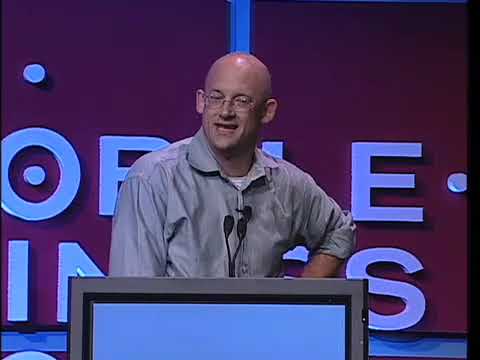
Web 2.0 Expo NY: Clay Shirky (shirky.com) It's Not Information Overload. It's Filter Failure.
55K views • 18 years ago
O'Reilly
Clay Shirky argues at Web 2.0 Expo NY that the problem online is not information overload but filter failure. He says the real challenge is building better ways to filter and organize what we see.
 28:23
The Fast Fourier Transform (FFT): Most Ingenious Algorithm Ever?
2.3M views • 5 years ago
Reducible
Reducible's visual walkthrough of the Fast Fourier Transform, motivated by polynomial multiplication. It shows how the FFT's key ideas can be discovered by asking the right questions.
Topic match · Information theory & signal processing 47:01
Operation InfeKtion: How Russia Perfected the Art of War | NYT Opinion
1.8M views • 7 years ago
New York Times Opinion
A New York Times Opinion documentary tracing Soviet and KGB disinformation, from the 1980s AIDS origin hoax to modern campaigns like Pizzagate. It features former KGB officers and the people who tried to counter the lies.
 20:05
But what are Hamming codes? The origin of error correction
3.1M views • 6 years ago
3Blue1Brown
3Blue1Brown's discovery-oriented introduction to error correction codes, building up Hamming codes from the puzzle of locating a flipped bit. It explains the parity-check idea and why it is so efficient.
Topic match · Information theory & signal processing 28:11
The Future of War, and How It Affects YOU (Multi-Domain Operations) - Smarter Every Day 211
2.6M views • 7 years ago
SmarterEveryDay
Destin Sandlin of Smarter Every Day explains Multi-Domain Operations through footage from his last mission at RIMPAC 2018. He covers missile and torpedo testing and interviews military leaders about the cyber and information domains.
 26:33
The Most Underrated Algorithm
10.8M views • 4 years ago
Veritasium
Veritasium tells the story of the Fast Fourier Transform, from its use in detecting nuclear tests to Cold War politics, and how it could have changed the arms race. It includes a short, intuitive explanation of what the Fourier transform does.
Topic match · Information theory & signal processing 23:53
D/A and A/D | Digital Show and Tell (Monty Montgomery @ xiph.org)
647K views • 13 years ago
FL Studio
Monty Montgomery of Xiph.org gives real-time demonstrations of sampling, quantization, bit depth and dither using real audio equipment, including both digital analysis tools and vintage analog bench gear. It shows that sampled audio is not stair-stepped and corrects common misconceptions about digital audio.
Topic match · Information theory & signal processing 55:27
Leonard Susskind on The World As Hologram | TVO Docs
4.1M views • 15 years ago
TVO Docs
Stanford physicist Leonard Susskind gives a public lecture on the holographic principle, the indestructibility of information and the nature of black holes. It asks whether the world could be a hologram.
 24:47
But what is a Fourier series? From heat flow to drawing with circles | DE4
19M views • 7 years ago
3Blue1Brown
3Blue1Brown introduces Fourier series, from the heat equation to drawing arbitrary shapes with rotating circles. It builds a visual intuition for decomposing functions into sine waves.
Topic match · Information theory & signal processing 52:59
David Kriesel: Lies, damned lies and scans
58K views • 11 years ago
Free and Open Source Software Conference (FrOSCon) e.V.
David Kriesel's FrOSCon talk on how Xerox scancopiers, due to JBIG2 compression, silently replaced digits in scanned documents. He walks through how he discovered the bug and why it is so dangerous.
Topic match · Information theory & signal processing 29:22
Samplerates: The Higher the Better, Right?
571K views • 6 years ago
FabFilter
Dan Worrall explains when higher sample rates help in recording and mixing, and when they do not. He goes into oversampling versus higher sample rates, and aliasing in distortion plugins.
Topic match · Information theory & signal processing 38:01
I published music on Tidal to test MQA - MQA Review
610K views • 5 years ago
GoldenSound
GoldenSound publishes music on Tidal to test MQA, a deep dive into the format's claims and problems including its leaky filter. Testing begins around the 5:45 mark.
Topic match · Information theory & signal processing 25:35
Epicycles, complex Fourier series and Homer Simpson's orbit
421K views • 8 years ago
Mathologer
Mathologer explains epicycles and complex Fourier series, inspired by an animation of Homer Simpson drawn with epicycles. It covers the shape of the Moon's orbit around the Sun and how to make your own epicycle drawings.
Topic match · Information theory & signal processing 35:13
I built a QR code with my bare hands to see how it works
9.7M views • 2 years ago
Veritasium
Veritasium builds a QR code by hand to explain how it works. It covers the history of Morse code and barcodes, how QR codes encode data, why damaged codes still scan, and how safe they are.
Topic match · Information theory & signal processing 57:21
An Observation on Generalization
210K views • 3 years ago
Simons Institute for the Theory of Computing
Ilya Sutskever gives a Simons Institute talk on why neural networks generalize, framing learning as finding short descriptions, like compression. It was part of the Large Language Models and Transformers program.
Topic match · Information theory & signal processing 25:52
Halide Talk
53K views • 12 years ago
Andrew Adams
Andrew Adams, a Halide developer, presents the Halide language for image processing and tensor computation. The talk explains the separation of algorithm from schedule with illustrated examples of parallelism, locality and redundancy tradeoffs.
 51:36
Veritasium: A Story of YouTube Propaganda
2.7M views • 5 years ago
Tom Nicholas
Tom Nicholas critiques Veritasium's sponsored video on driverless cars, using it to examine YouTube sponsorships, science-channel credibility and how statistics and misinformation can be used in branded content.
 46:27
Sensor Fusion on Android Devices: A Revolution in Motion Processing
517K views • 16 years ago
Google TechTalks
David Sachs of InvenSense explains how gyroscopes, accelerometers and compasses work on their own and together, demonstrated on a modified Android handset. He covers sensor fusion algorithms and why rotation math such as Euler angles matters.
 31:06
Jim Keller - Moore's Law in the age of AI Chips
33K views • 6 years ago
Matroid
Jim Keller's talk at the 2020 Scaled Machine Learning conference on Moore's Law in the age of AI chips. He compares scalar, vector and GPU-style parallel approaches to computation.
 52:07
What Bodies Think About: Bioelectric Computation Outside the Nervous System - NeurIPS 2018
103K views • 7 years ago
The Artificial Intelligence Channel
Michael Levin's NeurIPS 2018 talk on bioelectric computation outside the nervous system, showing how cell electrical networks shape development and regeneration. It covers morphological information processing in living tissue.
 47:43
"Turning the database inside out with Apache Samza" by Martin Kleppmann
205K views • 12 years ago
Strange Loop Conference
Martin Kleppmann argues that databases are global shared mutable state and proposes treating them as an ever-growing log of immutable facts. Derived data such as caches, indexes and views is then built by stream processors like Apache Samza. The talk draws on Kafka and LinkedIn's experience with commit logs.
 41:46
The Battle of Midway 1942: Told from the Japanese Perspective (1/3)
19.7M views • 7 years ago
Montemayor
Part one of Montemayor's animated-map documentary on the Battle of Midway, told using only the information available to the Japanese side. It focuses on Nagumo's dilemma.
 24:44
ADL's Never Is Now 2019 | ADL International Leadership Award Presented to Sacha Baron Cohen
2.3M views • 6 years ago
Anti-Defamation League
Sacha Baron Cohen's speech accepting the ADL International Leadership Award, in which he criticizes social media companies for amplifying hate and propaganda. He argues that freedom of speech is not freedom of reach.
 26:08
Did SARS-Cov-2 start in a Chinese lab?
182K views • 6 years ago
potholer54
Science journalist potholer54 examines the claim that SARS-CoV-2 came from a Wuhan lab, tracing the sources behind it and the weaknesses in the evidence.
 29:37
The Really Dark Truth About Bots
947K views • 1 year ago
Benn Jordan
Benn Jordan examines the role of bots and propaganda accounts on X and other social platforms, including the platform's decline and the influence of Russian operations. It covers more than bots, discussing bias and how the platform changed.
 37:52
Algorithms are breaking how we think
3M views • 1 year ago
Technology Connections
A Technology Connections video essay arguing that algorithmic feeds make people passive about finding content, leading to complacency in how they seek information. It urges people to actively choose what they consume.
 21:05
Who is Manipulating Facebook? - Smarter Every Day 215
1M views • 7 years ago
SmarterEveryDay
Destin Sandlin of Smarter Every Day investigates manipulation on Facebook, interviewing the company's team about content moderation. It is the third video in his series on social media manipulation.
 21:24
Why are people mean on Twitter? - Smarter Every Day 214
957K views • 7 years ago
SmarterEveryDay
Destin Sandlin of Smarter Every Day examines how bad actors and bots use Twitter, drawing on the released Russian IRA dataset and interviews. It asks why interactions on the platform turn hostile.
 31:44
The Value of Values with Rich Hickey
145K views • 14 years ago
InfoQ
Rich Hickey's JaxConf 2012 keynote examines what values are and why immutable values matter as information systems grow more complex and data gets bigger. It contrasts places with values and builds the case for immutability.
 59:56
AWS re:Invent 2018: Amazon DynamoDB Deep Dive: Advanced Design Patterns for DynamoDB (DAT401)
468K views • 7 years ago
Amazon Web Services
Rick Houlihan's AWS re:Invent 2018 deep dive on advanced DynamoDB design patterns. It covers index overloading, GSI sharding, composite keys, graph processing and transactions.
 28:04
Ground Source / Geothermal Heat Pumps and Other Info
1.2M views • 5 years ago
Technology Connections
A Technology Connections video on how ground-source (geothermal) heat pumps work and why they hold efficiency in winter. It also covers related heat pump information, and the description notes air-source heat pumps have since improved.
 25:10
Data Brokers: Last Week Tonight with John Oliver (HBO)
9.7M views • 4 years ago
LastWeekTonight
John Oliver's Last Week Tonight segment explains how data brokers collect and sell personal information, including a stunt in which his team bought data to identify members of Congress.
 22:56
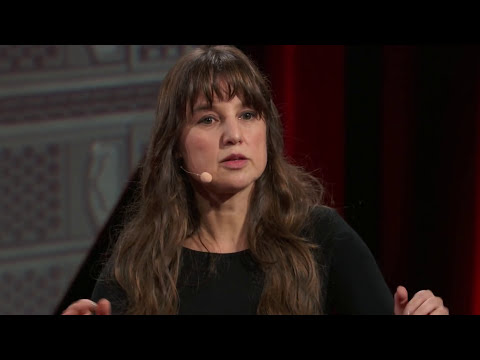
We're building a dystopia just to make people click on ads | Zeynep Tufekci
771K views • 8 years ago
TED
Technosociologist Zeynep Tufekci argues that the machine-learning systems used to serve ads also decide what political and social information people see. She explains how opaque algorithms can nudge, segment and manipulate users, and warns that the real danger is powerful people using AI to control populations.
 39:33
Bret Victor - Media for Thinking the Unthinkable
33K views • 11 years ago
Colin McDonnell
Bret Victor's 2013 MIT Media Lab talk argues that the media we think with determine which thoughts are possible. He demos new representations for scientific papers, circuits, filters and signal processing.
 52:52
Google Developers Day US - Theorizing from Data
27K views • 19 years ago
GoogleDeveloperDay
Peter Norvig's 2007 Google talk on theorizing from data, covering what huge datasets can do for language understanding, translation, information extraction and inference. It argues that more data often beats cleverer models.
 59:34
There is No Algorithm for Truth - with Tom Scott
2.7M views • 7 years ago
The Royal Institution
Tom Scott's Royal Institution discourse on science communication in the age of social media, how recommendation algorithms shape popularity, and why view counts can matter more than truth. It includes a segment on parasocial relationships.
 56:03
A Tour of Prolog
33K views • 4 years ago
The Power of Prolog
Markus Triska tours Prolog's most distinctive features, including its use as a database and query language, rule processing, constraint solving and compile-time rewriting. It also covers concise meta-interpreters.
 48:24
Conan O'Brien | Talks at Google
3.5M views • 16 years ago
Talks at Google
Conan O'Brien and Andy Richter visit Google's Mountain View headquarters in 2010 for a comedic Q&A. Conan jokes with the interviewer and the Google audience.