information processing
 1:01:51
Lecture 1: Introduction to Information Theory
411K views • 12 years ago
Jakob Foerster
The first lecture of David MacKay's Cambridge course on information theory, pattern recognition and neural networks. It introduces the core ideas of his book Information Theory, Inference, and Learning Algorithms.
 30:38
Solving Wordle using information theory
11.8M views • 4 years ago
3Blue1Brown
3Blue1Brown uses Wordle as an excuse to teach information theory and entropy, building a solver that picks guesses by expected information and incorporating word frequencies.
 53:46
Dasher: information-efficient text entry
7K views • 19 years ago
Google TechTalks
David MacKay's 2007 Google Tech Talk presents Dasher, a text-entry system driven by continuous gestures and a language model, reaching about 35 words per minute with one finger and 25 hands-free. It explains the information-theory reasoning behind the design.
 13:43
Why Quantum Information is Never Destroyed
715K views • 8 years ago
PBS Space Time
A PBS Space Time episode asking whether the universe's information can ever truly be lost, tying quantum mechanics, determinism and black holes together. It sets up the black hole information paradox.
 23:51
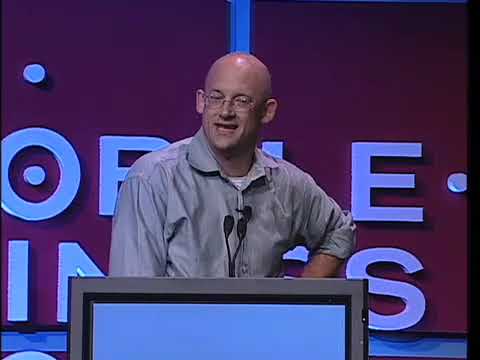
Web 2.0 Expo NY: Clay Shirky (shirky.com) It's Not Information Overload. It's Filter Failure.
55K views • 18 years ago
O'Reilly
Clay Shirky argues at Web 2.0 Expo NY that the problem online is not information overload but filter failure. He says the real challenge is building better ways to filter and organize what we see.
 12:31
The Superheterodyne Radio: No really, that's its name
987K views • 7 years ago
Technology Connections
Technology Connections explains why the superheterodyne radio has its name and how mixing frequencies lets it tune stations well. It walks through the underlying wave phenomena and algebra and why the design solved a hard tuning problem.
Topic match · Information theory & signal processing 15:30
The Black Hole Information Paradox
1.1M views • 8 years ago
PBS Space Time
PBS Space Time episode on the black hole information paradox, covering how black holes seem to destroy information, the no-hair conjecture and the proposed role of the event horizon. It is part of a series on black holes.
 19:42
But what is the Fourier Transform? A visual introduction.
12.6M views • 8 years ago
3Blue1Brown
3Blue1Brown's animated visual introduction to the Fourier Transform, showing how a signal breaks into frequency components.
Topic match · Information theory & signal processing 28:23
The Fast Fourier Transform (FFT): Most Ingenious Algorithm Ever?
2.3M views • 5 years ago
Reducible
Reducible's visual walkthrough of the Fast Fourier Transform, motivated by polynomial multiplication. It shows how the FFT's key ideas can be discovered by asking the right questions.
Topic match · Information theory & signal processing 18:07
The more general uncertainty principle, regarding Fourier transforms
2.3M views • 8 years ago
3Blue1Brown
3Blue1Brown shows how the uncertainty principle arises from Fourier transforms. A wave packet cannot be narrow in both position and frequency, so the principle is a property of waves rather than of measurement.
Topic match · Information theory & signal processing 47:01
Operation InfeKtion: How Russia Perfected the Art of War | NYT Opinion
1.8M views • 7 years ago
New York Times Opinion
A New York Times Opinion documentary tracing Soviet and KGB disinformation, from the 1980s AIDS origin hoax to modern campaigns like Pizzagate. It features former KGB officers and the people who tried to counter the lies.
 20:05
But what are Hamming codes? The origin of error correction
3.1M views • 6 years ago
3Blue1Brown
3Blue1Brown's discovery-oriented introduction to error correction codes, building up Hamming codes from the puzzle of locating a flipped bit. It explains the parity-check idea and why it is so efficient.
Topic match · Information theory & signal processing 28:11
The Future of War, and How It Affects YOU (Multi-Domain Operations) - Smarter Every Day 211
2.6M views • 7 years ago
SmarterEveryDay
Destin Sandlin of Smarter Every Day explains Multi-Domain Operations through footage from his last mission at RIMPAC 2018. He covers missile and torpedo testing and interviews military leaders about the cyber and information domains.
 26:33
The Most Underrated Algorithm
10.8M views • 4 years ago
Veritasium
Veritasium tells the story of the Fast Fourier Transform, from its use in detecting nuclear tests to Cold War politics, and how it could have changed the arms race. It includes a short, intuitive explanation of what the Fourier transform does.
Topic match · Information theory & signal processing 1:01:45
Information, Evolution, and intelligent Design - With Daniel Dennett
586K views • 11 years ago
The Royal Institution
Daniel Dennett gives a Royal Institution talk toward a unified theory of information, tying together evolution, learning and engineering. He argues that design can arise bottom-up through small steps without a designer.
 1:11:41
Lecture 1 | Natural Language Processing with Deep Learning
820K views • 9 years ago
Stanford University School of Engineering
The first lecture of Stanford's Natural Language Processing with Deep Learning course, taught by Chris Manning and Richard Socher. It introduces NLP and word vectors, including SVD, skip-gram, CBOW, negative sampling and word2vec.
 1:48:50
The War on Sensemaking, Daniel Schmachtenberger
534K views • 7 years ago
Rebel Wisdom
Daniel Schmachtenberger discusses why the information ecology is damaged and what healthy public sensemaking would take. The conversation ties this to the meaning crisis and to improving discourse.
 4:32
The Visual Microphone: Passive Recovery of Sound from Video
1.9M views • 12 years ago
Abe Davis's Research
MIT researchers show that sound can be recovered from silent video by analyzing tiny vibrations in objects such as a potato chip bag. It works even with consumer cameras by using rolling shutter.
Topic match · Information theory & signal processing 0:49
Psaki: 'We're Flagging Problematic Posts On Facebook That Spread Disinformation'
22K views • 5 years ago
Newsweek
A short Newsweek clip of White House press secretary Jen Psaki saying the administration is flagging problematic posts to Facebook that spread COVID-19 and vaccine disinformation.
 1:26:11
Succinct Data Structures
9K views • 12 years ago
Edward Kmett
Edward Kmett's 2013 talk at Prezi in Budapest on succinct data structures, which store data in close to the information-theoretic minimum space while supporting fast queries. It ties together the research and walks through his Haskell succinct library.
Topic match · Information theory & signal processing 1:06:26
Over the Shoulder 1 - Text Preprocessing in Forth
25K views • 12 years ago
Andreas Wagner
Samuel Falvo II live-codes a text preprocessor and blog engine in Forth over about an hour. It shows Forth's dictionary being snapshotted and restored in place of mutation, and how a small Forth system gets real work done.
 0:07
Lies on the Internet
2.8M views • 14 years ago
baines0
A very short clip from the children's cartoon Arthur riffing on the line about not believing everything you read on the internet.
 23:53
D/A and A/D | Digital Show and Tell (Monty Montgomery @ xiph.org)
647K views • 13 years ago
FL Studio
Monty Montgomery of Xiph.org gives real-time demonstrations of sampling, quantization, bit depth and dither using real audio equipment, including both digital analysis tools and vintage analog bench gear. It shows that sampled audio is not stair-stepped and corrects common misconceptions about digital audio.
Topic match · Information theory & signal processing 1:15:47
Richard Feynman Computer Science Lecture - Hardware, Software and Heuristics
978K views • 14 years ago
Muon Ray
A lecture by Richard Feynman on how computers work, using the analogy of a filing clerk that becomes progressively dumber and faster. It also covers heuristics and how computers handle data and solve problems in finite time.
 3:39
(1/4) Intro/History: Introducing a 100-year-old mechanical computer
476K views • 11 years ago
engineerguy
The first of four short videos from Bill Hammack (engineerguy) introducing and giving the history of a 100-year-old mechanical computer, Michelson's harmonic analyzer. The series goes on to explain Fourier synthesis, analysis and operation of the machine.
Topic match · Information theory & signal processing 15:12
JPEG DCT, Discrete Cosine Transform (JPEG Pt2)- Computerphile
697K views • 11 years ago
Computerphile
Mike Pound explains the discrete cosine transform and how it underpins JPEG compression. It is part two of Computerphile's JPEG series.
Topic match · Information theory & signal processing 1:03:40
David Kriesel: Traue keinem Scan, den du nicht selbst gefälscht hast
7M views • 11 years ago
media.ccc.de
David Kriesel's 31C3 talk, in German, on the discovery that Xerox scanner-copiers silently replace digits and letters in scanned documents. He explains how the bug stayed unnoticed in the wild for years.
Topic match · Information theory & signal processing 18:31
Fourier Optics used for Optical Pattern Recognition
103K views • 6 years ago
Huygens Optics
Huygens Optics explains the Fourier transform and shows how a lens performs one optically. A DLP projector is used as a Fourier filter to do simple pattern recognition on lithographic character patterns.
Topic match · Information theory & signal processing 9:37
Characters, Symbols and the Unicode Miracle - Computerphile
2.1M views • 13 years ago
Computerphile
Tom Scott explains for Computerphile how Unicode and UTF-8 grew out of messy older character encodings to become the web's standard. It covers why the design works and how it handles worldwide text.
Topic match · Information theory & signal processing 55:27
Leonard Susskind on The World As Hologram | TVO Docs
4.1M views • 15 years ago
TVO Docs
Stanford physicist Leonard Susskind gives a public lecture on the holographic principle, the indestructibility of information and the nature of black holes. It asks whether the world could be a hologram.
 24:47
But what is a Fourier series? From heat flow to drawing with circles | DE4
19M views • 7 years ago
3Blue1Brown
3Blue1Brown introduces Fourier series, from the heat equation to drawing arbitrary shapes with rotating circles. It builds a visual intuition for decomposing functions into sine waves.
Topic match · Information theory & signal processing 1:27:44
Black hole Firewalls - with Sean Carroll and Jennifer Ouellette
1.8M views • 12 years ago
The Royal Institution
A Royal Institution event with Sean Carroll and Jennifer Ouellette on what happens if you fall into a black hole, covering the firewall paradox, the information problem and the holographic principle.
 4:20
Why Snow and Confetti Ruin YouTube Video Quality
10.4M views • 10 years ago
Tom Scott
Tom Scott explains why confetti and snow wreck video quality, using interframe compression and bitrate. He demonstrates it live by changing the quality on screen.
Topic match · Information theory & signal processing 1:54
The Loudness War
2.7M views • 20 years ago
Matt Mayfield Music
A two-minute demonstration of the loudness war, showing how heavy dynamic range compression in CD mastering makes music louder while degrading sound quality. It uses audio examples so you can hear the distortion.
Topic match · Information theory & signal processing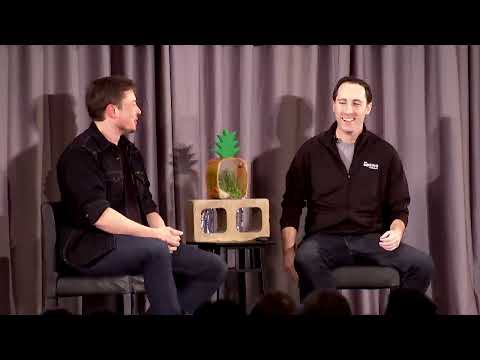 1:12:05
The Boring Company Information Session
448K views • 8 years ago
The Boring Company
A long information session where The Boring Company presents its vision for Loop, an underground high-speed transit system, and the traffic problems it aims to solve. It includes discussion of faster tunnel boring and electrification.
 3:50
Ptolemy and Homer (Simpson)
380K views • 18 years ago
Santiago Ginnobili
A short animation reconstructing a planet's looping orbit using Ptolemy's epicycles and deferents, with the epicycles tracing out the face of Homer Simpson. It shows how enough circles can reproduce nearly any shape.
Topic match · Information theory & signal processing 1:03:44
CppCon 2015: Timur Doumler “C++ in the Audio Industry”
131K views • 11 years ago
CppCon
Timur Doumler's CppCon 2015 talk on how C++ is used in the audio industry. It covers the patterns and tools audio developers rely on, including handling real-time constraints.
Topic match · Information theory & signal processing 9:51
Justin Bieber 800% Slower
4.4M views • 16 years ago
turinpt2
A Justin Bieber song slowed down 800% with the PaulStretch program, turning a pop track into a long ambient drone.
Topic match · Information theory & signal processing 3:28
1.1 - Course outline
113K views • 9 years ago
LaintalAy
Course outline for Stanford's online GNSS course, introducing how GPS works and the many uses of satellite navigation. The series pairs short lectures with backyard experiments using smartphones.
Topic match · Information theory & signal processing 4:01
Onslaught - Bad Apple 64 - C64 Demo
71K views • 12 years ago
RetroDemoScene
Onslaught's Bad Apple 64 is a Commodore 64 demo that streams over 2000 frames of the Bad Apple animation from a single disk side at 12fps, with each frame packed to around 70 bytes.
Topic match · Information theory & signal processing