learning science
 47:20
Hamming, Intro to The Art of Doing Science and Engineering: Learning to Learn (March 28, 1995)
171K views • 14 years ago
securitylectures
The introductory lecture of Richard Hamming's capstone course, The Art of Doing Science and Engineering: Learning to Learn. It focuses on style of thinking and on educating rather than training, using technical material only as illustration.
 1:09:53
Distinguished Lecturer Series: Building Science - Adventures in Building Science
185K views • 16 years ago
Berkeley Lab
A Berkeley Lab Distinguished Lecturer talk on building science, with an expert covering control layers, insulation and vapour barrier placement, and how buildings fail. The delivery is humorous.
 10:00
SICP / What is "Computer Science" ?
131K views • 20 years ago
LarryNorman
An excerpt from Hal Abelson's opening SICP lecture introducing computer science and contrasting declarative and imperative knowledge. He argues that computer science is not really a science and is more like magic or engineering of ideas.
 1:52
R. P. Feynman on social sciences
210K views • 16 years ago
x1x2x3ct
A two-minute clip of Richard Feynman on the social sciences, discussing what counts as real science versus pseudo science.
 44:24
31 Hamming, Learning to Learn: You and Your Research, 6 June 1995
9K views • 8 years ago
Hamming on Hamming: Learning to Learn
The final lecture of Richard Hamming's Learning to Learn course, from 1995, based on his well-known talk 'You and Your Research'. It covers how to do important work and build a career.
 1:11:41
Lecture 1 | Natural Language Processing with Deep Learning
820K views • 9 years ago
Stanford University School of Engineering
The first lecture of Stanford's Natural Language Processing with Deep Learning course, taught by Chris Manning and Richard Socher. It introduces NLP and word vectors, including SVD, skip-gram, CBOW, negative sampling and word2vec.
 1:00:14
The Neuroscience of Consciousness – with Anil Seth
1.9M views • 9 years ago
The Royal Institution
Neuroscientist Anil Seth gives a Royal Institution lecture on the science of consciousness. He separates conscious level, content and self, and argues that experience arises from the brain's predictive inference.
 44:09
Lec 1 | MIT 6.042J Mathematics for Computer Science, Fall 2010
2.8M views • 13 years ago
MIT OpenCourseWare
The first lecture of MIT 6.042J Mathematics for Computer Science, taught by Tom Leighton, introducing mathematical proofs. It covers propositions, implication and basic proof methods.
 1:10:58
Trends in Deep Learning Hardware: Bill Dally (NVIDIA)
32K views • 2 years ago
Paul G. Allen School
Bill Dally of NVIDIA gives a University of Washington lecture on trends in deep learning hardware. It covers numeric formats, specialized instructions, energy per operation and co-design of hardware and software.
 1:13:57
Floyd Toole - Sound reproduction – art and science/opinions and facts
144K views • 11 years ago
CIRMMT
Floyd Toole's CIRMMT distinguished lecture on the science of sound reproduction, drawing on decades of blind listening research. It covers what listeners prefer in loudspeakers and why measured accuracy and anechoic response matter.
 1:12:56
Lecture 1A | MIT 6.001 Structure and Interpretation, 1986
995K views • 17 years ago
MIT OpenCourseWare
The first lecture of MIT's 1986 6.001 Structure and Interpretation of Computer Programs, given by Harold Abelson, introducing Lisp and the idea of computer science as the study of process.
 1:13:22
Sacha Arnoud, Director of Engineering, Waymo - MIT Self-Driving Cars
109K views • 8 years ago
Lex Fridman
Sacha Arnoud, Waymo's Director of Engineering, gives a lecture in MIT's 2018 deep learning for self-driving cars course on the rise of machine learning in autonomous vehicles. It covers how Waymo uses deep learning and how it handles tricky driving situations.
 15:25
Stephen Krashen on Language Acquisition
1.5M views • 16 years ago
Mark Rounds
A 15-minute clip of linguist Stephen Krashen discussing language acquisition, drawn from the 1980s. It presents his input hypothesis and the distinction between acquisition and learning.
 1:02:57
Peter Norvig - The Unreasonable Effectiveness of Data
74K views • 15 years ago
UBC Computer Science
Peter Norvig's UBC distinguished lecture on how massive amounts of simple data, such as for language modeling, can yield understanding that hand-built models could not.
 15:13
Free Energy Principle — Karl Friston
171K views • 9 years ago
Serious Science
Neuroscientist Karl Friston gives a 15-minute talk on the free energy principle, covering Markov blankets, Bayesian model evidence and global brain theories.
 39:49
Lec 1 | MIT 18.06 Linear Algebra, Spring 2005
4.9M views • 17 years ago
MIT OpenCourseWare
The first lecture of Gilbert Strang's MIT 18.06 Linear Algebra course, covering the geometry of linear equations. It opens a full 35-lecture university course.
 13:47
This is how you treat ADHD based off science, Dr Russell Barkley part of 2012 Burnett Lecture
5.1M views • 12 years ago
Adhd Videos
A short excerpt from Dr Russell Barkley's 2012 Burnett Lecture on ADHD, focused on treatment. He argues ADHD is a disorder of executive function and self-regulation, and that environments should be designed to compensate.
 9:59
Feynman on Scientific Method.
2.4M views • 15 years ago
seabala
A short clip of Richard Feynman explaining the scientific method: guess, compute consequences, compare to experiment, and why vague theories like astrology cannot be proven wrong.
 1:15:47
Richard Feynman Computer Science Lecture - Hardware, Software and Heuristics
978K views • 14 years ago
Muon Ray
A lecture by Richard Feynman on how computers work, using the analogy of a filing clerk that becomes progressively dumber and faster. It also covers heuristics and how computers handle data and solve problems in finite time.
 59:16
Ep. 1 - Awakening from the Meaning Crisis - Introduction
844K views • 7 years ago
John Vervaeke’s Lectern
The first episode of John Vervaeke's lecture series on the modern meaning crisis, tracing its history through philosophy, cognitive science, religion and psychology. It introduces the series and its themes.
 1:38:06
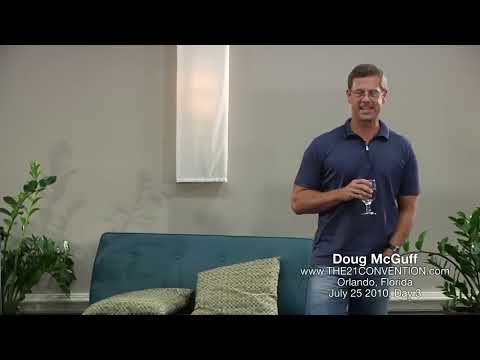
Paleo Diet & Strength Training Biochemistry | Doug McGuff M.D. | Full Length HD
655K views • 15 years ago
21 Studios
Doug McGuff presents the biochemistry behind high-intensity strength training and the paleo diet, including how the body stores and burns fat. It is a roughly hour-and-a-half full-length lecture.
 3:19
Introduction: The Chemical History of a Candle by Michael Faraday (1/6)
207K views • 10 years ago
engineerguy
Bill Hammack of engineerguy introduces his series on Michael Faraday's lectures on The Chemical History of a Candle. He describes the free companion book and the commentary and caption features that help modern viewers.
 51:32
Great Impractical Ideas in Computer Science: PowerPoint Programming
2.2M views • 7 years ago
Tom Wildenhain
Tom Wildenhain's guest lecture for CMU's Esoteric Programming Languages course shows that PowerPoint transitions and slides are Turing complete without macros, building up to a mind-bending fractal ending.
 1:01:51
Lecture 1: Introduction to Information Theory
411K views • 12 years ago
Jakob Foerster
The first lecture of David MacKay's Cambridge course on information theory, pattern recognition and neural networks. It introduces the core ideas of his book Information Theory, Inference, and Learning Algorithms.
 1:06:15
The Hyperbolic Geometry of DMT Experiences (@Harvard Science of Psychedelics Club)
1.4M views • 7 years ago
Qualia Research Institute
Andres Gomez Emilsson of the Qualia Research Institute presents a model of DMT experiences using hyperbolic geometry and dynamical systems theory. He describes how different intoxication levels correspond to changing curvature and information content of experience.
 1:03
The Scientific Method-Richard Feynman
180K views • 13 years ago
Sképseis
A one-minute clip of Richard Feynman describing the scientific method: guess a law, compute its consequences, and compare with experiment. If it disagrees with experiment, it is wrong.
 1:00:06
Computer Science - Brian Kernighan on successful language design
332K views • 10 years ago
University of Nottingham
Brian Kernighan gives a talk at the University of Nottingham on how to succeed in language design without really trying. He draws on his experience with awk and other languages.
 57:57
Lecture 1 | Introduction to Convolutional Neural Networks for Visual Recognition
2.9M views • 9 years ago
Stanford University School of Engineering
The first lecture of Stanford's CS231n course on convolutional neural networks for visual recognition. It surveys the history and key challenges of computer vision, from the Cambrian explosion and Hubel and Wiesel to ImageNet.
 15:26
Stephen Krashen: Language Acquisition and Comprehensible Input
186K views • 10 years ago
Tarek Hamza
A lecture from the 1980s by linguist Stephen Krashen on how people acquire language. He explains his comprehensible input hypothesis for second-language acquisition.
 2:49
Feynman :: Rules of Chess
1.4M views • 19 years ago
defjam99b
A three-minute clip of Richard Feynman using the rules of chess as an analogy for how science works, discovering rules by observation and sometimes meeting surprises like castling. It touches on incremental progress versus revolutions.
 56:27
In Search of Tomorrow
18K views • 10 years ago
Berkeley Institute for Data Science (BIDS)
Chris Granger, creator of Light Table and the Eve language, gives a Berkeley data science lecture on what computation and programming might look like in ten years. He covers the path that led to Eve and ends with demos.
 57:15
1. Introduction to Human Behavioral Biology
20.5M views • 15 years ago
Stanford
The opening lecture of Robert Sapolsky's Stanford course on Human Behavioral Biology, explaining the course premise and how to avoid categorical thinking. It starts a roughly 25-lecture series on how biology, genes, hormones and environment shape behavior.
 52:29
Stanford's Sapolsky On Depression in U.S. (Full Lecture)
6.4M views • 17 years ago
Stanford
Stanford professor Robert Sapolsky lectures on depression as a real biological disease. He covers its biological and psychological causes, how it differs from ordinary sadness, and ideas such as learned helplessness. He ties these together into one account.
 44:19
Hamming, "You and Your Research" (June 6, 1995)
368K views • 14 years ago
securitylectures
Richard Hamming's 1995 recording of his talk 'You and Your Research', drawn from his graduate engineering course. He discusses how great scientists pick important problems and build careers, drawing on his years at Bell Labs.
 1:20:09
Confessions of a Converted Lecturer: Eric Mazur
207K views • 17 years ago
UMBCtube
Harvard physicist Eric Mazur explains how he realized his students were memorizing rather than understanding, and how he changed his teaching. He presents peer instruction and data showing improved student performance.
 1:08:37
Analogy as the Core of Cognition
600K views • 17 years ago
Stanford
Douglas Hofstadter's Stanford Presidential Lecture argues that analogy is the core of cognition, illustrating how concepts, categorization and thought arise from analogy-making.
 56:04
Richard Feynman - The.Character of Physical Law - Part 1 The Law of Gravitation (full version)
1.4M views • 15 years ago
Tinkerin' Thinkers
The first of Richard Feynman's 1964 Cornell Messenger Lectures, The Character of Physical Law, focusing on the law of gravitation. Feynman builds up from planetary motion to the nature of physical laws.
 6:33
The Biggest Ideas in the Universe: Introduction
384K views • 6 years ago
Sean Carroll
Sean Carroll introduces his video series on the biggest ideas in physics, such as symmetry, space and matter, as informal discussions with follow-up Q&A videos. This is the short opening video of the series.
 1:27:44
"Why Zebras Don't Get Ulcers: Stress and Health" by Dr. Robert Sapolsky
1.1M views • 9 years ago
Beckman Institute at Illinois
Robert Sapolsky's lecture on how the body's stress response, evolved for short-term physical emergencies, harms long-term health when triggered by psychological stressors. It was given as the inaugural Fenton-Rhodes Lecture.
 1:16:22
If Brains are Computers, Who Designs the Software? - with Daniel Dennett
873K views • 9 years ago
The Royal Institution
Daniel Dennett's Royal Institution lecture on whether the brain is a computer and where its software comes from. He argues that minds are built by evolution and culture, with competence arising without comprehension.