memory
No strong matches for “memory”. Here are the closest videos.
 59:56
Marty Lobdell - Study Less Study Smart
25.5M views • 15 years ago
Pierce College District WA
Psychology professor Marty Lobdell gives a one-hour lecture on how to study effectively, covering short focused sessions with breaks, study environment, note-taking and memory techniques. It was aimed at students who cram without improving.
Topic match · Education & learning 37:56
The Neuroanatomy of ADHD and thus how to treat ADHD - CADDAC - Dr Russel Barkley part 3ALL
1.3M views • 12 years ago
Adhd Videos
Dr. Russell Barkley lectures on the neuroanatomy of ADHD and how to treat it, linking executive function and working memory to the disorder. It is part 3 of a CADDAC series.
Topic match · Neuroscience & the brain 17:26
Lecture 1 | Programming Paradigms (Stanford)
1.2M views • 18 years ago
Stanford
The first lecture of Stanford's CS107 Programming Paradigms, taught by Jerry Cain, giving an overview of the course. The course goes from C and assembly through C++, concurrency, Scheme and Python.
Topic match · C, C++, Rust, Go & systems languages 1:03:43
How to Speak
23.5M views • 6 years ago
MIT OpenCourseWare
Patrick Winston's long-running MIT lecture on public speaking teaches heuristic rules for talks. It covers how to start, use time and place, boards, props and slides, and how to inform, persuade and finish.
Topic match · Education & learning 57:15
1. Introduction to Human Behavioral Biology
20.5M views • 15 years ago
Stanford
The opening lecture of Robert Sapolsky's Stanford course on Human Behavioral Biology, explaining the course premise and how to avoid categorical thinking. It starts a roughly 25-lecture series on how biology, genes, hormones and environment shape behavior.
Topic match · Neuroscience & the brain 52:29
Stanford's Sapolsky On Depression in U.S. (Full Lecture)
6.4M views • 17 years ago
Stanford
Stanford professor Robert Sapolsky lectures on depression as a real biological disease. He covers its biological and psychological causes, how it differs from ordinary sadness, and ideas such as learned helplessness. He ties these together into one account.
Topic match · Neuroscience & the brain 1:21:22
Light Years Ahead | The 1969 Apollo Guidance Computer
2.8M views • 6 years ago
TNMoC
Robert Wills of TNMoC explains the Apollo Guidance Computer hardware and software, then walks through the Apollo 11 landing procedure step by step, including the 1202 alarms.
Topic match · Computer architecture & CPUs 1:20:09
Confessions of a Converted Lecturer: Eric Mazur
207K views • 16 years ago
UMBCtube
Harvard physicist Eric Mazur explains how he realized his students were memorizing rather than understanding, and how he changed his teaching. He presents peer instruction and data showing improved student performance.
Topic match · Education & learning 11:41
RSA ANIMATE: Changing Education Paradigms
18M views • 16 years ago
Royal Society of Arts
An RSA Animate drawn from a Sir Ken Robinson talk arguing that current education systems are modeled on the industrial age. It discusses divergent thinking, standardization, and how schools disengage kids.
Topic match · Education & learning 1:15:47
Richard Feynman Computer Science Lecture - Hardware, Software and Heuristics
978K views • 14 years ago
Muon Ray
A lecture by Richard Feynman on how computers work, using the analogy of a filing clerk that becomes progressively dumber and faster. It also covers heuristics and how computers handle data and solve problems in finite time.
Topic match · Computer architecture & CPUs 2:50:14
Simple Code, High Performance
463K views • 5 years ago
Molly Rocket
Casey Muratori's University of Twente guest lecture is a case study in how straightforward code can cut thousands of lines and tens of seconds of runtime down to a few dozen lines running in under a second. It uses concrete examples to show why software is often an order of magnitude slower than it should be.
Topic match · Computer architecture & CPUs 1:16:55
LEADERSHIP LAB: Writing Beyond the Academy 1.23.15
1.7M views • 11 years ago
UChicago Social Sciences
Larry McEnerney of the University of Chicago Writing Program argues that good writing is defined by what readers value, not by rules or the writer's own ideas. He explains why academic habits fail outside academia and how to write so readers find the work valuable.
Topic match · Education & learning 1:27:44
"Why Zebras Don't Get Ulcers: Stress and Health" by Dr. Robert Sapolsky
1.1M views • 9 years ago
Beckman Institute at Illinois
Robert Sapolsky's lecture on how the body's stress response, evolved for short-term physical emergencies, harms long-term health when triggered by psychological stressors. It was given as the inaugural Fenton-Rhodes Lecture.
Topic match · Neuroscience & the brain 2:04
Admiral Grace Hopper Explains the Nanosecond
163K views • 14 years ago
funbury
Admiral Grace Hopper holds up a length of wire to show how far light travels in a nanosecond, about 11.8 inches. She explains how she made the idea concrete to people who could not picture a billionth of a second.
Topic match · Computer architecture & CPUs 1:00:14
The Neuroscience of Consciousness – with Anil Seth
1.9M views • 9 years ago
The Royal Institution
Neuroscientist Anil Seth gives a Royal Institution lecture on the science of consciousness. He separates conscious level, content and self, and argues that experience arises from the brain's predictive inference.
Topic match · Neuroscience & the brain 1:19:38
John Hennessy and David Patterson 2017 ACM A.M. Turing Award Lecture
150K views • 8 years ago
Association for Computing Machinery (ACM)
Hennessy and Patterson's 2018 Turing Award lecture at ISCA, A New Golden Age for Computer Architecture. It covers domain-specific hardware, security, open instruction sets and agile chip development.
Topic match · Computer architecture & CPUs 1:13:13
Robert Sapolsky: The Biology of Humans at Our Best and Worst
1.5M views • 8 years ago
Stanford Iranian Studies Program
A 73-minute Stanford talk by Robert Sapolsky drawn from his book Behave. It surveys the biological factors behind human behavior at its best and worst.
Topic match · Neuroscience & the brain 1:42:47
23. Language
1.2M views • 15 years ago
Stanford
Robert Sapolsky's Stanford lecture on language, comparing human and animal communication, ape language projects like Koko and Kanzi, and how language is acquired. It is part of his human behavioral biology course.
Topic match · Neuroscience & the brain 8:07
Seymour Papert 1983
28K views • 19 years ago
Cynthia Solomon
An eight-minute excerpt of a 1983 video featuring Seymour Papert, creator of Logo, on children learning programming and abstract ideas through embodied play. It shows kids acting out the Logo turtle.
Topic match · Education & learning 1:31:28
Stanford Seminar: Beyond Floating Point: Next Generation Computer Arithmetic
33K views • 9 years ago
Stanford Online
John Gustafson presents posits, a proposed drop-in replacement for IEEE 754 floats that is simpler in hardware and more flexible in precision. The seminar includes a live demo and machine learning results.
Topic match · Computer architecture & CPUs 1:06:15
The Hyperbolic Geometry of DMT Experiences (@Harvard Science of Psychedelics Club)
1.4M views • 7 years ago
Qualia Research Institute
Andres Gomez Emilsson of the Qualia Research Institute presents a model of DMT experiences using hyperbolic geometry and dynamical systems theory. He describes how different intoxication levels correspond to changing curvature and information content of experience.
Topic match · Neuroscience & the brain 1:28:09
Jacob Appelbaum (Part 2/2) Digital Anti-Repression Workshop - April 26 2012
19K views • 14 years ago
NewYorkRawVideos
Part 2 of a Q&A workshop with security researcher Jacob Appelbaum from April 2012, covering mobile phone security, cellphone forensics, state repression and surveillance. Topics include booting Tails from USB and surveillance self-defense resources.
Topic match · Security & hacking 1:10:03
Stanford Seminar - Generalized Reversible Computing and the Unconventional Computing Landscape
16K views • 9 years ago
Stanford Online
A Stanford EE380 seminar by Michael P. Frank of Sandia National Laboratories on generalized reversible computing. It surveys unconventional computing approaches as transistor scaling nears its limits and energy efficiency stops improving.
Topic match · Computer architecture & CPUs 15:13
Free Energy Principle — Karl Friston
171K views • 9 years ago
Serious Science
Neuroscientist Karl Friston gives a 15-minute talk on the free energy principle, covering Markov blankets, Bayesian model evidence and global brain theories.
Topic match · Neuroscience & the brain 1:22:47
Dr. Robert Sapolsky's lecture about Biological Underpinnings of Religiosity
874K views • 14 years ago
Aprendiendo Juntos
Robert Sapolsky's Stanford lecture on the biological underpinnings of religiosity, from his human behavioral biology course. It covers theories linking religion to stress, and schizotypal traits.
Topic match · Neuroscience & the brain 49:39
NeWS: A Networked and Extensible Window System, lecture by James Gosling
5K views • 10 years ago
Computer History Museum
A 1990 lecture by James Gosling on NeWS, Sun's networked window system in which clients send PostScript programs to the server for execution. It covers the high-level imaging model and compares NeWS with similar systems.
Topic match · Operating systems & kernels 9:02
Why hierarchy creates a destructive force within the human psyche (by dr. Robert Sapolsky)
322K views • 14 years ago
TheSymposionNights
A short clip of Robert Sapolsky on how social hierarchy generates chronic stress, drawing on baboon research. It links rank-related stress to heart health and life expectancy.
Topic match · Neuroscience & the brain 49:47
Lecture 1 | Programming Methodology (Stanford)
2.6M views • 18 years ago
Stanford
First lecture of Stanford's CS106A Programming Methodology by Mehran Sahami, giving a course overview and starting on programming. The course teaches software engineering principles using Java.
Topic match · Education & learning 1:10:58
Trends in Deep Learning Hardware: Bill Dally (NVIDIA)
32K views • 2 years ago
Paul G. Allen School
Bill Dally of NVIDIA gives a University of Washington lecture on trends in deep learning hardware. It covers numeric formats, specialized instructions, energy per operation and co-design of hardware and software.
Topic match · Computer architecture & CPUs 52:54
Rust at speed — building a fast concurrent database
225K views • 7 years ago
Jon Gjengset
A guest lecture Jon Gjengset gave at Two Sigma on using Rust for large, high-performance systems. It covers why Rust suits such projects, the Noria research database, a concurrent data structure used in it, and practical experience.
Topic match · C, C++, Rust, Go & systems languages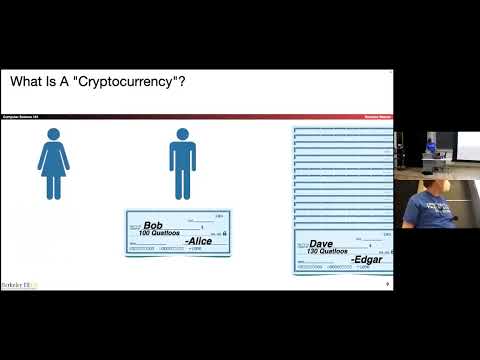 1:06:36
Computer Security 161 Cryptocurrency Lecture
128K views • 4 years ago
Nicholas C Weaver
A UC Berkeley CS 161 lecture by Nicholas Weaver on cryptocurrency and blockchains, covering how they work and the case against them. It is aimed at a computer security course audience.
Topic match · Security & hacking 1:20:35
Anton: A Special-Purpose Machine That Achieves a Hundred-Fold Speedup in Biomolecular Simulations
12K views • 14 years ago
NC State
David Shaw of D. E. Shaw Research presents Anton, a special-purpose machine that speeds up biomolecular simulations about a hundred-fold. The lecture covers molecular dynamics and how simulation helps understand how drugs bind.
Topic match · Computer architecture & CPUs 1:28:44
14. Limbic System
2M views • 15 years ago
Stanford
Robert Sapolsky's Stanford lecture on the limbic system as the emotional part of the nervous system, covering its role in decision making, links to the cortex and the functions of its subparts.
Topic match · Neuroscience & the brain 2:02:18
The Mill CPU Architecture – The Compiler (10 of 13)
12K views • 11 years ago
Mill Computing, Inc.
A long Mill Computing lecture on the Mill CPU's compiler toolchain, covering the specializer that targets family members, scheduling and latency passes, and the belt. It explains how the compiler handles a wide-issue, exposed-pipeline design.
Topic match · Computer architecture & CPUs 15:25
Stephen Krashen on Language Acquisition
1.5M views • 16 years ago
Mark Rounds
A 15-minute clip of linguist Stephen Krashen discussing language acquisition, drawn from the 1980s. It presents his input hypothesis and the distinction between acquisition and learning.
Topic match · Education & learning 1:26:50
The Mill CPU Architecture - the Belt (2 of 13)
38K views • 13 years ago
Mill Computing, Inc.
The second talk in the Mill CPU series by Mill Computing, covering the Belt, the Mill's operand-passing model that replaces general registers. It explains the cost of register renaming in conventional wide CPUs and how the Belt reaches high instruction-level parallelism.
Topic match · Computer architecture & CPUs 1:37:33
21. Chaos and Reductionism
1.8M views • 15 years ago
Stanford
Robert Sapolsky's Stanford lecture on chaos and reductionism, which he calls one of the hardest of the course. It examines the limits of breaking systems into parts to understand them and introduces chaotic systems.
Topic match · Neuroscience & the brain 15:26
Stephen Krashen: Language Acquisition and Comprehensible Input
186K views • 10 years ago
Tarek Hamza
A lecture from the 1980s by linguist Stephen Krashen on how people acquire language. He explains his comprehensible input hypothesis for second-language acquisition.
Topic match · Education & learning 33:26
On Mathematical Maturity (1) Thomas Garrity
172K views • 9 years ago
IAS | PCMI Park City Mathematics Institute
Thomas Garrity discusses mathematical maturity, a concept mathematicians use for professional development, and how it can inform teaching, mentoring and careers. It was given at the IAS/PCMI Park City Mathematics Institute.
Topic match · Education & learning 4:13:49
Jorge Luis Borges: This Craft of Verse Lectures - thepostarchive
159K views • 9 years ago
thepostarchive
The six Norton Lectures Jorge Luis Borges gave in 1967-68, titled This Craft of Verse, on topics including the riddle of poetry, metaphor, storytelling, translation and a poet's creed. The recording runs over four hours.