net worth
 4:19
How Special Relativity Makes Magnets Work
4M views • 13 years ago
Veritasium
Veritasium explains magnetism as a consequence of special relativity. Length contraction of moving charges makes a current in a wire attract or repel a nearby moving charge.
 28:35
Magnetohydrodynamics - Propelling Liquid Metal with Magnets!
1.1M views • 8 years ago
Tech Ingredients
Tech Ingredients explains the principles of magnetohydrodynamics and builds several demonstrations, including propelling liquid metal and electrolytes with magnets and a railgun-style setup.
 4:00
The Netherlands Is Not 'Holland.' It Never Was.
13.9M views • 13 years ago
CGP Grey
A short CGP Grey explainer on why 'Holland' is wrong as a name for the whole country of the Netherlands. It covers the country's provinces and its constituent territories.
 23:05
World's Strongest Magnet!
16.4M views • 3 years ago
Veritasium
Veritasium visits the National High Magnetic Field Laboratory to see the world's strongest magnets and demonstrate effects like eddy currents. It covers what intense magnetic fields do to materials and objects.
 8:14
The Lightning Network Explained (Litecoin/Bitcoin)
119K views • 9 years ago
Franklyn
An 8-minute explainer on the Lightning Network and how it relates to Segwit, Bitcoin and Litecoin. It covers how off-chain payment channels route payments to scale blockchain transactions.
 15:41
How anti-theft tags work - magnetostriction
886K views • 10 years ago
Applied Science
Applied Science explains how retail anti-theft tags work. A tiny magnetostrictive strip acts as a mechanical oscillator excited by a magnetic field, and magnetizing or demagnetizing it arms or disarms the tag.
 18:40
But what is a neural network? | Deep learning chapter 1
25.1M views • 9 years ago
3Blue1Brown
3Blue1Brown's first chapter on deep learning explains what neurons and layers are and the math underlying a basic neural network, using handwritten digit recognition with visual animations.
 23:32
The Solar Gravitational Lens will Map Exoplanets. Seriously.
582K views • 6 years ago
Launch Pad Astronomy
Explains the proposed NASA JPL plan to use the Sun as a gravitational lens, sending solar sail craft to its focal region to image an exoplanet's surface. It covers the distances involved, how imaging with the Sun would work and the mission design.
 21:15
The REAL Possibility of Mapping Alien Planets!
778K views • 4 years ago
PBS Space Time
PBS Space Time explains the proposal to use the Sun's gravity as a giant lens, sending a train of small light-sail spacecraft to the focal point roughly 550 AU out. It covers how such a telescope could image exoplanets in surprising detail and the engineering challenges involved.
 28:09
How does Starlink Satellite Internet Work?📡☄🖥
9.9M views • 4 years ago
Branch Education
Branch Education explains how Starlink works, from the ground dish and satellites to phased-array beam steering and data routing. Animations cover how a beam stays connected to a satellite moving at 27,000 km/h.
 5:26
Neural Network Learns The Physics of Fluids and Smoke | Two Minute Papers #118
209K views • 9 years ago
Two Minute Papers
Two Minute Papers covers a paper on speeding up fluid and smoke simulation with convolutional networks. It contrasts the approach with earlier regression forest methods.
 16:21
The Ranks of Global Billionaires: Not All Billionaires Are Made Equal
2M views • 6 years ago
Economics Explained
An Economics Explained video on the different kinds of billionaires, from founders to oligarchs. It explains how wealth is held in illiquid stock and why diversification is a problem for some.
 6:17
Why Cars Rarely Crash into Buildings in the Netherlands
1M views • 6 years ago
Not Just Bikes
Not Just Bikes explains why cars rarely crash into buildings in the Netherlands, attributing it to street design that forgives mistakes and to systematic crash investigation. It contrasts this with North American acceptance of such crashes.
 5:12
Traffic Calming is Everywhere in the Netherlands
404K views • 6 years ago
Not Just Bikes
Not Just Bikes shows how traffic calming is built into streets across the Netherlands, from city centres to villages. Street design naturally slows cars and makes roads safer.
 20:33
Gradient descent, how neural networks learn | Deep Learning Chapter 2
9.7M views • 9 years ago
3Blue1Brown
3Blue1Brown's second neural network chapter explains cost functions and gradient descent, showing how a network learns by minimizing error during training.
 9:52
AI Slop Is Destroying The Internet
11.4M views • 1 year ago
Kurzgesagt – In a Nutshell
Kurzgesagt examines how AI-generated content is flooding the internet, from video and music to news and books. It looks at how this makes verifying what is real harder.
 16:04
Genetic Engineering Will Change Everything Forever – CRISPR
30.8M views • 10 years ago
Kurzgesagt – In a Nutshell
Kurzgesagt's animated explainer on CRISPR gene editing, covering how the technology works and what it could mean for curing disease, designer babies and aging. It frames genetic engineering as an irreversible change coming to humanity.
 13:04
VACNET Anti-cheat
574K views • 8 years ago
3kliksphilip
3kliksphilip summarizes Valve's GDC talk on VACNet, a deep-learning system that flags CS:GO cheaters and feeds the Overwatch review queue. It covers Trust Factor, VAC, and how the data is collected and analyzed.
 7:04
Genetic Engineering and Diseases – Gene Drive & Malaria
9.9M views • 10 years ago
Kurzgesagt – In a Nutshell
A Kurzgesagt animation on using gene drives to modify mosquitoes against malaria, and whether we should. It explains the mechanism and the ethical trade-offs.
 18:20
Even Small Towns are Great Here (5 Years in the Netherlands)
1.8M views • 3 years ago
Not Just Bikes
Not Just Bikes reflects on five years in the Netherlands and tours small towns and cities, from Haarlem to Veenendaal. It argues that good urbanism with walkable streets, bike infrastructure and transit is found almost everywhere there, not just in Amsterdam.
 6:47
Starlink revisions, Nov 2018
173K views • 8 years ago
Mark Handley
Mark Handley of UCL looks at how SpaceX's November 2018 revisions to the Starlink constellation affect network behavior. The video visualizes the orbits and routing and estimates latencies, building on his earlier video and research paper.
 5:10
Junction design in the Netherlands
630K views • 12 years ago
BicycleDutch
A five-minute BicycleDutch episode showing how Dutch junctions are designed so cyclists and pedestrians can cross safely. It explains the layout choices that separate and protect them.
 8:25
Calculating a Car Crash - Numberphile
446K views • 8 years ago
Numberphile
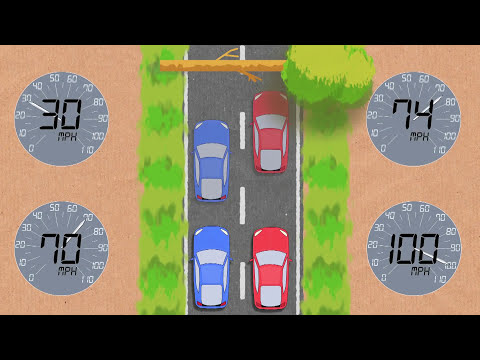
Numberphile's Ben Sparks works through the physics of a car crash, showing how kinetic energy grows with the square of speed and why stopping distance climbs so quickly as velocity increases.
 25:05
The Best-Designed Town in the Netherlands (and therefore, the world)
1.2M views • 1 year ago
Not Just Bikes
Not Just Bikes tours Houten, a Dutch town designed around cycling, explaining how its layout makes most trips by bike safe and easy. It also promotes a book about the town.
 21:42
Future Computers Will Be Radically Different (Analog Computing)
13.2M views • 4 years ago
Veritasium
Veritasium explains why analog computing may suit AI workloads, covering old analog computers, The Analog Thing and Mythic's analog chips that use flash memory for neural network inference. It argues digital hardware is hitting limits.
 10:15
Using ground relays with Starlink
506K views • 6 years ago
Mark Handley
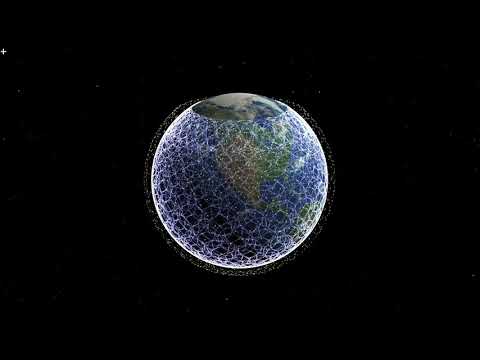
Mark Handley of UCL explains, with simulation visualizations, how early Starlink satellites without inter-satellite links could still give low-latency wide-area communication by hopping via ground relays. He shows it can beat fibre on many long paths.
 3:59
The Lava Lamps That Help Keep The Internet Secure
4.3M views • 9 years ago
Tom Scott
Tom Scott visits Cloudflare's San Francisco office to show the wall of lava lamps whose camera feed is used as a source of entropy for random number generation. It is a short explainer on how this helps secure internet encryption.
 55:02
GradIEEEnt half decent: The hidden power of imprecise lines
391K views • 3 years ago
suckerpinch
Tom 7 (suckerpinch) delivers a long, comedic digression on gradient descent and floating-point imprecision. He shows how rounding behavior can supply the nonlinearity needed to build a neural network.
 4:31
why typing like this is sometimes okay.
5.4M views • 7 years ago
Tom Scott
Tom Scott makes a short descriptivist argument that language keeps changing and that casual internet writing conventions, like lowercase typing and dropped full stops, are legitimate. It is part of his Language Files series, written with Gretchen McCulloch.
 7:27
This clock was famous, but the internet ruined it.
4.7M views • 4 years ago
Tom Scott
Tom Scott explains the famous Dutch flower auction clock at Royal FloraHolland in Aalsmeer, a literal Dutch auction, and how the internet changed it. It is a short look at how the system worked then and now.
 8:35
The Big Short (2015) - Jared Vennett's Pitch to Front Point Partners (Jenga Blocks Scene) [HD 1080p]
17.9M views • 9 years ago
Extractor
A scene from The Big Short in which Jared Vennett pitches credit default swaps on mortgage bonds to a hedge fund team, using a Jenga tower to illustrate collateralized debt obligations.
 6:30
How the Dutch got their cycle paths
1.2M views • 15 years ago
BicycleDutch
A short BicycleDutch video on how the Netherlands got its cycling infrastructure, including the 1970s protests and the shift away from car-centric planning. The channel later published an updated version.
 23:11
Eating less Meat won't save the Planet. Here's Why
5.8M views • 5 years ago
Joseph Everett - WIL
Joseph Everett, with Dr. Frank Mitloehner, argues that eating less meat will not do much for the climate. He covers beef's water footprint, land and feed use, and methane.
 15:48
The Best Country in the World for Drivers
2.2M views • 4 years ago
Not Just Bikes
Not Just Bikes argues that the Netherlands, famed for cycling, is also the best country for drivers. It explains how prioritizing walking, cycling and transit makes driving faster and more pleasant.
 12:09
I promise this story about microwaves is interesting.
9M views • 5 years ago
Tom Scott
Tom Scott investigates the claim that the microwave was invented to heat hamsters, and interviews James Lovelock about freezing and microwave-thawing hamsters in the 1950s. It traces early magnetron uses beyond radar.
 11:11
Old-fashioned rice cookers are extremely clever
3.2M views • 6 years ago
Technology Connections
Technology Connections explains how old-fashioned non-electronic rice cookers work, using a magnet and spring switch tripped by the Curie point. It shows the thermodynamics and magnetism behind a simple appliance.
 5:55
Richard Feynman talks about light
1.8M views • 19 years ago
sdfhsfh
A PBS clip in which Richard Feynman explains the strange nature of light and electromagnetic radiation. He conveys how little of it we actually see and how radio waves are present everywhere.
 7:09
The Deadliest Being on Planet Earth – The Bacteriophage
35.3M views • 8 years ago
Kurzgesagt – In a Nutshell
An animated Kurzgesagt explainer on bacteriophages, viruses that kill bacteria, covering how they infect and burst cells and their potential as therapy against antibiotic-resistant bacteria.
 15:41
Why SpaceX is Making Starlink
7.4M views • 7 years ago
Real Engineering
Real Engineering explains why SpaceX is building Starlink, including the economics of satellite internet. It covers the latency advantage of light in vacuum over fiber for long-distance links.
 12:47
Backpropagation, intuitively | Deep Learning Chapter 3
6.4M views • 9 years ago
3Blue1Brown
3Blue1Brown's third deep learning chapter gives a visual, intuitive account of backpropagation and what happens to a neural network as it learns. A follow-up video covers the underlying calculus.